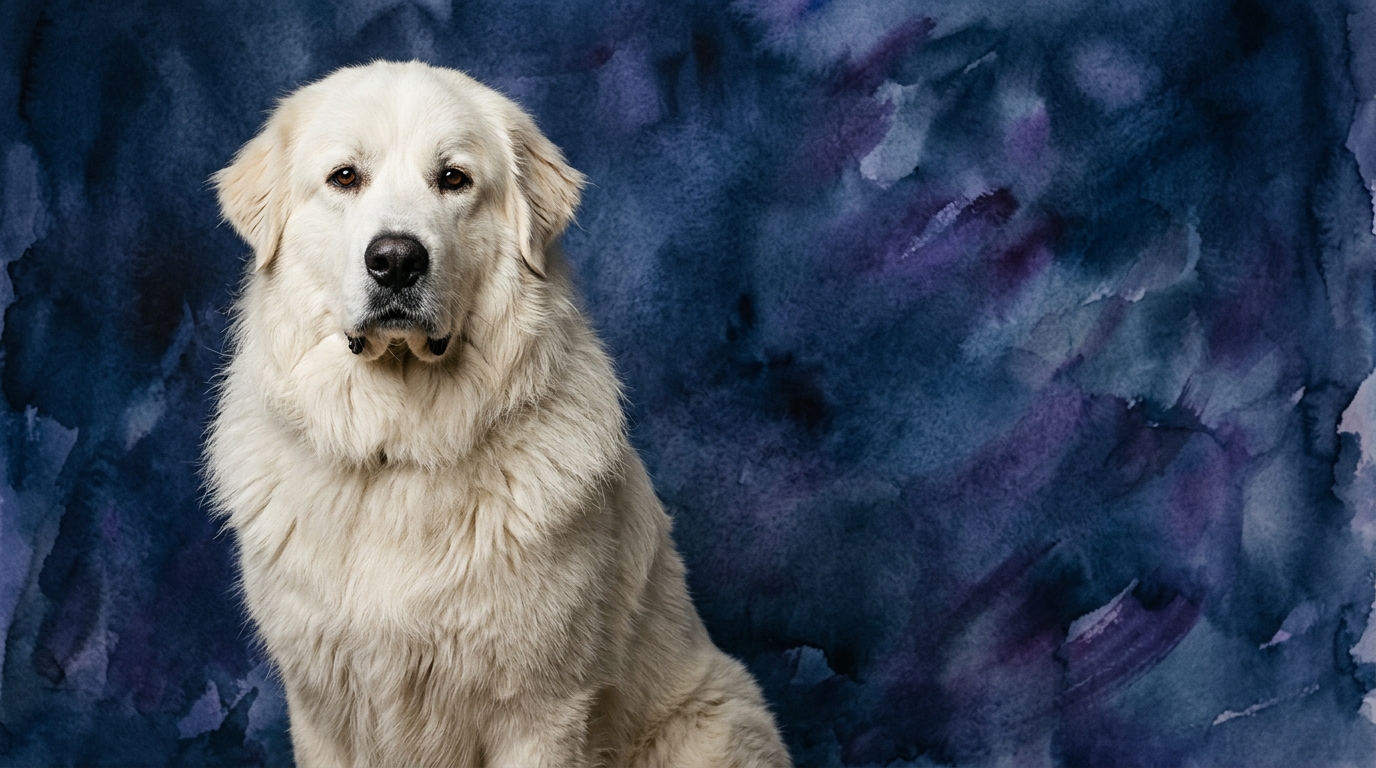

Side-by-Side IQ Profile: Great Pyrenees vs. Brussels Griffon
Both the Great Pyrenees and the Brussels Griffon are assigned a 3/5 across our five cognitive dimensions: Problem Solving, Training Speed, Social Intelligence, Instinctive Drive, and Memory. It's crucial to understand that identical scores don't imply identical cognitive function; rather, these scores reflect how effectively each breed utilizes its inherent abilities within its historical context and breed purpose. The Great Pyrenees, a dedicated livestock guardian, holds a Coren ranking of #64, which primarily reflects its obedience to learned commands, often secondary to its independent decision-making. The Brussels Griffon, a toy companion breed, is not Coren-ranked, highlighting that its cognitive strengths lie outside the typical metrics of competitive obedience.
For Problem Solving (3/5), a Pyrenees excels at assessing environmental threats and strategizing protection for its flock, while a Griffon might apply its 3/5 score to cleverly maneuvering for attention or preferred sleeping spots within a human household. Training Speed (3/5) for a Pyrenees means it learns, but often on its own terms, prioritising its guarding instincts over immediate compliance; for a Griffon, 3/5 indicates an ability to grasp commands, though sensitivity and a charming stubbornness can influence consistency. Social Intelligence (3/5) in the Pyrenees involves discerning friend from foe among animals and people, showing profound loyalty to its charges; for the Griffon, it translates to an acute understanding of human emotions and household dynamics, often used to great effect. Instinctive Drive (3/5) for the Pyrenees is centered on vigilance, patrolling, and protection, whereas for the Griffon, it manifests as a strong desire for companionship, play, and occasionally, a surprising prey drive from its ratting ancestry. Finally, Memory (3/5) in a Pyrenees is robust for remembering territory, routines, and past threats, ensuring consistent guardianship; in a Griffon, it's adept at recalling people, routines, and experiences, forming deep bonds and learning household expectations.
Where Great Pyrenees Wins Cognitively
The Great Pyrenees' cognitive strengths are deeply rooted in its ancient role as a livestock guardian. Its 3/5 Problem Solving score shines brightest in autonomous decision-making in complex, unpredictable environments. A Pyrenees doesn't wait for commands to assess a potential threat; it independently evaluates the situation, determining the most effective deterrent, whether that's a warning bark, a strategic placement between flock and perceived danger, or a direct confrontation. This involves sophisticated spatial reasoning and risk assessment, critical for protecting vulnerable animals without human intervention.
Their 3/5 Social Intelligence is specifically tuned to the nuances of group dynamics within a flock or family. They develop profound, quiet bonds with their charges, exhibiting a protective empathy that allows them to anticipate needs and react to subtle cues of distress. This isn't just about obedience; it's about a deep, instinctual understanding of their role and the welfare of those they guard. Their Memory (3/5) ensures they recall safe boundaries, past encounters with predators, and the routines of their environment, building a comprehensive mental map essential for their vigilant duties. This combination of independent thought, protective social acumen, and reliable memory makes them unparalleled in their specific cognitive niche.
Where Brussels Griffon Wins Cognitively
The Brussels Griffon's cognitive prowess is centered on social engagement and adaptability within a human-centric world. Their 3/5 Problem Solving manifests in their ability to quickly learn household rules, figure out how to access forbidden treats, or charm their way onto a lap. They possess a cleverness for navigating social situations, often using their expressive faces and engaging personalities to elicit desired responses from their human companions. This is a very different kind of problem-solving than the Pyrenees', focused on interpersonal dynamics rather than environmental threats.
Their 3/5 Social Intelligence is exquisitely sensitive to human emotions and subtle cues. A Griffon often seems to know when its owner is sad, offering comfort, or when they're playful, initiating games. This emotional attunement allows them to form incredibly strong, reciprocal bonds, making them exceptionally responsive companions. Their Memory (3/5) is excellent for recalling specific interactions, preferred people, and routines, which contributes to their adaptability and makes them feel like truly integrated family members. They remember who gives the best belly rubs, who is more likely to share a snack, and the precise time for their evening walk, showcasing a memory system optimized for harmonious cohabitation.
Which is Easier to Train and Why
When considering ease of training, both breeds have a Training Speed of 3/5, yet their approaches and motivations differ significantly. The Brussels Griffon generally *appears* easier to train for conventional obedience and tricks due to its strong desire for human interaction and approval. Their 3/5 Social Intelligence means they are highly motivated by praise and positive reinforcement, quickly connecting actions with rewards. However, their sensitivity means harsh methods are counterproductive, and their 3/5 Problem Solving can sometimes be used to creatively avoid commands if they perceive a better alternative, or if they're feeling particularly opinionated. Consistency and gentle, engaging methods are key to harnessing their willingness to learn.
The Great Pyrenees, with its 3/5 Training Speed, learns but often on its own terms. Their 3/5 Instinctive Drive for independent guarding means they are not inherently driven by a desire for immediate human compliance for compliance's sake. They are thoughtful and will weigh a command against their own perceived duties or comfort. Commands that make logical sense to their guarding instincts are learned and performed more readily than arbitrary ones. Training a Pyrenees requires immense patience, consistency, and a partnership approach where the dog understands the 'why' behind the request. While they can learn complex tasks, their independent nature means they may choose when and how to perform them, making them less 'easy' in the traditional obedience sense compared to the more people-pleasing Griffon.
Which Suits Active Owners vs. Relaxed Owners
For active owners, the Great Pyrenees suits those whose 'activity' involves managing a large property or engaging in consistent, purposeful outdoor routines. While not typically a dog for high-intensity sports, a Pyrenees thrives with ample space to patrol, explore, and be vigilant. Owners who enjoy long, rambling walks or live on acreage where the dog can fulfill its natural instincts for independent oversight will find a harmonious match. They require mental engagement through their guarding duties, which can be 'active' in a less strenuous, but deeply fulfilling way. A relaxed owner without sufficient space or understanding of their independent needs might struggle with their territorial barking and roaming tendencies.
The Brussels Griffon, conversely, is an excellent fit for owners seeking a companion that thrives on close interaction rather than extensive outdoor excursions. While they enjoy short, brisk walks and playful indoor games, their exercise needs are modest, making them ideal for apartment living or less active households. They suit relaxed owners who can provide consistent attention, mental stimulation through training and play, and who appreciate a dog that is content to cuddle on the couch. Their high 3/5 Social Intelligence makes them a delightful presence for owners who value a deeply connected and engaging canine companion in their daily lives.
The Verdict
Choose the Great Pyrenees if you seek an independent, watchful guardian for a large property, appreciating a dog that thinks for itself and offers steadfast, subtle protection. Their cognitive strengths lie in autonomous decision-making and nuanced threat assessment.
Opt for the Brussels Griffon if you desire a sensitive, engaging companion who thrives on human interaction and adapts well to various living situations with consistent, positive guidance. Their cognitive strengths are rooted in social acumen and emotional responsiveness.
🧠 Find Your Pet's IQ Score
Our Pet IQ Lab assessment covers 25+ tests across 5 cognitive dimensions — personalized to your breed.
Take the Full IQ Test →Frequently Asked Questions
Are Great Pyrenees stubborn in training?
Great Pyrenees are not necessarily stubborn, but highly independent. Their 3/5 Training Speed means they learn, but their strong 3/5 Instinctive Drive to guard often means they prioritize their perceived duties over immediate obedience. Training requires patience and understanding their motivations.
Do Brussels Griffons bark a lot?
Brussels Griffons can be vocal, especially if not properly socialized or if they are bored or anxious. Their 3/5 Social Intelligence means they are attuned to their environment and can alert owners to perceived changes, but consistent training can help manage excessive barking.
How do the 3/5 IQ scores translate differently for these breeds?
Despite identical 3/5 scores, these breeds apply their cognitive abilities differently due to their distinct historical roles. A Great Pyrenees uses its 3/5 Problem Solving for independent threat assessment, while a Brussels Griffon uses its 3/5 Social Intelligence to navigate complex human interactions and gain attention.