
Side-by-Side IQ Profile
At The Cosmic Pet Pet IQ Lab, we assess canine intelligence across five critical dimensions: Problem Solving, Training Speed, Social Intelligence, Instinctive Drive, and Memory. Intriguingly, both the Great Pyrenees and the English Toy Spaniel achieve a solid 3/5 across all these metrics. While the scores are identical, their historical roles and inherent temperaments mean these capacities manifest in distinctly different ways.
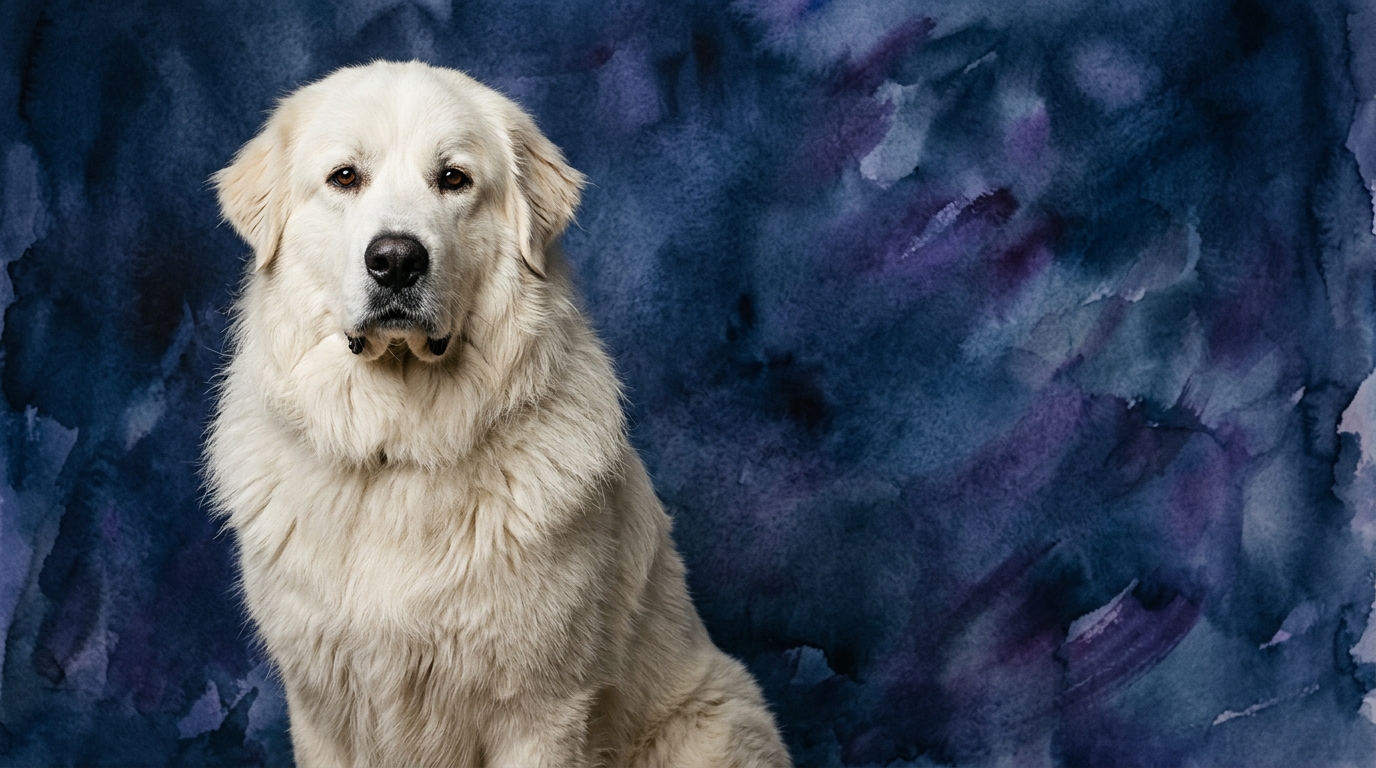
For the **Great Pyrenees** (Working, Coren rank #64):
**Problem Solving (3/5):** This reflects an ability to independently assess and respond to environmental changes or perceived threats within their guarded territory. Their problem-solving is practical, focused on protective strategies and navigating their environment for flock safety without constant human direction.
**Training Speed (3/5):** A Pyr learns, but often processes commands through the lens of their independent, protective nature. They understand what is asked but may only comply if it aligns with their perceived duty, requiring patience and consistent, trust-based reinforcement to bridge understanding with consistent action.
**Social Intelligence (3/5):** This manifests as a keen awareness of their surroundings and the intentions of others, adept at discerning potential threats from harmless presences. They read body language and environmental cues to assess situations, prioritizing observation and protection over effusive engagement.
**Instinctive Drive (3/5):** This score is heavily driven by their inherent guarding nature, compelling them to survey, protect, and act as a deterrent. This powerful, fundamental drive shapes their vigilance and often guides their decision-making.
**Memory (3/5):** A Great Pyrenees retains knowledge of territory boundaries, identifies regular visitors versus potential dangers, and remembers routines related to their protective duties, utilizing this recall for effective long-term guardianship.
For the **English Toy Spaniel** (Toy, Not Coren-ranked):
**Problem Solving (3/5):** For an English Toy Spaniel, problem-solving typically revolves around navigating their domestic world to achieve comfort or attention, like finding a cozy spot or subtly communicating needs to their human companions. Their solutions are often socially oriented.
**Training Speed (3/5):** This breed is a receptive learner, eager to please and quick to pick up on cues, especially with positive reinforcement and affection. They thrive on interactive training that leads to social rewards, making them generally cooperative students.
**Social Intelligence (3/5):** Highly attuned to human emotions and family dynamics, they excel at reading moods, understanding subtle shifts in tone, and offering comfort or seeking interaction appropriately. Their world centers on their human family, making this a core strength.
**Instinctive Drive (3/5):** This drive is primarily geared towards companionship and bonding, manifesting as a strong innate desire to be close to their people, seeking comfort, warmth, and constant presence, fulfilling their historical role as devoted lapdogs.
**Memory (3/5):** An English Toy Spaniel quickly remembers routines, favorite people, specific places for naps or treats, and the patterns of daily household life. This recall contributes significantly to their contented and well-adjusted domestic existence.
Where Great Pyrenees Wins Cognitively
Despite identical raw scores, the Great Pyrenees exhibits cognitive strengths rooted in its millennia-old purpose. Their problem-solving, while scored 3/5, is applied to complex, independent decision-making in vast, dynamic environments. A Pyr must autonomously assess threats, differentiate between harmless wildlife and genuine danger, and formulate strategies to protect their flock without direct human supervision. This requires a nuanced understanding of cause and effect in a real-world context, a form of practical intelligence that excels in self-sufficiency. Their social intelligence, also 3/5, is uniquely geared towards reading the intentions of strangers or unfamiliar animals, providing a robust early warning system. This independent judgment and environmental processing are distinct cognitive advantages.
Where English Toy Spaniel Wins Cognitively
The English Toy Spaniel, with its matching 3/5 scores, demonstrates cognitive strengths perfectly adapted for close human companionship. Their social intelligence, while equal in score, manifests as a profound sensitivity to human emotional states. They are adept at picking up on subtle vocal inflections, facial expressions, and body language, often predicting their owner's needs or moods with remarkable accuracy. This emotional attunement allows them to offer comfort or solicit attention precisely when desired, fostering deep bonds. Their problem-solving (3/5) often centers on navigating complex social interactions or intricate household dynamics to achieve their goals. This nuanced understanding of human-centric problems represents a unique cognitive advantage in domestic settings.
Which is Easier to Train and Why
When considering ease of training, the identical 3/5 "Training Speed" scores can be misleading due to fundamental behavioral differences. The English Toy Spaniel, a breed developed for companionship, typically exhibits a strong desire to please its human family. Their social intelligence drives them to seek approval and positive interaction, making them generally more receptive to training cues and eager to comply for praise, treats, and affection. They thrive on structured engagement and tend to form strong associations between commands and rewards quickly. In contrast, the Great Pyrenees, bred for independent decision-making as a livestock guardian, possesses a unique cognitive framework that prioritizes self-reliance over immediate obedience. While they understand commands (reflected in their 3/5 problem-solving and memory), their 3/5 training speed is often tempered by their instinct to evaluate if a command aligns with their perceived duty. This independence means a Pyr might learn a command but choose not to execute it if they deem it unnecessary or contrary to their protective instincts, often requiring a patient approach. Therefore, for most typical obedience tasks, the English Toy Spaniel will generally present as the "easier" student due to their inherent motivation to cooperate.
Which Suits Active Owners vs Relaxed Owners
The cognitive blueprints of these two breeds naturally align with differing owner lifestyles. An active owner, one who enjoys hiking or exploring, might find the Great Pyrenees a suitable, albeit independent, companion. While not high-energy in the typical sense, their cognitive strength in environmental assessment and their historical role in patrolling vast territories mean they appreciate space and purpose-driven movement. Their protective instincts mean "active" might translate to supervising a large property or accompanying an owner on long, watchful walks rather than intense agility. They thrive with owners who understand their independent nature, providing clear boundaries and a sense of "job" or territory. Conversely, the English Toy Spaniel is an ideal match for relaxed owners who prioritize indoor companionship, gentle play, and abundant affection. Their social intelligence and instinctive drive for bonding mean they flourish in environments where they are consistently close to their human family. They require minimal strenuous exercise, preferring short strolls or indoor games, and their cognitive focus on human interaction makes them perfectly content as a devoted lapdog.
The Verdict
Opt for a Great Pyrenees if you value an independent, watchful companion with a strong protective instinct and ample space, understanding that their cognitive strengths lie in autonomous decision-making and territory management.
Select an English Toy Spaniel if you desire a highly perceptive, affectionate lap companion whose intelligence is geared towards deep social bonding and subtle emotional attunement within a relaxed home environment.
🧠 Find Your Pet's IQ Score
Our Pet IQ Lab assessment covers 25+ tests across 5 cognitive dimensions — personalized to your breed.
Take the Full IQ Test →Frequently Asked Questions
Do identical IQ scores mean these breeds think exactly alike?
No, identical scores across the five IQ dimensions indicate similar inherent capacities but not identical application. Their breed histories and purposes mean their problem-solving, social intelligence, and drives manifest in vastly different behavioral expressions, adapted to their specific roles.
How does a Great Pyrenees' independence affect its intelligence?
A Great Pyrenees' independence is a cornerstone of its intelligence, particularly in problem-solving and social intelligence. It allows them to make autonomous decisions in complex situations, like guarding livestock, rather than relying solely on human direction, showcasing a unique form of practical, self-reliant cognition.
Is the English Toy Spaniel's social intelligence transferable to other animals?
While primarily focused on human interaction, an English Toy Spaniel's social intelligence can extend to other calm, respectful animals within the household. Their perceptive nature allows them to read cues from other pets, often adapting their behavior to maintain harmony and seek comfortable companionship, though humans remain their primary focus.