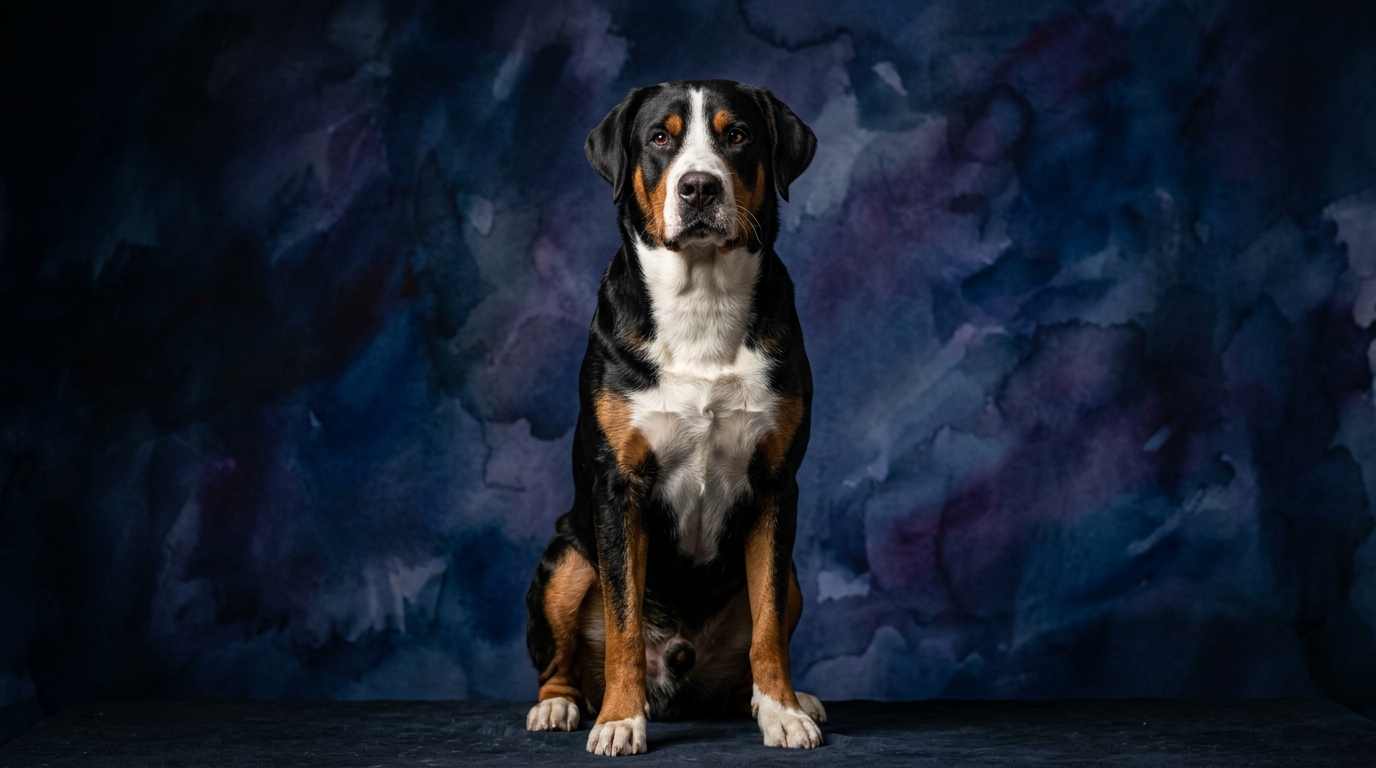
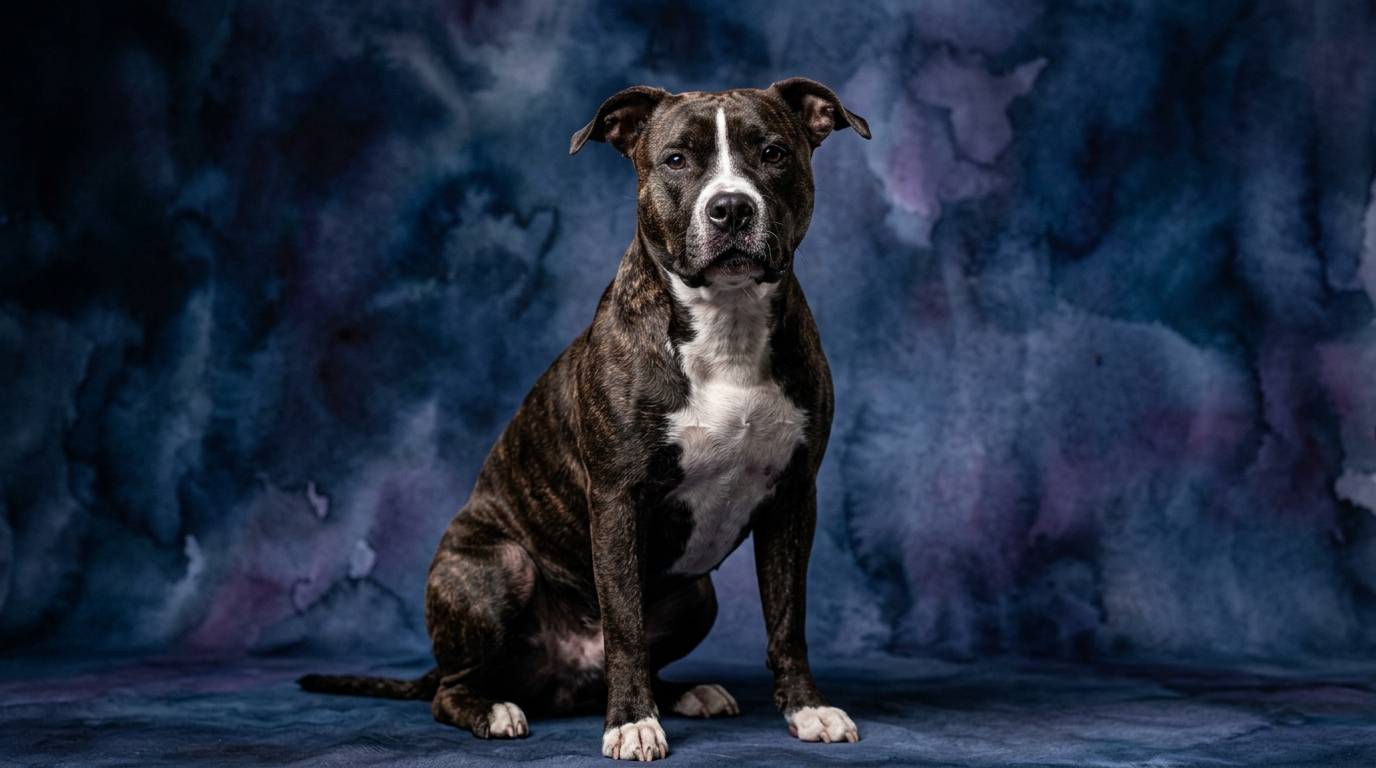
Side-by-Side IQ Profile: Greater Swiss Mountain Dog vs. American Staffordshire Terrier
Delving into the cognitive profiles of the Greater Swiss Mountain Dog and the American Staffordshire Terrier reveals intriguing similarities and a pivotal distinction. The Greater Swiss Mountain Dog, a working breed, exhibits a balanced intellectual landscape: Problem Solving 3/5, Training Speed 3/5, Social Intelligence 3/5, Instinctive Drive 3/5, and Memory 3/5. This consistent scoring across all dimensions suggests a robust, practical intellect, well-suited for its historical roles in drafting and droving. Their 3/5 in problem-solving indicates a capacity to navigate practical challenges methodically, while their 3/5 in social intelligence points to a cooperative nature, essential for working alongside humans. A 3/5 in training speed and memory suggests they learn at a steady, consistent pace, requiring patient repetition for skill acquisition and retention, aligning with a breed built for endurance and reliability rather than rapid responses.
The American Staffordshire Terrier, a terrier breed, presents a very similar cognitive baseline across most dimensions: Problem Solving 3/5, Training Speed 3/5, Social Intelligence 3/5, and Instinctive Drive 3/5. This parity implies a comparable aptitude for general problem-solving, social interaction, and a moderate inherent drive. However, a significant difference emerges in their Memory score, which stands at 4/5 for the AmStaff, compared to the GSMD's 3/5. This superior memory, coupled with its notable Coren ranking of #48 for working and obedience intelligence, points to a distinct cognitive advantage in retaining learned information and responding to commands with greater efficiency. While both breeds are capable learners, the AmStaff's enhanced memory suggests a more streamlined process for acquiring and recalling new behaviors.
Where the Greater Swiss Mountain Dog Wins Cognitively
The Greater Swiss Mountain Dog's cognitive strengths are rooted in its well-rounded, practical application of intellect, particularly valuable for cooperative, physical tasks. Its consistent 3/5 scores across problem-solving, social intelligence, and instinctive drive indicate a robust, adaptable mind that excels in real-world scenarios requiring steady effort and collaboration, rather than rapid, complex command sequences. This breed demonstrates a reliable capacity for understanding and executing multi-step tasks such as drafting, livestock tending, or even complex household routines, where consistent engagement and a thoughtful, methodical approach are more critical than sheer speed of learning.
Their social intelligence, rated at 3/5, supports their history as reliable partners in both family life and farm work. This suggests an aptitude for reading human cues and collaborating effectively, fostering a strong, reciprocal working relationship based on mutual understanding rather than just obedience. This cognitive profile allows them to work through practical challenges methodically, using their physical prowess in conjunction with their mental faculties to achieve goals, making them dependable problem-solvers in their own domain. They process information steadily, leading to enduring comprehension of their environment and responsibilities.
Where the American Staffordshire Terrier Wins Cognitively
The American Staffordshire Terrier's cognitive edge is most apparent in its superior memory and its Coren ranking, indicating a capacity for quicker acquisition and retention of formal commands. With a memory score of 4/5, compared to the Greater Swiss Mountain Dog's 3/5, AmStaffs are likely to remember cues and sequences more efficiently, making them particularly adept at structured obedience and dog sports where precision and recall are paramount. This enhanced memory means they solidify new behaviors with fewer repetitions and recall them more reliably even after periods of inactivity.
Their placement at #48 on Coren's list for working intelligence further underscores this advantage, suggesting they grasp new instructions with remarkable efficiency and retain them over longer periods. This cognitive trait allows AmStaffs to build a broader repertoire of behaviors and respond reliably to a wider array of commands, making them excellent candidates for advanced training disciplines, including complex trick training or agility. Their problem-solving ability, rated at 3/5, combined with better memory, means they can apply learned solutions more readily to new contexts, leveraging past experiences effectively to navigate novel situations or solve puzzles.
Which Is Easier to Train and Why
When comparing ease of training, the American Staffordshire Terrier generally holds a distinct advantage, primarily due to its higher memory score and its Coren ranking. An AmStaff's 4/5 memory indicates a quicker grasp of new commands and superior retention over time, meaning fewer repetitions are typically needed for them to master a behavior and recall it consistently. Their placement at #48 on Coren's list, which assesses working and obedience intelligence, reinforces their aptitude for formal training, suggesting they are notably responsive to human instruction and can execute tasks reliably. This translates into a more efficient training process for owners seeking rapid progress in obedience or dog sports.
In contrast, the Greater Swiss Mountain Dog, with a 3/5 in training speed and memory, requires more consistent and patient repetition to solidify new behaviors. While they are certainly capable of learning, their cognitive pace is more deliberate, meaning owners must commit to a steady, long-term training regimen. Both breeds possess a 3/5 instinctive drive, but the AmStaff's terrier tenacity can translate into a focused drive to 'win' in training scenarios, making them eager to please and perform for their handler. The GSMD's steady working drive, while invaluable for sustained tasks like drafting, might not translate into the same rapid command acquisition as the AmStaff's sharper memory and obedience inclination, requiring a different approach to maintain engagement and achieve mastery.
Which Suits Active Owners vs. Relaxed Owners
For active owners seeking a canine partner for structured activities and advanced learning, the American Staffordshire Terrier often proves a more suitable match due to its superior memory and higher Coren rank. Owners who enjoy dog sports, competitive obedience, or intricate trick training will find the AmStaff's ability to quickly learn and retain complex sequences particularly rewarding, leveraging their mental agility and inherent tenacity. Their drive to perform and their capacity for quick understanding make them excellent candidates for owners dedicated to consistent, engaging mental and physical challenges.
Conversely, the Greater Swiss Mountain Dog, with its balanced cognitive profile and steady working drive, is an excellent fit for owners whose activity preferences lean towards cooperative, practical tasks or consistent outdoor adventures rather than high-speed, precision-based sports. Owners who appreciate a thoughtful, methodical companion for hiking, carting, or farm work, and are prepared for a consistent, patient training approach, will find the GSMD's robust and reliable intellect to be a perfect complement to their lifestyle. While both breeds benefit immensely from activity, the type of mental engagement they thrive on differs, with the AmStaff preferring rapid-fire learning and the GSMD excelling in sustained, purposeful work.
The Verdict
Choose the Greater Swiss Mountain Dog if you seek a steadfast, cooperative companion with a robust, practical intellect suited for consistent, physical tasks and a methodical training approach.
Choose the American Staffordshire Terrier if you desire a tenacious, quick-witted partner who excels at structured training, rapidly acquires new commands, and thrives in dog sports or advanced obedience.
🧠 Find Your Pet's IQ Score
Our Pet IQ Lab assessment covers 25+ tests across 5 cognitive dimensions — personalized to your breed.
Take the Full IQ Test →Frequently Asked Questions
Are Greater Swiss Mountain Dogs difficult to train?
Greater Swiss Mountain Dogs are not difficult to train, but they do require consistency and patience due to their 3/5 training speed and memory scores. They respond well to positive reinforcement and thrive on a methodical approach, making them steady learners rather than quick study breeds.
Do American Staffordshire Terriers have good memories?
Yes, American Staffordshire Terriers possess a strong memory, rated at 4/5 in our IQ lab, which indicates a superior ability to retain learned commands and experiences. This cognitive strength contributes to their effectiveness in formal obedience and their Coren ranking of #48 among working and obedience breeds.
Which breed is better for first-time dog owners?
Neither breed is inherently "better" for first-time owners without considering individual commitment, but the AmStaff's quicker learning curve might be easier for some, provided an owner can manage its tenacious drive. The GSMD's steady nature can also be forgiving, but requires an owner dedicated to consistent, patient training without expecting rapid results.