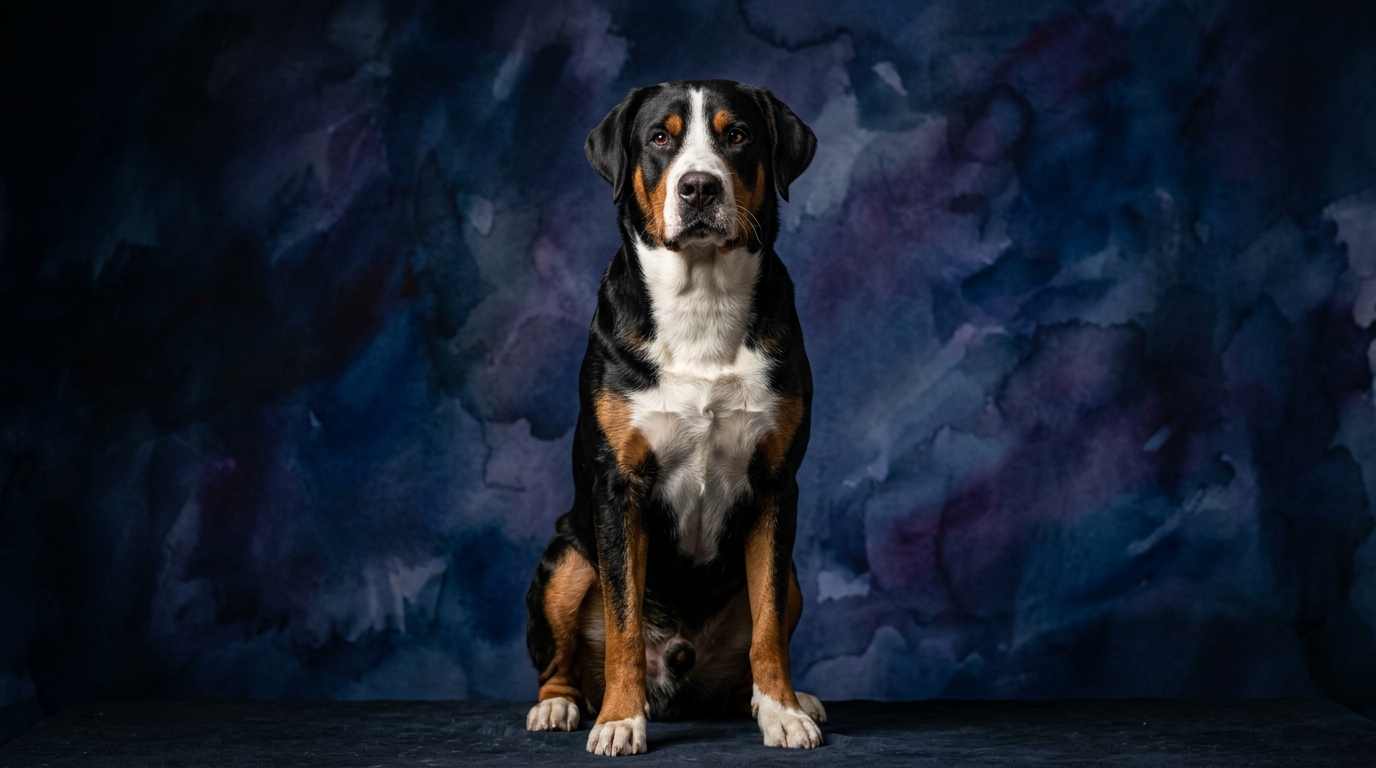
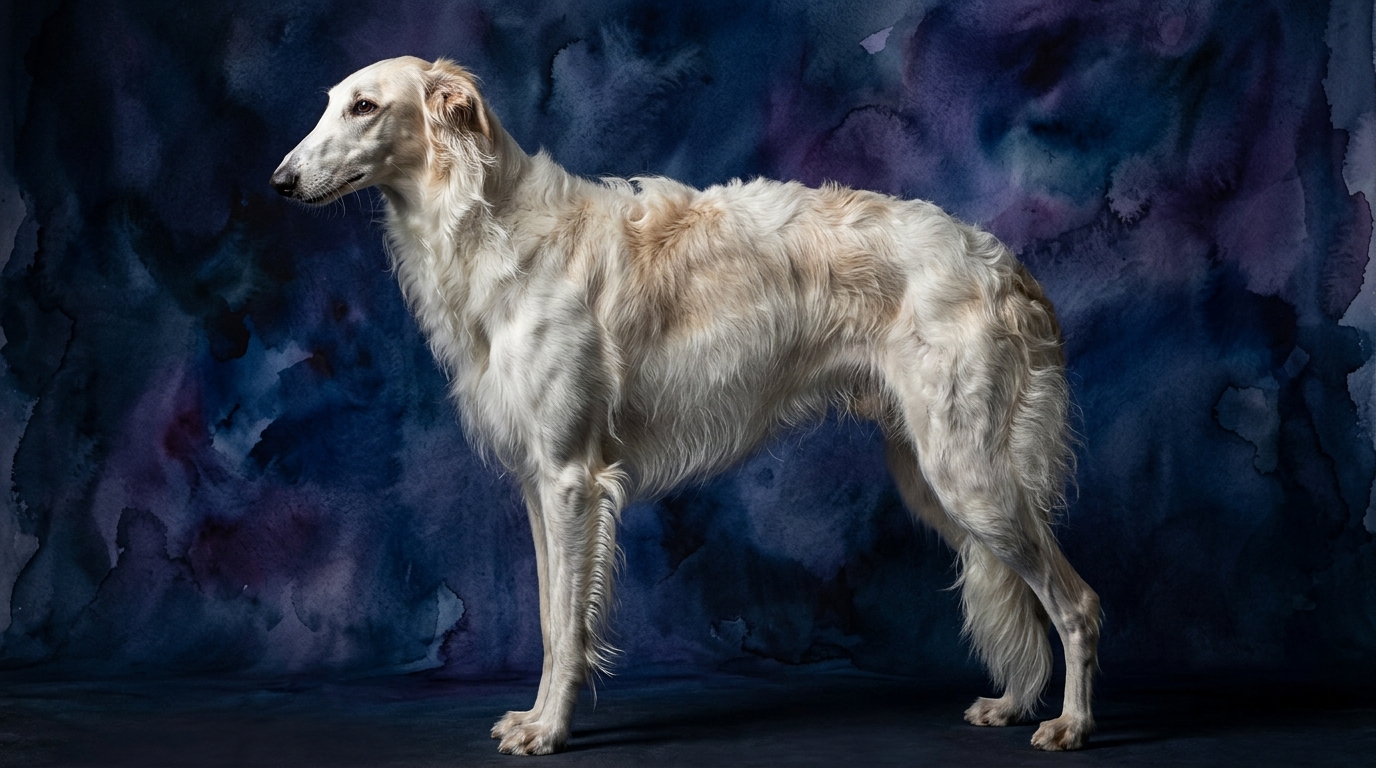
Side-by-side IQ Profile: Greater Swiss Mountain Dog vs. Borzoi
The Cosmic Pet Pet IQ Lab's framework offers a granular view into canine cognition, and while both the Greater Swiss Mountain Dog and the Borzoi register identical 3/5 scores across all five dimensions, their expression diverges dramatically. For the Greater Swiss Mountain Dog, a robust working breed, Problem Solving (3/5) involves practical, physical challenges like maneuvering a cart or strategically moving livestock, reflecting their methodical nature. Training Speed (3/5) indicates responsive learning from consistent instruction, absorbing commands steadily over time rather than instantly. Their Social Intelligence (3/5) fosters strong family bonds, adeptly reading trusted humans and integrating into the household, displaying reservation with strangers. The Instinctive Drive (3/5) primarily manifests as a desire to be useful, to guard the family, and participate in group activities, not prey chase. Their Memory (3/5) is reliable for recalling commands, routines, and locations within their established environment, aiding daily tasks.
The Borzoi, an elegant sighthound, interprets these same 3/5 scores through a very different lens. Their Problem Solving (3/5) is independent and situation-specific, often involving quick strategy for prey detection and pursuit, or efficiently finding a comfortable spot. Their solutions are swift and often self-serving. Training Speed (3/5) means they grasp concepts quickly, but their willingness to perform depends entirely on motivation; they learn efficiently but often choose when to apply it. Social Intelligence (3/5) is discerning and aloof; they form deep, quiet bonds with a chosen few, reading human moods sensitively but showing little interest in strangers. Their Instinctive Drive (3/5) is overwhelmingly dominated by sighthound heritage: an intense urge to spot, chase, and potentially capture fast-moving objects. Their Memory (3/5) is keen for spatial awareness, remembering hunting grounds, environmental layouts, and past training experiences.
Where the Greater Swiss Mountain Dog Excels Cognitively
The Greater Swiss Mountain Dog's cognitive strengths lie in cooperative problem-solving and robust social engagement. Their 3/5 in problem-solving shines in practical, multi-step tasks like carting or agility, where methodical application of strategy is key. This isn't about raw speed of thought, but consistent, purposeful action. Their 3/5 social intelligence fosters an exceptional partnership, allowing them to anticipate owner needs and respond to subtle cues, making them highly integrated family members. This cooperative spirit is a significant cognitive advantage for owners seeking a dog that truly wants to work alongside them. Their reliable memory (3/5) ensures complex routines and commands are retained, enabling them to be consistent and dependable companions in various roles.
Where the Borzoi Excels Cognitively
The Borzoi's cognitive prowess is defined by independent thought and specialized sighthound instincts. Their 3/5 in problem-solving manifests as quick, decisive action in pursuit, where split-second judgments about speed, trajectory, and obstacles are critical. This form of problem-solving prioritizes autonomous decision-making in high-stakes environments. Their instinctive drive (3/5), while challenging for training, is a profound cognitive strength for their original purpose, a finely tuned sensory and motor system dedicated to the hunt. This drive couples with excellent spatial memory (3/5), allowing them to recall terrain features, preferred prey routes, and safe running areas, crucial for a dog relying on sight and speed. Their discerning social intelligence allows for deep, selective bonds, speaking to a nuanced understanding of their social world, expressed with elegant reserve.
Which is Easier to Train and Why
When considering ease of training, the Greater Swiss Mountain Dog generally presents a more straightforward path. Their working background instills a desire for engagement and cooperation. Their 3/5 social intelligence means they are often keen to understand and fulfill human expectations, seeking to be a valued partner. They respond well to clear, consistent instruction and positive reinforcement, thriving on praise and the satisfaction of a task well done. While their training speed is 3/5, their inherent biddability makes the process feel more collaborative.
The Borzoi, despite also having a 3/5 training speed, can be significantly more challenging for obedience. Their independent nature and strong sighthound instincts often mean they understand commands but may choose not to comply if a more compelling instinct, like a distant squirrel, takes precedence. Training a Borzoi requires immense patience, creativity, and a deep understanding of their unique motivations. Owners must make training fun, rewarding, and relevant to the Borzoi's interests, often competing with their powerful instinctive drive. They are not dogs that live to please in the conventional sense.
Which Suits Active Owners vs. Relaxed Owners
Both breeds demand owner commitment, though its nature differs. For active owners, the Greater Swiss Mountain Dog suits those enjoying structured activities like regular hikes, carting, competitive obedience, or agility. They thrive on consistent mental and physical engagement, enjoying active participation in family life, utilizing their cooperative problem-solving and steady memory.
The Borzoi also requires an owner understanding their specific activity needs. They are sprinters, needing intense, high-speed running in a securely fenced area. An active owner for a Borzoi provides these bursts of exhilarating exercise, often daily, and is vigilant about their prey drive outside secure spaces. They are not ideal for long-distance jogging partners but for facilitating bursts of speed.
For relaxed owners, neither is truly "low maintenance." A Greater Swiss Mountain Dog might adapt to a slightly less rigorous exercise schedule if mental stimulation through training, puzzle toys, and consistent family interaction remains high, as they are deeply social. A Borzoi's calm indoor demeanor is contingent upon meeting their fundamental need for intense running. A truly relaxed owner failing to provide secure running opportunities will likely have a restless, unfulfilled Borzoi, despite their domestic placidity.
The Verdict
Choose the Greater Swiss Mountain Dog if you seek a robust, cooperative companion eager to be an integrated family member, thrive on structured activities, and appreciate a dog that genuinely desires to work and learn alongside you, offering a dependable and engaged partnership.
Choose the Borzoi if you appreciate a graceful, independent, and discerning companion, understand the unique demands of a sighthound's powerful prey drive and need for secure, high-speed running, and value a dog with quiet dignity and a selective, deep bond.
🧠 Find Your Pet's IQ Score
Our Pet IQ Lab assessment covers 25+ tests across 5 cognitive dimensions — personalized to your breed.
Take the Full IQ Test →Frequently Asked Questions
Are Greater Swiss Mountain Dogs good with children?
Yes, Greater Swiss Mountain Dogs are generally known for being patient and tolerant with children, often forming strong bonds. Their social intelligence and protective instincts make them watchful family companions, but like any large breed, supervision is always recommended to ensure respectful interactions.
Can Borzoi live with cats?
Living with cats can be challenging for Borzoi due to their inherent sighthound prey drive, which can be difficult to override. While some Borzoi can be raised successfully with cats from puppyhood, it requires careful, consistent management and a thorough understanding of their strong instincts.
Do Borzoi bark a lot?
Borzoi are generally not excessive barkers; they are often quiet and reserved indoors. They may bark to alert their owners to something unusual or during play, but they typically do not engage in nuisance barking, preferring to communicate through other subtle means.