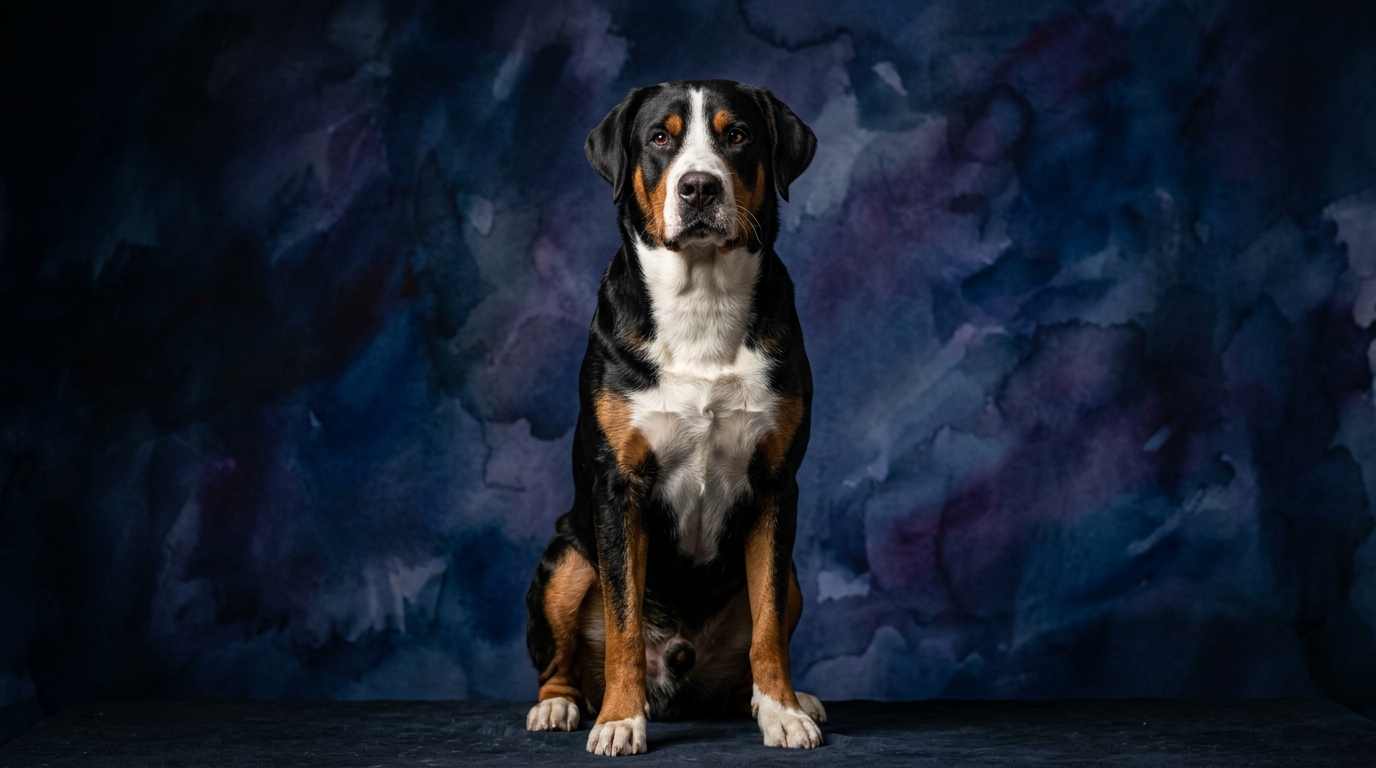
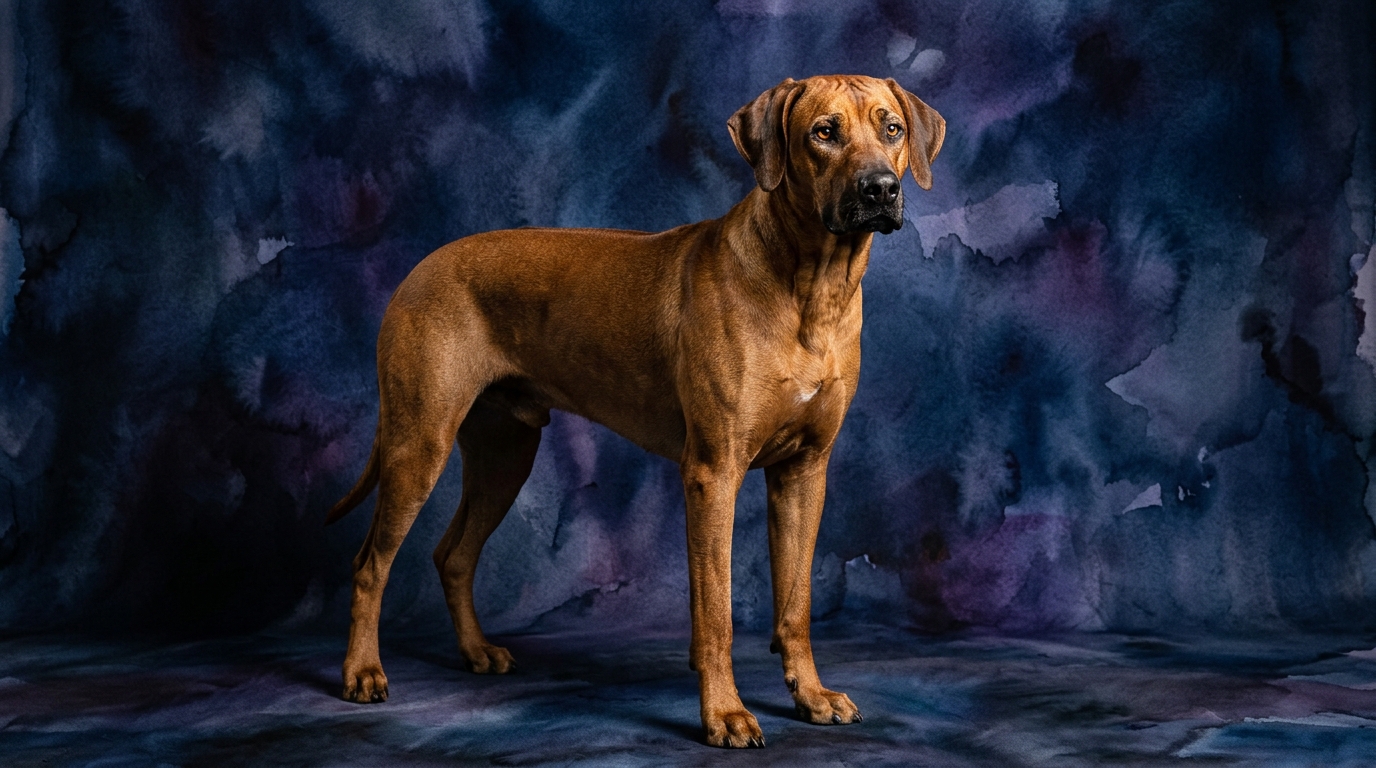
Side-by-Side IQ Profile
To understand these breeds, let's dissect their cognitive makeup according to The Cosmic Pet Pet IQ Lab metrics:
**Greater Swiss Mountain Dog:**
**Problem Solving (3/5):** This breed approaches challenges methodically, relying on physical ability and a desire for structure to find direct, robust solutions within defined frameworks.
**Training Speed (3/5):** Learns at a moderate pace, thriving on consistent, positive reinforcement and clear expectations due to a willingness to cooperate.
**Social Intelligence (3/5):** Possesses solid social awareness, forming deep family bonds and being generally affable, though reserved with strangers.
**Instinctive Drive (3/5):** Moderate drives for guarding, pulling, and sometimes herding, manifesting as a protective nature and desire for purposeful activity.
**Memory (3/5):** Exhibits good memory for commands, routines, and experiences, contributing to their reliability and consistent behavior.
**Rhodesian Ridgeback:**
**Problem Solving (3/5):** Tackles problems with independent thought and persistence, often observing strategically and devising resourceful, unique solutions.
**Training Speed (3/5):0** Learns at a moderate pace, but requires compelling motivation and a nuanced approach due to an independent nature.
**Social Intelligence (3/5):** Displays discerning social intelligence, loyal to family but reserved with strangers, reading intentions well.
**Instinctive Drive (3/5):** Potent drives for prey, tracking, and protection, demanding careful management and appropriate outlets.
**Memory (3/5):** Capable memory, particularly for significant events, routes, and individuals, influencing future responses and interactions.
Where Greater Swiss Mountain Dog Wins Cognitively
While both breeds register a 3/5 across our IQ metrics, the Greater Swiss Mountain Dog's cognitive profile shines in scenarios demanding cooperative effort and structured application of strength. Their problem-solving, rated 3/5, is geared towards practical, direct solutions within a defined framework. For instance, in tasks like pulling a cart or an agility course, a GSMD methodically applies physical prowess and follows commands, preferring established methods over elaborate workarounds. Their 3/5 social intelligence fosters a strong desire to work *with* humans, making them exceptionally attuned to collaborative tasks. This willingness to partner, combined with their 3/5 memory for routines, allows them to excel in consistent, repeatable working roles. They are reliable partners in tasks requiring precision and teamwork, less inclined to "freelance" and more to execute what has been taught.
Where Rhodesian Ridgeback Wins Cognitively
The Rhodesian Ridgeback's cognitive strengths, though numerically similar, manifest differently, particularly in situations demanding independent thought, persistence, and keen sensory processing. Their problem-solving ability, rated 3/5, often involves a self-directed, observational approach. Faced with a puzzle, a Ridgeback might assess and devise a unique strategy using their environment, rather than immediate brute-force. This independence, coupled with their 3/5 instinctive drive for tracking and pursuit, means they excel in tasks where self-motivation and sustained focus are paramount, like scent work or complex outdoor navigation. Their 3/5 memory is adept at recalling environmental details and scent profiles, crucial for their historical role. Their social intelligence, also 3/5, translates into a discerning nature, making independent judgments about new situations. This profile makes them highly capable in autonomous decision-making, leveraging acute senses.
Which is Easier to Train and Why
Despite both having a 3/5 training speed, the "ease" of training differs significantly. The Greater Swiss Mountain Dog generally offers a more straightforward experience. Their working breed heritage instills a strong desire to please and a natural inclination towards cooperation. With consistent positive reinforcement and clear boundaries, a GSMD typically responds with enthusiasm, understanding cause and effect well due to their 3/5 problem-solving and social intelligence. They thrive on routine, making their responses predictable. Conversely, the Rhodesian Ridgeback, while capable, often requires an experienced, patient handler. Their hound lineage fosters greater independence; a Ridgeback might question commands if they don't align with immediate instincts or self-interest. Their 3/5 instinctive drive, especially for scent, demands careful management. Training a Ridgeback necessitates making learning engaging, rewarding, and relevant to their natural drives, requiring more creativity and persistence to maintain focus.
Which Suits Active Owners vs Relaxed Owners
An owner's lifestyle is a key factor. The Greater Swiss Mountain Dog adapts well to moderately active families. Their 3/5 instinctive drive means they appreciate purposeful work like hiking or dog sports, but also value family downtime. Daily exercise is crucial, but they are content relaxing indoors once needs are met. Their 3/5 social intelligence makes them excellent companions, enjoying household activities. Owners who enjoy regular walks and interactive play would find a good match. In contrast, the Rhodesian Ridgeback is suited for highly active owners. Their history as pursuit hunters demands exceptional stamina and extensive physical/mental stimulation. Simple daily walks are insufficient; Ridgebacks require vigorous exercise like long runs, challenging hikes, or demanding sports such as lure coursing. Their 3/5 instinctive drive needs outlets. A sedentary owner would find a Ridgeback demanding, potentially leading to boredom and destructive behaviors.
The Verdict
If you seek a cooperative, dependable family companion who thrives on routine, enjoys moderate activity, and appreciates clear guidance in training, the Greater Swiss Mountain Dog is an excellent choice. They offer robust companionship and a willingness to collaborate.
If you are an experienced, highly active owner prepared to provide extensive physical and mental challenges to an independent, discerning companion with strong natural drives, the Rhodesian Ridgeback will be a rewarding match. They offer unwavering loyalty and a keen, self-reliant spirit.
🧠 Find Your Pet's IQ Score
Our Pet IQ Lab assessment covers 25+ tests across 5 cognitive dimensions — personalized to your breed.
Take the Full IQ Test →Frequently Asked Questions
Do Greater Swiss Mountain Dogs require a lot of grooming?
Greater Swiss Mountain Dogs have a relatively low-maintenance coat. Regular brushing, typically a few times a week, is sufficient to manage shedding and keep their coat healthy. They do not require professional grooming beyond occasional nail trims and ear cleaning.
Are Rhodesian Ridgebacks good with children?
Rhodesian Ridgebacks can be excellent family dogs and are often very loyal to children within their own family. However, due to their size, strength, and protective instincts, supervision is always recommended, especially with very young children. Early socialization is crucial for them to develop good manners.
What kind of exercise is best for a Rhodesian Ridgeback?
Rhodesian Ridgebacks require vigorous and consistent exercise. Activities like long-distance running, extensive hiking, lure coursing, advanced obedience, or scent work are ideal. They benefit from outlets that engage both their physical stamina and their keen tracking and pursuit instincts.