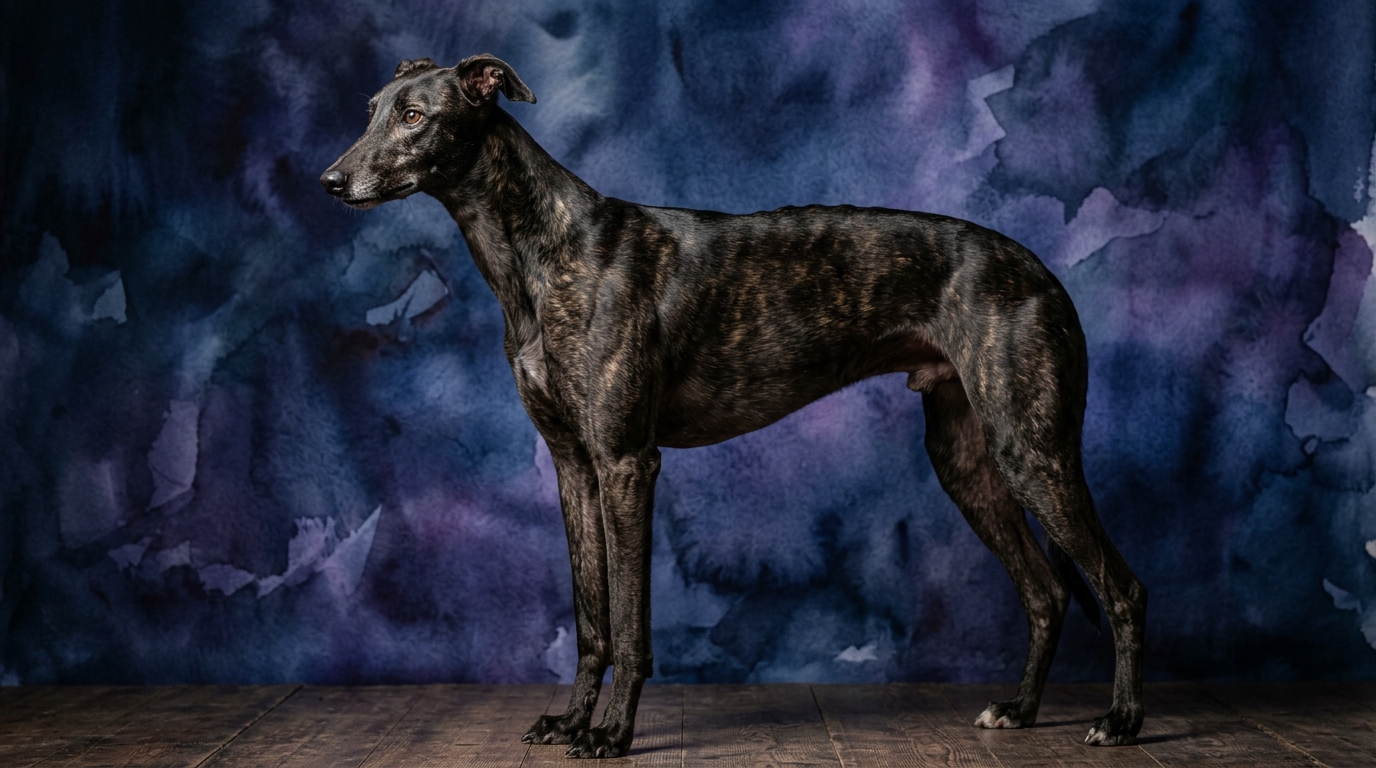
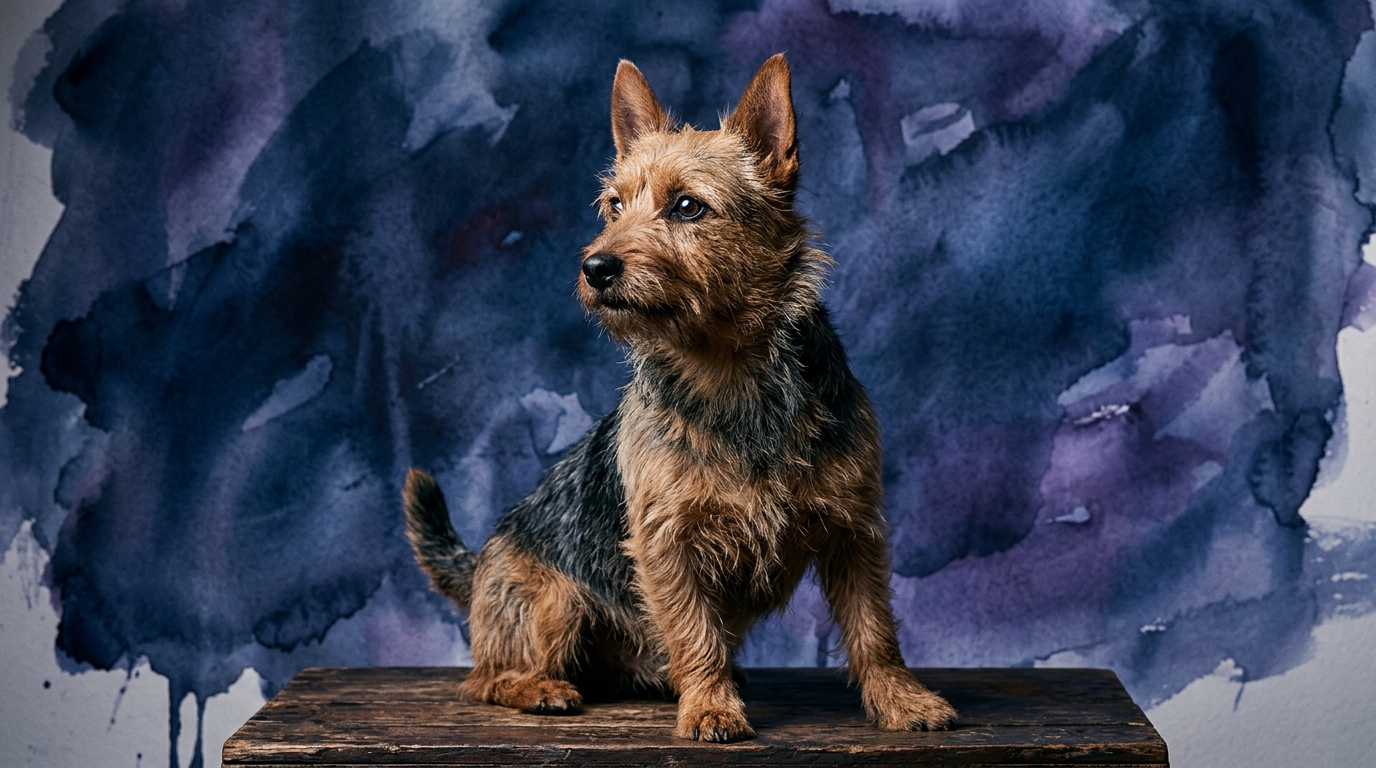
Side-by-Side Cognitive Profiles
At The Cosmic Pet Pet IQ Lab, we analyze canine intelligence across five key dimensions. While both the Greyhound and Australian Terrier possess their own forms of cleverness, their scores reflect vastly different evolutionary pressures and working roles.
The Greyhound, a breed refined for speed and pursuit, holds a respectable Coren rank of #46, indicating an above-average capacity for obedience and working intelligence. Their Problem Solving is rated 3/5, demonstrating an ability to navigate their environment and overcome simple obstacles, often through efficient, direct action rather than complex strategizing. Training Speed is 2/5; while capable of learning, their motivation often lies in self-gratification or the thrill of the chase, rather than a strong desire to please through intricate commands. Social Intelligence stands at 3/5, meaning they are adept at reading human cues and forming deep bonds, though they can be reserved with strangers. Their Instinctive Drive is a commanding 5/5, reflecting an unparalleled genetic predisposition for visual pursuit and speed. Memory is 3/5, allowing them to recall routines, learned behaviors, and significant experiences effectively.
The Australian Terrier, a small but mighty earth dog, is not Coren-ranked, which is common for breeds whose intelligence is geared more towards independent work than complex human-directed obedience. Their Problem Solving is also 3/5, but this manifests as persistent ingenuity in practical tasks, such as locating hidden objects or navigating tight spaces in pursuit of vermin. Training Speed is 3/5, suggesting a moderate pace of learning; they are often eager to engage with their handlers but can exhibit terrier stubbornness. Social Intelligence is 3/5, meaning they are attuned to their family's dynamics and can be quite adaptable in social settings, often displaying a bold and self-assured demeanor. Their Instinctive Drive is 3/5, focused on digging, scent work, and confronting small prey rather than open-field pursuit. Memory is 3/5, providing a solid foundation for remembering commands, routines, and significant events within their environment.
Where the Greyhound Excels Cognitively
The Greyhound's most pronounced cognitive advantage lies in its Instinctive Drive (5/5). This isn't merely physical speed; it represents a sophisticated cognitive architecture for processing visual stimuli at high velocity, predicting prey movement, and executing precise chase sequences. Their brains are uniquely wired for this specific, high-stakes cognitive task, making them masters of the open field pursuit.
Their Coren ranking of #46, while not top-tier, places them significantly higher than many breeds, including the unranked Australian Terrier, in their capacity for working and obedience intelligence. This indicates a foundational ability to understand and consistently execute human commands in structured environments, even if their natural inclinations sometimes overshadow this capacity. When motivated, their cognitive ability to follow complex sequences can be quite profound.
In certain contexts, the Greyhound's problem-solving (3/5) also shows a distinct efficiency. Rather than elaborate schemes, their cognitive approach often prioritizes directness and energy conservation. This manifests as an innate ability to find the most efficient path in a race or the quickest way to return to comfort, showcasing a pragmatic, results-oriented form of intelligence geared towards their specific needs and desires.
Where the Australian Terrier Shows Cognitive Strengths
Despite sharing a 3/5 score for Problem Solving, the Australian Terrier's cognitive strength in this area is characterized by tenacious, independent ingenuity. Their historical role as vermin hunters required them to figure things out on their own, whether it was how to access a burrow, navigate complex terrain, or outsmart small prey. This showcases a persistent, self-directed form of cognitive engagement that prioritizes practical, environmental challenges.
The Australian Terrier's Training Speed (3/5) offers a slight edge over the Greyhound's 2/5, suggesting a greater responsiveness to interactive learning. While their terrier independence means training must be engaging and consistent, their desire for interaction and 'work' with their person can lead to faster acquisition of commands. They thrive on mental challenges and the cooperative aspect of training, making them often appear more eager to learn new tasks.
In terms of Social Intelligence (3/5), the Australian Terrier often exhibits a robust and adaptive understanding of their family's social dynamics. They are known for their bold 'big dog personality' in a small package, readily expressing a wide range of emotions and intentions. This strong social acumen allows them to integrate seamlessly into diverse family settings, often becoming a spirited and communicative member of the household, attuned to subtle human cues and ready to participate.
Training: Greyhound vs. Australian Terrier
When considering ease of training, the Australian Terrier generally presents as more straightforward due to their slightly higher Training Speed score of 3/5. Their natural inclination for interaction and a desire to engage with their owner can make them more receptive to consistent, positive reinforcement. While their terrier stubbornness means training must be varied and captivating, their inherent spunk and desire for a 'job' make them willing participants in learning new commands and tricks, often picking up new concepts with enthusiasm.
The Greyhound, with a Training Speed of 2/5, requires a more nuanced approach. Their primary cognitive focus is often on visual stimuli and the pursuit instinct, which can lead to 'selective deafness' when their sighthound drives are activated. They are capable of learning, as evidenced by their Coren rank, but their motivation for obedience is often linked to comfort, routine, or high-value rewards, rather than an innate eagerness to perform complex obedience for its own sake. Training Greyhounds demands immense patience, positive reinforcement, and a deep understanding of their unique motivations and instincts.
Ultimately, while both breeds benefit from dedicated owners, the Australian Terrier's more interactive and 'work-oriented' nature often makes them appear easier to train for those seeking a dog eager to learn and participate in various activities. Greyhounds, while profoundly affectionate, will challenge an owner to respect their independent spirit and channel their intelligence in ways that align with their inherent drives.
Lifestyle Match: Active vs. Relaxed Owners
For the active owner, both breeds offer engagement, but in different forms. An active owner who enjoys short, exhilarating bursts of speed and then a calm companion would find a Greyhound a perfect fit. Greyhounds require opportunities for intense, full-speed sprints in a safe, enclosed area, but are not built for endurance running or prolonged strenuous activity. Their 'active' is about explosive power, not sustained exertion.
Conversely, an Australian Terrier suits an active owner who enjoys consistent daily walks, interactive play, and mental challenges. Their activity is more about sustained moderate energy, exploration, and engagement, rather than raw speed. They thrive on having a 'job' and participating in their owner's daily life, making them ideal for someone who wants a spirited companion for adventures and consistent interaction.
For the relaxed owner, the Greyhound is often dubbed a '45 mph couch potato.' After their necessary bursts of exercise, they are incredibly calm, quiet, and content to lounge indoors. They adapt remarkably well to apartment living, provided their specific exercise needs are met. The Australian Terrier is less suited for a truly 'relaxed' owner in terms of minimal interaction; while small, their terrier nature demands consistent mental stimulation, training, and a sense of purpose to prevent boredom-induced behaviors. A relaxed owner must still be prepared for daily engagement and activity with an Aussie.
The Verdict: Choosing Your Companion
The Verdict
Choose a Greyhound if you seek an elegant, serene companion content with quiet indoor life after their necessary bursts of speed, appreciating their independent spirit and providing a safe, secure environment for their innate chase drive.
Opt for an Australian Terrier if you desire a lively, tenacious, and highly interactive small dog that thrives with consistent engagement, mental stimulation, and a bold personality ready for adventure and companionship.
🧠 Find Your Pet's IQ Score
Our Pet IQ Lab assessment covers 25+ tests across 5 cognitive dimensions — personalized to your breed.
Take the Full IQ Test →Frequently Asked Questions
Are Greyhounds good apartment dogs?
Yes, surprisingly. Despite their size, Greyhounds are often calm indoors, requiring short bursts of exercise rather than constant activity. As long as they have a safe space to sprint occasionally, they adapt well to smaller living spaces.
Do Australian Terriers bark a lot?
Australian Terriers can be vocal, especially when alerting to perceived intruders or when bored. Their terrier instincts make them keen watchdogs, but consistent training and mental stimulation can help manage excessive barking.
Which breed is better with children?
Both breeds can be good with children, but their approaches differ. Greyhounds are generally gentle and tolerant, while Australian Terriers are sturdy and playful, often enjoying interactive games. Supervision is always recommended with any dog and child.