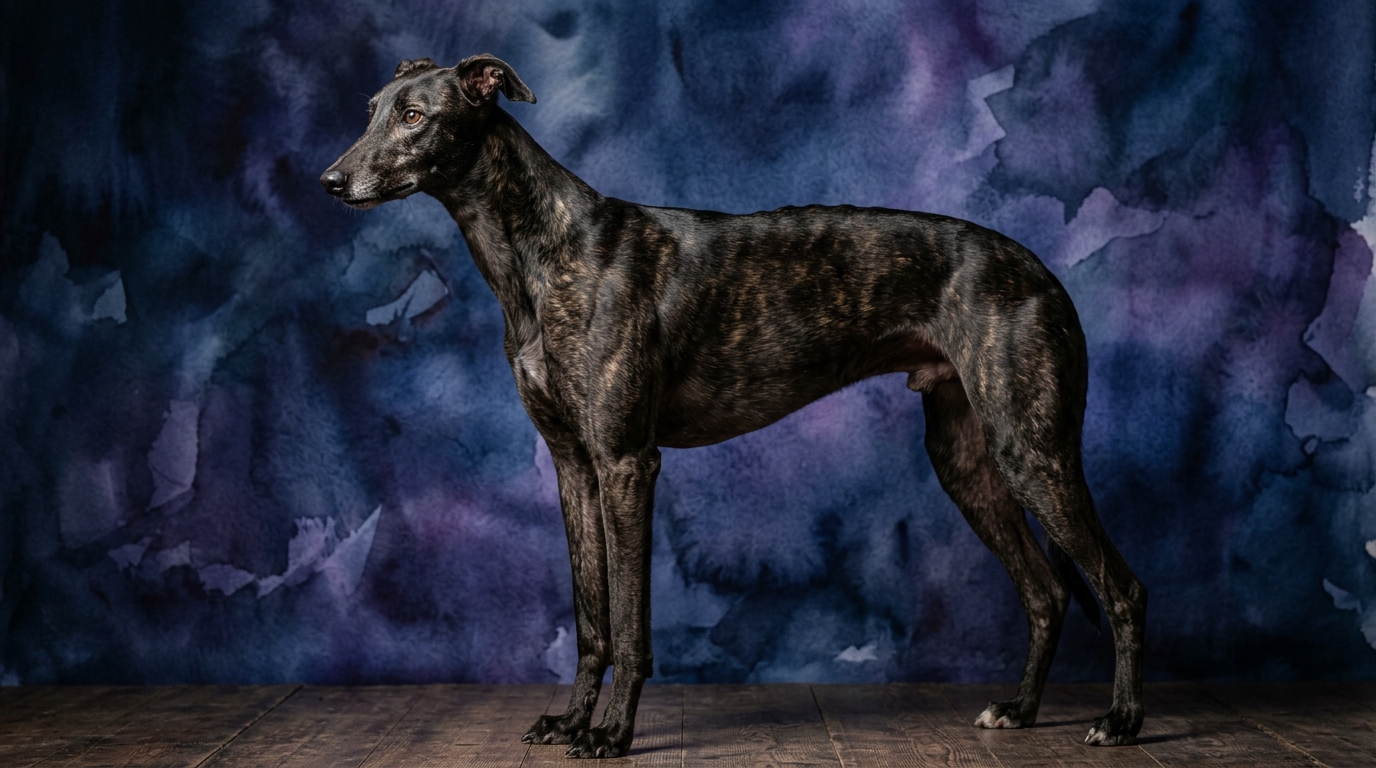
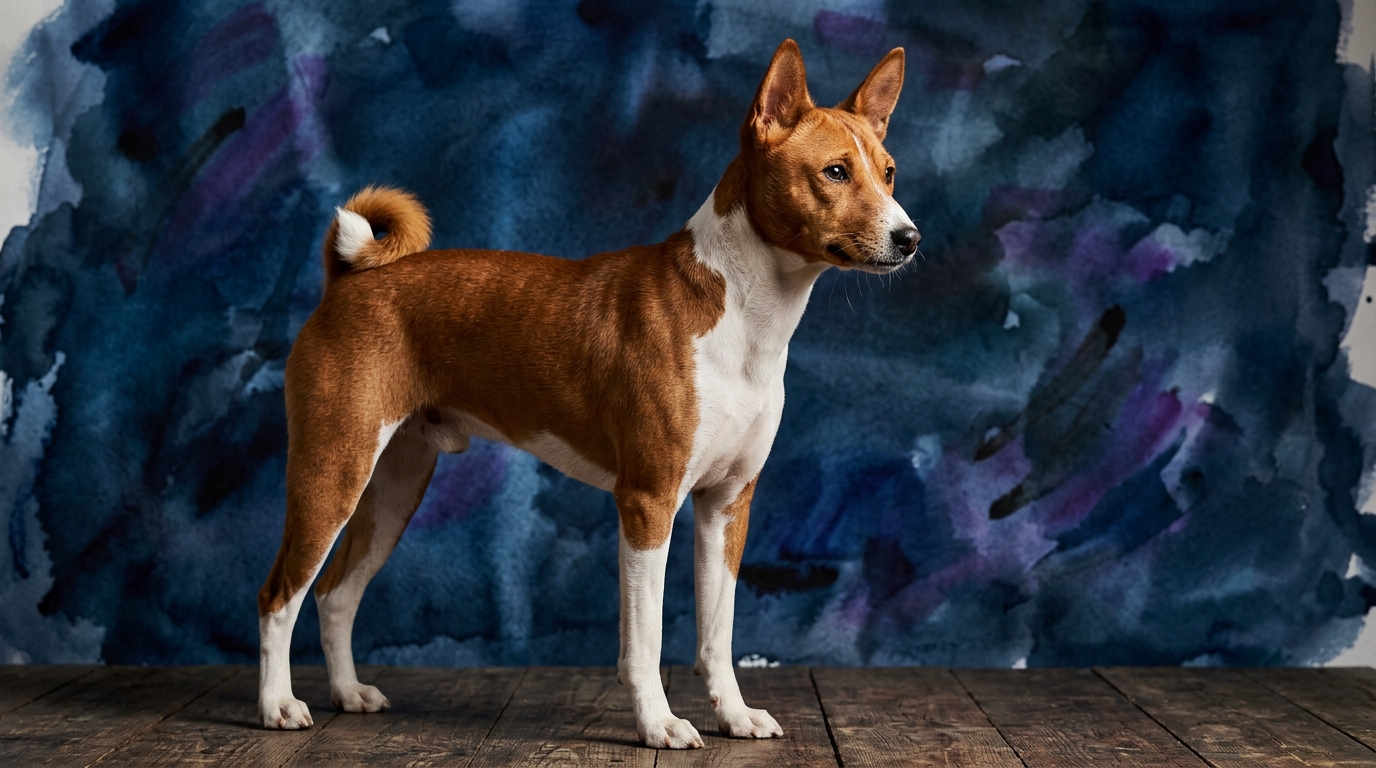
Side-by-Side Cognitive Profiles
The Cosmic Pet Pet IQ Lab's framework offers a detailed look at how these two breeds process the world. The Greyhound, ranked #46 by Coren, exhibits a balanced cognitive profile suited for cooperative tasks, while the Basenji, at #78, displays a more independent and resourceful intelligence.
For the **Greyhound**, Problem Solving is rated 3/5, indicating a moderate capacity to navigate new challenges, often relying on learned patterns rather than inventing novel solutions. Training Speed is 2/5, meaning they require more repetition to master new commands, though they are generally willing to engage. Social Intelligence stands at 3/5, suggesting they understand human cues and form bonds, but might not be overtly demonstrative. Their Instinctive Drive is a powerful 5/5, reflecting their profound prey drive and chase instincts. Memory is 3/5, an average retention of experiences and learned behaviors.
The **Basenji** presents a contrasting picture. Their Problem Solving is an impressive 5/5, showcasing an exceptional ability to devise creative solutions to complex situations, often thinking several steps ahead. However, Training Speed is a low 1/5, highlighting their independent nature and reluctance to consistently follow commands without perceived benefit. Social Intelligence, like the Greyhound, is 3/5, indicating an understanding of social dynamics but often on their own terms. Instinctive Drive is also a dominant 5/5, a testament to their deep-seated hunting heritage. Their Memory is a strong 4/5, allowing them to recall past events and routines with remarkable clarity, sometimes holding grudges or remembering past injustices.
Where the Greyhound Excels Cognitively
The Greyhound's cognitive strengths lie in its cooperative spirit and capacity for focused execution. While their problem-solving isn't as spontaneous as the Basenji's, their moderate rating of 3/5 means they are perfectly capable of learning and applying solutions within a structured environment. Their edge often comes from their relative amenability to direction. A Greyhound will typically respond more readily to a known command or procedure, making them more predictable in their cognitive responses. This willingness to work alongside a human, rather than constantly evaluating the directive, allows them to excel in tasks requiring consistent application of learned skills.
Their 2/5 training speed, while not top-tier, is significantly higher than the Basenji's. This translates into a quicker uptake of basic obedience and a more straightforward path to establishing routines. A Greyhound can be taught complex lure coursing patterns or specific racing protocols with patience, relying on their memory and responsiveness to cues. They are less likely to deliberately 'unlearn' a command or find an alternative, unauthorized method of achieving a goal, which can be a hallmark of more independent thinkers. This makes their cognitive output more reliable for owners seeking a responsive companion.
Where the Basenji Shows Superior Cognitive Prowess
The Basenji's cognitive brilliance shines in its extraordinary problem-solving ability, rated a perfect 5/5. This breed doesn't just learn; it reasons. Faced with an obstacle, a Basenji is likely to analyze the situation, experiment with different approaches, and often devise an ingenious, albeit sometimes mischievous, solution. This might involve figuring out how to open complex latches, scale fences, or outsmart conventional barriers to reach a desired object or location. Their mind is constantly active, seeking out puzzles to solve, which can be both captivating and challenging for their human companions.
Furthermore, the Basenji's superior memory (4/5) complements its problem-solving skills, allowing them to retain complex information and past experiences with remarkable detail. They remember what worked, what didn't, and who was responsible for what. This means they can learn from previous attempts, refine their strategies, and even recall specific events or cues from long ago. This combination of high-level problem-solving and excellent memory contributes to their reputation as independent thinkers, capable of navigating complex environments and social situations with a self-assured, often calculating, approach.
Training: Greyhound vs. Basenji Responsiveness
When it comes to trainability, the Greyhound generally presents a more straightforward experience than the Basenji. The Greyhound's training speed of 2/5, while not exceptional, signifies a willingness to learn and a capacity for repetition. They respond to positive reinforcement and clear directives, and their Coren rank of #46 suggests a reasonable aptitude for following human commands. While they might require more repetitions than some breeds to solidify a behavior, they are typically eager to please and enjoy the interaction of training sessions. Owners can expect a Greyhound to eventually grasp and consistently perform a range of obedience commands with patience.
The Basenji, on the other hand, is famously more challenging to train, with a training speed of 1/5. Their formidable problem-solving skills and strong independent streak often lead them to question commands or find alternative methods. They are less driven by a desire to please and more by their own perceived advantage or interest. This can manifest as 'selective hearing,' where they choose to ignore commands if something more stimulating captures their attention. Training a Basenji requires immense creativity, consistency, and a deep understanding of their unique motivations. They excel with clicker training, lure training, and puzzle-based learning, where they feel they are solving the problem themselves, rather than merely complying with an order.
Matching Breeds to Owner Lifestyles
Considering their cognitive profiles, Greyhounds and Basenjis suit different types of owners. The Greyhound, despite its speed, often thrives with owners who appreciate a calm indoor companion that enjoys bursts of intense outdoor activity. Their moderate social intelligence and willingness to follow direction make them suitable for owners who seek a dog that integrates smoothly into a routine and is generally cooperative. They need secure spaces for running, but within the home, they are often surprisingly mellow and content to lounge. An owner who enjoys structured walks and occasional, safe off-leash sprints will find a Greyhound rewarding, appreciating their quiet companionship.
The Basenji is better suited for active owners who relish a mental challenge and can provide consistent, engaging stimulation. Their high problem-solving ability means a bored Basenji will invent its own entertainment, which can often be destructive or lead to escape attempts. Owners who enjoy puzzle toys, advanced obedience, agility, or scent work will find the Basenji's sharp mind a joy to engage. They require an owner who understands and respects their independent nature, is committed to creative training methods, and can manage a dog that thrives on figuring things out for itself. This breed is for those who appreciate a clever, often self-sufficient companion that demands thoughtful interaction.
The Verdict
Choose a Greyhound if you desire a generally calm, cooperative companion who enjoys routine and can be trained with consistent effort, offering rewarding, though not demanding, interaction.
Opt for a Basenji if you are an experienced, active owner who thrives on engaging a highly intelligent, independent thinker with complex puzzles and creative training, appreciating their self-assured nature.
🧠 Find Your Pet's IQ Score
Our Pet IQ Lab assessment covers 25+ tests across 5 cognitive dimensions — personalized to your breed.
Take the Full IQ Test →Frequently Asked Questions
Are Greyhounds truly 'lazy' indoors?
While Greyhounds are known for their incredible speed outdoors, they are often surprisingly calm and relaxed indoors, frequently referred to as '45-mph couch potatoes.' They require bursts of intense exercise but are content to lounge for much of the day, making them excellent companions for quieter households.
Why are Basenjis considered so difficult to train?
Basenjis are often considered challenging to train due to their high problem-solving skills and strong independent streak. They are not as motivated by a desire to please as many other breeds and tend to evaluate commands based on their own perceived benefit, often leading to selective hearing or creative disobedience.
Do both breeds have a strong prey drive?
Yes, both Greyhounds and Basenjis exhibit a very strong instinctive drive (5/5), particularly a high prey drive. As sighthounds, they are bred to spot and chase moving objects, which means secure fencing and leashed walks are crucial for their safety and to prevent them from pursuing perceived prey.