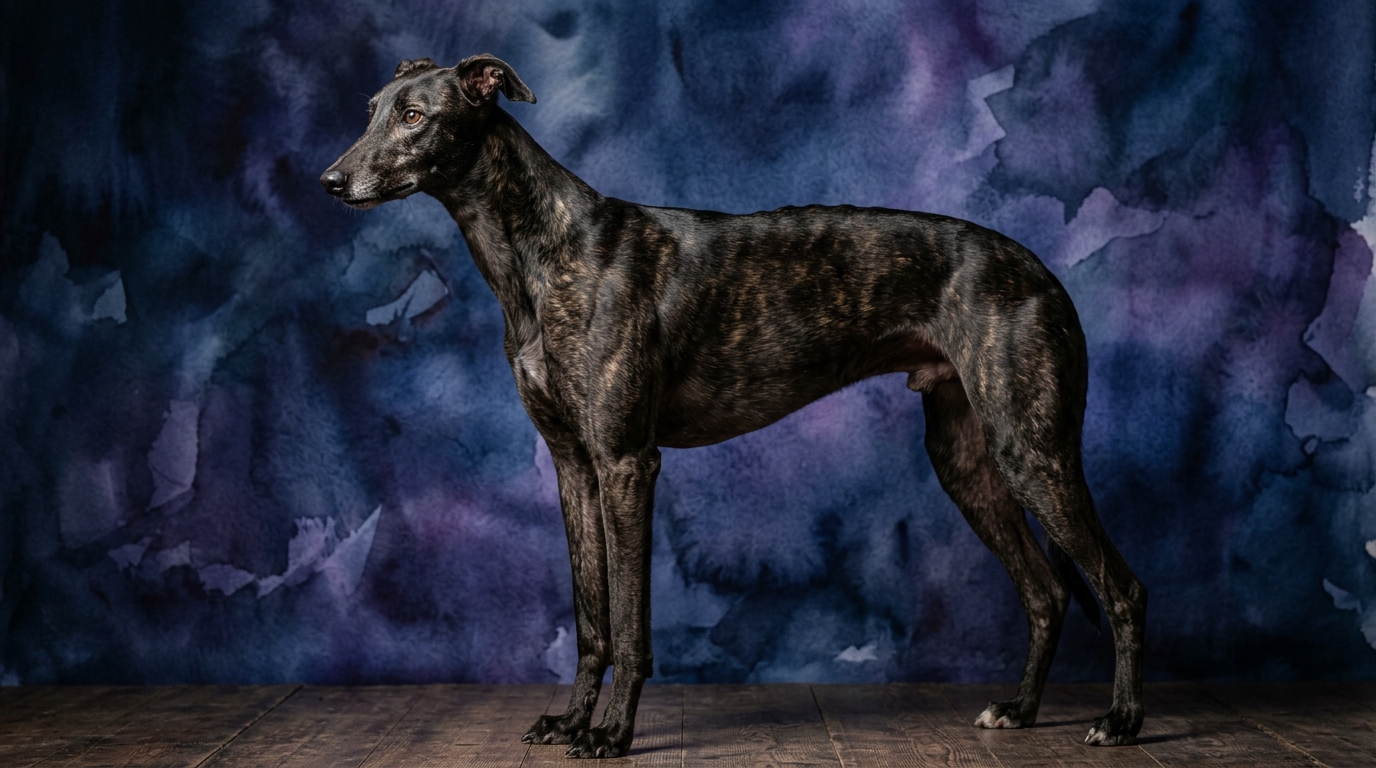
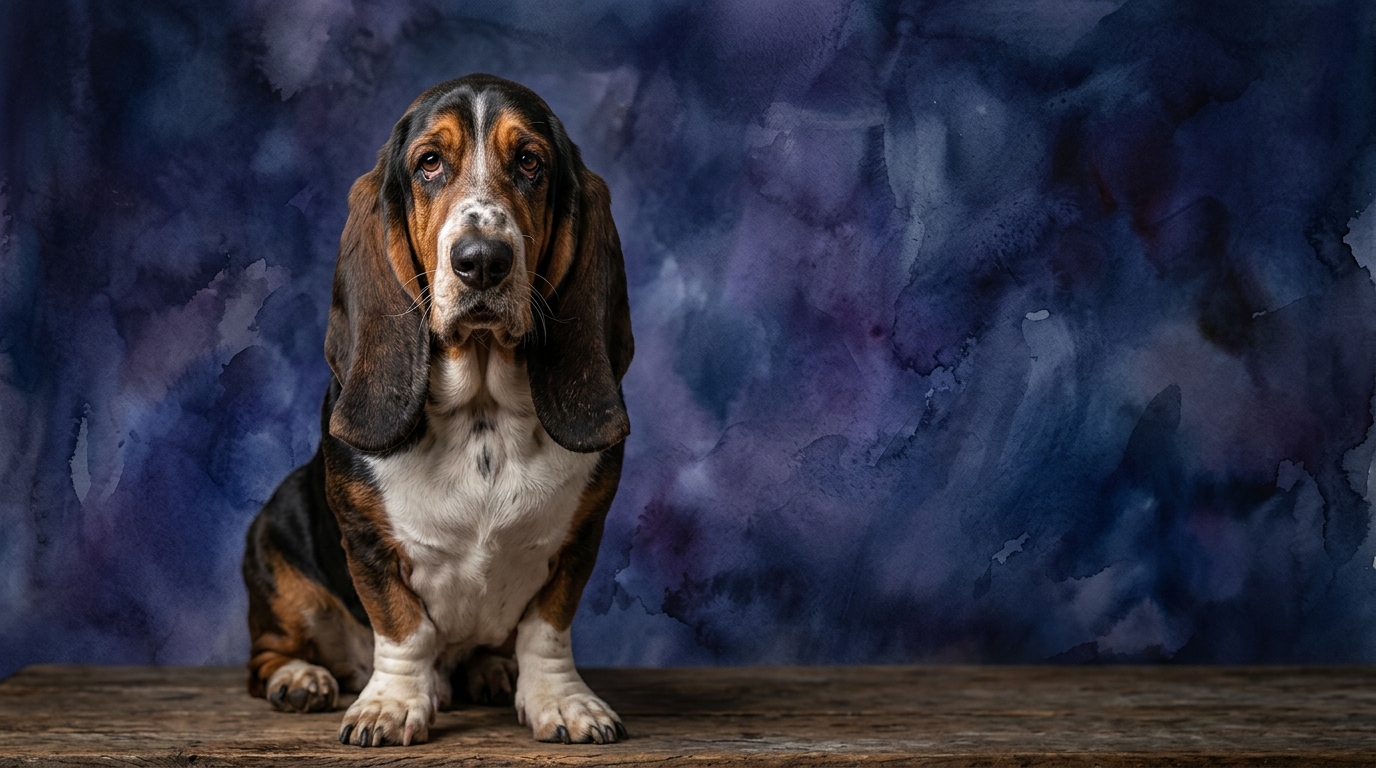
Side-by-Side Cognitive Profile: Greyhound vs. Basset Hound
Our Cosmic Pet IQ Lab framework evaluates canine intelligence across five key dimensions, allowing for a nuanced understanding beyond simple ranking. The Greyhound, with a Coren ranking of #46, demonstrates a capable working and obedience intelligence, while the Basset Hound, at #71, occupies a slightly different cognitive niche. Let's break down their specific scores.
When it comes to Problem Solving, both breeds register a 3/5. This suggests an adequate capacity for navigating novel situations or figuring out how to achieve a goal, though their approaches might differ significantly based on their primary senses and drives. Neither breed is typically described as a master escape artist or a puzzle savant, but they can learn to adapt.
Training Speed is where we see a distinct difference: the Greyhound scores 2/5, while the Basset Hound scores 3/5. This metric reflects how quickly a breed grasps new commands and associates actions with consequences. A lower score for the Greyhound implies they may require more repetitions or different motivational strategies to internalize new behaviors compared to the Basset Hound.
Social Intelligence is identical for both breeds, at 3/5. This indicates a moderate ability to understand human cues, interact appropriately within a social structure, and form bonds. They are not typically aloof nor overly dependent, generally fitting comfortably into a family unit with clear communication.
The most striking divergence lies in Instinctive Drive, with the Greyhound scoring a powerful 5/5 compared to the Basset Hound's 3/5. For Greyhounds, this reflects their profound sighthound heritage, a deeply ingrained drive to chase anything that moves quickly. For Bassets, it speaks to their persistent, methodical scent-tracking capabilities, a different manifestation of instinctual work.
Finally, Memory for both breeds sits at 3/5. This suggests they possess a solid capacity to recall learned commands, routines, and past experiences over time. Neither is particularly prone to forgetting established behaviors, nor do they exhibit exceptional long-term recall for complex sequences, placing them squarely in the middle.
Where the Greyhound's Cognitive Strengths Shine
The Greyhound's dominant cognitive strength unequivocally lies in its Instinctive Drive (5/5), which is intricately tied to its visual processing and rapid physical response. Their brains are wired for speed, not just in their limbs but in their visual cortex. They possess an unparalleled ability to scan horizons, detect subtle movements at a distance, and process environmental changes with incredible swiftness, making split-second decisions for pursuit. This isn't just a physical trait; it's a profound cognitive adaptation for survival as a sighthound.
While their Problem Solving score is 3/5, this often manifests in spatial awareness and navigating complex environments at high velocity. A Greyhound might not solve a puzzle box, but it can strategize the quickest route across an open field, anticipating the trajectory of a lure or perceived prey. Their memory (3/5) serves them well in recalling the layout of familiar running areas or the sequence of a lure course, allowing them to optimize their performance.
Their Coren rank of #46, despite a lower training speed, indicates a capacity for understanding and executing commands once their attention is captured and the motivation is aligned. They can learn complex sequences for racing or coursing, demonstrating a focused application of their cognitive resources when their primal drive is engaged. Their intelligence is less about eager compliance and more about efficient, targeted action.
Where the Basset Hound's Cognitive Strengths Take the Lead
The Basset Hound's cognitive prowess is a testament to focused, sustained attention, primarily driven by their profound olfactory capabilities. Their Instinctive Drive (3/5) may score lower than the Greyhound's, but it represents a deep, unwavering commitment to scent work. Their brains are finely tuned instruments for scent discrimination, allowing them to follow a cold trail for extended periods, ignoring visual and auditory distractions that would derail many other breeds. This requires immense cognitive focus and a methodical problem-solving strategy centered on olfactory data.
Their Problem Solving (3/5) often manifests in navigating complex scent puzzles, unraveling a labyrinth of smells to isolate a specific target. This isn't about speed, but about persistence and analytical scent processing. A Basset will meticulously work through a trail, demonstrating a unique form of cognitive endurance that few breeds possess. Their memory (3/5) aids them in recalling specific scent signatures or previously worked areas, enhancing their tracking efficiency.
The Basset Hound also edges out the Greyhound in Training Speed (3/5 vs. 2/5), suggesting a greater amenability to learning new commands in a structured environment. This, combined with their 3/5 Social Intelligence, implies they are generally more inclined to engage with human instruction when presented with positive reinforcement, particularly food rewards. Their intelligence is less about explosive action and more about patient, dedicated sensory work and cooperative learning.
Which is Easier to Train and Why: Behavioral Differences
Assessing ease of training requires understanding a breed's core motivations and attentional focus. The Basset Hound generally presents as the easier breed to train, primarily due to their higher Training Speed score of 3/5 and a more moderate Instinctive Drive (3/5). Bassets are often motivated by food and comfort, making reward-based training highly effective. Their persistence, while challenging if they fixate on a scent, can be harnessed into focused learning sessions, especially when the environment is calm and free of competing olfactory stimuli. They tend to be less prone to sudden, uncontrollable bursts of independent action when a visual trigger appears, unlike their sighthound counterparts.
Conversely, the Greyhound, with a Training Speed of 2/5 and a powerful Instinctive Drive of 5/5, can be more challenging to train in conventional obedience. Their profound sighthound nature means their attention can be instantly diverted by movement. A squirrel darting across the yard will almost always take precedence over a 'sit' command, regardless of prior training. This isn't a lack of intelligence, but a hardwired prioritization of their predatory instinct. Successful Greyhound training requires immense patience, understanding of their independent spirit, and a consistent, positive reinforcement approach that acknowledges their sighthound needs. Secure, enclosed spaces for off-leash exercise are crucial, as their recall can be unreliable if their chase drive is triggered.
Cognitive Fit: Active vs. Relaxed Owners
Matching a dog's cognitive profile to an owner's lifestyle is key for mutual contentment. For owners seeking a more relaxed pace, the Basset Hound is often a natural fit. Their Instinctive Drive (3/5), while persistent, translates to a slower, methodical engagement with the world through scent. They thrive on long, leisurely 'sniffaris' where they can explore a rich tapestry of smells, fulfilling their cognitive need for tracking without requiring high-impact physical exertion. After their scent-work, they are typically content to relax, making them excellent companions for quieter households, provided their distinctive vocalizations are understood.
For owners with a nuanced understanding of canine activity, Greyhounds can surprisingly suit both active and more relaxed lifestyles, though with specific considerations. While their Instinctive Drive (5/5) demands outlets for their incredible speed and visual processing, they are often described as '45 mph couch potatoes.' This means they require intense, short bursts of exercise in a secure environment (like a fenced yard or lure coursing track) to satisfy their sighthound instincts. Once these needs are met, they are typically calm, quiet, and content to lounge indoors, making them suitable for owners who appreciate their serene indoor demeanor but can provide structured, high-energy mental and physical stimulation when required. Active owners might enjoy engaging in lure coursing or fast fetch games, while relaxed owners might appreciate their quiet presence after a good run.
The Verdict
Choose a Greyhound if you appreciate a serene indoor companion who needs specific, high-intensity outlets for their profound visual and chase instincts, and you are prepared for their independent training approach. They offer a unique blend of athleticism and calm.
Opt for a Basset Hound if you desire a patient, scent-driven companion who enjoys methodical exploration and cooperative learning, fitting well into a more relaxed lifestyle where their vocalizations and dedicated sniffing are embraced.
🧠 Find Your Pet's IQ Score
Our Pet IQ Lab assessment covers 25+ tests across 5 cognitive dimensions — personalized to your breed.
Take the Full IQ Test →Frequently Asked Questions
Do Greyhounds need a lot of exercise?
Greyhounds are often called '45 mph couch potatoes.' They require short bursts of intense exercise, such as sprinting in a securely fenced area or lure coursing, to satisfy their powerful instinctive drive. Once these needs are met, they are typically calm and enjoy lounging indoors.
Are Basset Hounds difficult to train due to their stubbornness?
Basset Hounds have a moderate training speed (3/5) and can be quite amenable to training, especially with positive reinforcement like food rewards. Their 'stubbornness' is often a manifestation of their strong instinctive drive to follow a scent, which can make them less responsive when distracted, but they are capable learners.
Which breed is better with other pets?
Both breeds have a social intelligence of 3/5, suggesting they can coexist well with other pets with proper introductions. However, a Greyhound's high prey drive (5/5) means careful supervision is crucial around smaller, fast-moving animals. Basset Hounds are generally more tolerant, though their scent drive might lead them to ignore other pets when on a trail.