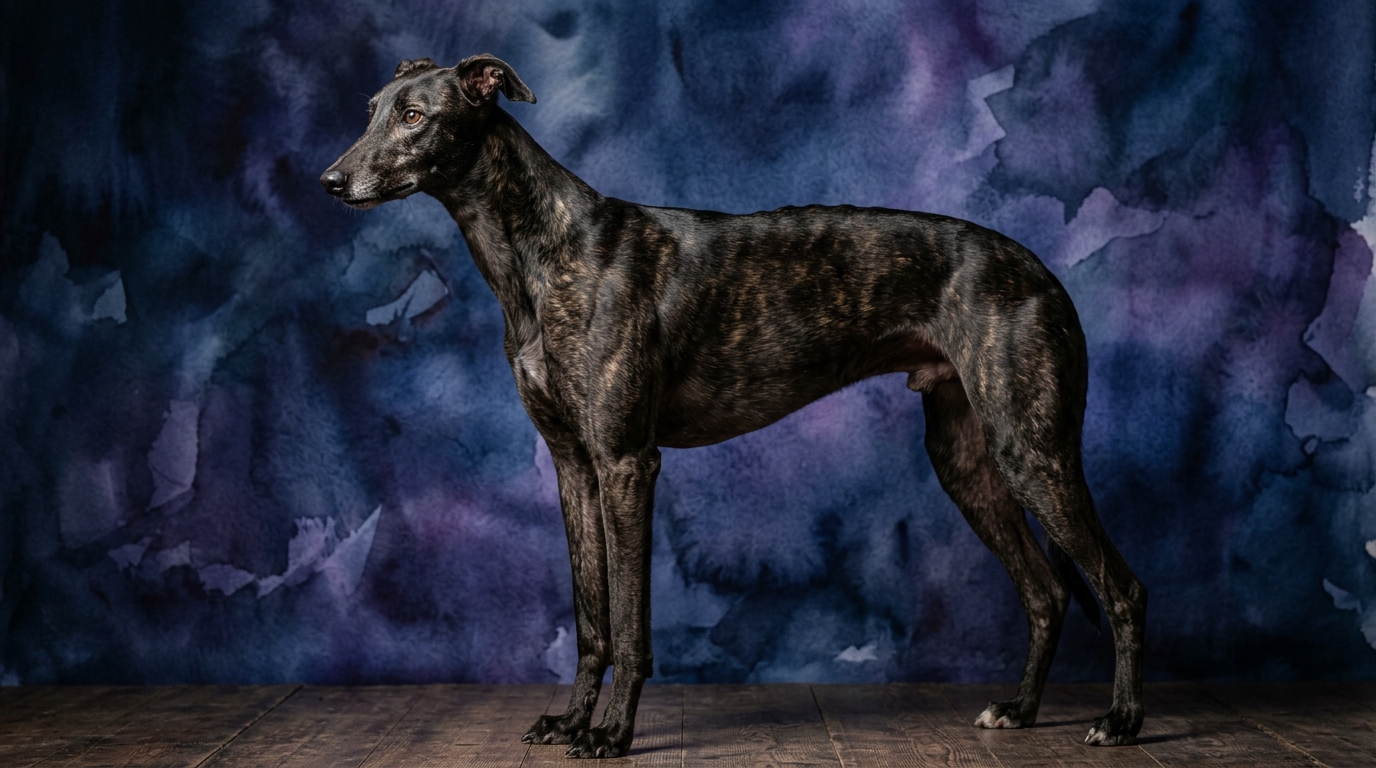

Side-by-Side IQ Profile: Greyhound vs. Belgian Sheepdog (Groenendael)
To truly understand the cognitive landscape of these two distinct breeds, we must examine their individual scores across five key dimensions of intelligence. The Greyhound, ranked #46 by Coren, presents a profile honed for independent pursuit and explosive speed. Its Problem Solving ability scores 3/5, indicating a capacity for practical, immediate solutions, often related to physical obstacles or prey capture, rather than abstract or multi-step tasks. Training Speed is rated 2/5, suggesting that while Greyhounds can learn, they often require more repetition and patience, reflecting their independent nature rather than a strong desire to please or work in close partnership. Social Intelligence, at 3/5, points to an awareness of their human companions and environment, but perhaps less overt engagement or nuanced interpretation of human cues compared to other breeds. The Greyhound's Instinctive Drive is a powerful 5/5, primarily manifesting as an intense prey drive and an urge to chase anything that moves quickly. Finally, Memory at 3/5 means they retain routines and basic commands well, but might not excel at recalling complex sequences or intricate past events with the same precision as other breeds.
In stark contrast, the Belgian Sheepdog (Groenendael), a herding breed with a Coren rank of #15, showcases a cognitive design focused on intricate work and partnership. Their Problem Solving ability is a remarkable 5/5, indicating a strong capacity for complex, adaptive thought, enabling them to strategize in dynamic situations, such as herding livestock or navigating elaborate obedience courses. Training Speed is also 5/5, highlighting their eagerness to learn, quick grasp of new commands, and responsiveness to instruction, making them highly biddable. Social Intelligence, at 3/5, is similar to the Greyhound in its numerical score, but often manifests differently; Groenendaels are sensitive to their handler's moods and intentions, forming deep bonds, though they can be reserved with strangers. Their Instinctive Drive, rated 3/5, is primarily expressed through herding behaviors, protective instincts, and a strong work ethic, rather than a raw, unbridled chase drive. Memory, at a perfect 5/5, allows Groenendaels to recall a vast repertoire of commands, intricate sequences, and past experiences with impressive accuracy, crucial for their roles in advanced training and competitive sports.
Where the Greyhound Excels Cognitively
The Greyhound's cognitive strengths lie squarely in its ancestral role as a sighthound. Its 5/5 Instinctive Drive for pursuit is not merely physical; it's deeply integrated with its problem-solving and environmental awareness. When a Greyhound spots movement, its brain rapidly processes distance, speed, and trajectory, initiating an immediate, highly efficient chase sequence. This isn't abstract thought, but rather an incredibly specialized, real-time cognitive function essential for its survival and success in hunting. Their intelligence is about efficient, independent action in high-speed scenarios, making split-second decisions about terrain and evasive maneuvers without needing human input. They excel at recognizing and reacting to subtle environmental cues, like changes in wind direction or faint movements in the distance, which are critical for tracking and pursuit.
Where the Belgian Sheepdog (Groenendael) Shines Cognitively
The Belgian Sheepdog (Groenendael) demonstrates its cognitive prowess in areas demanding complex planning, rapid learning, and robust memory. Their 5/5 Problem Solving capacity allows them to strategize in dynamic herding situations, anticipating the movements of livestock and adjusting their tactics on the fly. This isn't just reacting; it's proactive, multi-step thinking. Their 5/5 Training Speed means they quickly form associations between commands and actions, absorbing new information with remarkable efficiency. This is coupled with a 5/5 Memory, enabling them to retain extensive repertoires of commands, intricate routines, and past experiences. This combination makes them exceptional candidates for advanced obedience, agility, protection work, and service roles, where a vast memory and the ability to apply learned solutions to novel problems are paramount. They thrive on mental challenges that require sustained focus and understanding of complex instructions.
Training Dynamics: Which is Easier and Why?
Based on their Training Speed scores, the Belgian Sheepdog (Groenendael) (5/5) is unequivocally easier to train than the Greyhound (2/5) in terms of rapidly acquiring new commands and performing complex sequences. The Groenendael possesses a strong innate desire to work closely with its handler, often seeking guidance and thriving on the mental engagement of training. Their high problem-solving ability allows them to grasp concepts quickly and generalize learned behaviors to new situations with minimal repetition. They are often described as 'biddable,' meaning they are eager to please and responsive to direction, making them highly rewarding for experienced trainers seeking a canine partner for advanced disciplines.
The Greyhound, by contrast, approaches training with a more independent mindset. Their lower training speed score doesn't imply a lack of capacity to learn, but rather a need for more patient, consistent, and often reward-based methods. Their primary motivation is not necessarily to please, but rather to pursue their own interests, particularly anything that triggers their powerful instinctive drive. While they can master basic obedience, teaching them complex, multi-step commands or intricate routines may require significantly more time and creative approaches to maintain their engagement, as their attention is more easily diverted by external stimuli, especially visual ones.
Matching Breeds to Lifestyles: Active vs. Relaxed Owners
The choice between a Greyhound and a Belgian Sheepdog (Groenendael) largely depends on the owner's lifestyle and their capacity for canine engagement. For owners who are active in bursts and appreciate a dog that can quickly switch to a relaxed, calm indoor demeanor, the Greyhound might be an excellent fit. They require short, intense periods of exercise – a sprint in a securely fenced area or a brisk walk – followed by long stretches of napping. Their independence means they don't constantly demand interaction, fitting well with owners who enjoy a dog's presence without constant hands-on engagement. However, 'relaxed' does not mean neglecting their powerful prey drive, which requires careful management and secure environments.
Conversely, the Belgian Sheepdog (Groenendael) is suited for highly active owners who are prepared for significant daily physical and mental engagement. These dogs thrive on sustained activity, whether it's long hikes, running, or participating in dog sports like agility, obedience, or protection work. Their high problem-solving ability, training speed, and memory mean they require consistent mental stimulation to prevent boredom and destructive behaviors. An owner who enjoys a deeply involved partnership, dedicating time to advanced training and regular, vigorous exercise, will find the Groenendael to be an incredibly rewarding and loyal companion. They are not content to be mere couch potatoes, even after exercise; their minds need to be challenged regularly.
The Verdict
Choose the Greyhound if you appreciate an independent companion, are prepared to manage a strong prey drive, and prefer a dog that is content with intense bursts of exercise followed by long periods of quiet relaxation indoors.
Opt for the Belgian Sheepdog (Groenendael) if you seek a highly engaged, biddable partner for advanced training, dog sports, or working roles, and are committed to providing substantial daily mental and physical stimulation.
🧠 Find Your Pet's IQ Score
Our Pet IQ Lab assessment covers 25+ tests across 5 cognitive dimensions — personalized to your breed.
Take the Full IQ Test →Frequently Asked Questions
Are Greyhounds truly difficult to train?
Greyhounds are not inherently difficult to train, but their independent nature and lower training speed score mean they require more patience and consistent, positive reinforcement. They learn best with short, engaging sessions and clear motivation, often responding well to food rewards or chase games.
How does a Groenendael's herding instinct manifest in a home environment?
A Groenendael's herding instinct can manifest as a tendency to 'herd' family members, especially children, by nudging or circling them. They may also be watchful of their surroundings and exhibit protective behaviors, requiring early socialization and training to channel these instincts appropriately.
Can a Greyhound live in an apartment?
Yes, Greyhounds can adapt well to apartment living due to their calm indoor demeanor and preference for napping, provided they receive adequate daily exercise. A secure outdoor space for running, even if it's a short sprint, is crucial to satisfy their physical needs.