Side-by-Side Cognitive Profile: Greyhound vs. Black Russian Terrier
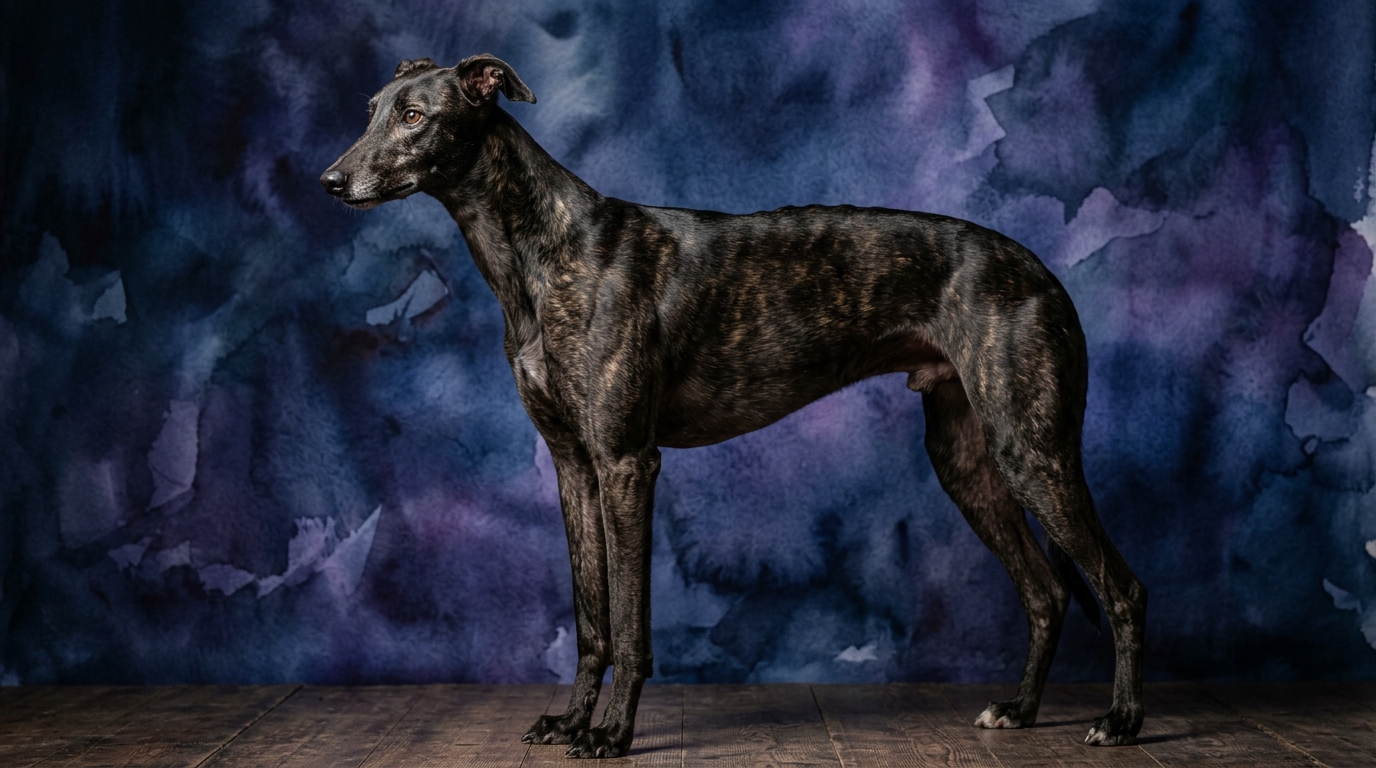
Our Cosmic Pet IQ Lab assesses canine cognitive abilities across five key dimensions, revealing fascinating distinctions between breeds. The Greyhound, a sighthound developed for speed and pursuit, holds a Coren rank of #46, indicating a solid capacity for adaptive learning. Its Problem Solving is rated 3/5, reflecting an ability to navigate immediate challenges, particularly those related to pursuit, but not necessarily complex, abstract puzzles. Training Speed is 2/5, suggesting a more independent nature that requires consistent, patient guidance. Social Intelligence stands at 3/5, meaning they are generally gentle and capable of forming bonds, though often reserved with strangers. Their Instinctive Drive is a powerful 5/5, singularly focused on chase. Memory is 3/5, allowing them to recall routines and familiar faces.
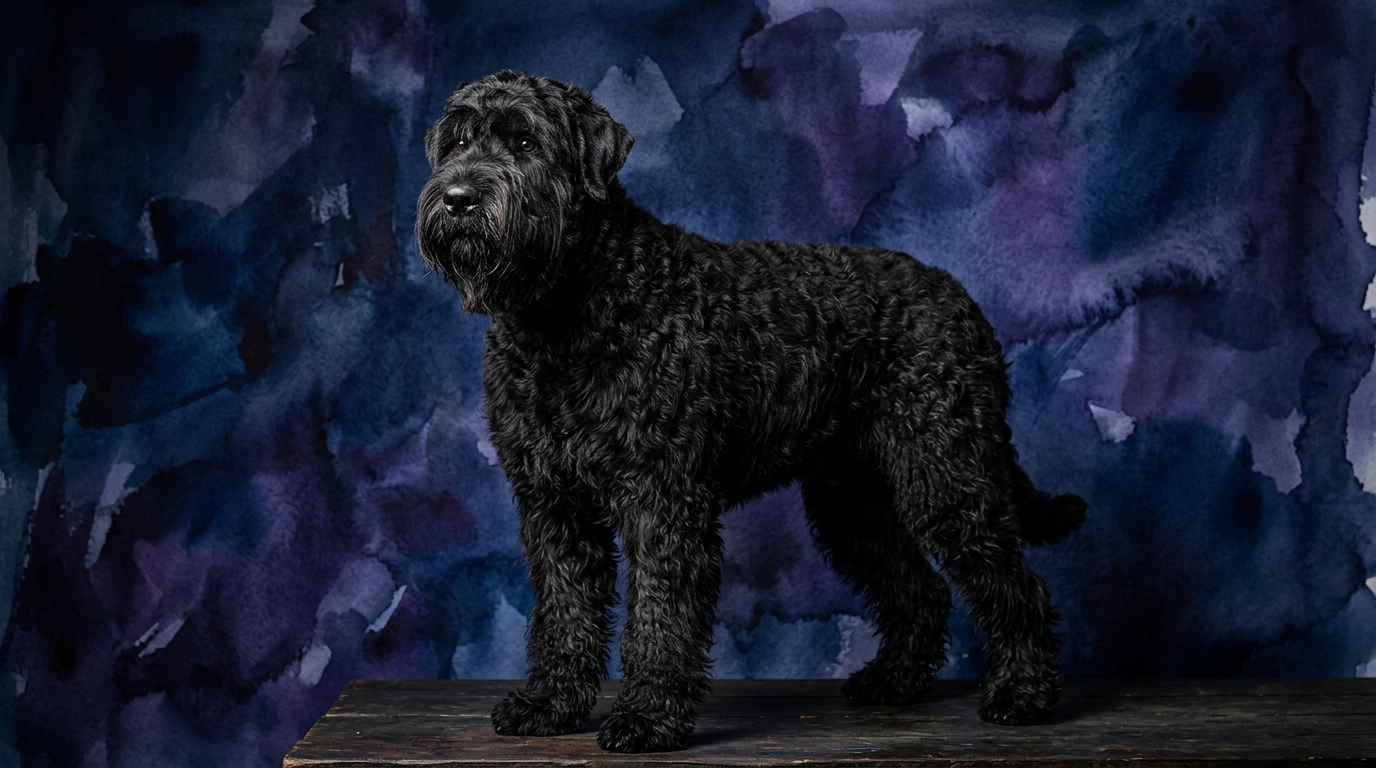
In contrast, the Black Russian Terrier (BRT), a robust working breed, is not Coren-ranked but presents a distinct cognitive blueprint. Its Problem Solving is also 3/5, geared towards practical, task-oriented thinking rather than independent strategizing. The BRT's Training Speed is 3/5, indicating a more receptive disposition to instruction compared to the Greyhound, a trait valued in working dogs. Social Intelligence is 3/5, characterized by deep loyalty to their family and a discerning, protective stance towards outsiders. Instinctive Drive is 3/5, reflecting a balanced drive for guarding and companionship rather than singular prey focus. Memory is 3/5, enabling them to retain commands and recognize threats effectively.
Where the Greyhound's Cognition Excels
The Greyhound's cognitive strengths are deeply intertwined with its history as a hunter. Its Instinctive Drive, rated 5/5, is a clear cognitive advantage in its domain. This isn't merely a physical urge; it represents an incredibly efficient neural pathway dedicated to identifying, tracking, and intercepting moving targets. Their brains are finely tuned for rapid visual processing, allowing them to instantly calculate trajectories and adjust their body movements at extreme speeds. This specialized cognitive function enables them to make split-second decisions during a chase, navigating complex terrain and anticipating prey movements with remarkable precision, often without direct human command.
While their Problem Solving is rated 3/5 overall, within the context of pursuit, their ability to navigate obstacles and adapt their strategy on the fly is exceptional. This translates into a focused, almost meditative state during a run, where external distractions fade, and the entire cognitive apparatus is dedicated to the task at hand. Their memory, at 3/5, supports this by allowing them to quickly learn the layout of a running track or the nuances of a lure's path, enhancing their performance in environments where their chase instinct can be safely expressed.
Where the Black Russian Terrier's Cognition Shines
The Black Russian Terrier's cognitive prowess is rooted in its development as a multi-purpose working dog, requiring a different set of mental attributes. Their Training Speed, rated 3/5, surpasses the Greyhound's 2/5, signifying a greater amenability to instruction and a more consistent focus on their handler. This isn't just about obedience; it reflects a cognitive desire to understand and execute tasks, making them more adaptable to various forms of training, from obedience to protection work and even scent detection.
While their Instinctive Drive is 3/5, it is a more versatile and manageable drive compared to the Greyhound's singular focus. This allows their Problem Solving (3/5) and Social Intelligence (3/5) to be applied more broadly in complex human-dog interactions and working scenarios. Their cognition is geared towards understanding social cues, discerning intentions, and making decisions that support their guarding role, often requiring a nuanced interpretation of situations rather than a purely reactive response. Their memory (3/5) is particularly effective in retaining intricate command sequences and recognizing subtle changes in their environment, crucial for a protective breed.
Trainability: A Tale of Two Temperaments
When considering ease of training, the Black Russian Terrier generally presents a more straightforward path for the dedicated owner, largely due to its higher Training Speed of 3/5. Their working dog heritage means they are typically more inclined to engage with human instruction and possess a robust desire to perform tasks. While they are not without an independent streak, their social intelligence manifests as a deep bond and a readiness to learn from their primary handler. They are less prone to being overwhelmingly distracted by minor environmental stimuli when a training session is underway, allowing for more consistent progress in obedience and specialized tasks.
The Greyhound, with a Training Speed of 2/5, requires a different approach. Their immense Instinctive Drive (5/5) means that any moving object can instantly become a paramount distraction, overriding previous commands. Their nature as sighthounds, bred to make independent decisions at a distance from their handler during a chase, means they are not inherently inclined to constantly seek human direction. Training a Greyhound demands exceptional patience, positive reinforcement, and a deep understanding of their chase instinct, often requiring secure, enclosed spaces to prevent them from acting on their powerful urge to pursue. While they can learn, their cognitive priority is often elsewhere, particularly outdoors.
Matching Canine Cognition to Owner Lifestyle
The choice between a Greyhound and a Black Russian Terrier hinges significantly on an owner's lifestyle and their capacity to meet distinct cognitive and physical needs. For active owners who enjoy consistent, structured engagement and a dog that thrives on having a 'job,' the Black Russian Terrier is an excellent fit. They require daily mental stimulation through training, long walks, and activities that challenge their problem-solving abilities and reinforce their working drives. Owners who appreciate a formidable, discerning companion willing to participate actively in family life and tasks will find the BRT's robust cognition rewarding.
Conversely, the Greyhound might surprisingly suit owners who are 'relaxed' in their daily routine but can provide specific, intense bursts of exercise. Greyhounds are renowned for their '45 mph couch potato' nature; they need opportunities to sprint in a safe, enclosed area a few times a week to satisfy their powerful instinctive drive. However, once that energy is expended, they are typically calm, quiet, and content to lounge indoors. Owners who appreciate a gentle, independent companion and can accommodate their specific exercise needs without requiring constant, high-intensity daily engagement will find the Greyhound's unique cognitive balance aligns well with their lifestyle.
The Verdict
Choose the Greyhound if you seek a calm indoor companion, can provide secure space for intense sprints, and appreciate a dog whose cognitive strengths lie in precise, independent pursuit.
Opt for the Black Russian Terrier if you desire a dedicated working partner, are willing to invest in consistent training and socialization, and value a discerning, protective companion with a robust intellect for tasks.
🧠 Find Your Pet's IQ Score
Our Pet IQ Lab assessment covers 25+ tests across 5 cognitive dimensions — personalized to your breed.
Take the Full IQ Test →Frequently Asked Questions
Are Greyhounds good apartment dogs despite their speed?
Yes, surprisingly. Greyhounds need short bursts of intense exercise, but are otherwise calm and enjoy lounging indoors, making them suitable for apartment living if their exercise needs are met and they have soft places to rest.
What kind of mental stimulation does a Black Russian Terrier need?
Black Russian Terriers thrive on consistent training, puzzle toys, scent work, and 'jobs' like carrying a backpack or participating in protection sports. Their working heritage means they benefit from tasks that engage both their body and their robust mind, preventing boredom and channeling their energy positively.
How do the protective instincts differ between these breeds?
The Greyhound's primary instinct is to chase, showing little inherent guarding behavior. The Black Russian Terrier possesses strong guardian instincts, being naturally wary of strangers and protective of their family and territory, requiring careful socialization and consistent handling to manage these traits.