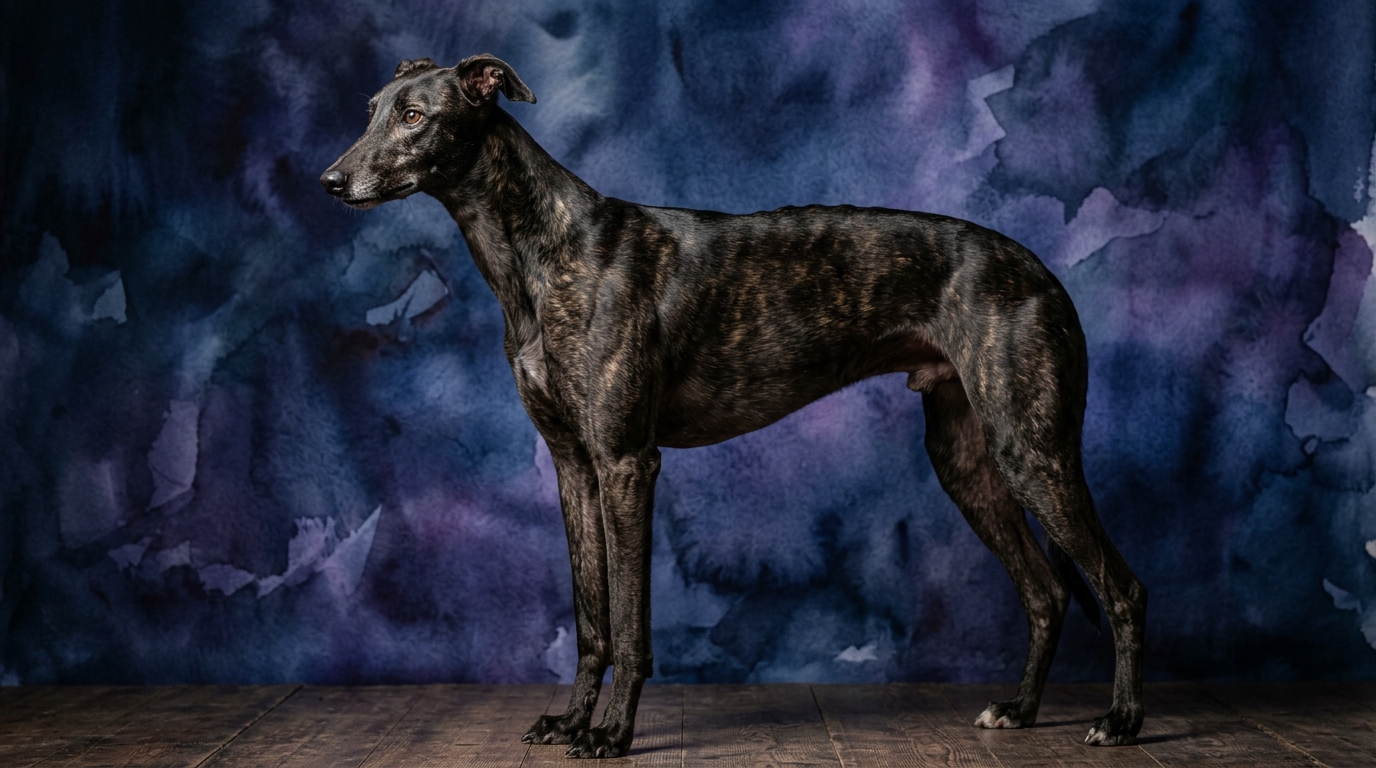
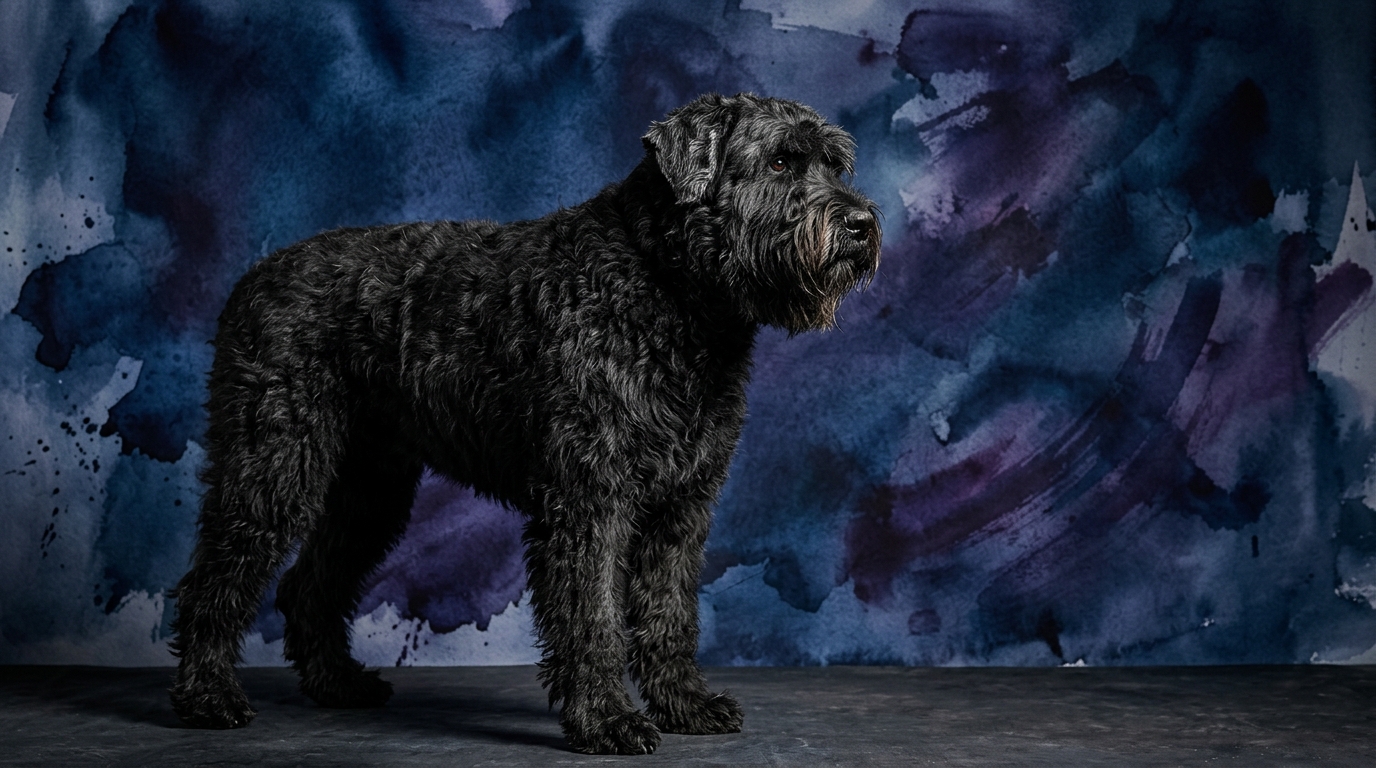
Side-by-Side IQ Profile: Greyhound vs. Bouvier des Flandres
**Greyhound (Coren Rank #46, Hound Group)**
**Problem Solving (3/5):** Greyhounds demonstrate moderate capacity for navigating novel challenges, often preferring well-established routines but capable of adapting with guidance. Their problem-solving tends to be task-oriented, particularly when it involves efficiently reaching a desired object or location.
**Training Speed (2/5):** While capable of learning, Greyhounds typically require more repetition and consistent motivation compared to some other breeds. Their independent nature and focus on sensory input can make rapid rote learning less natural, necessitating patient, reward-based methods.
**Social Intelligence (3/5):** These hounds exhibit a balanced understanding of social cues, forming deep bonds with their chosen family and often showing reserved, polite interactions with strangers. They are sensitive to human moods and intentions but may not always seek constant social engagement.
**Instinctive Drive (5/5):** The Greyhound's sighthound heritage manifests in an exceptionally powerful prey drive, propelling them to pursue anything that moves quickly. This instinct is a defining cognitive feature, influencing their attention, motivation, and environmental responses significantly.
**Memory (3/5):** Greyhounds possess a solid, practical memory for locations, routines, and specific individuals. They recall learned commands and positive or negative experiences reliably, though their recall may be more situational than abstract.
**Bouvier des Flandres (Not Coren-Ranked, Herding Group)**
**Problem Solving (3/5):** Bouviers demonstrate a practical, resilient approach to problem-solving, often employing their physical presence and determination to overcome obstacles. They are adept at figuring out how to manage livestock or navigate complex environments, showing a thoughtful persistence.
**Training Speed (3/5):** These herding dogs learn at a steady pace, capable of absorbing commands and routines effectively with clear, consistent instruction. Their desire to work and please their handler contributes to their trainable nature, making them responsive to structured lessons.
**Social Intelligence (3/5):** Bouviers exhibit a strong social awareness, particularly within their family unit, acting as watchful protectors and devoted companions. They are attuned to the dynamics of their human pack, often displaying a reserved but observant demeanor towards outsiders.
**Instinctive Drive (3/5):** The Bouvier's instinctive drive centers on herding and guarding, manifesting as a strong protective instinct and a desire to keep their 'flock' together. This drive is purposeful and controlled, less about chase and more about management and oversight.
**Memory (3/5):** Bouviers possess a reliable memory for commands, routines, and the layout of their territory. They remember past interactions and learned boundaries, contributing to their consistency and reliability as working companions.
Where the Greyhound Wins Cognitively
The Greyhound's unparalleled instinctive drive for pursuit is a cognitive marvel, allowing for an almost instantaneous processing of visual stimuli and a rapid, coordinated physical response. This specialized cognitive pathway for chase, rated 5/5, is far more developed than in the Bouvier, making them supreme athletes of speed and reaction. Their ability to switch from calm to full-throttle pursuit in a fraction of a second demonstrates a unique mental agility tied directly to their hunting heritage and a sensory focus sharpened over centuries for spotting and engaging fast-moving targets.
Where the Bouvier des Flandres Wins Cognitively
The Bouvier des Flandres demonstrates a superior blend of physical presence and strategic thinking, particularly in managing dynamic situations. Their herding and guarding instincts, rated 3/5, are more nuanced than the Greyhound's pure chase drive, indicating a cognitive framework geared towards oversight and control rather than mere acceleration. This means they excel in tasks requiring judgment, such as positioning themselves to guide livestock or assessing potential threats, showcasing a thoughtful determination in their problem-solving (3/5). Furthermore, their training speed (3/5) edges out the Greyhound (2/5), suggesting a slightly more eager and consistent engagement in structured learning tasks.
Which is Easier to Train and Why?
Based on our IQ scores, the Bouvier des Flandres generally presents as an easier dog to train, scoring 3/5 in training speed compared to the Greyhound's 2/5. The Bouvier's inherent desire to work and their purposeful herding instinct translate into a greater readiness to engage with commands and a more consistent focus during training sessions. They are often motivated by a desire to please and fulfill a role, making them responsive to clear, structured instruction. Greyhounds, conversely, possess a more independent streak; their primary motivation is often tied to their powerful instinctive drive for chase, making it more challenging to redirect their focus onto human-centric tasks, especially if a stimulating visual target is present. Their training often requires more patience to overcome this independence and their lower inherent drive for rote learning, emphasizing consistency and high-value rewards.
Matching Breeds to Lifestyles: Active vs. Relaxed Owners
For the truly active owner seeking a partner for demanding outdoor pursuits that aren't purely about speed, the Bouvier des Flandres is an excellent fit. Their robust stamina, thoughtful problem-solving, and desire for purposeful work make them suitable for extensive hikes, agility, or working roles where sustained effort and mental engagement are key. They thrive with owners who can provide consistent mental and physical challenges, channeling their protective and managerial instincts constructively.
Conversely, the Greyhound, despite its athletic prowess, often suits a more relaxed lifestyle outside of short, intense bursts of exercise. They are renowned '45 mph couch potatoes,' thriving with dedicated sprint opportunities in a secure area but equally content with long periods of rest indoors. Owners seeking a calm, sensitive companion who enjoys quiet companionship after a good run will find the Greyhound ideal, appreciating their serene indoor presence and minimal demands for constant activity.
The Verdict
Opt for a Greyhound if you appreciate a calm indoor companion who thrives on brief, explosive sprints and possesses a reserved, sensitive demeanor, requiring patient, consistent training that respects their independent spirit.
Select a Bouvier des Flandres if you seek a resilient, dedicated working partner capable of sustained effort and thoughtful problem-solving, thriving with consistent training and an owner who can channel their protective and herding instincts.
🧠 Find Your Pet's IQ Score
Our Pet IQ Lab assessment covers 25+ tests across 5 cognitive dimensions — personalized to your breed.
Take the Full IQ Test →Frequently Asked Questions
Do Greyhounds require a lot of exercise daily?
Despite their reputation for speed, Greyhounds are often quite content with a few short, brisk walks or opportunities for a supervised sprint in a secure area each day, coupled with plenty of indoor rest. They are not typically high-energy dogs requiring hours of sustained activity, preferring a balance of bursts and calm.
Are Bouvier des Flandres good family dogs?
Bouvier des Flandres can be excellent family dogs, known for their loyalty and protective nature towards their 'flock.' They are generally patient with children but require early socialization and consistent training to channel their strong guarding instincts appropriately, ensuring they understand their role within the family.
How do their problem-solving abilities differ in practical situations?
A Greyhound might problem-solve by finding the quickest path to a perceived 'prey' item, relying on speed and visual cues, while a Bouvier des Flandres might problem-solve by strategically positioning themselves to control a situation or move an object, using thoughtful determination and physical presence to manage their environment.