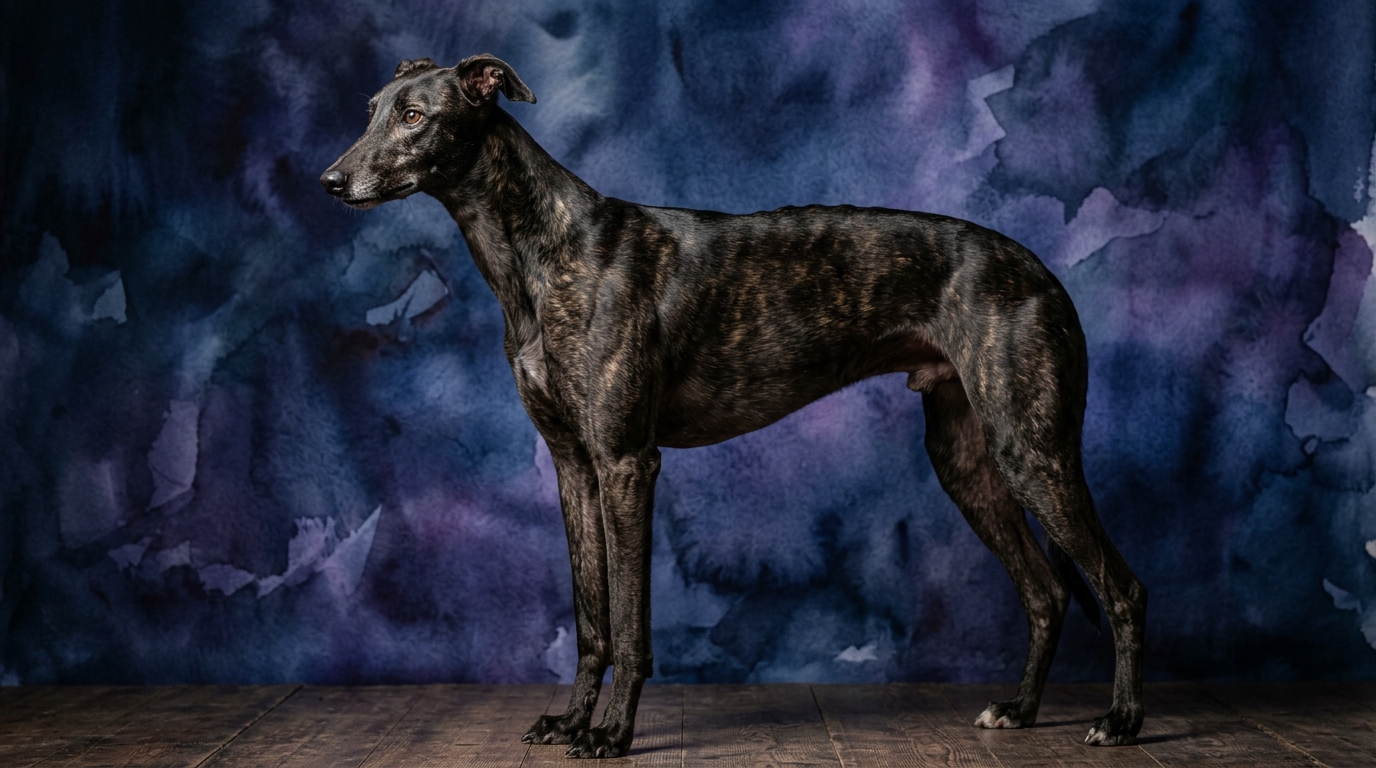
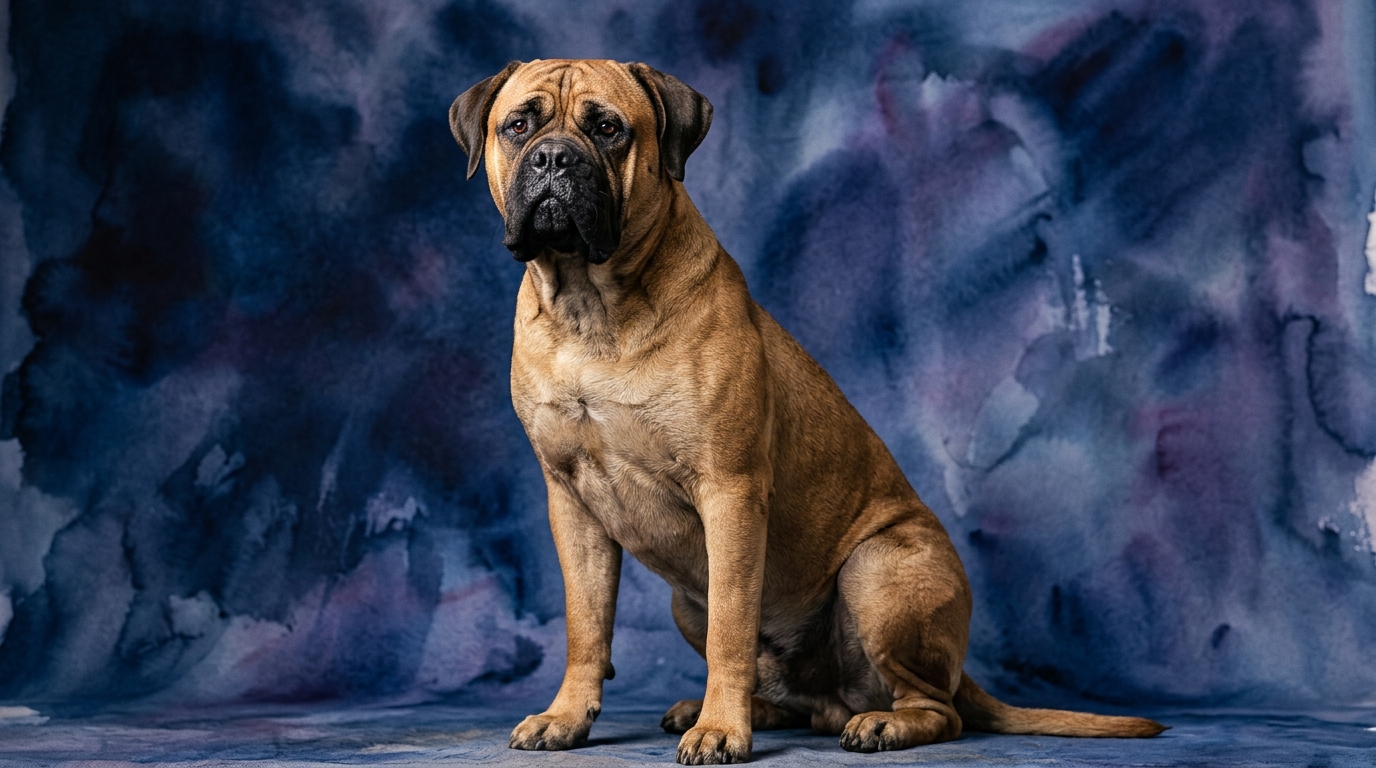
Side-by-Side IQ Profile: Greyhound vs. Bullmastiff
The Cosmic Pet Pet IQ Lab's five-dimensional model offers a nuanced view of canine intelligence. For the Greyhound, a Hound breed ranked #46 by Coren, their profile includes a problem-solving capacity of 3/5, indicating a moderate ability to navigate environmental challenges but not typically complex strategizing. Their training speed registers at 2/5, suggesting a more independent learning curve that requires patience and engaging methods. Social intelligence stands at 3/5, meaning they read human cues adequately and form bonds, though often with a reserved demeanor towards strangers. A striking 5/5 for instinctive drive underscores their powerful impulse to chase, a core component of their sighthound heritage. Finally, memory is rated 3/5, allowing them to recall routines and learned behaviors consistently.
In contrast, the Bullmastiff, a Working breed holding Coren's #69 rank, shares some cognitive similarities but diverges significantly in others. Their problem-solving ability also registers at 3/5, demonstrating a similar capacity for practical, everyday solutions like figuring out how to get to a desired spot. However, their training speed edges out the Greyhound at 3/5, suggesting a slightly greater willingness to engage in structured learning and repetition. Social intelligence matches at 3/5, reflecting their devotion to family and a watchful, discerning nature with outsiders. Their instinctive drive, rated 3/5, is centered more on protective vigilance than pursuit. Like the Greyhound, their memory is a solid 3/5, enabling them to remember boundaries, routines, and family members with reliability.
Where the Greyhound Wins Cognitively
The Greyhound's undeniable cognitive triumph lies in its extraordinary instinctive drive, scoring a perfect 5/5 compared to the Bullmastiff's 3/5. This isn't merely a physical attribute; it represents a highly specialized cognitive framework wired for rapid detection and pursuit of movement. A Greyhound's brain is acutely tuned to visual stimuli, processing the faintest flicker of motion at a distance and immediately activating a complex sequence of calculations for speed, trajectory, and interception. This superior cognitive processing of environmental dynamics for the purpose of the chase means they excel at tasks requiring quick, decisive reactions to visual cues, a mental agility honed over centuries of sighthound breeding.
This intense drive translates into a distinct form of situational awareness. While a Bullmastiff's instincts are geared towards guarding and assessment, a Greyhound's mind is constantly scanning for opportunities to engage its natural calling. This mental quickness in identifying and reacting to "prey" makes them unparalleled in activities that tap into this deep-seated cognitive strength, such as lure coursing, where their minds are fully engaged in the simulated chase, demonstrating a singular focus and processing speed for this specific type of stimulus.
Where the Bullmastiff Wins Cognitively
The Bullmastiff demonstrates a cognitive edge in its training speed, rated 3/5 compared to the Greyhound's 2/5. This subtle but significant difference reflects a mind generally more receptive to structured instruction and a greater inclination towards cooperative learning. Their historical role as estate guardians required them to understand complex commands, differentiate between threats and welcomed visitors, and work in close partnership with their human handlers. This background has cultivated a cognitive disposition that values clarity, consistency, and a desire to understand and execute directives.
While both breeds possess moderate problem-solving skills, the Bullmastiff's slightly higher training receptiveness means they often integrate new commands more readily into their behavioral repertoire. Their social intelligence, though rated similarly, manifests in a deep loyalty that motivates them to please their family, making them more inclined to focus on the handler during training sessions. This cognitive framework, rooted in a desire for partnership and a clear understanding of their role, allows them to absorb and apply lessons with greater consistency than the more independent and visually driven Greyhound.
Which is Easier to Train and Why
When considering ease of training, the Bullmastiff generally presents a smoother path for most owners, primarily due to their superior training speed (3/5 vs. Greyhound's 2/5) and a fundamental difference in their motivation. Bullmastiffs, as working dogs, inherently possess a greater desire to understand and comply with human direction. Their cognitive makeup is predisposed to forming a strong working partnership, making them more amenable to repetitive obedience exercises and establishing clear routines. They respond well to consistent, firm-but-fair methods and positive reinforcement, often demonstrating a desire to please their handler, which greatly aids in skill acquisition.
Conversely, the Greyhound's training journey demands a different approach. Their lower training speed and formidable instinctive drive (5/5) mean they are often less interested in traditional, repetitive obedience. A Greyhound might understand a command perfectly but choose to ignore it if their sighthound instincts are triggered by a distant movement. Training them requires immense patience, creativity, and a deep understanding of their independent nature. Owners must make training sessions highly engaging, short, and positive, often leveraging their love for comfort and routine rather than relying on a strong desire to please. Off-leash reliability, especially in unfenced areas, is a significant challenge due to their powerful prey drive, demanding specialized training and management strategies.
Which Suits Active Owners vs. Relaxed Owners
The suitability for active versus relaxed owners is often misunderstood for both breeds, requiring a nuanced look at their cognitive and physical needs. For the Greyhound, despite their incredible speed and 5/5 instinctive drive, they are often described as "45 mph couch potatoes." While they *must* have opportunities for explosive, full-speed running, this exercise is typically short-burst and requires a highly secure, fenced environment to prevent their prey drive from leading them astray. Indoors, they are remarkably calm and prefer lounging. Therefore, they suit owners who are relaxed in their daily home life but are dedicated to providing specific, intense exercise opportunities in a controlled setting, understanding their need for both exhilarating sprints and extensive napping. They are not a dog for casual off-leash park visits or long, meandering hikes where visual triggers abound.
The Bullmastiff, with its 3/5 instinctive drive and more moderate energy levels, fits well with owners who appreciate a steady, deliberate pace. They are not built for sustained high-speed activity but thrive on regular, moderate walks and structured play sessions. Their cognitive profile, favoring a slightly higher training speed and social intelligence centered on family, means they enjoy being involved in family activities and appreciate routine. They suit owners who value a watchful, protective companion and are prepared to provide consistent training and socialization to channel their guardian instincts appropriately. They are excellent companions for relaxed strolls in the neighborhood or quiet evenings at home, requiring less intense bursts of physical exertion than a Greyhound, but still needing consistent mental and physical engagement.
The Verdict
Choose the Greyhound if you appreciate an elegant, quiet companion indoors, are prepared to manage a powerful prey drive with secure off-leash opportunities, and possess the patience for a sighthound's independent training style.
Choose the Bullmastiff if you seek a loyal, protective family member who thrives on consistent guidance, moderate daily activity, and offers a steadfast, watchful presence in your home.
🧠 Find Your Pet's IQ Score
Our Pet IQ Lab assessment covers 25+ tests across 5 cognitive dimensions — personalized to your breed.
Take the Full IQ Test →Frequently Asked Questions
Do Greyhounds struggle with recall due to their high instinctive drive?
Yes, their powerful prey drive (5/5) means a moving target can override even well-established recall commands. It's crucial to train recall extensively in low-distraction environments and always use a leash or secure fencing in unpredictable areas to ensure their safety.
Is a Bullmastiff's protective instinct a challenge for social intelligence?
A Bullmastiff's social intelligence (3/5) is geared towards family loyalty and vigilance, meaning they are often reserved with strangers but not inherently aggressive. Proper socialization from a young age is vital to ensure they differentiate between a threat and a new friend, fostering appropriate protective responses rather than unwarranted suspicion.
How does memory (3/5 for both) impact training for these breeds?
A moderate memory score for both breeds means they can certainly learn and retain commands and routines, but might not excel at very long, complex sequences or abstract concepts. Consistency in training, clear, repetitive instruction, and positive reinforcement are key to solidifying their learning and ensuring good recall of desired behaviors over time.