Side-by-Side IQ Profile: Speed vs. Stamina of Mind
The Cosmic Pet Pet IQ Lab employs a five-dimensional framework to assess canine intelligence, offering a nuanced view beyond simple obedience. These dimensions — problem-solving, training speed, social intelligence, instinctive drive, and memory — help us understand how each breed processes information and interacts with its world.
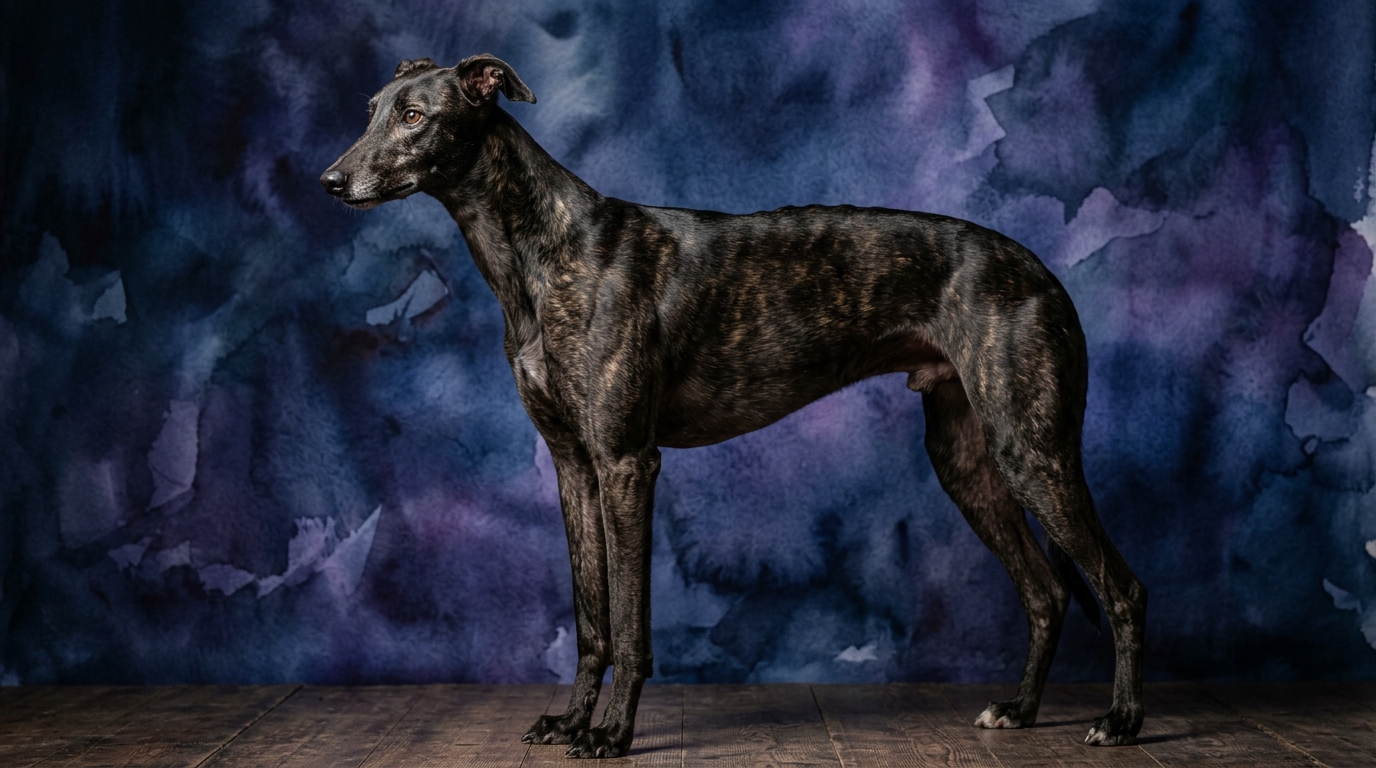
For the Greyhound, a breed sculpted for speed and sight hunting, its cognitive scores reflect a specialized brilliance. Its problem Solving ranks at 3/5, indicating an ability to find efficient solutions for immediate, often physical challenges, rather than complex, abstract puzzles. Training Speed is 2/5, suggesting a more independent nature that requires patience and understanding during training. Social Intelligence stands at 3/5, as Greyhounds form deep bonds with their inner circle but can be reserved with strangers. Its Instinctive Drive is a perfect 5/5, a testament to its unparalleled prey drive and focus on pursuit. Memory scores 3/5, meaning it recalls familiar routines and faces but might not retain intricate commands quickly without consistent reinforcement.
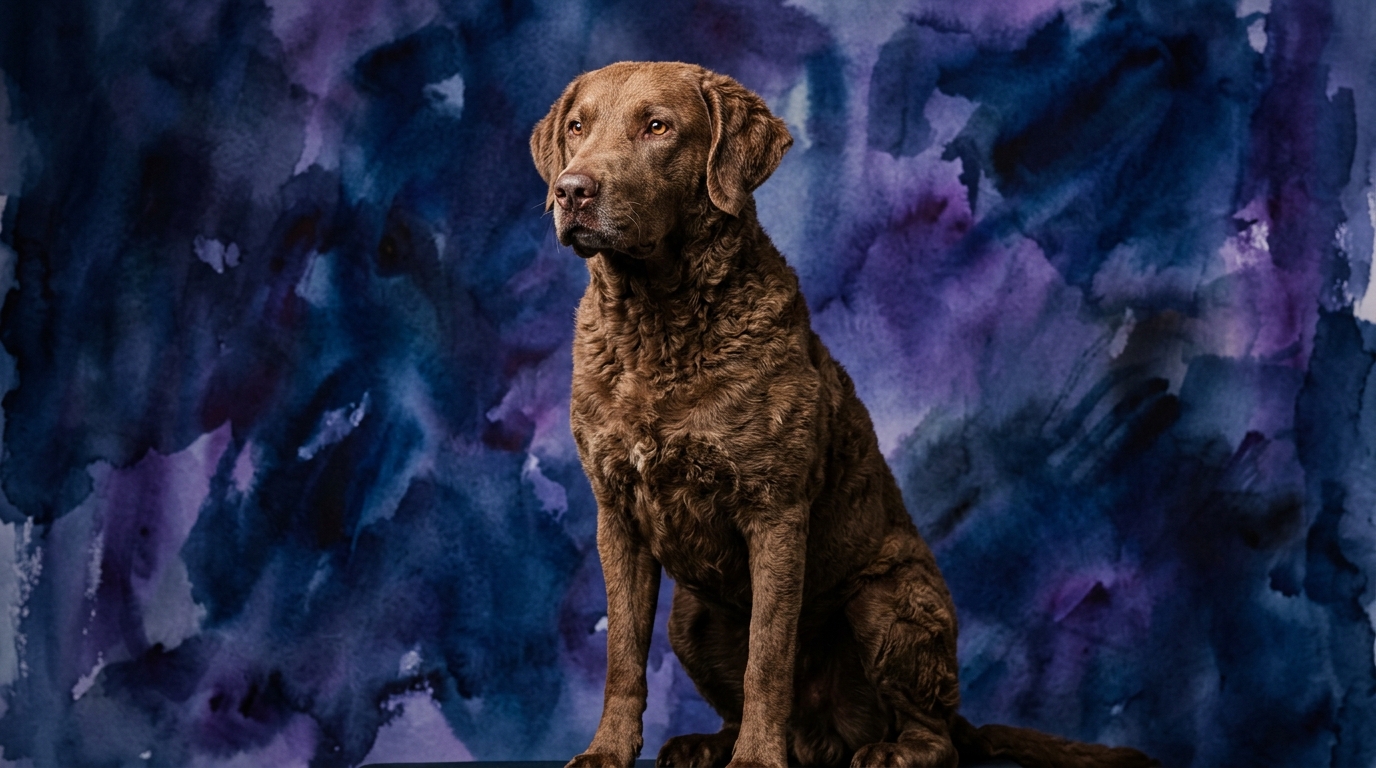
The Chesapeake Bay Retriever, a breed developed for arduous waterfowl retrieval in challenging conditions, presents a different cognitive blueprint. Its problem Solving is a strong 4/5, indicative of a capacity to navigate complex environments and strategize during tasks. Training Speed also scores 4/5, reflecting a generally responsive and eager-to-please temperament. Social Intelligence mirrors the Greyhound at 3/5, showing devotion to family but a potential wariness of outsiders without proper socialization. Its Instinctive Drive is 3/5, a robust retrieving drive focused on its working purpose, distinct from the Greyhound's generalized prey instinct. Memory is a commendable 4/5, allowing for excellent recall of learned tasks, commands, and retrieving locations.
Where the Greyhound Wins Cognitively
The Greyhound's cognitive prowess truly shines in its unparalleled Instinctive Drive, rated at a perfect 5/5. This isn't merely a physical attribute; it's a profound cognitive specialization in identifying, tracking, and executing a high-speed chase. Their problem-solving (3/5) in this context is immediate, reactive, and incredibly efficient. When a small, fast-moving object enters their field of vision, a Greyhound's brain makes split-second calculations of trajectory, speed, and anticipated movement, initiating an unhesitating pursuit. This specific type of cognitive processing—rapid, instinctive, and physically integrated—is where they excel, even if they might not be top performers in abstract puzzle-solving.
Their cognitive strength lies in tasks demanding immediate physical action, driven by an acute visual stimulus. They process visual information with incredible speed, allowing them to react to changes in their environment or the movement of perceived 'prey' with astonishing swiftness. This makes them brilliant at lure coursing or anything that taps into that primal, focused pursuit drive, demonstrating a unique form of 'situational intelligence' that is perfectly adapted to their original purpose.
Where the Chesapeake Bay Retriever Wins Cognitively
The Chesapeake Bay Retriever's cognitive strengths lie in its sustained focus, methodical approach, and capacity for complex learning, evidenced by its 4/5 scores in both problem-solving and memory, coupled with a 4/5 training speed. This combination allows a Chessie to excel in multi-step tasks that require planning and retention. Imagine a Chessie retrieving a fallen bird: it must remember where the bird landed, navigate through dense cover or icy water, retrieve the bird, and reliably return it to its handler. This involves significant spatial memory, an understanding of commands, and the ability to overcome environmental obstacles—all requiring deliberate cognitive effort.
Their intelligence is less about instantaneous, reactive bursts and more about an enduring, purposeful application of learned knowledge. They demonstrate a strong capacity for understanding complex cues and applying strategies in varied, challenging environments. This makes them adept at advanced obedience, scent work, and, of course, their traditional role in waterfowl hunting, where consistent performance and reliable memory are paramount. Their cognitive profile points to a breed that truly thrives on having a 'job' and the mental engagement that comes with it.
Which is Easier to Train and Why
When it comes to ease of training, the Chesapeake Bay Retriever generally presents a more straightforward experience, scoring 4/5 in training speed. Their historical role as a working dog instilled a strong desire to collaborate with their handler and find purpose in given tasks. Chessies typically possess a higher cognitive capacity for understanding and executing commands, and their superior memory (4/5) significantly aids in retaining these lessons over time. They tend to be more handler-focused and eager to please, making them responsive to traditional training methods and positive reinforcement.
The Greyhound, with a training speed of 2/5, offers a more challenging training journey. Their independent nature, deeply rooted in generations of solitary pursuit, means they are often less inclined to follow commands unless it aligns with their immediate interest or comfort. Their primary focus is frequently external, driven by their powerful prey instinct, rather than on their handler. Training a Greyhound demands exceptional patience, consistent positive reinforcement, and an understanding of their unique motivations. Their lower memory score (3/5) means that repetition is key, and trainers must adapt to a dog that values its own decision-making, particularly when a compelling visual stimulus is present.
Which Suits Active Owners vs. Relaxed Owners
For the highly active owner, the Chesapeake Bay Retriever is often the ideal match. Their robust build, strong retrieving drive (3/5 instinctive drive, but directed), and high problem-solving capacity (4/5) mean they thrive on vigorous physical and mental stimulation. Owners who enjoy activities like hiking, swimming, dog sports, or hunting will find a Chessie to be an enthusiastic and capable partner. They need a job or consistent engagement to prevent boredom and channel their considerable energy constructively.
Conversely, the Greyhound often suits a more relaxed owner, despite their reputation for speed. While they are capable of incredible bursts of acceleration, they are famously known as '45 mph couch potatoes.' Their energy comes in short, intense sprints, followed by long periods of rest and quiet companionship. They are generally content with regular, secure off-leash running opportunities combined with a calm home environment. Their independent nature means they are not constantly demanding attention, making them excellent companions for those who appreciate a peaceful, affectionate presence without the need for constant, demanding activity.
The Verdict: When to Choose Each
The Verdict
Choose a Greyhound if you seek a quiet, independent companion who excels in short bursts of speed and appreciates calm home life, understanding their unique pursuit-driven mindset.
Opt for a Chesapeake Bay Retriever if you are an active individual desiring a devoted, task-oriented partner capable of complex learning and thriving on vigorous outdoor activities and mental challenges.
🧠 Find Your Pet's IQ Score
Our Pet IQ Lab assessment covers 25+ tests across 5 cognitive dimensions — personalized to your breed.
Take the Full IQ Test →Frequently Asked Questions
Is a Greyhound difficult to train?
Greyhounds have a lower training speed (2/5) due to their independent nature and focus on instinctive pursuits. They require consistent, positive reinforcement and understanding of their unique motivations, making training a patient endeavor rather than inherently difficult.
What kind of mental stimulation does a Chesapeake Bay Retriever need?
Chesapeake Bay Retrievers thrive on mental challenges, scoring high in problem-solving (4/5) and memory (4/5). They benefit from activities like scent work, complex retrieving games, and learning new commands to keep their minds engaged and prevent boredom.
Do Greyhounds make good family pets despite their strong drive?
Yes, Greyhounds can be excellent family pets, often displaying a gentle and calm demeanor indoors. While their instinctive drive (5/5) means they require secure fencing and leashed walks, their social intelligence (3/5) allows them to form strong, affectionate bonds with their human families.