Side-by-Side IQ Profile: Sighthound vs. Sporting Dog Brains
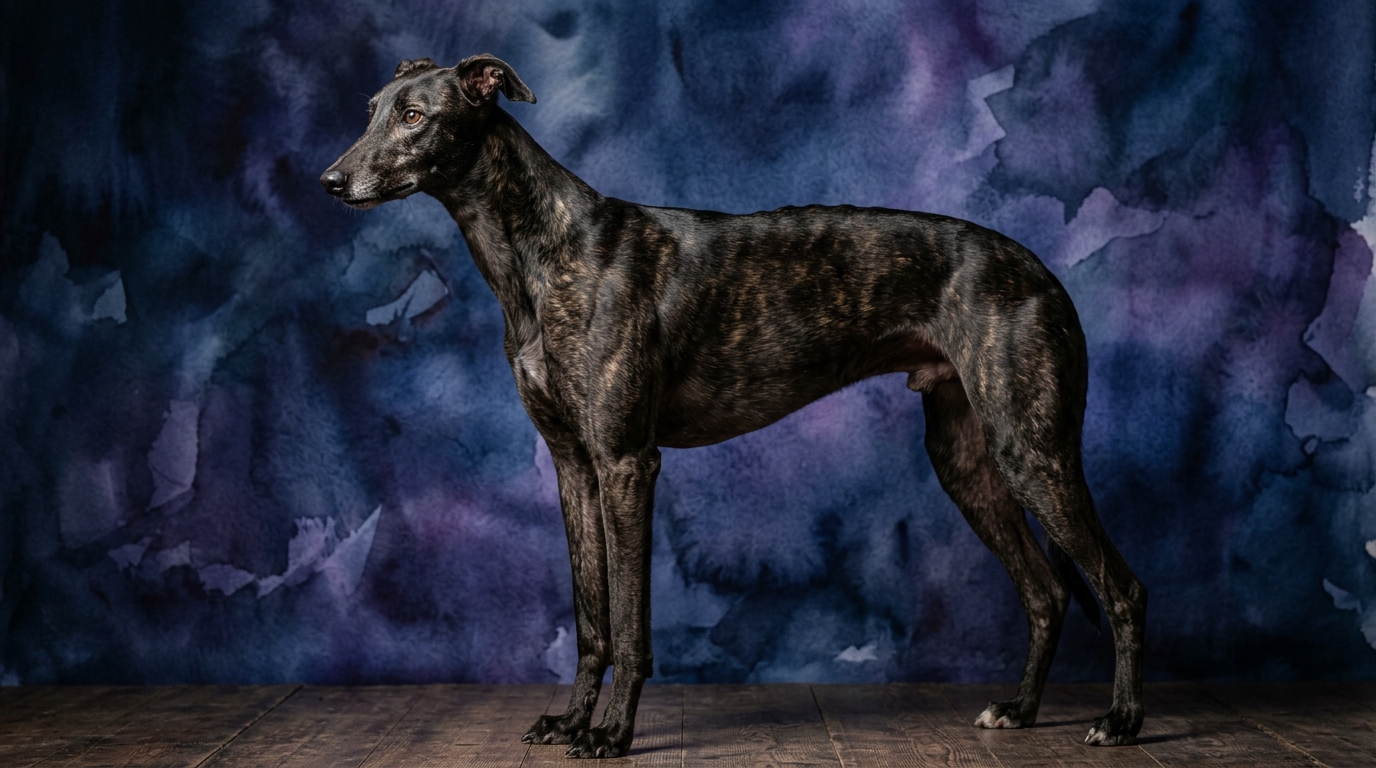
The Cosmic Pet Pet IQ Lab provides a detailed five-dimensional framework for understanding canine cognition, revealing the nuanced mental architecture of each breed. For the Greyhound, ranked #46 by Coren, its IQ profile is marked by a Problem Solving score of 3/5, indicating an aptitude for navigating complex environments and making rapid, on-the-fly decisions during pursuit, rather than intricate puzzle-solving. Its Training Speed of 2/5 suggests a degree of independence in learning, often requiring specific motivation beyond typical obedience cues. Social Intelligence at 3/5 points to an ability to read subtle human cues but often with a reserved demeanor. Crucially, its Instinctive Drive soars at 5/5, reflecting an unparalleled genetic predisposition for chase and sight-based hunting, while Memory sits at 3/5, sufficient for recalling routes and prey patterns.
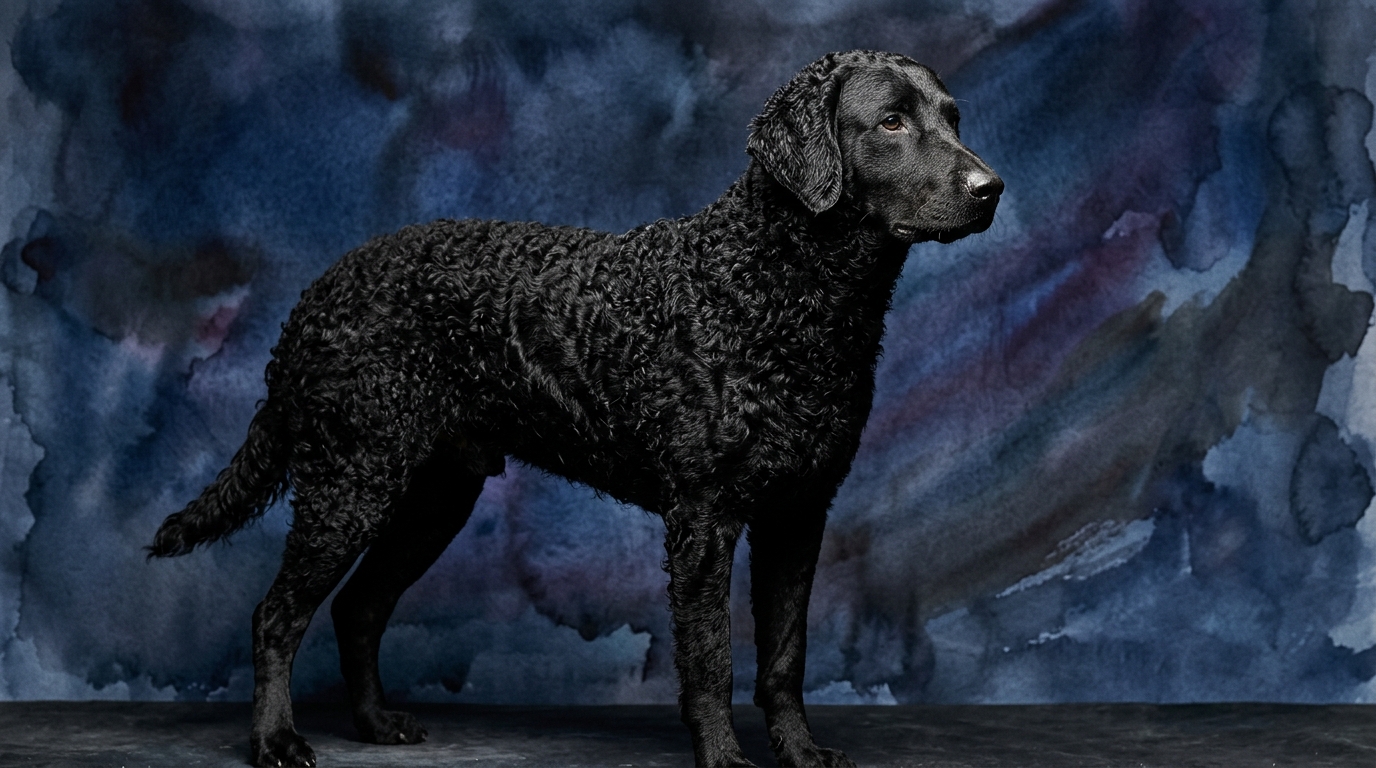
In contrast, the Curly-Coated Retriever, holding a higher Coren rank of #41, presents a different cognitive blueprint. Its Problem Solving also scores 3/5, yet this manifests in an ability to figure out retrieving challenges and adapt to varied working conditions, often involving water. A notable difference is its Training Speed of 3/5, indicating a more eager and responsive learner, generally more biddable than the Greyhound. Social Intelligence matches at 3/5, though expressed through a more engaged, partnership-oriented interaction style. Its Instinctive Drive at 3/5 is focused on retrieving and working alongside humans, a strong drive but not as singularly intense as the Greyhound's prey drive. The Curly-Coated Retriever shines in Memory, scoring 4/5, essential for remembering multiple retrieve locations, complex sequences of commands, and maintaining a working dog's repertoire of skills.
Where the Greyhound Wins Cognitively
The Greyhound's cognitive prowess is deeply rooted in its specialized role as a sighthound, excelling in areas where speed, visual acuity, and independent decision-making are paramount. Its top-tier Instinctive Drive (5/5) is not merely physical; it's a cognitive engine that fuels an exceptional ability to process visual stimuli at high speeds, identify targets from afar, and execute complex chase patterns without direct human intervention. This translates to superior spatial reasoning within dynamic environments, allowing them to predict prey movement and navigate obstacles with incredible precision and economy of effort.
While its Problem Solving is 3/5, this score reflects a specific type of problem-solving: the rapid, intuitive calculation required to outmaneuver a quarry. Unlike a retriever that might methodically work through a puzzle, a Greyhound’s cognitive strength lies in instantaneous risk assessment and path optimization during a high-stakes pursuit. Furthermore, their reserved Social Intelligence (3/5) can be a cognitive advantage in some contexts, suggesting an independent thought process less swayed by constant human direction, allowing them to trust their own instincts in a chase scenario rather than waiting for a command.
Where the Curly-Coated Retriever Wins Cognitively
The Curly-Coated Retriever's cognitive strengths are centered around its collaborative working heritage, making it a master of retention and cooperative problem-solving. Its superior Memory (4/5) is a standout feature, enabling it to recall a vast array of commands, remember the locations of multiple fallen game birds, or execute intricate field test patterns with impressive accuracy. This robust memory system is crucial for a dog expected to perform complex, multi-stage tasks over extended periods, often in varied and challenging terrains.
Coupled with its higher Training Speed (3/5), the Curly-Coated Retriever demonstrates a greater cognitive willingness and capacity for learning and retaining new information presented by a human handler. Their problem-solving (3/5), while matching the Greyhound's raw score, is applied differently: it’s about figuring out how to retrieve an item from a difficult spot, adapting to changing conditions during a hunt, or understanding the nuances of a new training exercise. This adaptability and eagerness to engage in learning make their cognitive profile particularly suited for partnership-oriented activities requiring a broad skill set.
Which is Easier to Train and Why?
When considering ease of training, the Curly-Coated Retriever holds a distinct advantage over the Greyhound. The Curly's Training Speed of 3/5, combined with its Memory of 4/5, indicates a dog that is generally more receptive to learning commands and retaining them over time. Their instinctive drive, while strong (3/5), is inherently geared towards working collaboratively with a handler, making them more inclined to seek and respond to human direction. They are often highly motivated by praise, toys, and food, which are common tools in positive reinforcement training, and their social intelligence (3/5) leans towards an engaged partnership.
Conversely, the Greyhound's Training Speed of 2/5 reflects its more independent and less biddable nature. While they are certainly capable of learning, their primary motivation is often their powerful 5/5 Instinctive Drive for pursuit, rather than pleasing a handler or earning a treat. This means that traditional obedience training can be a slower process, requiring more patience, creativity, and understanding of their unique motivations. Their memory (3/5) is adequate, but their willingness to apply it to human-directed tasks, especially when their prey drive is engaged, can be challenging. They are not 'difficult' to train, but they require an approach that respects their inherent independence and leverages their natural desires, often needing a strong 'why' for compliance beyond simple command.
Which Suits Active Owners vs. Relaxed Owners?
For owners with an active lifestyle seeking a canine partner for demanding activities, the Curly-Coated Retriever is generally the more suitable choice. Their 3/5 instinctive drive for working and retrieving, coupled with their higher training speed and memory, means they thrive on consistent mental and physical engagement. They excel in dog sports like agility, obedience, dock diving, and field work, requiring owners who are prepared to dedicate significant time to training, exercise, and structured activities. Their need for a 'job' and their desire to collaborate make them perfect for individuals who enjoy an active, hands-on relationship with their dog, and can provide ample opportunities for both physical exertion and cognitive stimulation.
The Greyhound, despite its legendary speed, often paradoxically suits more relaxed owners. While they require opportunities for vigorous, short bursts of running in a secure area to satisfy their 5/5 instinctive drive, they are famous for being "45 mph couch potatoes." Their independent nature (lower training speed) means they don't constantly demand attention or a job; they are often content to lounge quietly for much of the day after their exercise needs are met. For owners who appreciate a calm, independent companion that doesn't need constant mental stimulation or structured training beyond basic manners, and who can provide a safe space for those exhilarating sprints, the Greyhound can be an ideal, low-maintenance choice in terms of daily activity demands.
The Verdict
Choose the Greyhound if you appreciate an independent, reserved companion whose intelligence manifests in lightning-fast, instinct-driven decisions and who thrives on short, intense bursts of exercise followed by extensive relaxation.
Opt for the Curly-Coated Retriever if you desire a highly trainable, collaborative partner with excellent memory, eager to engage in diverse activities and thrive on consistent mental and physical challenges.
🧠 Find Your Pet's IQ Score
Our Pet IQ Lab assessment covers 25+ tests across 5 cognitive dimensions — personalized to your breed.
Take the Full IQ Test →Frequently Asked Questions
Are Greyhounds truly less intelligent than Curly-Coated Retrievers?
No, it's more accurate to say their intelligence manifests differently. Greyhounds excel in instinctual, independent problem-solving related to chase, while Curly-Coated Retrievers demonstrate stronger memory and collaborative intelligence for learned tasks.
Which breed requires more mental stimulation?
The Curly-Coated Retriever generally requires more consistent and varied mental stimulation due to its higher training speed and memory, thriving on learning new tasks and engaging in problem-solving activities. Greyhounds, while capable, often prefer less structured mental engagement.
Can a Greyhound be trained for complex tasks like a retriever?
While Greyhounds can learn complex tasks, their independent nature and lower training speed mean it typically requires more patience and creative motivation than with a Curly-Coated Retriever. Their cognitive strengths lie more in instinctual action than extensive learned obedience routines.