The Cosmic Pet Pet IQ Lab: Greyhound vs. German Wirehaired Pointer
Welcome to The Cosmic Pet Pet IQ Lab, where we delve into the unique cognitive profiles of different dog breeds. Today, we're examining two distinct canine athletes: the elegant Greyhound, a quintessential sighthound, and the rugged German Wirehaired Pointer (GWP), a multi-talented sporting dog. Their historical roles have sculpted their minds in remarkably different ways, making this a compelling study in specialized versus generalized intelligence.
While both breeds are cherished companions, their brainpower is optimized for divergent tasks. The Greyhound's evolutionary path focused on explosive speed and keen visual acuity for chasing prey, demanding a specific set of mental tools. The GWP, conversely, was developed to be an all-around hunting partner, requiring adaptability, problem-solving prowess across various environments, and strong cooperation with its human handler. By dissecting their IQ dimensions, we can appreciate the nuances of their cognitive design and better understand what makes each breed tick.
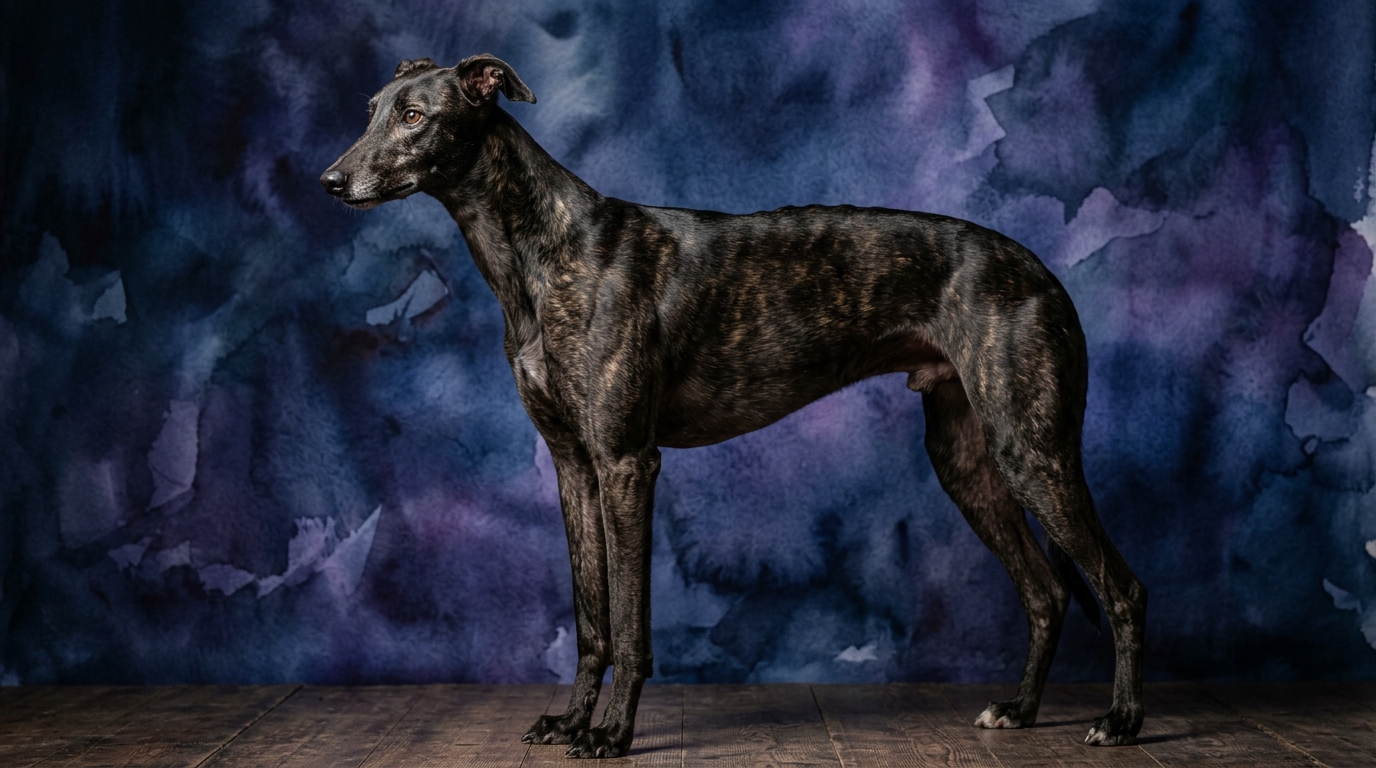
Side-by-Side IQ Profile: Greyhound
The Greyhound, with a Coren rank of #46, presents a cognitive profile finely tuned for its purpose as a sighthound.
**Problem Solving (3/5):** Greyhounds typically exhibit moderate problem-solving abilities, often excelling in tasks related to their primary drive, such as efficiently navigating a lure course. Their solutions frequently lean towards direct, physical action rather than intricate, multi-step strategizing, demonstrating a pragmatic approach to immediate challenges.
**Training Speed (2/5):** While capable of learning, Greyhounds generally require more repetitions and patience during training sessions. Their independent nature and intense focus on chasing can make them less eager to comply with human-initiated commands immediately, often preferring to follow their own instincts.
**Social Intelligence (3/5):** Greyhounds possess a moderate level of social intelligence, forming deep, affectionate bonds with their chosen family members. They are often reserved and quiet with strangers but can be incredibly gentle and responsive to familiar human cues once trust is established.
**Instinctive Drive (5/5):** This is the Greyhound's preeminent cognitive strength. Their instinctive drive is profoundly high, specifically geared towards pursuit and sight-based hunting. This powerful, almost automatic, urge to chase anything that moves is the bedrock of their breed identity and defines much of their behavioral responses, showcasing a specialized, highly evolved predatory intelligence.
**Memory (3/5):** Greyhounds demonstrate moderate memory capabilities. They can recall learned commands and routines, especially those associated with positive experiences and consistency. However, they might not retain intricate sequences or infrequently practiced lessons as readily as some other breeds, often prioritizing immediate sensory input.
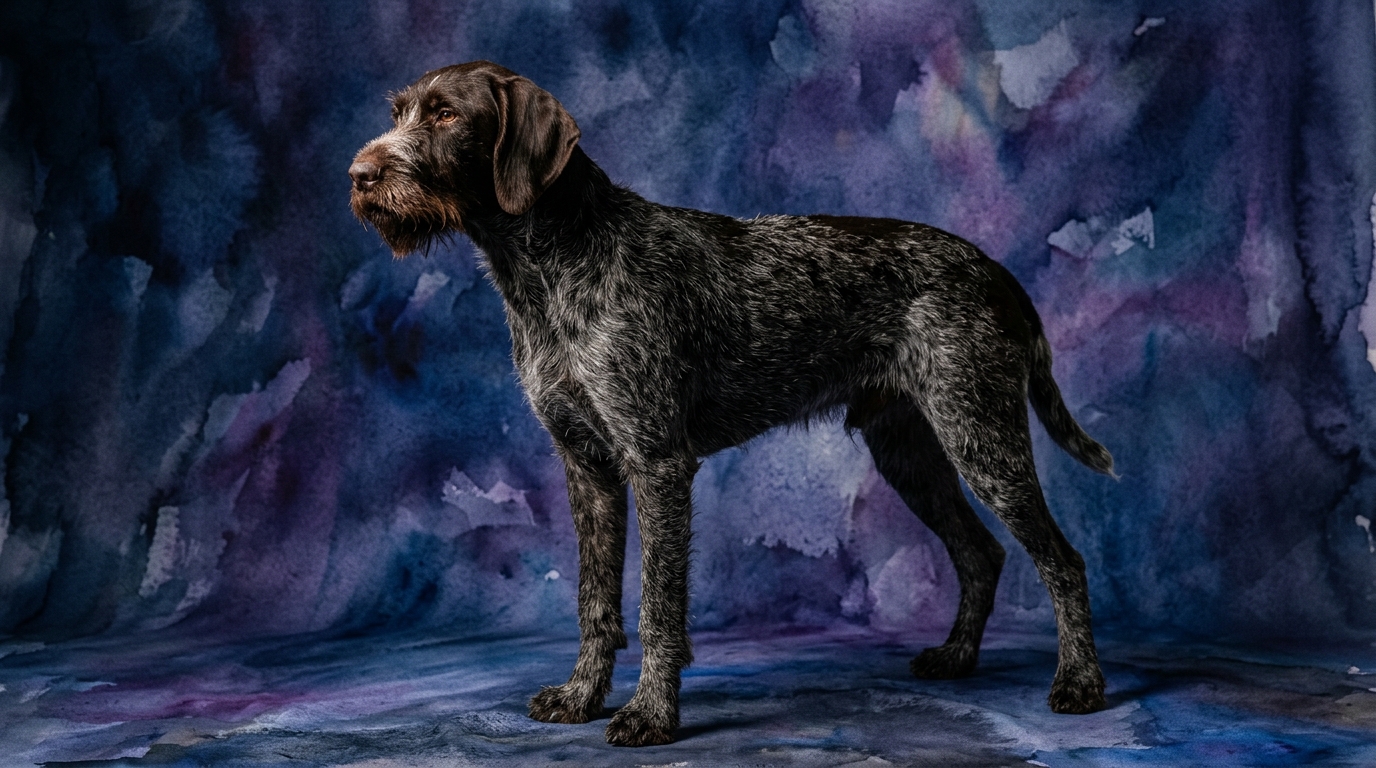
Side-by-Side IQ Profile: German Wirehaired Pointer
The German Wirehaired Pointer (GWP), holding a Coren rank of #28, showcases a versatile and robust cognitive makeup, reflecting its role as an all-purpose gundog.
**Problem Solving (4/5):** German Wirehaired Pointers show strong problem-solving skills, adept at figuring out complex tasks required for their versatile hunting roles. They can strategize to locate hidden game, retrieve objects from challenging environments, and adapt quickly to new or changing situations in the field, demonstrating a flexible and analytical mind.
**Training Speed (4/5):** GWPs are generally quick learners, often grasping new commands and concepts with fewer repetitions than many other breeds. Their inherent working drive and eagerness to please their handler make them highly trainable and remarkably responsive to consistent, engaging instruction.
**Social Intelligence (3/5):** Similar to Greyhounds, GWPs exhibit moderate social intelligence. They are typically outgoing and friendly with both their families and often strangers, but their primary focus remains on their working partnership with their owner. They are highly attuned to human direction and emotions, especially within a working or training context.
**Instinctive Drive (3/5):** The GWP's instinctive drive is well-balanced and highly directed, focused on a range of hunting behaviors like pointing, retrieving, and tracking. While present, it's more controlled and readily channeled by handler commands than the Greyhound's singular chase instinct, making them highly cooperative in their work and less likely to act purely on impulse.
**Memory (4/5):** GWPs boast strong memory capabilities, which are crucial for remembering complex scent trails, field patterns, and a wide repertoire of commands and learned behaviors. This allows them to build upon past experiences and consistently perform intricate tasks over extended periods, making them reliable partners in demanding situations.
Where the Greyhound Wins Cognitively
The Greyhound's paramount cognitive strength lies in its **instinctive drive (5/5)**, specifically its unparalleled capacity for focused, high-speed pursuit triggered by sight. This isn't merely physical agility; it's a mental quickness to identify, lock onto, and execute a chase with singular determination, demonstrating an acute perceptual intelligence. Their entire cognitive architecture seems optimized for this one, powerful purpose. While their training speed might be lower for conventional obedience, their ability to instantly recognize and react to moving stimuli, coupled with their incredible physical prowess, represents a unique form of situational problem-solving within their specialized domain. They are masters of the immediate, visceral response, requiring minimal processing time once their prey drive is engaged. This acute perception of movement and the subsequent, almost automatic, execution of a chase sequence demonstrates a highly evolved, specialized form of intelligence for their specific niche, a testament to centuries of selective breeding for speed and sight hunting.
Where the German Wirehaired Pointer Wins Cognitively
The German Wirehaired Pointer demonstrates a broader spectrum of cognitive superiority, particularly in **problem solving (4/5)**, **training speed (4/5)**, and **memory (4/5)**. Their versatility as an all-around hunting dog demands a brain capable of intricate, multi-stage tasks. A GWP must not only track and point game but also retrieve it from diverse terrains and water, often requiring independent decision-making under varying conditions. This translates to a stronger capacity for analytical thinking and adapting strategies to achieve a goal, such as navigating complex cover or figuring out how to retrieve a bird from thick brambles. Their quicker training speed suggests a higher aptitude for understanding and retaining complex command sequences, while their superior memory allows them to build a robust mental library of learned behaviors and environmental cues, essential for consistent performance in the field. They excel at integrating various pieces of information to execute a larger, handler-directed objective, showcasing a more generalized, adaptable form of working intelligence.
Which Is Easier to Train and Why
The German Wirehaired Pointer is generally considered significantly easier to train than the Greyhound, a distinction largely due to their higher **training speed (4/5 vs 2/5)** and more balanced **instinctive drive (3/5 vs 5/5)**. GWPs possess a strong desire to collaborate with their human partners, a trait cultivated over generations for their demanding working roles. They are typically eager to please, respond well to positive reinforcement, and readily absorb new commands and concepts, making them highly amenable to structured learning environments. Their instincts, while robust for hunting, are also more readily channeled and directed by a handler, allowing for greater control and refinement of behaviors.
In contrast, the Greyhound's lower training speed reflects a more independent nature and a profound, often overriding, prey drive. While they are certainly capable of learning, their motivation is less about pleasing and more about following their own impulses, particularly when a chase opportunity arises. This means training a Greyhound often requires more patience, consistency, and creative methods to overcome their inherent disinterest in repetitive drills and their powerful urge to pursue. Their independent problem-solving often manifests as finding the easiest path for *themselves*, rather than strictly adhering to the one prescribed by the trainer, requiring a different approach to engagement and motivation.
Which Suits Active Owners vs. Relaxed Owners
For active owners seeking a highly engaged and versatile canine partner, the German Wirehaired Pointer is the clear choice. Their robust build, high energy levels, and keen working intelligence thrive on consistent physical activity combined with mental challenges, such as advanced obedience, field trials, tracking, or agility. They require an owner who can commit to daily rigorous exercise and provide ongoing opportunities for their problem-solving and training aptitudes to be utilized, finding fulfillment in joint activities and shared adventures. A GWP left without sufficient mental and physical outlets can become bored and potentially destructive, needing an owner who can match their zest for life.
Conversely, the Greyhound, despite its racing heritage, often suits more relaxed owners who appreciate bursts of intense activity followed by extended periods of calm. While they need regular opportunities to stretch their legs in a secure area (a fenced yard or safe off-leash park is crucial for those explosive sprints), their daily exercise requirements are surprisingly moderate compared to many active breeds. They are often content to lounge indoors for hours, making them excellent companions for those who enjoy a quiet home life but can still provide a safe space for their infrequent, exhilarating runs. Their independent nature also means they don't constantly demand human attention, fitting well with owners who prefer a less overtly 'needy' companion and value a dog's calm presence.
The Verdict
Choose a Greyhound if you appreciate a calm, gentle house companion who enjoys short, explosive bursts of speed and possesses an independent spirit, especially if you can provide a secure space for them to run.
Opt for a German Wirehaired Pointer if you are an active, experienced owner seeking a highly trainable, versatile working partner eager for consistent mental and physical challenges and joint adventures.
🧠 Find Your Pet's IQ Score
Our Pet IQ Lab assessment covers 25+ tests across 5 cognitive dimensions — personalized to your breed.
Take the Full IQ Test →Frequently Asked Questions
Is a Greyhound difficult to train because of its lower training speed score?
While Greyhounds have a lower training speed score (2/5), indicating they may take more repetitions to learn new commands, they are not untrainable. Their independence and strong prey drive mean training requires patience, consistency, and positive reinforcement, focusing on making training enjoyable and rewarding for them rather than purely task-driven.
Does the German Wirehaired Pointer's high problem-solving score make them prone to mischief?
The German Wirehaired Pointer's high problem-solving ability (4/5) signifies their capacity for intelligent thought and adaptability, which can indeed lead to mischief if their minds aren't adequately stimulated. Owners should provide plenty of mental enrichment through training, puzzles, and engaging activities to channel their cognitive strengths constructively and prevent boredom-induced behaviors.
How do their social intelligence scores (3/5 for both) impact their family life?
A social intelligence score of 3/5 for both breeds suggests they form strong, loyal bonds with their immediate families and are generally good at reading human cues within that familiar circle. Greyhounds tend to be more reserved with strangers, while GWPs are often more outgoing, but both value their family connections deeply without being overly dependent or constantly demanding attention, offering a balanced companionship.