A Side-by-Side Cognitive Profile
Our journey into canine cognition often begins with a breed's Coren rank, a metric reflecting working and obedience intelligence. The Giant Schnauzer, ranking at #28, suggests a breed that typically grasps new commands with fewer repetitions, while the Greyhound, at #46, indicates a different cognitive emphasis, often prioritizing independent action over immediate human directives. This initial ranking sets the stage for a deeper exploration into their individual mental landscapes, highlighting how purpose shapes perception of intellect.
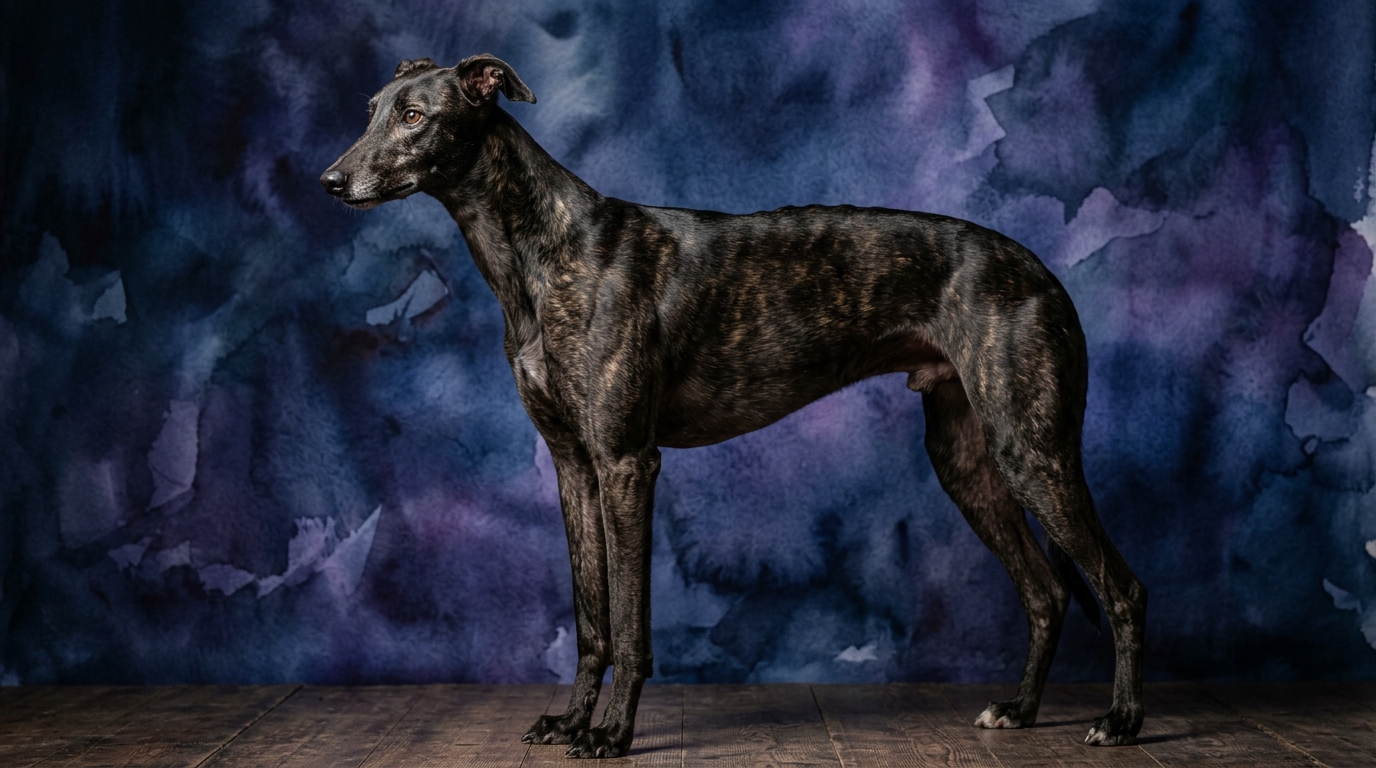
The Greyhound's intelligence profile paints a picture of specialized brilliance: Problem Solving 3/5, Training Speed 2/5, Social Intelligence 3/5, Instinctive Drive 5/5, and Memory 3/5. This breed’s mind is acutely tuned to its ancestral role as a sighthound, where unparalleled instinctive drive for pursuit is paramount. Their lower training speed score doesn't imply a lack of mental capacity, but rather a preference for independent thought and action, especially when their powerful instincts are engaged, making them selective learners.
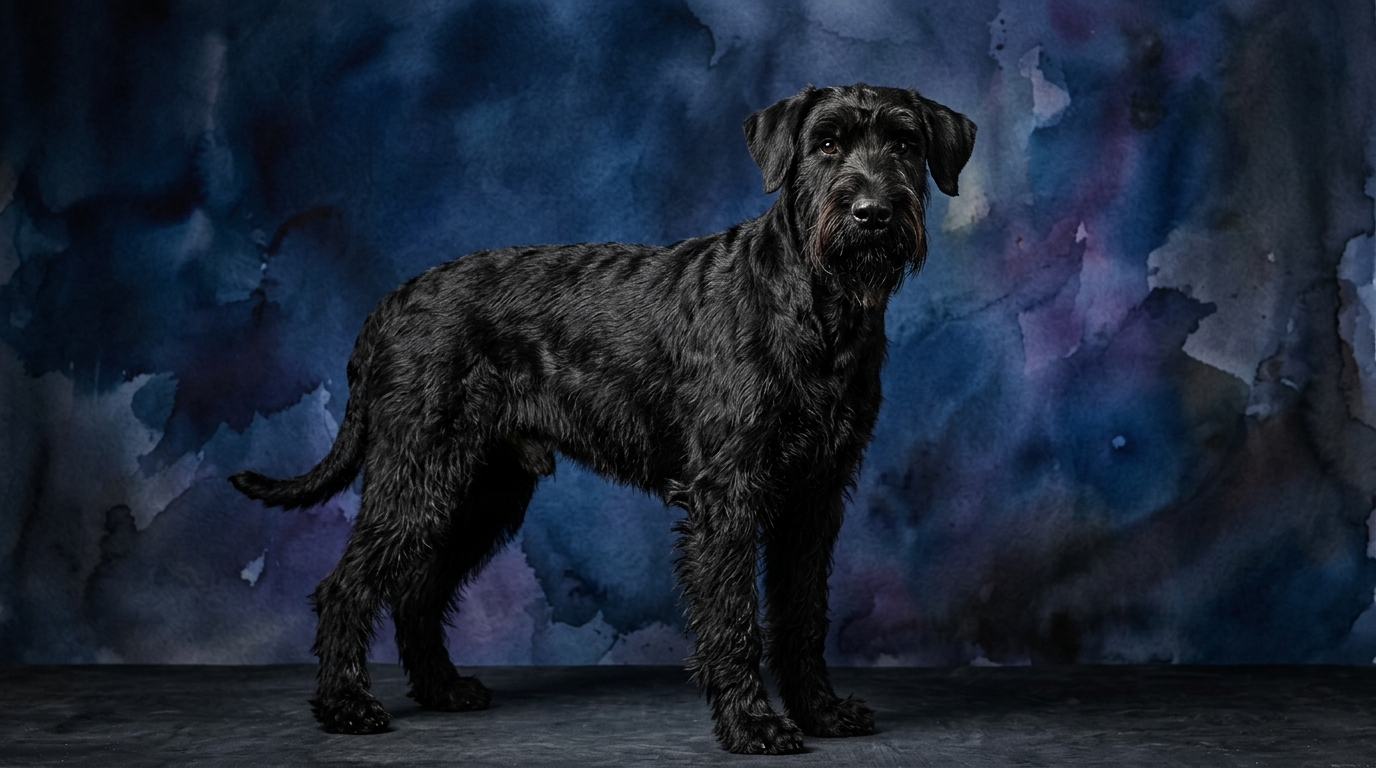
In contrast, the Giant Schnauzer presents a profile suited for versatile working roles: Problem Solving 4/5, Training Speed 4/5, Social Intelligence 3/5, Instinctive Drive 3/5, and Memory 4/5. Their higher scores in problem-solving and training speed reflect a breed historically tasked with guarding livestock, driving cattle, and performing police work, roles that demand quick learning, adaptability, and a willingness to collaborate closely with human partners. Their robust memory further supports their capacity for retaining complex command sequences and routines over time.
Where the Greyhound's Mind Excels
The Greyhound’s undeniable cognitive apex lies in its Instinctive Drive, rated a perfect 5/5. This isn't just about raw speed; it's a sophisticated package of exceptional visual acuity, rapid decision-making, and an unwavering focus on pursuit, all orchestrated for the chase. When a Greyhound spots movement, its brain processes the stimulus and orchestrates an immediate, powerful, and efficient response, demonstrating a highly specialized form of problem-solving centered around the dynamics of capture.
This intense drive is a testament to their evolutionary purpose, allowing them to track and capture prey over vast distances with remarkable efficiency and precision. Their ability to navigate complex terrain at high speeds, making split-second adjustments without direct human intervention, showcases a unique environmental intelligence. It's a cognitive strength tailored for survival and success in their specific field of work, far removed from typical obedience drills, highlighting their independent ingenuity.
While their Problem Solving (3/5) and Memory (3/5) might appear moderate in general terms, within the context of their instinctive drive, these scores are profoundly effective. A Greyhound remembers optimal chase paths and adapts to changing environmental conditions on the fly, demonstrating practical rather than abstract problem-solving. Their memory is particularly adept at recalling the thrill and mechanics of the chase, reinforcing their motivation for future pursuits.
The Giant Schnauzer's Cognitive Strengths
The Giant Schnauzer shines with its robust Problem Solving (4/5) and impressive Training Speed (4/5). These attributes are deeply rooted in their history as a working breed, where intelligence was a prerequisite for tasks requiring independent thought and quick learning. Whether herding cattle or acting as a protector, a Giant Schnauzer needed to assess situations and learn appropriate responses swiftly, often in dynamic, unpredictable environments, showcasing their adaptability.
Their capacity for retaining information, evidenced by a Memory score of 4/5, is a significant asset that underpins their trainability. This allows them to master intricate obedience routines, perform multi-step tasks, and consistently recall commands even after long periods, making them reliable partners. This strong memory contributes to their effectiveness in advanced dog sports and professional working roles, where precision and consistent recall are paramount.
Coupled with their Social Intelligence of 3/5, the Giant Schnauzer exhibits a balanced cognitive profile that facilitates a strong working relationship with humans. They can understand complex social cues and adapt their behavior accordingly, which is essential for collaborative tasks involving nuanced communication. This combination of problem-solving, rapid learning, and solid memory makes them highly capable partners, always ready for a new challenge and eager to engage their minds.
Training Dynamics: Who Learns Faster?
When it comes to formal training, the Giant Schnauzer holds a clear advantage with a Training Speed of 4/5 compared to the Greyhound's 2/5. The Giant Schnauzer's inherent desire to work alongside humans and its sharp wit mean it typically picks up new commands and behaviors with fewer repetitions, making training sessions often more straightforward and rewarding for both dog and handler. They thrive on mental engagement and complex tasks, viewing training as a collaborative activity.
The Greyhound's lower Training Speed score doesn't mean they are incapable of learning, but rather that their motivations and learning style differ significantly from a traditional working breed. Their powerful Instinctive Drive (5/5) means they are often more interested in pursuing a visual stimulus than in performing a sit-stay on command. Their independent nature, honed for solitary hunting, means they might question the utility of a command if it doesn't align with their immediate interests or innate drives, requiring a different approach.
For owners, this translates into distinct approaches. Training a Giant Schnauzer benefits from variety, consistent challenges, and clear, positive reinforcement to channel their eagerness and focus. Training a Greyhound requires immense patience, a deep understanding of their sighthound nature, and creativity in making training relevant and fun, often leveraging high-value rewards and minimizing distractions that trigger their prey drive. Consistency is crucial for both, but the methods and expected pace will vary significantly, adapting to their individual cognitive architecture.
Lifestyle Match: Active Pursuits vs. Engaged Partnership
The Greyhound, despite its reputation for speed, often surprises new owners with its '45 mph couch potato' persona. They are built for explosive bursts of speed, followed by extensive periods of rest, making them excellent companions for relaxed households. An ideal owner for a Greyhound appreciates this unique energy profile, providing safe, fenced areas for sprinting and managing their powerful prey drive, while also enjoying their calm, often quiet presence indoors. Their intelligence is best supported by outlets for their instinctive drive, such as lure coursing, rather than constant, high-impact exercise.
In stark contrast, the Giant Schnauzer requires an owner who can consistently provide both vigorous physical exercise and substantial mental engagement. Their problem-solving abilities and high training speed mean they thrive when given a 'job' to do, whether it's advanced obedience, agility, protection work, or even complex puzzle games that challenge their intellect. They are not content to merely observe; they need to participate and apply their keen intellect, making them unsuitable for passive companionship.
Therefore, a Greyhound suits a relaxed owner who can offer short, intense exercise opportunities and then enjoy a placid companion, understanding that their mental needs are often tied to their specific instinctive outlets and independent nature. A Giant Schnauzer, however, demands an active owner willing to invest significant time in training and activities that challenge their robust cognitive capabilities, fostering a true working partnership that extends beyond basic companionship and requires consistent effort.
Social Intelligence: Shared Ground, Different Expressions
Both the Greyhound and the Giant Schnauzer share a Social Intelligence score of 3/5, indicating a moderate capacity for understanding and navigating social dynamics. This score suggests they are capable of forming strong bonds with their human families and understanding social cues, but might not be as overtly demonstrative or universally gregarious as some breeds bred solely for companionship. Their social interactions are often nuanced, selective, and deeply tied to their individual breed histories.
For the Greyhound, this social intelligence often manifests as a quiet, gentle affection towards their chosen family members, sometimes referred to as 'velcro dogs' within their trusted circle. They are often sensitive and can be reserved or aloof with strangers, taking time to warm up and assess new individuals. Their social understanding allows them to be wonderfully empathetic companions within their trusted circle, often preferring calm interactions over boisterous play, reflecting their generally serene indoor temperament.
The Giant Schnauzer's social intelligence, while scoring the same, is expressed differently, often intertwined with their protective instincts. They are typically devoted to their families and can discern social dynamics within the household, but their wariness of strangers is a hallmark of their guardian heritage. This means their social understanding often includes an element of assessment and vigilance, making them attentive family members who are also observant of their surroundings and potential threats, contributing to their loyal yet watchful nature.
The Verdict
Opt for a Greyhound if you admire specialized instinctive brilliance, value an independent companion, and are prepared to manage a strong prey drive within a generally calm home environment, appreciating bursts of speed followed by serene relaxation.
Select a Giant Schnauzer if you seek a highly trainable, problem-solving partner eager for consistent mental and physical challenges, and appreciate a vigilant, protective companion who thrives on having a clear purpose and engagement.
🧠 Find Your Pet's IQ Score
Our Pet IQ Lab assessment covers 25+ tests across 5 cognitive dimensions — personalized to your breed.
Take the Full IQ Test →Frequently Asked Questions
Are Greyhounds difficult to train due to their lower training speed?
Greyhounds are not inherently difficult, but their independent nature and strong prey drive mean training requires patience, consistency, and understanding their unique motivations. Focusing on positive reinforcement and making training fun and relevant to their natural instincts yields the best results, as they respond well to gentle, engaging methods.
What kind of mental stimulation does a Giant Schnauzer need?
Giant Schnauzers thrive on complex tasks, advanced obedience training, agility, scent work, and interactive puzzle toys. They benefit significantly from activities that engage their problem-solving and memory capabilities, keeping their active minds challenged and preventing boredom, which can lead to destructive behaviors if not properly addressed.
How do their Coren ranks reflect their overall intelligence?
The Coren rank primarily indicates a dog's working and obedience intelligence, reflecting how quickly they learn and obey commands from humans. While the Giant Schnauzer's #28 suggests easier trainability in this context, the Greyhound's #46 reflects a different cognitive profile, emphasizing specialized instinctive skills and independent action over general obedience, which is not a measure of overall brainpower or specific cognitive strengths.