Side-by-Side Cognitive Profiles: A Closer Look
The Cosmic Pet Pet IQ Lab's framework offers a detailed lens through which to examine the Greyhound and Komondor, highlighting their mental architecture across five key dimensions. Both breeds share a 'Problem Solving' score of 3 out of 5, indicating a moderate capacity to navigate novel situations and adapt to new challenges, though the specific application of this skill varies significantly between them. They also align on 'Social Intelligence' at 3 out of 5, suggesting a reasonable ability to interpret and respond to social cues from humans and other animals, fostering functional relationships.
However, distinct differences emerge in other crucial areas. The Greyhound's 'Training Speed' is rated at 2 out of 5, implying a slower uptake of new commands and a need for greater patience and repetition during instruction. In contrast, the Komondor scores 3 out of 5 in 'Training Speed,' suggesting a comparatively quicker ability to form associations between cues and desired behaviors. This difference is often attributed to their historical roles, with working breeds typically needing to be more receptive to human direction.
The most pronounced divergence lies in 'Instinctive Drive.' The Greyhound boasts an impressive 5 out of 5, reflecting an exceptionally strong, innate urge to chase, hunt, and perform behaviors associated with its sighthound heritage. The Komondor, on the other hand, registers a 3 out of 5 for 'Instinctive Drive,' which, while still present, is primarily channeled towards guarding and protection rather than pursuit. Finally, both breeds share a 'Memory' score of 3 out of 5, indicating they possess a solid capacity for retaining learned information and remembering past experiences, crucial for both companionship and their respective working roles.
Where the Greyhound Excels Cognitively
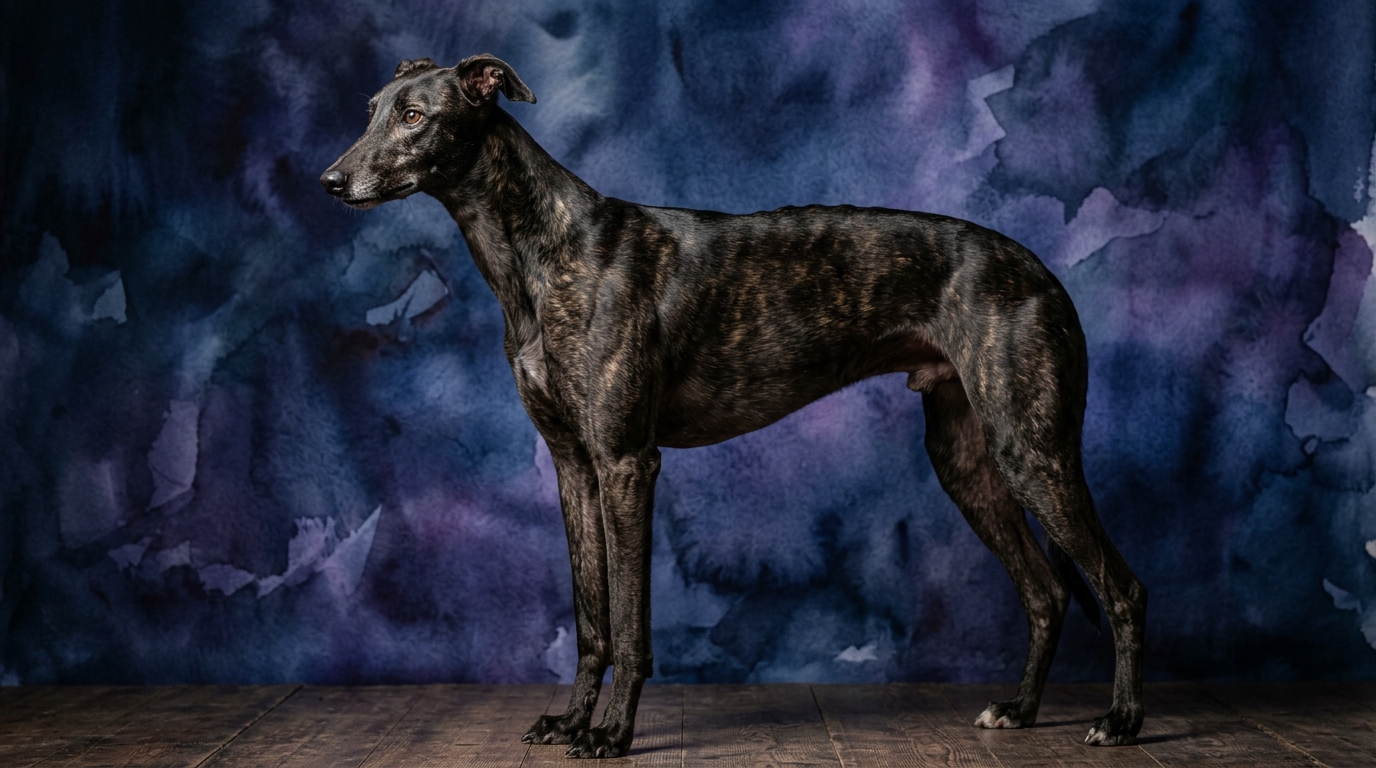
The Greyhound's dominant cognitive strength lies squarely in its 'Instinctive Drive,' scoring a perfect 5 out of 5. This isn't just about raw speed; it's about an unparalleled capacity for rapid visual processing, spatial reasoning to anticipate prey movements, and instantaneous decision-making during a high-speed chase. Their brains are wired for efficiency in pursuit, allowing them to calculate trajectories, adjust their pace, and react to sudden changes in an animal's escape path with astonishing precision. This advanced predatory cognition is a hallmark of their breed's purpose.
Beyond the chase, their problem-solving, though rated 3/5, often manifests in navigating complex environments at speed, finding the most efficient route, or identifying weaknesses in a target's defense. A Greyhound’s memory (3/5) is adept at recalling the layout of a park where they’ve previously had successful sprints or remembering the specific cues for a favored game of fetch, reinforcing their intrinsic drive. Their social intelligence, also 3/5, allows them to form close bonds with their human companions, often displaying a quiet sensitivity and understanding of household routines, which belies their powerful hunting heritage.
Where the Komondor Triumphs Cognitively
The Komondor's cognitive prowess shines in areas crucial for its role as a livestock guardian. Their 'Training Speed' of 3 out of 5, which surpasses the Greyhound's 2/5, suggests a more receptive mind for absorbing and executing human-directed tasks. This isn't to say they are always eager to please, as their independent nature can sometimes overshadow their receptiveness, but they possess the underlying capacity to learn commands efficiently when motivated.
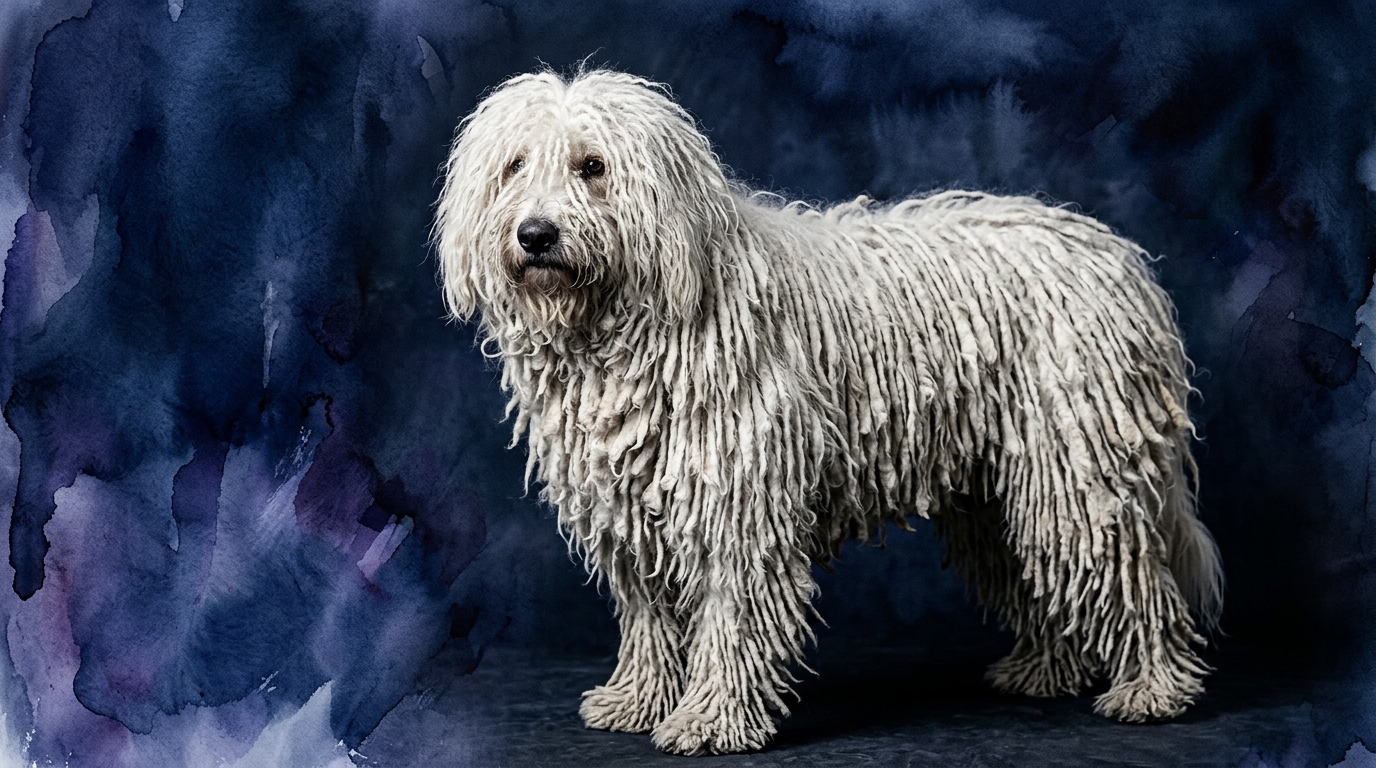
Their 'Instinctive Drive' at 3 out of 5 is entirely dedicated to protection. This involves a complex cognitive process of threat assessment: discerning genuine danger from benign stimuli, evaluating the intent of strangers, and strategically positioning themselves to defend their flock or family. Their problem-solving (3/5) is applied to these scenarios, such as finding the best vantage point for observation or determining the most effective way to deter a perceived threat without unnecessary aggression. Their social intelligence (3/5) is finely tuned to the dynamics of their family unit, enabling them to understand their charges and identify any deviations from the norm that might signal danger, making them vigilant and dedicated protectors.
Training Dynamics: Which is Easier and Why?
When it comes to ease of training, the Komondor generally holds an edge over the Greyhound, primarily due to its higher 'Training Speed' score (3/5 vs. 2/5). Komondors, bred to guard livestock, possess a natural inclination towards observing and responding to their environment, and with consistent, positive reinforcement, they can quickly grasp commands. However, their independent and sometimes stubborn nature, a byproduct of needing to make autonomous decisions in the field, means training requires patience and understanding, focusing on building a trusting relationship.
Greyhounds, with their lower 'Training Speed,' often require more repetitions and a highly engaging approach. Their strong 'Instinctive Drive' (5/5) means they are easily distracted by movement and scents, making focus a challenge in varied environments. They were historically bred to chase, not necessarily to be biddable to complex commands in a domestic setting. This isn't a lack of intelligence, but rather a difference in the *type* of intelligence and motivation. Owners will find that while Komondors might be slower to *obey* due to independence, Greyhounds can be slower to *learn* the command in the first place, often needing to see the direct benefit or reward for compliance. Effective training for a Greyhound often leverages their playfulness and desire for comfort, making sessions short, fun, and highly rewarding.
Matching Canine Companions to Owner Lifestyles
The cognitive and behavioral profiles of these two breeds clearly delineate which might be a better fit for different owner lifestyles. For the truly 'active owner,' the Greyhound, despite its reputation as a '45 mph couch potato,' is an excellent match. While they enjoy extensive periods of rest, their 'Instinctive Drive' of 5/5 necessitates regular, intense bursts of exercise. Owners who can provide secure, enclosed spaces for them to gallop freely, or enjoy activities like lure coursing, will see their Greyhound thrive. Their need for speed is profound, and an active owner understands this fundamental drive, providing appropriate outlets for their athletic prowess. They are also excellent companions for quiet evenings, but their daily requirement for significant physical exertion cannot be overlooked.
Conversely, the Komondor is more suited for a 'relaxed owner' who appreciates a watchful, independent presence. Their 'Instinctive Drive' (3/5) is geared towards guarding, not intense physical activity. While they require space to patrol and moderate daily walks, they aren't built for sustained, high-energy pursuits. Owners must be prepared for their strong protective instincts and the need for early, consistent socialization to ensure they are well-adjusted. The ideal Komondor owner is someone who values a dedicated guardian, understands the nuances of a working breed's independence, and can provide a secure environment where their protective nature can be fulfilled without overstimulation. Their lower exercise needs, compared to a Greyhound's bursts of speed, align well with a more laid-back, yet committed, ownership style.
The Verdict
Choose a Greyhound if you appreciate a quiet, sensitive companion with an unparalleled drive for speed, and you're prepared to manage their powerful chasing instincts with secure, high-energy play sessions.
Opt for a Komondor if you seek a dedicated, watchful guardian for your home and family, and you are ready to provide consistent training and socialization to channel their protective nature effectively.
🧠 Find Your Pet's IQ Score
Our Pet IQ Lab assessment covers 25+ tests across 5 cognitive dimensions — personalized to your breed.
Take the Full IQ Test →Frequently Asked Questions
Do Greyhounds genuinely enjoy lounging, or is it a misconception?
Despite their athletic build and incredible speed, Greyhounds are indeed known for their love of lounging. They are sprinters, designed for short, intense bursts of activity, followed by long periods of rest, making them excellent companions for relaxed evenings after their daily exercise needs are met.
How does a Komondor's protective instinct manifest in a family setting?
A Komondor's protective instinct means they are naturally watchful and dedicated to their family. They will often position themselves to observe their surroundings, alert to anything unusual, and can be wary of strangers until they are properly introduced and deemed non-threatening. Early and consistent socialization is key to ensuring they are well-adjusted.
Are either of these breeds suitable for first-time dog owners?
Both breeds present unique challenges that might be demanding for first-time owners. Greyhounds require management of their strong prey drive and specific exercise needs, while Komondors demand owners who can confidently handle their independence and powerful guarding instincts. Experience with dog behavior or a commitment to extensive training and socialization is highly recommended for either.