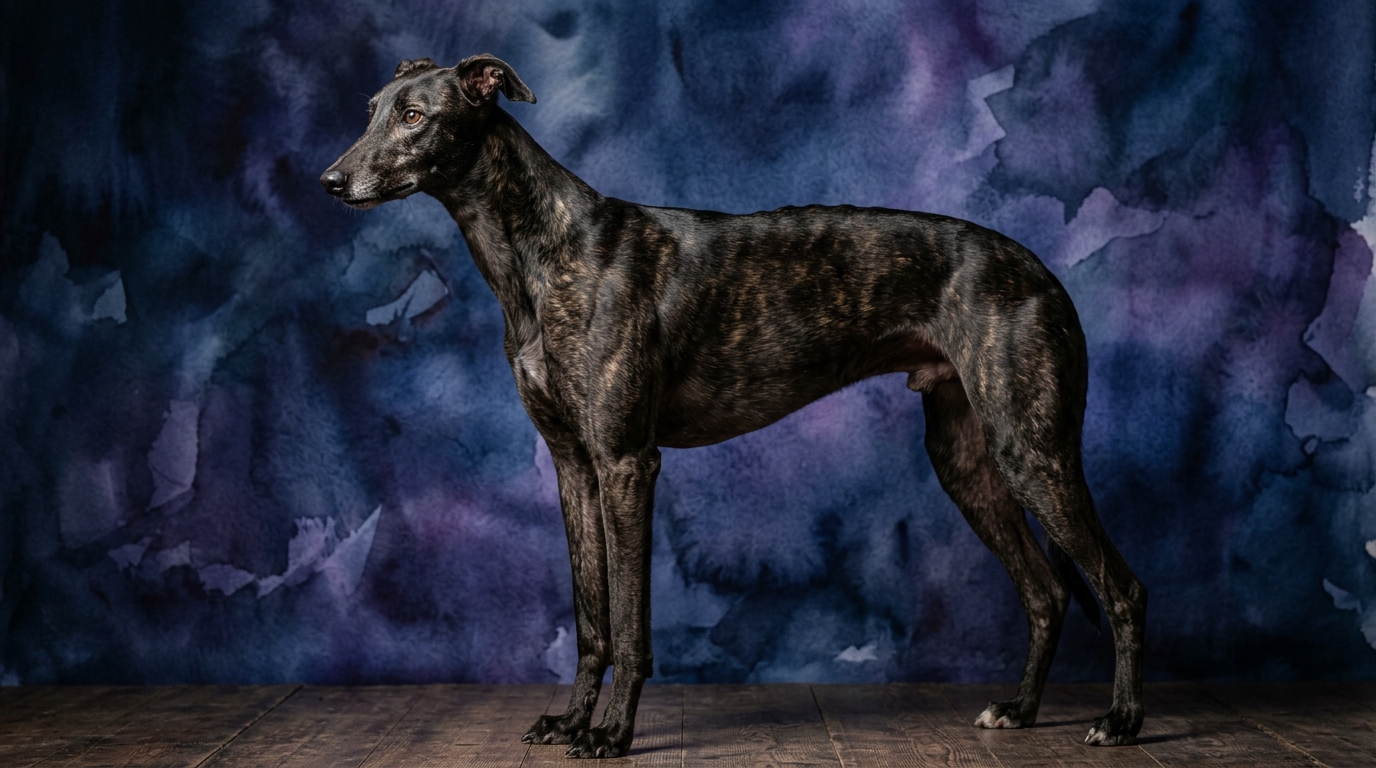
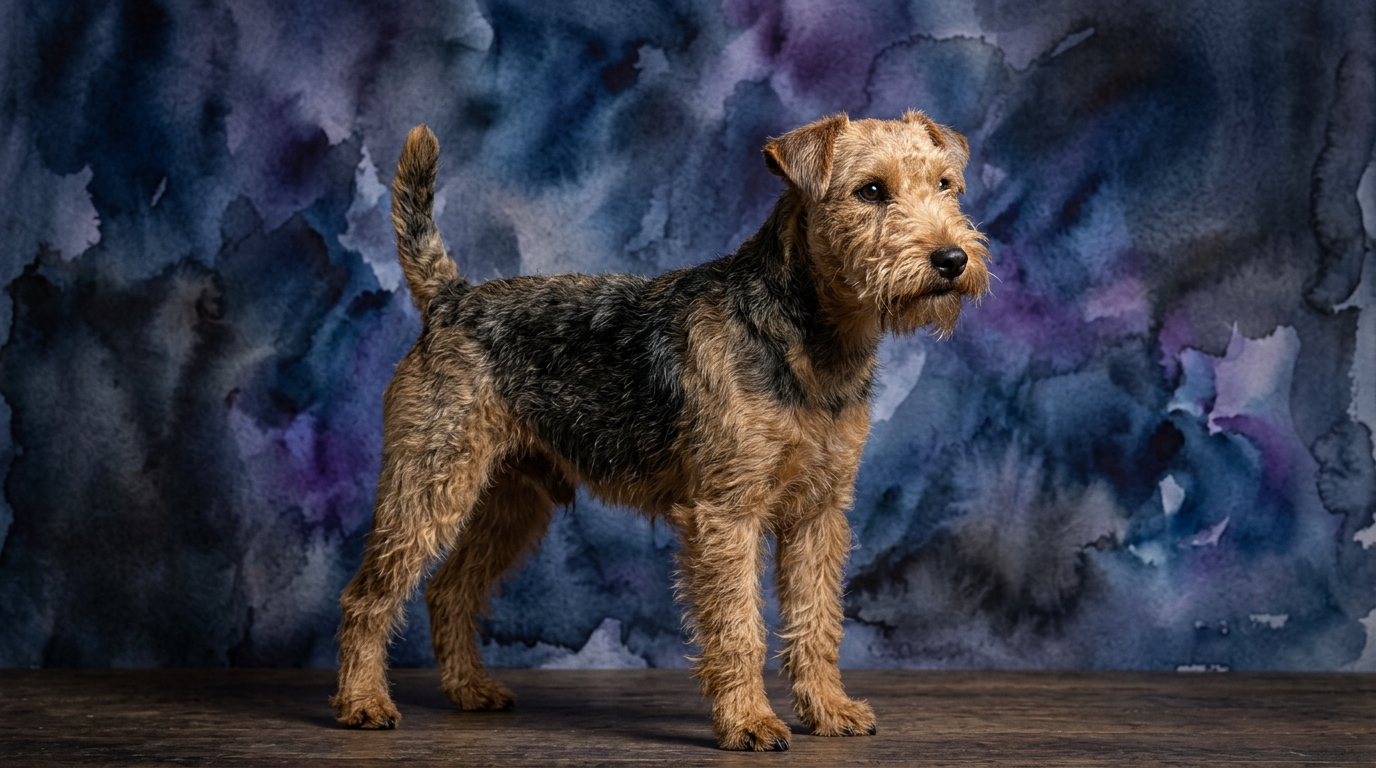
Side-by-Side Cognitive Profile: Greyhound vs. Lakeland Terrier
The Cosmic Pet Pet IQ Lab employs five key dimensions to evaluate canine cognition, moving beyond simplistic notions of 'smartness' to understand how breeds process information and interact with their world. These dimensions are Problem Solving, Training Speed, Social Intelligence, Instinctive Drive, and Memory, each offering a window into a breed's unique intellectual makeup.
The Greyhound, a sighthound ranked #46 by Coren, exhibits a cognitive profile deeply influenced by its heritage of high-speed pursuit. Their Problem Solving is rated 3/5, indicating an ability to resolve direct, goal-oriented challenges, particularly those related to the mechanics of a chase, but less so for complex, multi-step puzzles. Training Speed scores 2/5; while capable of learning commands, their sensitive nature and powerful independent streak often necessitate patience and positive reinforcement, with human directives sometimes taking a backseat to innate drives. Social Intelligence stands at 3/5, reflecting their capacity to form strong bonds and understand human cues, often with a gentle, observant demeanor. Their Instinctive Drive is a profound 5/5, manifesting as an exceptional focus on visual stimuli and an intense, hardwired urge to run and chase. Memory is rated 3/5, showing good recall for established routines and familiar individuals, though selective when a strong instinct is triggered.
In contrast, the Lakeland Terrier, a robust working terrier not appearing on the Coren rank, presents a different set of cognitive strengths forged in challenging, confined environments. Their Problem Solving is also 3/5, but this manifests as an astute ability to overcome physical obstacles, manipulating objects or digging to achieve a goal, rather than a visual chase strategy. Training Speed is 3/5, suggesting they grasp commands at a moderate pace, but their characteristic terrier tenacity and independence demand consistent, engaging training methods. Social Intelligence matches at 3/5, as they connect deeply with their family, displaying a bold and confident social presence, though they can be discerning with outsiders. Their Instinctive Drive is 3/5, focusing on scent and sound for tracking vermin, manifesting as tenacious pursuit, digging, and barking, rather than open-field speed. Memory is 3/5, indicating good retention for locations, routines, and experiences, recalling both positive and negative associations readily.
Where the Greyhound Excels Cognitively
When examining specific cognitive advantages, the Greyhound's evolutionary path grants it several distinct wins. Their 5/5 Instinctive Drive translates into unparalleled visual processing capabilities, allowing them to identify and track moving targets with incredible precision over significant distances. This isn't merely physical speed; it’s a cognitive economy where their brains are optimized for rapid decision-making during pursuit, calculating trajectories and executing movements with minimal hesitation. This specialized problem-solving manifests as an innate understanding of chase dynamics, making quick, decisive choices in high-stakes situations. Furthermore, their memory, while rated 3/5, is particularly effective for recalling optimal running lines and the layout of familiar open spaces. Beyond the chase, the Greyhound's 3/5 Social Intelligence, often expressed as a profound sensitivity and quiet observational nature, can be a cognitive advantage in environments where calm, empathetic companionship is valued over boisterous interaction, allowing them to attune to subtle human emotional states with remarkable gentleness.
Where the Lakeland Terrier Excels Cognitively
The Lakeland Terrier, shaped by its role as a tenacious vermin hunter, demonstrates cognitive strengths that sharply diverge from the Greyhound's open-field prowess. Their Problem Solving, also 3/5, excels in perseverance and resourcefulness, particularly in confined or complex environments. This manifests as clever manipulation of objects, strategic digging, and an unwavering determination to overcome physical barriers to reach a goal. Unlike the Greyhound's visual focus, the Lakeland's cognitive strengths lean heavily on acute auditory and olfactory processing, allowing them to interpret subtle scent trails and faint sounds, essential for tracking prey underground. This requires a different kind of spatial reasoning and sustained focus. Their 3/5 Training Speed, a notch above the Greyhound's 2/5, suggests a greater cognitive flexibility in acquiring and executing a broader range of non-instinctive commands, provided the training is stimulating and varied. This indicates a more adaptable learning style, allowing them to engage with diverse tasks beyond their primary drive. Their independent thinking, while sometimes perceived as stubbornness, is a cognitive win, enabling them to make autonomous decisions when direct human guidance is unavailable, a crucial trait for a solitary working terrier.
Training Dynamics: Greyhound vs. Lakeland Terrier
Evaluating ease of training requires understanding each breed's cognitive predispositions and primary motivations. The Greyhound, with a Training Speed of 2/5, presents a unique challenge. Their sensitive nature means harsh corrections are counterproductive, and their potent 5/5 Instinctive Drive often trumps human commands when a visual stimulus triggers their chase response. While they are certainly trainable, their learning process is often slower for general obedience and requires immense patience, consistent positive reinforcement, and a deep understanding of their sighthound tendencies. They may grasp a command but choose not to perform it if their focus is elsewhere, or if they perceive no immediate reward, showcasing a selective obedience rooted in their inherent drives.
The Lakeland Terrier, with a Training Speed of 3/5, generally proves more amenable to a wider variety of training tasks. While they possess an independent and sometimes stubborn 'terrier will,' their cognitive flexibility allows them to pick up new commands more readily, especially when training is engaging, varied, and rewards-based. Their 3/5 Instinctive Drive, though strong, is often more manageable than a Greyhound's, making it easier to channel into structured activities like agility or earthdog trials. Their tenacity, a cognitive strength in problem-solving, can be leveraged in training, as they are often determined to figure out what is expected of them. Therefore, for an owner seeking a dog that will more quickly and consistently learn a broad repertoire of commands and tricks, the Lakeland Terrier generally offers an easier path, provided the owner matches their energy and provides stimulating mental engagement.
Lifestyle Match: Active vs. Relaxed Owners
The choice between a Greyhound and a Lakeland Terrier often hinges on an owner's lifestyle and energy levels, aligning with each breed's cognitive and physical demands. For the active owner, the Lakeland Terrier is an ideal match. Their robust 3/5 Instinctive Drive, coupled with their tenacious Problem Solving, means they thrive on varied physical and mental engagement. They need regular, vigorous exercise, structured training sessions, and opportunities to channel their terrier instincts into productive outlets like scent work, earthdog trials, or agility. An owner who enjoys hiking, exploring, or participating in dog sports will find a willing and capable partner in the Lakeland, as their cognitive makeup craves challenges and consistent interaction.
Conversely, the Greyhound is often a better fit for more relaxed owners, despite their reputation for speed. While they require short bursts of intense running in a securely fenced area to satisfy their 5/5 Instinctive Drive, Greyhounds are famously calm and gentle indoors, earning them the moniker '45 mph couch potatoes.' Their 3/5 Social Intelligence and Memory make them excellent, quiet companions who appreciate routine and comfort. They are content to lounge for much of the day, making them suitable for apartment living or a less active household, provided their specific exercise needs are met safely. An owner who values quiet companionship, gentle affection, and a dog that is largely undemanding indoors, while understanding the necessity of providing safe, high-speed sprints, will find the Greyhound a remarkably harmonious fit.
The Verdict
For those seeking a gentle, calm indoor companion who enjoys bursts of intense speed, appreciates quiet routines, and whose owner understands their profound sighthound instincts, the Greyhound is an excellent choice. They are ideal for a relaxed home environment where secure off-leash running can be provided.
For owners who desire an active, tenacious, and engaging companion eager for mental and physical challenges, prepared for consistent training, and able to channel their terrier drive into productive activities, the Lakeland Terrier is best suited. They thrive with an owner ready for an energetic and interactive partner.
🧠 Find Your Pet's IQ Score
Our Pet IQ Lab assessment covers 25+ tests across 5 cognitive dimensions — personalized to your breed.
Take the Full IQ Test →Frequently Asked Questions
Are Greyhounds good apartment dogs?
Yes, despite their incredible speed, Greyhounds are often excellent apartment dwellers due to their calm indoor nature and preference for lounging. They typically require only short, intense bursts of exercise, provided these opportunities are safe and secure.
Do Lakeland Terriers bark a lot?
Lakeland Terriers can be quite vocal, often barking to alert their owners to new sights or sounds, or when bored. Consistent training, early socialization, and ample mental stimulation can help manage excessive barking.
How do the prey drives of Greyhounds and Lakeland Terriers differ?
A Greyhound's 5/5 prey drive is primarily visual, triggered by movement and focused on a lightning-fast, open-field chase. A Lakeland Terrier's 3/5 prey drive is more scent and sound-driven, geared towards persistent pursuit and digging in confined, often underground, spaces.