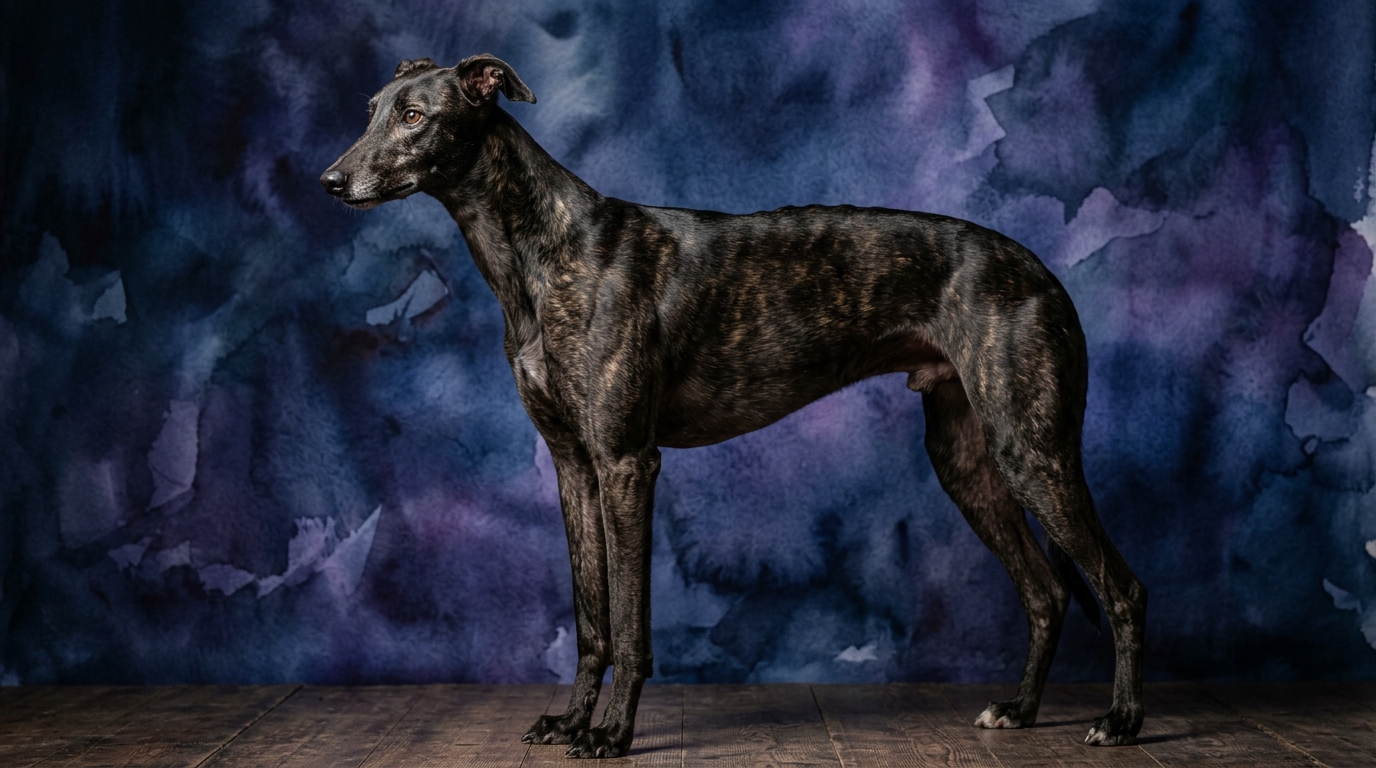
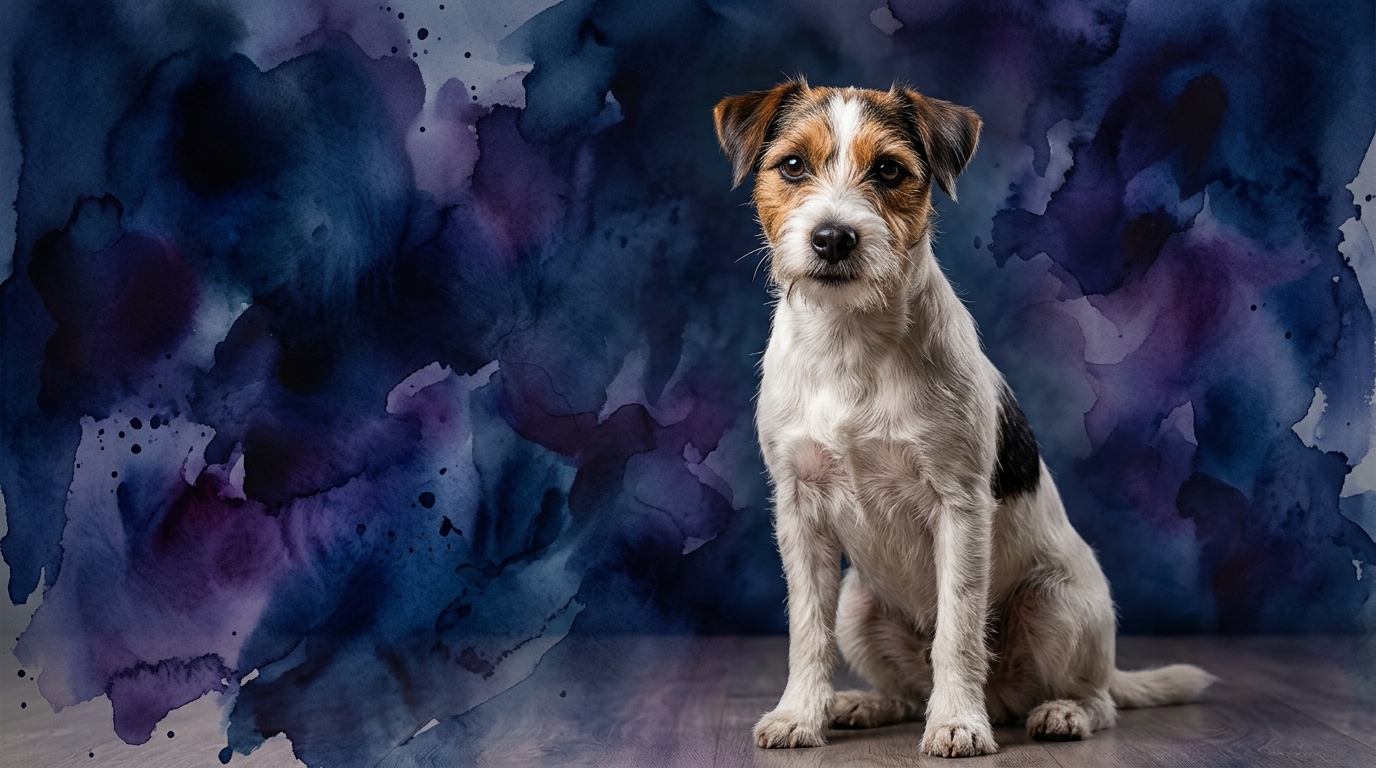
Side-by-Side IQ Profile: Speed vs. Scrutiny
The Cosmic Pet Pet IQ Lab assesses canine intelligence across five critical dimensions, providing a nuanced look at how breeds like the Greyhound and Parson Russell Terrier approach the world. For the Greyhound, problem-solving registers at 3/5, indicating a moderate capacity, likely geared towards immediate, visually-driven challenges rather than complex, multi-step puzzles. Their training speed is rated 2/5, suggesting a more independent learning curve, often requiring patience and motivation tailored to their sighthound nature. Social intelligence also sits at 3/5, implying an ability to form strong bonds but perhaps less emphasis on intricate group dynamics. Where Greyhounds truly shine is in instinctive drive, scoring an exceptional 5/5, a clear reflection of their profound, innate impulse to chase and pursue moving objects with singular focus. Their memory, at 3/5, is solid but not exceptional for complex sequences, perhaps more attuned to spatial recall for hunting territories or running paths.
In contrast, the Parson Russell Terrier presents a slightly different cognitive landscape. Their problem-solving ability matches the Greyhound at 3/5, but this likely manifests in persistent, hands-on approaches to obstacles, typical of a burrowing terrier. Training speed for the Parson Russell is 3/5, indicating a generally quicker uptake of commands compared to the Greyhound, often fueled by their eager-to-please yet spirited disposition. Social intelligence also scores 3/5, reflecting their capacity for connection within a family unit, though they can exhibit strong opinions within social interactions. The Parson Russell Terrier's instinctive drive is 3/5, a robust score that speaks to their hunting heritage and relentless pursuit of quarry, though perhaps less singularly focused on pure speed than the Greyhound. Their memory, like the Greyhound's, is rated 3/5, sufficient for learning tasks and routines but not necessarily for recalling vast, intricate information.
Where the Greyhound Excels Cognitively
The Greyhound's cognitive strengths are deeply rooted in their history as sight hunters, where rapid visual processing and explosive execution were paramount. Their 5/5 instinctive drive is not just a raw impulse; it's a sophisticated cognitive mechanism that allows them to instantaneously identify, track, and intercept fast-moving targets over open ground. This involves an incredible ability to filter out distractions and maintain tunnel vision on their 'prey,' whether it's a lure, a squirrel, or a thrown toy. Their problem-solving, though moderate at 3/5, is exceptionally efficient within this specific context, allowing for quick, decisive actions in pursuit without overthinking. They are masters of the chase, demonstrating a unique form of 'action intelligence' where thought and movement are seamlessly integrated for peak performance.
Furthermore, their cognitive profile allows for remarkable energy conservation, a trait essential for sustained bursts of speed. A Greyhound can appear incredibly relaxed and calm for extended periods, almost meditative, until a visual stimulus triggers their profound instinctive drive. This ability to switch between states of profound rest and explosive activity showcases a specific type of mental discipline. Their memory, while 3/5, is likely well-tuned for remembering optimal running lines, familiar paths, and the routines of their human companions, contributing to their calm demeanor indoors and their focused intensity outdoors.
Where the Parson Russell Terrier Excels Cognitively
The Parson Russell Terrier's cognitive advantages stem from their role as a working terrier, requiring ingenuity, tenacity, and a direct approach to challenges. Their problem-solving at 3/5 manifests as a persistent, hands-on determination to overcome obstacles, especially those related to accessing confined spaces or 'digging out' a perceived quarry. Unlike the Greyhound's visual-spatial problem-solving in open fields, the Parson Russell often exhibits a tactile, investigative form of intelligence, utilizing their nose and paws to manipulate their environment. This involves a strong capacity for trial-and-error learning when faced with physical barriers, making them adept at navigating complex or changing landscapes.
Their 3/5 training speed, combined with a robust 3/5 instinctive drive, indicates a cognitive eagerness to engage with tasks and learn new behaviors, particularly when those tasks mimic their natural hunting instincts. They thrive on mental stimulation that allows them to 'work' and figure things out, whether it's a puzzle toy or a scent-tracking game. This drive is less about raw speed and more about grit and determination, allowing them to focus on a task for extended periods. Their social intelligence, also 3/5, often includes a strong communication style, using barks and body language to express their intentions and desires, a critical trait for a dog expected to work closely with a human handler in challenging environments.
Training: Greyhound's Independent Streak vs. Parson Russell's Eager Tenacity
When it comes to training, the core behavioral differences between these two breeds become strikingly apparent, directly correlating with their IQ scores. The Greyhound’s training speed of 2/5 reflects their independent nature, a legacy of being bred to hunt by sight, often far from their human handler, making split-second decisions autonomously. They are not inherently driven to please through complex obedience and can be easily distracted by visual stimuli, requiring patient, consistent, and reward-based methods. Their learning is often slower when it comes to arbitrary commands, but they excel at learning routines and understanding household rules, especially if they perceive a clear benefit or comfort.
The Parson Russell Terrier, with a training speed of 3/5, generally exhibits more enthusiasm for learning commands and participating in structured activities. Their historical role required them to work in closer partnership with humans, necessitating a degree of biddability. However, this eagerness is often coupled with a strong-willed terrier tenacity. While they pick up cues more quickly, their problem-solving drive can lead them to test boundaries or find creative, sometimes mischievous, ways around rules. Effective training for a Parson Russell leverages their drive for engagement and mental stimulation, channeling their boundless energy and investigative nature into productive learning rather than allowing it to manifest as stubbornness or destructive behavior.
Suitability for Active vs. Relaxed Owners
Understanding their cognitive profiles is crucial for matching these breeds with the right lifestyle. The Greyhound, despite their incredible athletic prowess, often surprises owners with their relaxed indoor disposition. Their 5/5 instinctive drive for chase means they require secure, ample space for controlled bursts of running, but their ability to switch off and conserve energy makes them surprisingly calm housemates. They are well-suited for owners who appreciate a quiet, undemanding companion indoors but are committed to providing regular, safe opportunities for them to stretch their legs and fulfill their innate need for speed. They don't typically demand constant mental challenges or intricate games, preferring comfortable naps over complex puzzle toys.
Conversely, the Parson Russell Terrier, with its balanced 3/5 scores across most cognitive dimensions, thrives with owners who are prepared for consistent engagement and mental stimulation. Their moderate instinctive drive and problem-solving abilities mean they need outlets for their investigative nature and boundless energy, otherwise, they may invent their own 'work,' often to the detriment of household items. They are ideal for active owners who enjoy activities like agility, earthdog trials, scent work, or extensive hiking, and who are willing to invest time in training and brain games. Their need for purpose means they are not content to be just a couch potato, even if they enjoy a good snuggle after a vigorous mental and physical workout.
The Verdict
Choose the Greyhound if you appreciate a calm, elegant companion indoors who requires dedicated, safe opportunities for high-speed exercise, and you value an independent spirit over constant biddability.
Opt for the Parson Russell Terrier if you're an active owner seeking a tenacious, engaging partner for mental and physical challenges, prepared to channel their energetic drive into structured activities and consistent training.
🧠 Find Your Pet's IQ Score
Our Pet IQ Lab assessment covers 25+ tests across 5 cognitive dimensions — personalized to your breed.
Take the Full IQ Test →Frequently Asked Questions
Are Greyhounds difficult to train due to their lower training speed score?
Greyhounds aren't necessarily difficult, but their 2/5 training speed indicates they learn differently, often requiring more patience and motivation tailored to their sighthound instincts. They excel when training is fun, positive, and doesn't conflict with their natural prey drive or independent nature, and they quickly learn routines that bring them comfort.
How does the Parson Russell Terrier's 3/5 problem-solving manifest in daily life?
A Parson Russell Terrier's 3/5 problem-solving means they are persistent and clever at figuring things out, often using trial-and-error to overcome physical barriers or access desired items. This can translate to skillfully opening cabinets, escaping enclosures, or meticulously working to 'dig' out a toy hidden under a blanket, requiring owners to be proactive in providing appropriate mental challenges.
Which breed is better for a first-time dog owner?
Neither breed is inherently 'easy' for a first-time owner, as both have specific needs. A Greyhound might suit a first-timer who can provide secure exercise and appreciates a generally calm indoor presence, while a Parson Russell Terrier requires a first-timer who is committed to consistent training, mental stimulation, and can manage a dog with significant drive and tenacity.