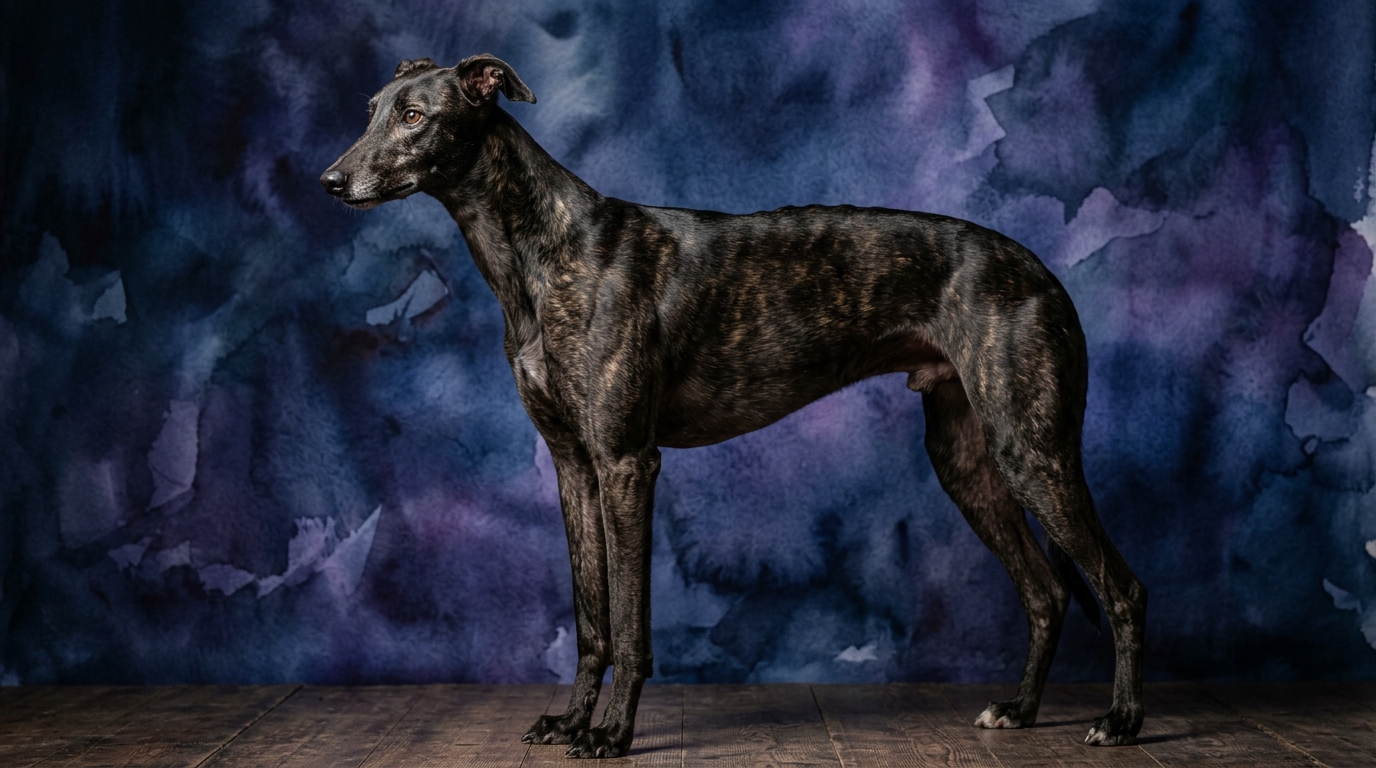
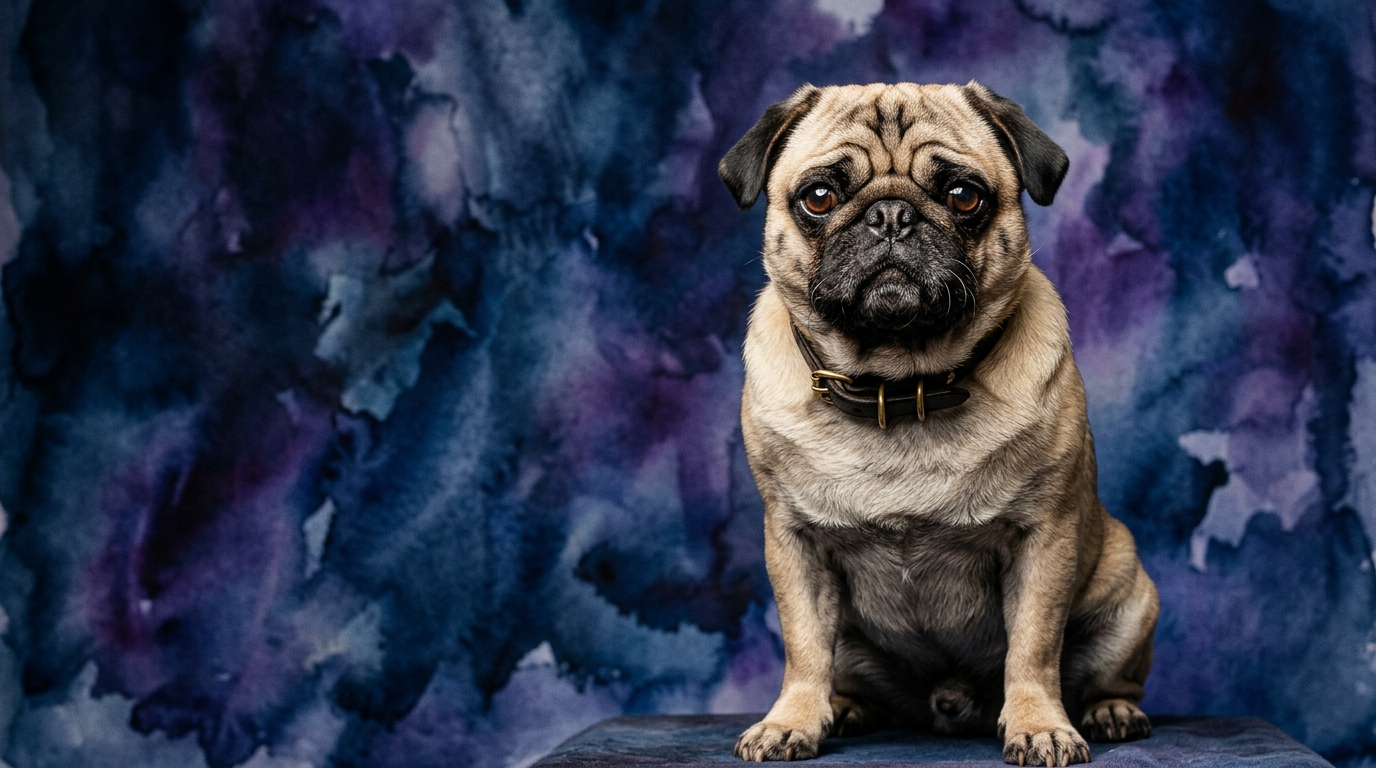
Side-by-Side IQ Profile: Greyhound vs. Pug
The Greyhound, a breed sculpted for the chase, exhibits a cognitive profile reflecting its specialized role. Their Problem Solving is rated at 3/5, indicating a moderate capacity to navigate novel situations or overcome simple obstacles when motivated. Training Speed stands at 2/5, suggesting they may require patience and consistent methods to master new commands, often prioritizing their own comfort or instinctive urges over immediate compliance. Social Intelligence is 3/5; while capable of forming strong bonds, their primary focus isn't always on intricate human-canine communication. Instinctive Drive is a commanding 5/5, a clear manifestation of their deep-seated impulse to pursue and react to moving objects. Memory is assessed at 3/5, meaning they can recall learned behaviors and routines reliably, but perhaps not with exceptional detail over long periods.
In contrast, the Pug, a breed developed purely for companionship, presents a markedly different cognitive landscape. Their Problem Solving ability is rated 2/5, implying they are less inclined to independently strategize solutions to complex environmental challenges, often preferring to seek human assistance or wait for guidance. Training Speed also registers at 2/5, indicating a similar pace to Greyhounds in learning new cues, though the underlying reasons for this pace likely differ, leaning towards a preference for comfort or a playful stubbornness. Where the Pug truly shines is in Social Intelligence, scoring an impressive 5/5; they are exceptionally adept at reading human emotions, anticipating interactions, and engaging in nuanced communication. Instinctive Drive is a low 2/5, reflecting their minimal prey drive or strong urges to perform specialized tasks. Memory for the Pug is 3/5, demonstrating a solid capacity for retaining familiar routines and social cues, contributing to their excellent adaptability within a household.
Where the Greyhound Excels Cognitively
The Greyhound's cognitive strengths are deeply intertwined with its heritage as a sighthound, primarily evident in its exceptional Instinctive Drive (5/5). This isn't merely a physical attribute but a complex cognitive process involving rapid visual processing, immediate decision-making, and sustained focus on a moving target. They demonstrate a remarkable ability to process visual stimuli at high speeds, differentiating a potential lure or prey from background clutter, and initiating a coordinated chase response with precision. This specialized form of problem-solving, though specific to their hunting context, showcases a highly developed cognitive pathway for rapid environmental assessment and reactive action.
Furthermore, their Problem Solving (3/5), while not top-tier for abstract puzzles, becomes more apparent in practical, goal-oriented scenarios related to their drive. A Greyhound might figure out how to navigate a complex path to reach a perceived 'target' or exploit a weakness in a barrier if strongly motivated by an instinctive urge. Their memory (3/5) supports this by allowing them to recall successful hunting routes or effective strategies for navigating familiar environments, contributing to their efficiency in their primary function, even if not expressed in typical obedience tasks.
Where the Pug Shines Cognitively
The Pug's cognitive prowess is overwhelmingly concentrated in the realm of Social Intelligence, where it scores a perfect 5/5. This dimension encompasses their profound ability to understand and respond to human emotions, intentions, and communication cues. Pugs are masters at reading subtle body language, vocal inflections, and facial expressions, often appearing to anticipate their owner's moods or desires. This high social acumen allows them to seamlessly integrate into human family dynamics, fostering deep emotional connections and providing unparalleled companionship. They intuitively grasp social hierarchies within a household and adapt their behavior to maintain harmony and affection.
Their moderate Memory (3/5) further enhances this social intelligence, enabling them to recall specific interactions, preferred petting spots, and the routines of their human companions. This memory isn't necessarily for complex sequences of commands, but rather for the nuanced patterns of social engagement. While their Problem Solving (2/5) and Instinctive Drive (2/5) are lower, these are secondary to their evolutionary purpose as companions. The Pug's cognitive framework is optimized for social bonding and emotional reciprocity, making them exceptionally adept at navigating the complexities of human relationships rather than environmental challenges or independent tasks.
Training Aptitude: Greyhound vs. Pug
When it comes to training, both Greyhounds and Pugs share a Training Speed score of 2/5, yet the underlying reasons for this moderate pace differ significantly. Greyhounds, with their powerful Instinctive Drive (5/5), can be easily distracted by visual stimuli or the urge to chase. Their focus during training sessions might be fleeting if a squirrel runs by or if they detect movement in the distance. Training a Greyhound often requires understanding their sighthound nature: short, engaging sessions, positive reinforcement, and patience to work around their inherent drives rather than against them. They can learn, but their motivation might not always align with human-centric obedience tasks, often preferring to conserve energy or follow their own impulses.
Pugs, while also scoring 2/5 in Training Speed, present a different set of considerations. Their lower Instinctive Drive (2/5) means they aren't easily sidetracked by environmental stimuli like a Greyhound. Instead, their training pace is often influenced by their comfort-loving nature and a playful streak of stubbornness. They might be more motivated by food rewards or a desire for attention, but can quickly lose interest if a session becomes repetitive or demanding. Their high Social Intelligence (5/5) can be leveraged during training; they respond well to positive encouragement and praise, often performing to please their beloved human, but their physical limitations and preference for leisure can sometimes override their desire to learn complex sequences quickly. Both breeds benefit immensely from consistent, positive reinforcement methods, but trainers must adapt to their unique motivational triggers and potential distractions.
Owner Suitability: Active vs. Relaxed Lifestyles
The distinct cognitive profiles of Greyhounds and Pugs make them suited for very different owner lifestyles. The Greyhound, with its dominant Instinctive Drive (5/5) and moderate Problem Solving (3/5), thrives with active owners who understand their need for bursts of intense physical activity, followed by long periods of rest. While not requiring constant strenuous exercise, they need opportunities to run safely, perhaps in a securely fenced area where they can indulge their natural chasing instincts. Owners who appreciate a dog with a reserved yet affectionate demeanor, who can provide structured outlets for their drive without expecting constant high-level obedience, will find a Greyhound rewarding. They are excellent for owners who enjoy quiet companionship but can also provide the necessary space and opportunity for their unique athleticism.
Conversely, the Pug, with its exceptional Social Intelligence (5/5) and low Instinctive Drive (2/5), is an ideal companion for more relaxed owners. They flourish in environments where close human interaction and affection are paramount. Pugs are content with moderate daily walks and indoor play, prioritizing comfort and companionship over rigorous physical challenges. Owners who seek a highly interactive, emotionally responsive dog that thrives on being part of daily household life will find the Pug perfectly suited. Their cognitive strengths are geared towards understanding and engaging with their human family, making them superb lap warmers and affectionate shadows, perfectly complementing a more sedentary or home-centric lifestyle.
The Verdict
Choose a Greyhound if you appreciate a noble, quiet companion with a powerful athletic drive that requires specific outlets, and you are patient with training that respects their sighthound instincts.
Choose a Pug if you desire an exceptionally social, emotionally intelligent companion who thrives on close interaction and a relaxed lifestyle, and you value a dog whose primary cognitive focus is on human bonding.
🧠 Find Your Pet's IQ Score
Our Pet IQ Lab assessment covers 25+ tests across 5 cognitive dimensions — personalized to your breed.
Take the Full IQ Test →Frequently Asked Questions
Do Greyhounds require a lot of exercise daily?
While Greyhounds possess a high instinctive drive for chasing, they are often referred to as '45 mph couch potatoes.' They need opportunities for short, intense bursts of running in a secure area, but are generally content with moderate daily walks and long periods of rest indoors. Their exercise needs are about quality over quantity.
Are Pugs difficult to train because of their low training speed score?
Pugs are not inherently difficult to train, but their 2/5 training speed suggests they may learn at a slower pace compared to some other breeds. Their preference for comfort and playful stubbornness means training requires patience, consistency, and highly motivating rewards like treats or praise. Leveraging their high social intelligence can make training more effective.
How does social intelligence manifest differently in Greyhounds and Pugs?
Greyhounds (3/5 social intelligence) are affectionate but often reserved; they form deep bonds but may not constantly seek interaction or read subtle human cues with the same intensity. Pugs (5/5 social intelligence) are highly attuned to human emotions and body language, constantly seeking connection and often anticipating their owners' needs, making them exceptionally responsive and engaging companions.