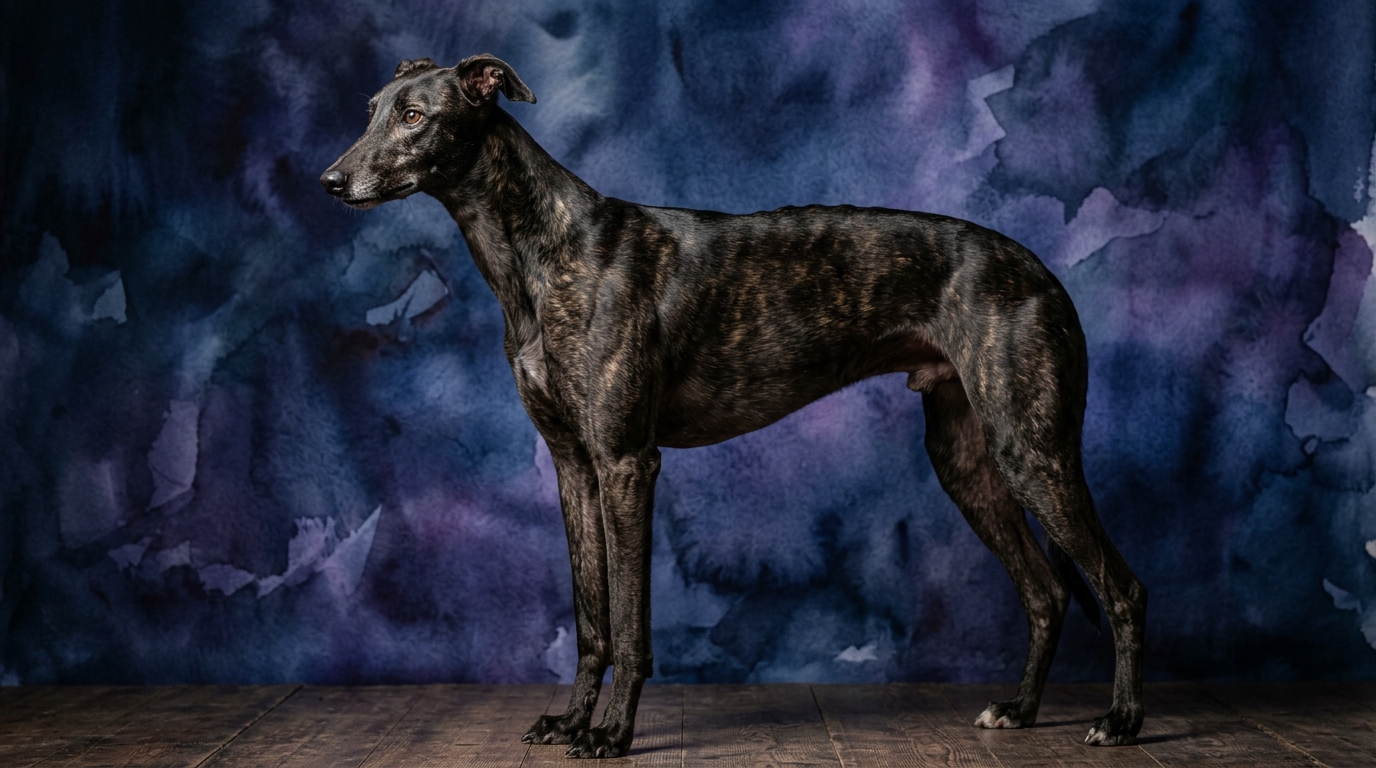
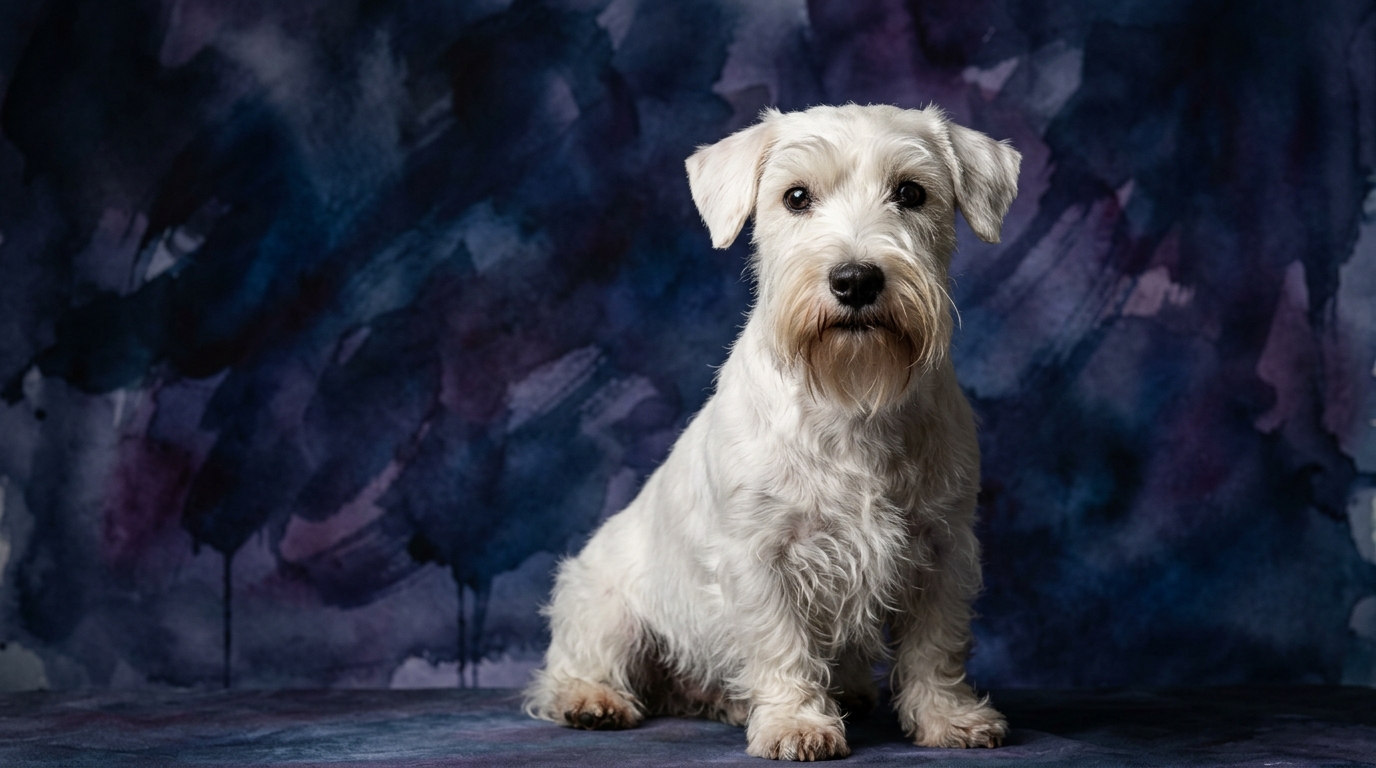
Side-by-Side Cognitive Profiles: Greyhound vs. Sealyham Terrier
At The Cosmic Pet Pet IQ Lab, we analyze canine cognition across five key dimensions, providing a granular view of each breed’s mental aptitudes. The Greyhound, a Hound breed, registers at Coren rank #46, while the Sealyham Terrier, a Terrier, is not included in Coren’s specific ranking methodology.
For the **Greyhound**, Problem Solving is rated 3/5. This often manifests not in complex manipulation, but in their ability to strategically navigate vast spaces at speed, interpreting environmental cues for pursuit. Training Speed is 2/5, indicating they can learn, but their independent nature and strong prey drive necessitate patient, consistent, and positive reinforcement, often requiring a clear 'what's in it for me' motivation. Social Intelligence stands at 3/5; they typically read human body language and tone well, forming deep, quiet bonds with their chosen family, though they can be reserved with strangers. Their Instinctive Drive is a powerful 5/5, dominated by an immediate, intense sighthound prey drive that defines much of their outdoor behavior. Memory is 3/5, demonstrating good recall for routines, familiar people, and places, though perhaps less for intricate, multi-step sequences without sustained practice.
The **Sealyham Terrier** shares a Problem Solving score of 3/5. For them, this intelligence is applied to task-oriented work, such as navigating underground tunnels or persistently working to locate quarry. Training Speed is 3/5; they are often eager to engage and can learn quickly, but their inherent terrier stubbornness means training needs to be engaging, varied, and fair. Social Intelligence is also 3/5; they interact confidently within their family unit, sometimes displaying a charmingly assertive demeanor, and can be discerning with newcomers. Their Instinctive Drive is 3/5, a robust terrier drive for digging, barking, and pursuing small prey, which, while potent, is often more sustained and less purely reactive than a sighthound’s burst. Memory is 3/5, allowing them to effectively recall commands and learned behaviors, especially those that have led to successful outcomes or rewards in their working tasks.
Where the Greyhound Excels Cognitively
The Greyhound’s primary cognitive advantage lies in its unparalleled Instinctive Drive, rated at a commanding 5/5. This isn't just about raw speed; it involves sophisticated real-time processing to execute a chase. A Greyhound’s brain rapidly analyzes visual stimuli, calculates trajectory, and adjusts its body mechanics over varied terrain, all in fractions of a second. This level of dynamic problem-solving, while instinct-driven, is a remarkable cognitive feat.
Their problem-solving ability (3/5), while not for intricate puzzles, shines in scenarios requiring swift decisions under pressure. Imagine a Greyhound pursuing a lure; it must anticipate turns, adjust its stride, and maintain focus despite distractions. This isn't rote memorization but an adaptive, fluid intelligence. Their memory (3/5) supports this by retaining spatial awareness of familiar running areas and the routines associated with their exercise, allowing them to perform optimally in their preferred environment.
Furthermore, their social intelligence (3/5), though often quiet, allows them to form deep, intuitive bonds. They are adept at reading subtle human cues, often anticipating their owner's next move without overt commands, a testament to their observational learning and memory for interaction patterns. This quiet perceptiveness, combined with their incredible physical prowess, defines their unique cognitive strengths.
Where the Sealyham Terrier Shines Cognitively
The Sealyham Terrier’s cognitive strengths are rooted in their terrier tenacity and purpose-bred problem-solving. Their Problem Solving at 3/5, while numerically matching the Greyhound, manifests very differently. A Sealyham’s mind is geared towards persistent, independent work, often involving navigating complex, confined spaces to achieve a goal. This requires spatial reasoning, determination, and an ability to work without constant human direction.
Their Training Speed (3/5) gives them an edge in learning various tasks and commands, often displaying a spirited willingness to engage when the activity is stimulating. Unlike the Greyhound's more independent approach, a Sealyham often thrives on interaction and purpose in their learning. Their Instinctive Drive (3/5), while lower than the Greyhound’s, is characterized by an unwavering focus on scent and sound-driven tasks, rather than pure visual pursuit. They excel at sustained effort in digging or 'earthdog' activities, showcasing a resilient mental fortitude.
The Sealyham’s social intelligence (3/5) complements their working drive, allowing them to integrate well into family dynamics. They are confident and can be quite expressive, using their social understanding to communicate their desires and boundaries effectively. Their memory (3/5) is robust for remembering complex routines and sequences of actions that lead to a desired outcome, making them effective partners in activities that require a degree of learned autonomy.
Training Dynamics: Which Breed is Easier?
When considering ease of training, the Sealyham Terrier generally presents a more straightforward path for the average owner due to its Training Speed rating of 3/5 compared to the Greyhound's 2/5. Sealyhams, while possessing the characteristic terrier stubbornness, often exhibit a higher intrinsic motivation to engage with their human companions in structured learning. Their desire to 'work' and their persistence can be channeled effectively with engaging, reward-based methods, and they often learn new commands and tricks at a quicker pace if they find the process stimulating.
The Greyhound’s lower Training Speed (2/5) stems from their independent nature and a strong, singular focus on their sighthound instincts. While they are certainly capable of learning, they are not typically driven by an overwhelming desire to please. Training a Greyhound requires immense patience, consistency, and a deep understanding of their motivations. Recall, for instance, can be particularly challenging due to their powerful prey drive; once they spot something to chase, their cognitive focus shifts entirely to that instinct, making it difficult to redirect their attention. They respond best to positive reinforcement that makes training valuable to them, such as food rewards or the opportunity for a controlled sprint.
In essence, the Sealyham's higher engagement level and task-oriented drive make them feel more 'trainable' to many, despite their potential for stubbornness. The Greyhound's training requires an owner who respects their independent spirit and works with, rather than against, their powerful natural instincts.
Ideal Lifestyles: Active vs. Relaxed Owners
The Greyhound and Sealyham Terrier cater to distinct owner lifestyles, reflecting their differing needs for activity and engagement. For owners seeking a largely relaxed home companion who offers bursts of exhilarating outdoor activity, the Greyhound is an excellent fit. Despite their reputation as racers, Greyhounds are often dubbed '45 mph couch potatoes.' They require secure, fenced areas where they can unleash their incredible speed in short, intense sprints, satisfying their 5/5 Instinctive Drive. However, once indoors, they are typically quiet, calm, and content to nap for extended periods, making them suitable for more relaxed indoor environments, even apartments, provided their specific exercise needs are met diligently.
Conversely, the Sealyham Terrier appeals more to active owners who appreciate a dog with a consistent zest for life and a need for mental and physical engagement. While they don't require the explosive sprints of a Greyhound, Sealyhams need regular, stimulating walks, opportunities for exploration, and activities that challenge their 3/5 Problem Solving and 3/5 Instinctive Drive for digging and scent work. They thrive on having a 'job' or consistent interaction, making them less suited for owners who prefer a truly sedentary pet. Their robust energy and curious nature mean they are more consistently 'active' throughout the day, requiring an owner willing to provide ongoing stimulation and adventure.
The Verdict
Choose the Greyhound if you appreciate a gentle, quiet indoor companion who thrives on brief, intense bursts of running in a secure environment and whose independent spirit you value.
Opt for the Sealyham Terrier if you desire a spirited, tenacious partner for daily adventures, who needs consistent mental and physical engagement, and whose confident, task-oriented nature you'll enjoy.
🧠 Find Your Pet's IQ Score
Our Pet IQ Lab assessment covers 25+ tests across 5 cognitive dimensions — personalized to your breed.
Take the Full IQ Test →Frequently Asked Questions
Are Greyhounds truly lazy dogs?
While Greyhounds are renowned for their love of napping and their calm indoor demeanor, they are not truly lazy. They require regular opportunities for high-speed running to satisfy their powerful sighthound instincts, typically in short, intense bursts rather than prolonged endurance exercise.
How does a Sealyham Terrier's 'not Coren-ranked' status impact its IQ?
A lack of Coren ranking doesn't indicate a deficit in a Sealyham Terrier's intelligence; it simply means the breed wasn't included in that specific study's methodology. Sealyhams demonstrate a practical, task-oriented intelligence, tenacity, and problem-solving skills well-suited to their original working purpose, which are highly valued by their owners.
Can a Greyhound and a Sealyham Terrier live together harmoniously?
Yes, a Greyhound and a Sealyham Terrier can coexist peacefully with careful introduction and supervision. Their distinct personalities and instinctive drives mean their interactions should be managed, especially given the Greyhound's strong prey drive towards small, fast-moving objects and the Sealyham's confident, sometimes assertive, terrier nature. Understanding each breed's individual needs and behaviors is key to a successful multi-dog household.