Side-by-Side IQ Profile: Greyhound vs. Westie
Despite sharing remarkably close ranks on Stanley Coren's intelligence scale (Greyhound at #46, West Highland White Terrier at #47), a deeper dive into their individual cognitive dimensions reveals distinct strengths and learning styles. These numbers are not just arbitrary scores; they reflect ingrained behavioral patterns and processing priorities that trace back to their breed origins and roles.
When it comes to **Problem Solving**, both breeds register a 3 out of 5. For Greyhounds, this often manifests as a keen ability to navigate their physical environment efficiently, quickly assessing obstacles in a direct path, or finding the most straightforward route to a desired location. Their problem-solving is typically pragmatic and tied to immediate, tangible goals. Westies, conversely, apply their problem-solving skills with a persistent curiosity, often figuring out how to access tight spaces, manipulate objects to their advantage, or overcome physical barriers with tenacious effort. Their approach is less about speed and more about determined exploration.
**Training Speed** is where the first notable divergence appears, with the Greyhound scoring 2 out of 5 and the West Highland White Terrier scoring 3 out of 5. This indicates that while both are capable of learning, Greyhounds generally require more repetition and patience in formal training sessions. Their independent nature and primary focus on instinctual drives can make them appear less eager to please in a structured learning environment. Westies, with their slightly higher score, tend to grasp new commands and routines somewhat faster, often displaying a more engaged, albeit sometimes headstrong, willingness to participate in collaborative learning tasks.
In **Social Intelligence**, both breeds are rated 3 out of 5, suggesting a moderate capacity for understanding human cues and social dynamics. Greyhounds are often observed to be highly sensitive to their owners' moods, forming deep, quiet bonds, though they might maintain a reserved demeanor with strangers. Their social understanding tends to be subtle and empathetic. Westies are typically more overtly expressive and engaging, reading social situations with a confident, sometimes demanding, air. They are adept at using their charm and persistence to communicate their needs, but both possess a comparable baseline for interpreting the social world around them.
The most dramatic difference lies in **Instinctive Drive**. The Greyhound boasts a perfect 5 out of 5, a testament to their unparalleled sighthound heritage where the drive to chase and pursue is paramount, often overriding all other considerations. This instinct is deeply woven into their cognitive fabric, influencing their perception and reaction to movement. The Westie's instinctive drive, while still present and powerful, scores 3 out of 5. This manifests as a strong desire to hunt small prey, dig, or explore, but it is typically less all-consuming than the Greyhound's, allowing for greater redirection and a broader range of focus.
Finally, for **Memory**, the West Highland White Terrier edges out the Greyhound with a score of 4 out of 5 compared to the Greyhound's 3 out of 5. Westies demonstrate a superior capacity for retaining information, whether it's learned commands, complex routines, or the precise location of hidden treasures. This stronger memory significantly contributes to their ability to build upon past training and adapt to consistent expectations. Greyhounds possess a functional memory, sufficient for daily life and familiar routines, but might not recall specific, less-repeated instructions or sequences with the same precision and long-term retention as a Westie.
Where the Greyhound's Mind Excels
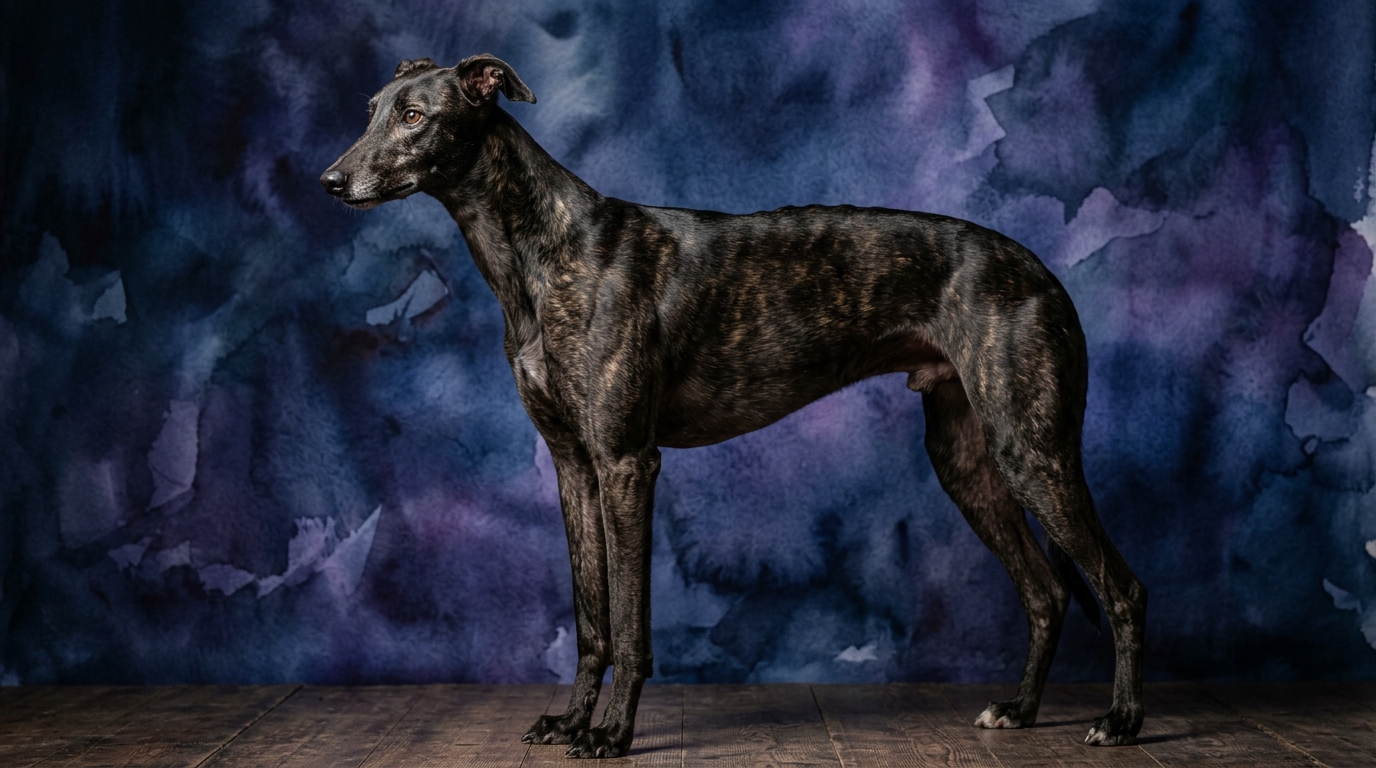
The Greyhound's cognitive prowess is deeply rooted in its specialized instinctive drive, scoring an exceptional 5 out of 5. This isn't merely about physical speed; it represents a profound cognitive specialization in visual processing and rapid response. Their brains are finely tuned to detect the slightest movement in their peripheral vision, instantly assessing distance, speed, and trajectory with breathtaking efficiency. This makes them unparalleled experts in tasks requiring quick, decisive action based on visual stimuli, such as lure coursing, where their ability to anticipate and react is a testament to their sophisticated visual-motor coordination.
Their decision-making in pursuit scenarios is incredibly fast and efficient, often appearing almost pre-programmed. They enter a unique 'flow state' during a chase, where intense focus on the moving object blocks out most distractions, allowing for a seamless integration of perception, thought, and action. This cognitive specialization means they excel in environments where quick, instinctive reactions are more valuable than complex, multi-step problem-solving. Their inherent grace and fluid coordination are also reflections of a highly integrated brain-body system, allowing for economical and precise movement that minimizes wasted energy, a cognitive efficiency in itself.
Where the West Highland White Terrier's Mind Shines
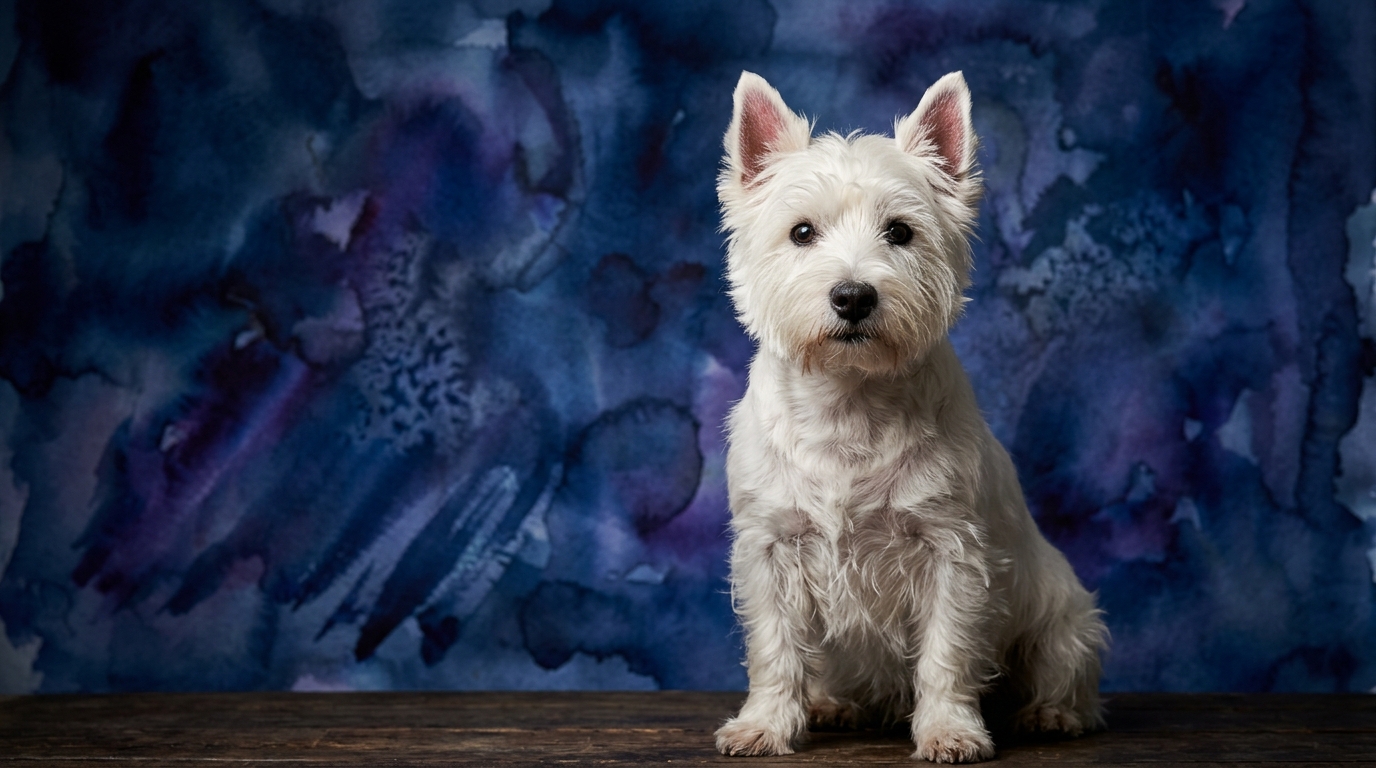
The West Highland White Terrier's cognitive strengths lie in its tenacious memory and slightly faster training speed. With a memory score of 4 out of 5, Westies excel at pattern recognition and the retention of routines and learned behaviors. This superior recall allows them to build a robust repertoire of commands and tricks over time, making them adept at activities requiring sequential learning or a good understanding of established rules. Their problem-solving, while rated similarly to Greyhounds, is often applied to more intricate, localized challenges, such as figuring out how to retrieve a toy from under furniture or manipulating a puzzle toy with persistent effort. This tenacity in mental engagement is a hallmark of their cognitive approach.
Their slightly higher training speed (3/5) suggests a greater mental flexibility and a more pronounced willingness to engage in collaborative learning with humans. Westies are often more persistent in attempting to understand and fulfill human expectations, driven by a blend of curiosity and a desire for interaction. Historically, their role as vermin hunters demanded a cognitive blend of memory (recalling the location of dens), problem-solving (navigating underground tunnels), and independent decision-making in the absence of human direction, all traits that contribute to their robust and adaptable cognitive profile today.
Training Dynamics: Greyhound vs. Westie
When considering which breed is generally easier to train, the West Highland White Terrier holds a distinct advantage due to its higher training speed (3/5 compared to the Greyhound's 2/5) and stronger memory. Westies tend to grasp new concepts more quickly and retain them more effectively. Their inherent terrier tenacity, often perceived as stubbornness, can be skillfully channeled into a persistent effort to master a task or command. They often enjoy the mental engagement that training provides, seeing it as a collaborative puzzle.
Greyhounds, conversely, can present more significant training challenges, primarily due to their lower training speed and their exceptionally powerful instinctive drive (5/5). Their independent nature means they may not always perceive immediate value in performing human-initiated tasks, especially if a more compelling stimulus, like a moving object, captures their attention. Training a Greyhound requires immense patience, consistent positive reinforcement, and a deep understanding of their sighthound motivations. While they are capable of learning, their progress can be slower, and their focus more easily diverted. For example, a Westie might bark persistently at a perceived threat or dig with single-minded focus but can often be redirected in a structured training session. A Greyhound mid-chase, however, is almost entirely impervious to verbal commands, highlighting the profound difference in their cognitive priorities during moments of high instinctive drive.
Lifestyle Match: Active vs. Relaxed Owners
Matching a dog's cognitive profile with an owner's lifestyle is crucial for a harmonious relationship. The Greyhound presents a nuanced scenario for owners. Despite their supreme speed and 5/5 instinctive drive, they are famously known as '45 mph couch potatoes.' This means they thrive with owners who understand their need for intense, short bursts of exercise – a securely fenced yard for sprints, a dedicated lure coursing session, or a quick, energetic play. However, once their physical needs are met, Greyhounds are remarkably calm, quiet, and relaxed indoors, preferring soft beds and extended lounging. Therefore, they suit owners who are active in concentrated bursts and value a tranquil, low-key indoor companion, rather than someone seeking a constant jogging partner.
The West Highland White Terrier, with its moderate instinctive drive (3/5) and higher training speed, is better suited for consistently active owners who enjoy mental engagement. Westies require regular walks, playtime, and consistent mental stimulation to prevent boredom and potential destructive behaviors. Their curiosity and tenacity mean they enjoy exploring their environment, digging, and participating in structured activities. They thrive on challenges like obedience training, agility, or earthdog trials, which satisfy their cognitive need for engagement and problem-solving. Less prone to extended lounging, Westies prefer to be involved, busy, and mentally stimulated, making them an excellent choice for owners who can provide consistent interaction and varied activities throughout the day.
The Verdict
Choose a Greyhound if you admire unparalleled speed and instinctual grace, seeking a calm indoor companion that thrives on intense, short bursts of activity and quiet companionship.
Opt for a West Highland White Terrier if you desire a tenacious, mentally agile partner who enjoys consistent engagement, learns readily, and brings a lively, curious energy to daily life.
🧠 Find Your Pet's IQ Score
Our Pet IQ Lab assessment covers 25+ tests across 5 cognitive dimensions — personalized to your breed.
Take the Full IQ Test →Frequently Asked Questions
Are Greyhounds difficult to train because of their independent nature?
Greyhounds can present training challenges due to their lower training speed score (2/5) and powerful instinctive drive (5/5). They often require consistent, patient, and positive reinforcement methods, as their focus can be easily drawn by moving objects, making recall a particular area for diligent work.
How does a West Highland White Terrier's memory benefit their owners?
A Westie's strong memory (4/5) means they excel at retaining commands, routines, and experiences, making them highly receptive to ongoing training and capable of learning complex sequences. This enhances their trainability and allows them to adapt well to established household rules and schedules.
Which breed is more adaptable to apartment living, considering their cognitive traits?
While both can adapt, the Greyhound often surprises with its suitability for apartment living due to its '45 mph couch potato' nature; they need short, intense exercise bursts but are very calm indoors. The Westie, with its moderate instinctive drive and need for consistent mental engagement, requires regular, stimulating outings to prevent boredom, making it adaptable but perhaps needing more active daily management in smaller spaces.