The Cosmic Pet Pet IQ Lab: A Side-by-Side Cognitive Profile
To truly understand the cognitive landscape of these two distinct breeds, we turn to The Cosmic Pet Pet IQ Lab's five core dimensions. This framework allows us to dissect their intellect beyond superficial observations, revealing where their mental gears truly engage. Both breeds, despite their vastly different histories and physical forms, share some intriguing commonalities while diverging significantly in others.
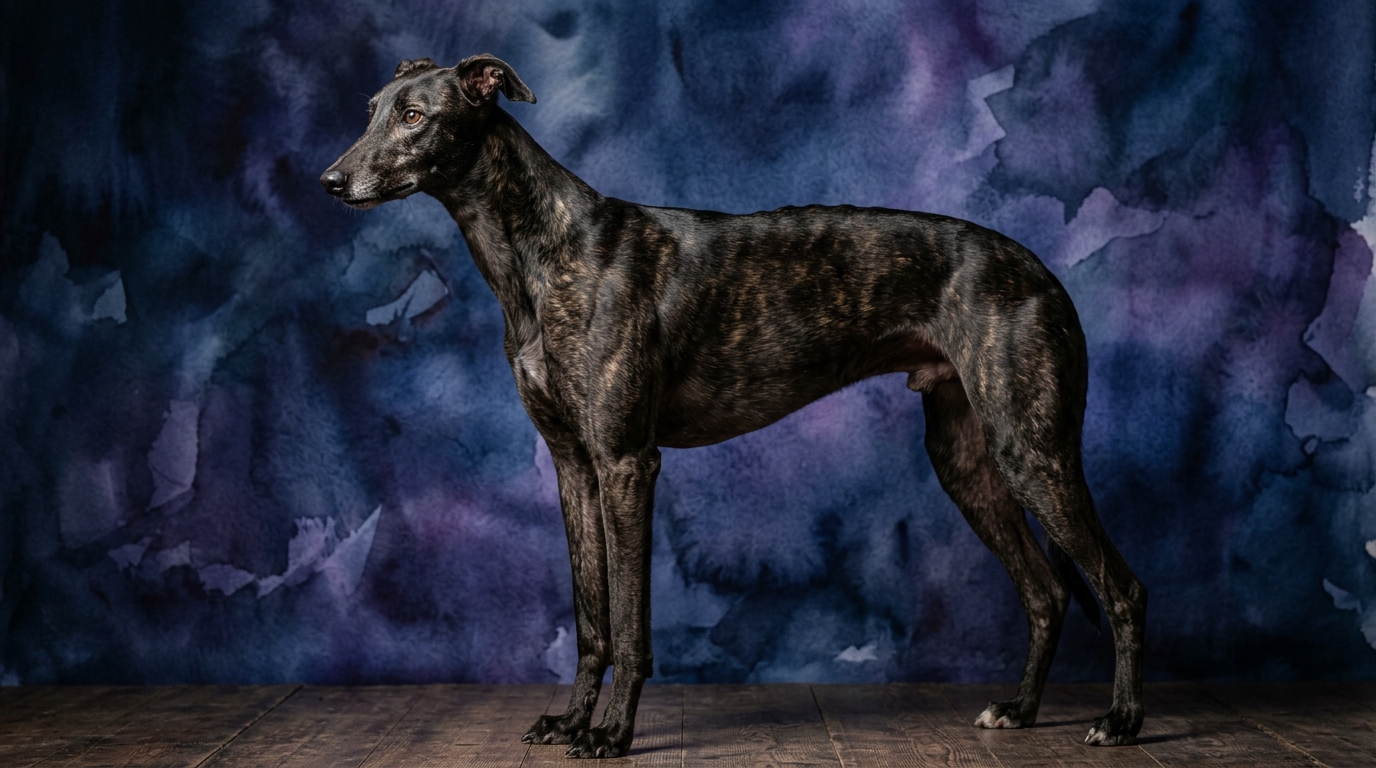
The Greyhound, a quintessential Sighthound, exhibits a Problem Solving score of 3/5, indicating an ability to navigate immediate environmental challenges but not necessarily a predisposition for complex abstract thought. Its Training Speed is rated 2/5, suggesting a more independent learning style that requires patience and clear motivation. Social Intelligence stands at 3/5, reflecting a reserved but deeply bonded nature with its chosen family. A towering 5/5 in Instinctive Drive is the Greyhound's hallmark, signifying an unparalleled urge to pursue. Finally, its Memory is a solid 3/5, capable of recalling routines and familiar faces.
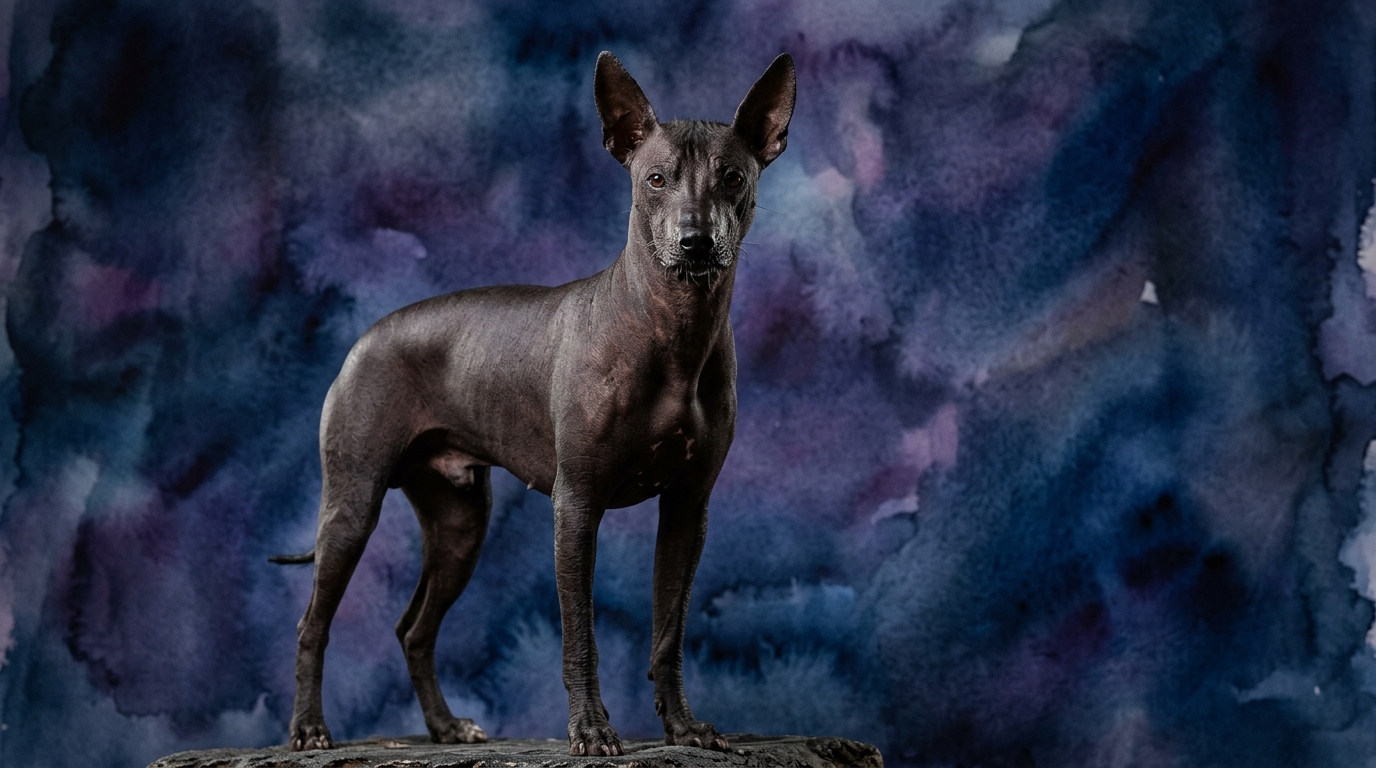
The Xoloitzcuintli, an ancient Non-Sporting breed, presents a slightly different yet equally compelling profile. Its Problem Solving ability mirrors the Greyhound at 3/5, showing practical intelligence for daily life rather than elaborate puzzle-solving. Where it begins to differentiate is in Training Speed, scoring 3/5, which suggests a more amenable and responsive nature during learning sessions. Social Intelligence is also 3/5, often manifesting as a watchful loyalty and deep attachment to its inner circle. Its Instinctive Drive is a moderate 3/5, present but not overwhelming, allowing for a broader engagement with its surroundings. Like the Greyhound, its Memory is rated 3/5, indicating reliable recall of learned behaviors and routines.
Where the Greyhound's Cognition Shines Brightest
The Greyhound's undisputed cognitive triumph lies in its extraordinary Instinctive Drive, rated a perfect 5/5. This isn't merely about physical speed; it represents a highly specialized form of intelligence honed over millennia for pursuit. A Greyhound's brain is exceptionally wired for visual perception of movement, rapid assessment of trajectory, and instantaneous reaction. When a small animal bolts, the Greyhound's cognitive process is a finely tuned engine: identifying the target, calculating the most efficient pursuit path, and committing every fiber of its being to the chase with singular focus. This intense, almost meditative concentration on a moving object is a profound cognitive skill, showcasing an unparalleled ability to filter out distractions and lock onto a primary objective.
This specialized intelligence manifests in an acute awareness of its surroundings, particularly anything that moves quickly. They can spot a squirrel or a distant object long before a human, demonstrating superior observational skills within their specific domain. This cognitive prowess, while perhaps not fitting conventional notions of 'problem-solving' in an abstract sense, is an elite form of environmental engagement, making them masters of their ancestral purpose. This focused, instinctual brilliance is what truly sets the Greyhound apart in the cognitive arena, making their Coren rank of #46 more about general working intelligence than their specific, highly evolved predatory intellect.
Where the Xoloitzcuintli Holds a Cognitive Edge
The Xoloitzcuintli's cognitive strengths often lie in its balanced approach and heightened receptivity to human interaction, particularly evident in its Training Speed of 3/5, which surpasses the Greyhound's 2/5. This slightly higher score indicates a more consistent willingness to engage and learn from its handler, making it generally more biddable in structured training environments. The Xoloitzcuintli often displays a steady eagerness to please, absorbing new commands and routines with a reliable pace, which can make the training journey feel more collaborative and less like a negotiation.
Furthermore, the Xoloitzcuintli's moderate Instinctive Drive (3/5) offers a distinct cognitive advantage in a typical companion setting. While it possesses natural instincts, they are not all-consuming like the Greyhound's. This moderation allows the Xoloitzcuintli to engage with a wider array of stimuli without being singularly fixated on a chase. This means their attention can be more readily directed towards human communication, environmental exploration, or social interactions beyond the immediate impulse to pursue. Their balanced cognitive profile allows for a more versatile mental engagement, making them adaptable to various learning contexts and family activities where an overwhelming singular drive might be a hindrance.
Training Dynamics: Which Breed Learns with Greater Ease?
When it comes to the practicalities of training, the Xoloitzcuintli generally presents an easier path for most owners due to its 3/5 Training Speed and balanced Instinctive Drive. Xolos typically exhibit a cooperative temperament and a strong desire to be involved with their human families. This translates into a more attentive pupil who is less likely to be distracted by external stimuli, making them more receptive to positive reinforcement methods. Their moderate instinctive drive means that while they might notice a squirrel, it's less likely to completely override their learned responses or the handler's commands, allowing for more consistent progress in obedience training.
The Greyhound, with its 2/5 Training Speed and profound 5/5 Instinctive Drive, presents a different training challenge. Their independence and the overwhelming pull of their prey drive mean that they can be selectively deaf to commands when something triggers their chase instinct. Training a Greyhound often requires immense patience, creative motivation (such as lure training or high-value food rewards), and a deep understanding of their sighthound nature. While they are certainly capable of learning and remembering commands (Memory 3/5), their initial acquisition speed is slower, and the consistency of their response is heavily influenced by environmental distractions. Owners must anticipate that a Greyhound's primary cognitive focus will always be on movement, and training often involves managing this powerful, innate drive rather than extinguishing it.
Matching Cognitive Profiles to Lifestyle: Active vs. Relaxed Owners
The choice between a Greyhound and a Xoloitzcuintli also hinges significantly on an owner's lifestyle and how they prefer to engage with their canine companion's cognitive and physical needs. For owners who identify as 'active,' the Xoloitzcuintli often presents a more versatile match. Their moderate Instinctive Drive (3/5) and reasonable Training Speed (3/5) mean they enjoy regular physical activity like brisk walks, hiking, or even dog sports such as agility, where their intelligence and biddability can shine. They thrive on consistent physical and mental engagement that isn't solely focused on high-speed bursts, making them excellent companions for varied outdoor adventures.
Greyhounds, despite their reputation as '45 mph couch potatoes,' also suit a specific type of active owner – one who can provide outlets for their extreme Instinctive Drive (5/5). This means access to a securely fenced area for exhilarating, full-speed sprints, or participation in sighthound-specific sports like lure coursing. These short, intense bursts of activity are crucial for their cognitive and physical well-being, allowing them to fulfill their deep-seated chase instinct. Owners who can facilitate this specialized form of activity will find a Greyhound to be a calm and relaxed indoor companion, but neglecting this need can lead to frustration for the dog.
For 'relaxed' owners, both breeds can adapt, but with important caveats. A Greyhound can be an ideal companion for a relaxed owner who understands their need for intense, albeit brief, exercise sessions. Once their instinctual need to run is met, they are often content to lounge quietly indoors, exhibiting their reserved Social Intelligence (3/5). However, managing their potent prey drive in public or unsecured areas requires constant vigilance. The Xoloitzcuintli, with its balanced energy and strong family attachment (Social Intelligence 3/5), can also suit a relaxed owner who still commits to daily walks and interactive play. They are often more adaptable to a less structured exercise routine than a Greyhound, provided they receive consistent mental stimulation and companionship, making them a good fit for those who enjoy a calm, yet engaged, presence in their home.
The Verdict
Choose a Greyhound if you appreciate a highly specialized, instinct-driven companion, are prepared to facilitate intense bursts of physical activity, and can manage a profound prey drive with understanding and patience.
Choose a Xoloitzcuintli if you seek a more balanced, biddable companion with moderate energy needs, who will thrive on consistent positive training and close family interaction without an overwhelming, single-minded drive.
🧠 Find Your Pet's IQ Score
Our Pet IQ Lab assessment covers 25+ tests across 5 cognitive dimensions — personalized to your breed.
Take the Full IQ Test →Frequently Asked Questions
Are Greyhounds difficult to train due to their lower training speed?
Greyhounds can be independent learners, requiring patience and highly motivating rewards to engage their attention. Their significant instinctive drive means training often focuses on managing their chase behaviors rather than intricate obedience, but they are capable of learning with consistency.
Do Xoloitzcuintlis have strong prey drives like Greyhounds?
Xoloitzcuintlis possess an instinctive drive rated 3/5, which is moderate compared to the Greyhound's 5/5. While they may show interest in chasing small animals, it's typically less intense and more manageable than the Greyhound's specialized pursuit instinct.
How does the 'social intelligence' rating of 3/5 for both breeds manifest differently?
For Greyhounds, 3/5 social intelligence often means reserved affection, deep bonds with family, and a discerning nature with strangers, showing loyalty without overt displays. For Xoloitzcuintlis, it implies a watchful loyalty, often aloofness towards outsiders, but a strong, attentive connection to their immediate human companions, possibly showing more overt engagement and dependence.