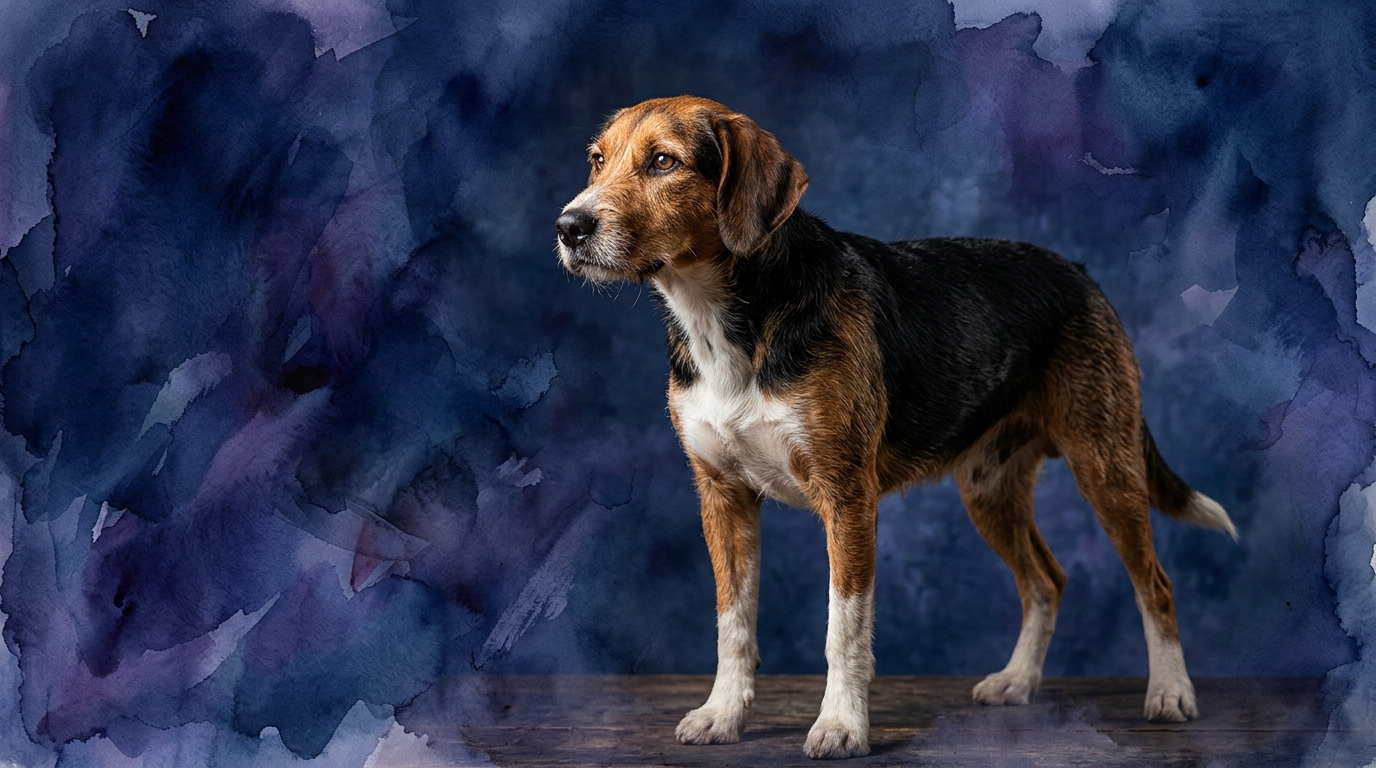
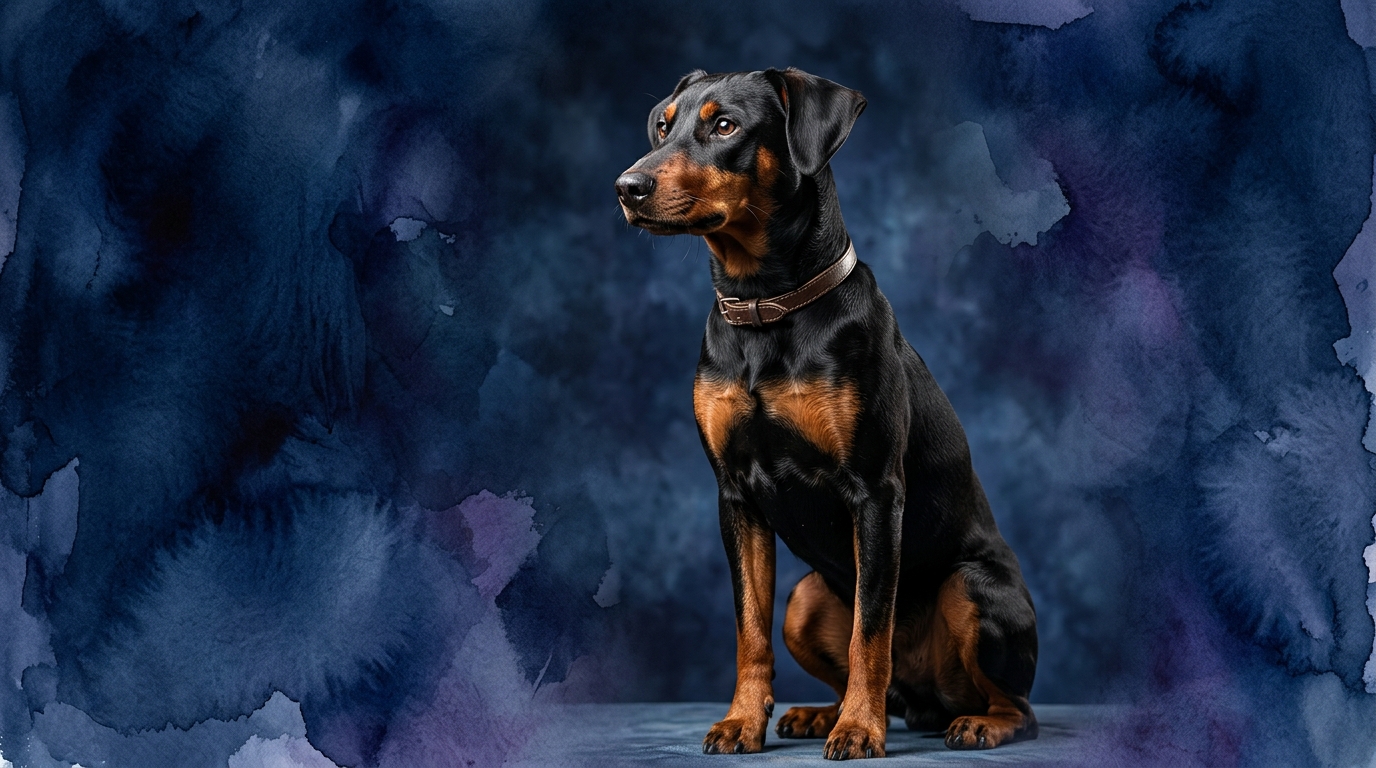
Side-by-Side Cognitive Profiles: Harrier vs. German Pinscher
At first glance, the Cosmic Pet Pet IQ Lab's assessment reveals identical scores across five key cognitive dimensions for both the Harrier and the German Pinscher: Problem Solving (3/5), Training Speed (3/5), Social Intelligence (3/5), Instinctive Drive (3/5), and Memory (3/5). However, these scores are broad indicators, and their manifestation varies significantly between a scent hound and a versatile working dog. Understanding these nuances is crucial to appreciating their distinct forms of intelligence.
The Harrier, a traditional Hound, applies its 3/5 Problem Solving to deciphering complex scent trails rather than abstract puzzles, relying on instinctual pattern recognition within its environment. Its 3/5 Training Speed is often moderated by its independent nature and powerful scent drive, meaning it learns but may prioritize an interesting smell over immediate human directives. Social Intelligence (3/5) in a Harrier centers on pack dynamics, understanding hierarchies for cooperative hunting. Their 3/5 Instinctive Drive is predominantly a tireless prey and scenting impulse, fueling stamina. Finally, their 3/5 Memory is strongly associative, recalling specific scents, trail locations, and social interactions within its trusted group.
The German Pinscher, a dynamic Working breed, exhibits its 3/5 Problem Solving through rapid assessment of situations, particularly in identifying environmental changes or perceived threats, adeptly finding solutions to secure its territory. Its 3/5 Training Speed is often characterized by an eagerness to please, picking up commands swiftly when motivated, though an independent streak can lead to selective hearing without consistent engagement. Social Intelligence (3/5) in a Pinscher is finely tuned to its human family's moods and intentions, acting as a sensitive alarm system. Their 3/5 Instinctive Drive combines a strong prey drive for vermin with a protective, territorial impulse, translating into vigilance. Their 3/5 Memory allows for excellent recall of learned commands, routines, and distinguishing familiar from unfamiliar individuals or sounds, adapting behavior accordingly.
Where the Harrier's Cognition Excels
The Harrier's cognitive strength shines brightest in its unparalleled olfactory processing and application. Their 3/5 problem-solving isn't about solving human-created puzzles, but rather deciphering a complex world through scent, navigating intricate trails, and distinguishing subtle nuances in odors over vast distances. This specialized intelligence allows them to construct a mental map of their environment based purely on scent, a feat few breeds can match.
Their instinctive drive, also rated 3/5, fuels an incredible persistence. Once on a scent, a Harrier demonstrates a single-minded focus that translates into an unwavering cognitive effort. This isn't stubbornness in a negative sense, but rather a deep-seated commitment to completing an instinctual task, showcasing a profound ability to sustain mental effort even when faced with distractions or fatigue. Their memory (3/5) is intricately linked to these scent profiles, allowing them to recall specific trails or the absence of a desired scent, guiding their continued exploration.
Where the German Pinscher's Cognition Stands Out
The German Pinscher's cognitive edge lies in its versatile and adaptive situational awareness, a hallmark of its working heritage. Their 3/5 problem-solving manifests as a quick, decisive analysis of their immediate surroundings, particularly in identifying novel stimuli or potential threats. This isn't just about reacting; it's about rapidly processing information and determining the most effective course of action, whether it's alerting their family to an intruder or strategizing to catch a rodent.
Their social intelligence (3/5) is finely tuned to their human companions, allowing them to read subtle cues and anticipate needs or moods. This attentiveness, combined with their strong memory (3/5) for learned routines and social interactions, makes them highly responsive and adaptable within a family unit. Unlike the Harrier's external, environment-focused drive, the Pinscher's instinctive drive (3/5) includes a strong protective instinct, requiring them to constantly monitor and interpret social and environmental signals to ensure the safety of their perceived 'pack'. This blend of observational skill and quick processing sets them apart.
Training Dynamics: Which Breed is Easier to Shape?
Despite both breeds holding a 3/5 rating for training speed, their underlying motivations create distinct training experiences. The German Pinscher, with its strong social intelligence and desire to be part of the family's activities, often approaches training with an eagerness to please its handler. They tend to be more attentive to human vocal cues and body language, making them quicker to grasp and execute commands when properly motivated. Their problem-solving skills are often directed towards understanding what their human wants, facilitating a smoother learning curve in obedience.
The Harrier, conversely, brings a different set of priorities to the training arena. Their intense instinctive drive, particularly their scenting instinct, can make them less consistently focused on human commands, especially in stimulating outdoor environments. While they have a 3/5 training speed, this often requires more patience, consistency, and creative methods that incorporate their natural drives. A Harrier might learn a command quickly but choose to 'ignore' it if a compelling scent distraction arises, demonstrating an independent streak that prioritizes their olfactory mission over immediate human directives. Training a Harrier often means working *with* their nose, not against it, to achieve reliable responses.
Matching Breeds to Lifestyles: Active vs. Engaged Owners
Both the Harrier and the German Pinscher are unsuitable for truly relaxed, sedentary owners, as their 3/5 instinctive drive and cognitive engagement demand significant daily activity. However, the *type* of activity they thrive on differs. An active owner who enjoys long, exploratory hikes, off-leash adventures in secure areas, or participation in scent work and tracking sports will find a Harrier an exhilarating companion. Their problem-solving is engaged by following complex scent trails, and their stamina requires sustained physical and mental output, making them ideal for those who embrace outdoor endurance.
For active owners who prefer more structured engagement, interactive games, and versatile training, the German Pinscher might be a more fitting choice. While equally energetic, their social intelligence and adaptability mean they can excel in a wider array of dog sports like agility, obedience, or protection work, which require close partnership and rapid decision-making. Their vigilance makes them excellent watchdogs, and their need for mental stimulation can be met through puzzle toys, consistent training refreshers, and varied daily routines. A German Pinscher thrives on being an active participant in family life, making them ideal for owners who seek a highly interactive and responsive partner for diverse activities, rather than solely scent-driven pursuits.
The Verdict
Choose the Harrier if you are an adventurous owner who values an independent, scent-driven companion for long treks and is prepared to channel their formidable instincts into engaging, outdoor-centric activities.
Opt for the German Pinscher if you desire a versatile, vigilant, and highly interactive partner for diverse dog sports and family activities, appreciating their quick assessment skills and close bond.
🧠 Find Your Pet's IQ Score
Our Pet IQ Lab assessment covers 25+ tests across 5 cognitive dimensions — personalized to your breed.
Take the Full IQ Test →Frequently Asked Questions
Are Harriers stubborn during training?
Harriers can appear stubborn due to their strong independent scent drive. They prioritize following interesting odors, which can make them less immediately responsive to commands compared to some other breeds. Consistent, positive reinforcement training that incorporates their natural instincts is key to success.
How do German Pinschers use their problem-solving skills?
German Pinschers use their problem-solving skills for quick situational assessment, often related to their protective instincts or navigating their environment. They are adept at figuring out how to alert their family to novel stimuli or overcoming minor obstacles in their surroundings with intelligent foresight.
Do both breeds require a lot of exercise?
Yes, both Harriers and German Pinschers are active breeds with a 3/5 instinctive drive that necessitates significant daily exercise and mental stimulation. Owners should be prepared for long walks, engaging play, and structured activities to keep these dogs physically and mentally fulfilled.