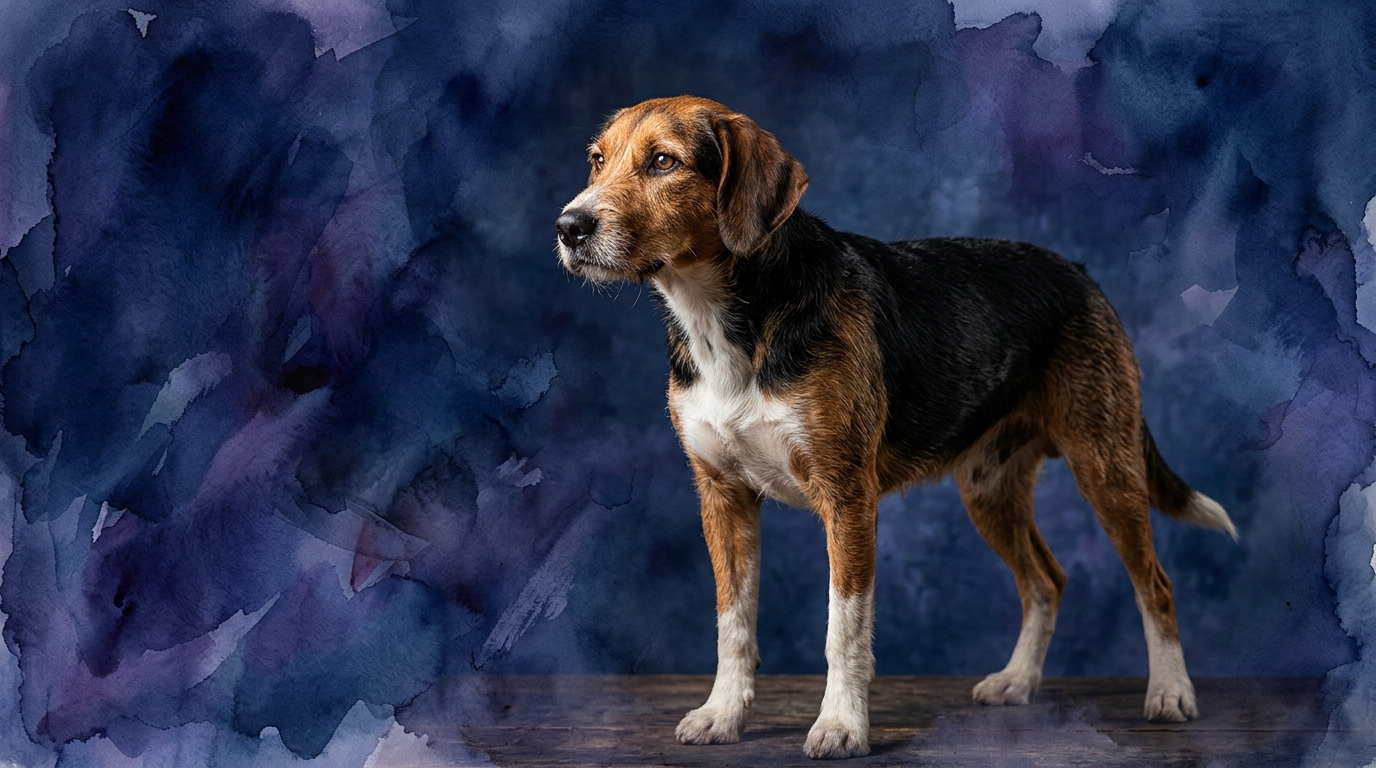
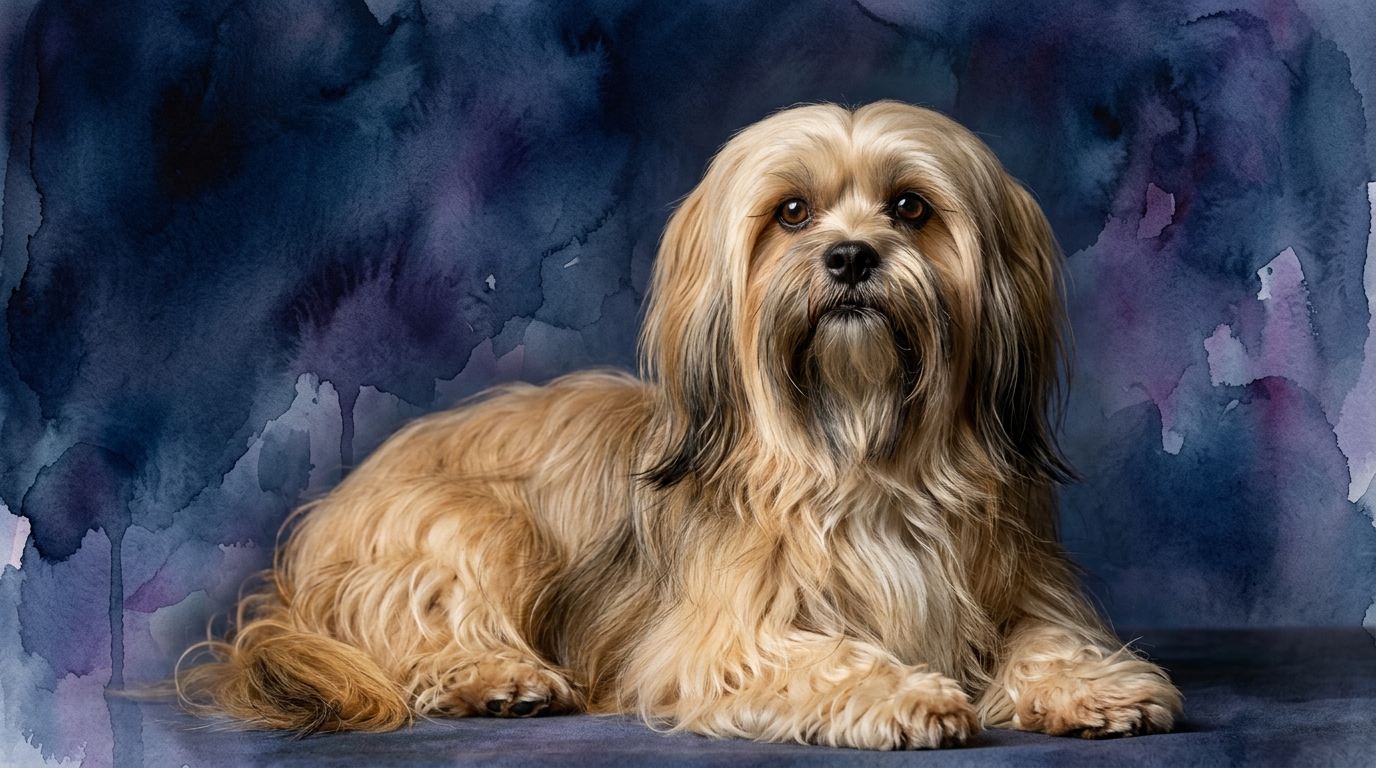
Side-by-Side IQ Profile: Harrier vs. Lhasa Apso
Despite their identical 3/5 scores across the board, the cognitive architecture of the Harrier and Lhasa Apso is profoundly influenced by their historical purposes. Understanding how each dimension manifests provides insight into their unique intellectual strengths.
**Problem Solving (3/5):** For a Harrier, a 3/5 in problem-solving often manifests as practical ingenuity within their hunting domain. They excel at figuring out how to navigate complex terrain to follow a scent trail, or how to work cooperatively with a pack to corner quarry. This isn't abstract puzzle-solving, but rather applying existing instincts and learning to achieve a tangible, often scent-related, goal. Their solutions are typically direct and driven by their primary motivation. A Lhasa Apso’s 3/5 in problem-solving is more focused on their immediate environment and social dynamics. They might cleverly determine the optimal vantage point for observation, or devise subtle strategies to gain attention or preferred resources from their human companions. Their intelligence here often involves understanding cause-and-effect within the household, such as which actions lead to a treat or a desired interaction, rather than complex mechanical puzzles.
**Training Speed (3/5):** A 3/5 training speed for a Harrier means they are capable of learning, but consistency and motivation are key. Their independent hound nature means they process commands at an average rate, and their strong olfactory distractions can make focus challenging. Training success often hinges on making activities engaging, leveraging their natural drives, and providing clear, repetitive instruction rather than expecting rapid, complex command acquisition. The Lhasa Apso also scores 3/5 in training speed, implying they learn at a moderate pace. Their independent and sometimes opinionated nature means they aren't always eager to please, and can choose when to comply. Effective training requires patience, positive reinforcement, and a strong, trust-based bond, as they are less likely to respond to harsh methods and prefer to cooperate on their own terms.
**Social Intelligence (3/5):** Harriers exhibit a 3/5 in social intelligence, which within their historical context, means they possess good pack communication skills and can read the intentions of other dogs effectively. With humans, they are generally affectionate and can understand basic social cues, but their primary focus during activities might remain on scent or prey rather than nuanced human emotional states. They are sociable but often driven by their instincts first. The Lhasa Apso’s 3/5 in social intelligence is distinct, geared towards their role as an indoor sentinel. They are adept at discerning family members from strangers and often develop a deep, intuitive understanding of their human family's moods and routines. While they might be reserved with outsiders, they can be highly attuned to the subtle emotional shifts within their inner circle, using this awareness to inform their protective behaviors and interactions.
**Instinctive Drive (3/5):** A 3/5 instinctive drive in a Harrier is dominated by their powerful scenting and prey drive. This moderate score indicates a robust, but not overwhelming, impulse to track and pursue, which is central to their being. This drive dictates much of their behavior, from how they explore their environment to their engagement with training, requiring outlets that satisfy these innate urges. For the Lhasa Apso, a 3/5 instinctive drive is primarily expressed through their vigilant guarding and alarm-barking behaviors. They possess a persistent, moderate urge to alert their family to perceived threats or novelties in their environment. This drive is rooted in their historical role as temple protectors, making them naturally watchful and vocal, traits that are deeply ingrained and influence their daily interactions and reactions.
**Memory (3/5):** Harriers scoring 3/5 in memory can effectively recall scent trails, learned hunting patterns, and the locations of familiar resources. Their memory is practical and often spatially oriented, allowing them to navigate complex environments and remember successful strategies for finding prey or returning home. They retain training commands with consistent reinforcement, particularly when linked to their natural drives. A Lhasa Apso’s 3/5 memory is often applied to remembering household routines, the specific habits of their family members, and which individuals are part of their accepted circle. They are good at recalling past interactions and can hold grudges or favoritism. Their memory also serves their sentinel role, allowing them to remember what is 'normal' in their territory and quickly identify deviations that warrant an alert.
Where the Harrier's Cognition Excels
Despite both breeds scoring 3/5 across the board, the Harrier's cognitive strengths distinctly lie in areas honed by centuries of independent hunting. Their 3/5 in Problem Solving is particularly robust when applied to environmental navigation and tracking: they demonstrate a superior ability to process complex olfactory information, follow a scent over varied terrain, and make on-the-spot decisions to maintain a trail. This isn't abstract reasoning, but a highly developed, specialized form of intelligence critical for their historical function. Coupled with their 3/5 Memory, they excel at recalling intricate scent patterns and successful hunting strategies, far surpassing the Lhasa Apso in sustained, outdoor, scent-driven tasks.
Where the Lhasa Apso's Cognition Excels
Conversely, the Lhasa Apso's cognitive advantages are rooted in their role as a discerning indoor sentinel. Their 3/5 in Social Intelligence, while numerically identical to the Harrier's, manifests as a more nuanced understanding of human household dynamics and subtle emotional cues within their family unit. They are often quicker to detect changes in routine or mood, and their problem-solving (also 3/5) is adept at navigating social situations to achieve desired outcomes, such as getting attention or asserting their presence. Their 3/5 Instinctive Drive for vigilance translates into an acute sensory perception for their immediate environment, allowing them to distinguish familiar sounds and sights from potential threats with a precision that a scent-focused Harrier would not prioritize.
Training Dynamics: Harrier vs. Lhasa Apso
Neither the Harrier nor the Lhasa Apso are typically described as effortlessly biddable, both holding a 3/5 in Training Speed, but their training challenges stem from different behavioral blueprints. The Harrier’s strong instinctive drive for scent and independent hunting means they can be easily distracted outdoors by compelling odors, often choosing to follow their nose over a human command. Training requires immense patience, creativity to make commands more engaging than a scent trail, and a high-value reward system. Their independence means they might 'think' for themselves rather than immediately comply. The Lhasa Apso, while not as prone to scent distractions, possesses an independent and sometimes stubborn temperament. Their social intelligence means they are often assessing whether a command benefits them, and their self-important nature means they won't blindly obey. Successful training for a Lhasa Apso relies on consistent positive reinforcement, building a strong, respectful relationship, and understanding that they respond best when they perceive a command as a suggestion rather than an order. Neither is 'easier' in an absolute sense; rather, they require different approaches to overcome their inherent behavioral tendencies.
Lifestyle Match: Active vs. Relaxed Owners
The choice between a Harrier and a Lhasa Apso largely hinges on an owner's lifestyle and energy levels. Harriers, with their strong instinctive drive and history as endurance hunters, are unequivocally suited for active owners. They require extensive daily exercise, including opportunities for running and engaging in scent work, to prevent boredom and potential destructive behaviors. A relaxed owner would quickly find themselves overwhelmed by a Harrier's energy and need for stimulation. In contrast, the Lhasa Apso, while not a couch potato, is far better suited for more relaxed owners. They thrive on consistent routines, regular but moderate walks, and mental engagement through companionship and alert duties. While they appreciate a secure yard to patrol, their physical demands are significantly lower than a Harrier's, making them a more fitting companion for those who prefer leisurely strolls over marathon runs.
The Verdict
For those seeking a robust, scent-driven companion for outdoor adventures and structured activities like tracking, the Harrier's specialized cognitive strengths and boundless energy make it an ideal choice.
If your lifestyle leans towards a discerning, watchful indoor companion who offers loyal affection and thrives on consistent routines, the Lhasa Apso, with its keen social intelligence and sentinel instincts, will be a deeply rewarding addition.
🧠 Find Your Pet's IQ Score
Our Pet IQ Lab assessment covers 25+ tests across 5 cognitive dimensions — personalized to your breed.
Take the Full IQ Test →Frequently Asked Questions
Do Harriers and Lhasa Apsos get along with other pets?
Harriers, being pack hounds, generally coexist well with other dogs, though their prey drive might make small, non-canine pets a challenge. Lhasa Apsos can live with other pets, but their independent nature and protective instincts mean early socialization is crucial to ensure harmonious relationships, especially with new additions.
Are Harriers or Lhasa Apsos better for first-time dog owners?
Neither breed is typically recommended for first-time dog owners due to their distinct needs and independent temperaments. Harriers require significant time, energy, and experience managing a strong prey drive, while Lhasa Apsos benefit from owners experienced in consistent, positive reinforcement training for their independent and sometimes stubborn nature.
How do their grooming needs compare?
Harriers have short, dense coats that require minimal grooming, primarily regular brushing to remove loose hair. Lhasa Apsos, conversely, possess long, flowing double coats that demand significant grooming, including daily brushing to prevent mats and tangles, and regular professional trims to maintain their coat health and appearance.