
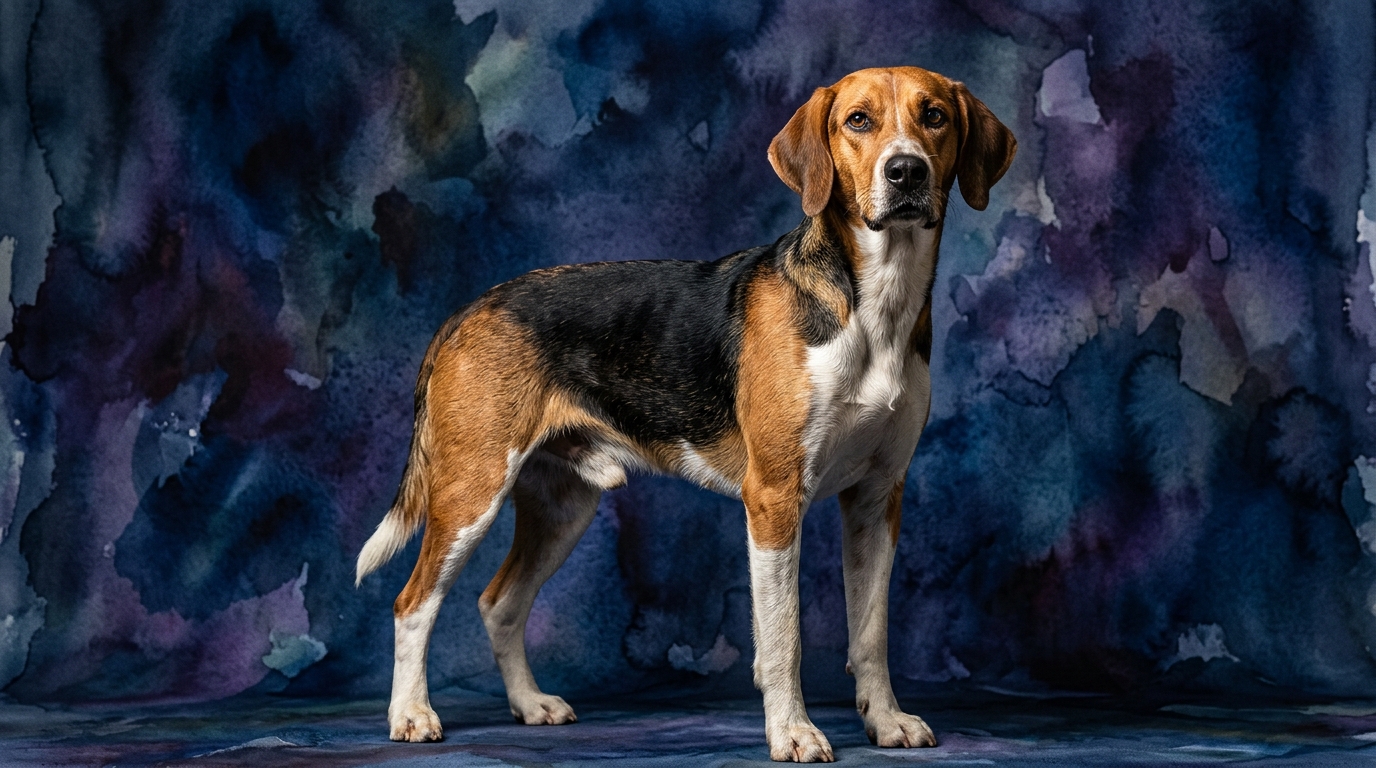
Side-by-Side Cognitive Profiles: Havanese vs. English Foxhound
The Havanese, often called the “Velcro dog,” presents a cognitive profile shaped by centuries of companionship. Their Problem Solving (3/5) manifests as practical cleverness within a domestic setting, adept at navigating household dynamics to achieve comfort or attention, rather than abstract puzzles. Training Speed (3/5) indicates a responsive learner, eager to please and capable of absorbing new commands at a steady pace, though their playful nature can sometimes add a layer of delightful distraction. Where the Havanese truly shines is in Social Intelligence (5/5), demonstrating an extraordinary capacity to read human emotions, interpret subtle cues, and adapt their behavior to foster harmonious interactions, making them deeply empathetic family members. Their Instinctive Drive (2/5) is notably low, with their primary motivations centered on companionship rather than strong prey or working instincts, contributing to their adaptability in varied living situations. Memory (3/5) for the Havanese is reliable for routines, learned behaviors, and recalling positive or negative social experiences, which further enhances their social learning.
In contrast, the English Foxhound, a breed sculpted for the hunt, possesses a distinct cognitive architecture. Their Problem Solving (3/5) is largely oriented towards their primary function: tracking. This involves complex spatial reasoning to follow intricate scent trails, navigating diverse terrains, and overcoming environmental obstacles with persistence. Training Speed (3/5) for the Foxhound reflects their capacity to learn, but it is often tempered by a profound independence and an overwhelming focus on their olfactory world; consistency and high-value rewards are paramount to compete with the allure of a compelling scent. Social Intelligence (3/5) for the Foxhound is geared more towards pack dynamics and cooperation, understanding their place within a group, be it canine or human, but perhaps without the same nuanced emotional attunement seen in dedicated companion breeds. Their Instinctive Drive (3/5) is a defining characteristic, embodying a formidable scent drive, endurance, and pursuit instinct that is central to their identity and decision-making. Memory (3/5) in the English Foxhound is particularly acute for scent patterns and geographical locations, vital for their historical role, though this might manifest as selective attention when a powerful scent overrides other learned commands.
Where the Havanese Excels Cognitively
The Havanese demonstrates a clear cognitive advantage in the realm of social intelligence, earning a perfect 5/5 score compared to the English Foxhound’s 3/5. This isn't merely about being friendly; it reflects a profound capacity to interpret and respond to human emotional states and social cues. A Havanese can often sense when their owner is upset or joyful, adjusting their demeanor to offer comfort or join in celebration. They are exceptionally skilled at reading body language, subtle vocal inflections, and even facial expressions, allowing them to form incredibly deep, intuitive bonds with their human families. This superior social acumen means they are often more adept at understanding household rules and expectations, not just through rote learning but through an inherent desire to maintain harmony within their social group. Their internal compass is heavily weighted towards fostering positive human-animal interactions, making them masters of domestic diplomacy.
Furthermore, the Havanese’s lower Instinctive Drive (2/5) contributes to a cognitive profile that is inherently more adaptable to a typical domestic environment. While the English Foxhound’s drives are a strength in their specific context, the Havanese's reduced inclination towards strong prey drive or independent tracking means fewer conflicts with household boundaries or urban living. This isn't a lack of specific intelligence, but rather a different prioritization of cognitive resources. Their problem-solving (3/5) might be geared towards figuring out how to get a favorite toy from under the couch or how to solicit a belly rub, rather than tracking a scent over miles. This focus on immediate social and environmental challenges, coupled with their high social intelligence, means they are often less prone to behaviors driven by an overwhelming external instinct, making them naturally more biddable and focused on their human companions within a home setting. Their cognitive landscape is largely centered on the intricacies of living harmoniously with people, a domain where they undeniably excel.
Where the English Foxhound's Cognitive Strengths Lie
The English Foxhound’s cognitive architecture truly shines when considering its specialized Instinctive Drive, rated at 3/5, which, while lower than some working breeds, represents a powerful and finely tuned set of abilities for its historical purpose. This isn't just about having an urge; it's about a complex interplay of sensory processing, memory, and sustained focus. Their problem-solving (3/5) is intrinsically linked to this drive, manifesting as an exceptional capacity to decipher and follow intricate scent trails, navigating varied and challenging terrains with unwavering determination. They are skilled at interpreting fragmented olfactory information, piecing together a continuous path where a less specialized nose would find only confusion. This specific type of problem-solving—persevering through complex sensory data to achieve a goal—is a testament to their unique cognitive strength. Their memory (3/5) is particularly adept at storing and recalling these scent patterns and geographical layouts, vital for their historical role, allowing them to learn and remember productive hunting grounds or efficient tracking routes.
Moreover, the English Foxhound’s endurance is not merely physical; it possesses a significant cognitive component. The ability to maintain intense focus on a task, often for extended periods and over significant distances, requires considerable mental stamina and single-mindedness. While their social intelligence (3/5) might not be as overtly expressive as a Havanese, their cognitive strength lies in their ability to cooperate within a pack context, understanding roles and working together towards a common objective. This requires a different kind of social acumen—one focused on coordinated effort and mutual support within a working group. Their independence, often perceived as a challenge in training, is also a cognitive asset in their original role; a foxhound needed to make decisions on the trail, relying on its own judgment and sensory information without constant human direction. This self-reliance and profound dedication to their olfactory world represent a distinct and highly specialized form of cognitive prowess.
Training Dynamics: Havanese vs. English Foxhound
When considering ease of training, both the Havanese and English Foxhound share a Training Speed score of 3/5, yet the practical experience of training them diverges considerably due to their differing cognitive priorities and instinctive drives. The Havanese, with its exceptional social intelligence (5/5) and lower instinctive drive (2/5), generally presents as the “easier” student for a typical pet owner. Their strong desire to please and deep attunement to human emotional states mean they are highly motivated by positive reinforcement and praise from their companions. They are less prone to being distracted by external environmental stimuli because their primary focus is often on their human family. This allows for a more direct and often quicker response to commands within a domestic setting. Their cognitive resources are heavily invested in understanding human expectations and adapting their behavior accordingly, making them naturally responsive to guidance.
Conversely, the English Foxhound, while equally capable of learning (Training Speed 3/5), requires a different approach to training that acknowledges their powerful Instinctive Drive (3/5) and independent nature. Their world is largely governed by their nose, and a compelling scent can easily override even well-established commands. Training a Foxhound means competing with an instinct that is fundamental to their being. This doesn't imply a lack of specific intelligence, but rather a different set of cognitive priorities. Successful training often involves incorporating scent work and allowing outlets for their natural drives, alongside patient, consistent methods utilizing high-value rewards that can momentarily outweigh the allure of a distant smell. Off-leash reliability, for instance, is a significant challenge for many Foxhound owners, as their problem-solving (3/5) and memory (3/5) are geared towards tracking, making them less likely to abandon a trail simply because a human calls. Therefore, while both breeds can learn at a moderate pace, the Havanese’s cognitive makeup makes them inherently more amenable to conventional companion dog training, while the Foxhound demands a deeper understanding of its specialized cognitive world.
Matching Cognitive Profiles to Owner Lifestyles
The choice between a Havanese and an English Foxhound largely hinges on an owner’s lifestyle and their capacity to meet a dog’s specific cognitive and physical needs. For relaxed owners, or those seeking a highly interactive and emotionally present companion, the Havanese is an exceptional fit. Their moderate exercise requirements mean they are content with daily walks and indoor play, but their profound social intelligence (5/5) and low instinctive drive (2/5) mean their cognitive stimulation comes primarily from interaction with their human family. They thrive on being involved in daily activities, understanding routines, and engaging in social games or gentle puzzle toys that challenge their domestic problem-solving (3/5). A relaxed owner can provide the consistent companionship and emotional engagement that fuels a Havanese’s cognitive well-being, without needing to commit to extensive outdoor adventures. Their cognitive landscape is centered on the home and its inhabitants, making them ideal for a quieter, more intimate lifestyle where shared moments are paramount.
In stark contrast, the English Foxhound is unequivocally suited for active owners who are prepared to embrace and channel their dog’s formidable physical and cognitive drives. Their robust Instinctive Drive (3/5) and inherent endurance demand significant physical exertion to prevent boredom and potential behavioral issues. An active owner will find immense satisfaction in engaging a Foxhound in long runs, extensive hikes, or structured scent work that allows them to utilize their exceptional olfactory problem-solving (3/5) and memory (3/5). These dogs are not content with short strolls; their minds are stimulated by exploration, by following intriguing scents, and by covering ground. Their cognitive well-being is deeply intertwined with having outlets for their primary instincts. An owner who can provide consistent, vigorous exercise and mental challenges that cater to their hound nature will discover a loyal and dedicated partner, but one who flourishes outside and thrives on purposeful activity that engages their specialized cognitive strengths.
The Verdict
Choose the Havanese if you seek an exceptionally socially intelligent companion that thrives on close human connection, offering profound emotional support and adapting seamlessly to a domestic, interactive lifestyle.
Opt for the English Foxhound if you are an active individual prepared to provide extensive outdoor engagement, valuing a dog with immense endurance and a focused, independent spirit driven by compelling scent-tracking instincts.
🧠 Find Your Pet's IQ Score
Our Pet IQ Lab assessment covers 25+ tests across 5 cognitive dimensions — personalized to your breed.
Take the Full IQ Test →Frequently Asked Questions
Are Havanese good for apartment living?
Yes, Havanese adapt well to apartment living due to their moderate exercise needs and strong desire for companionship, as long as they receive regular walks and plenty of indoor interaction.
Do English Foxhounds need a large yard?
English Foxhounds benefit greatly from a securely fenced large yard to safely explore and exercise, though consistent, vigorous walks or runs outside the yard are still essential to satisfy their high energy and scent drive.
How do the grooming needs compare for these breeds?
The Havanese requires significant grooming due to its long, non-shedding coat, needing daily brushing and regular professional trims, whereas the English Foxhound's short, dense coat is low-maintenance, requiring only occasional brushing.