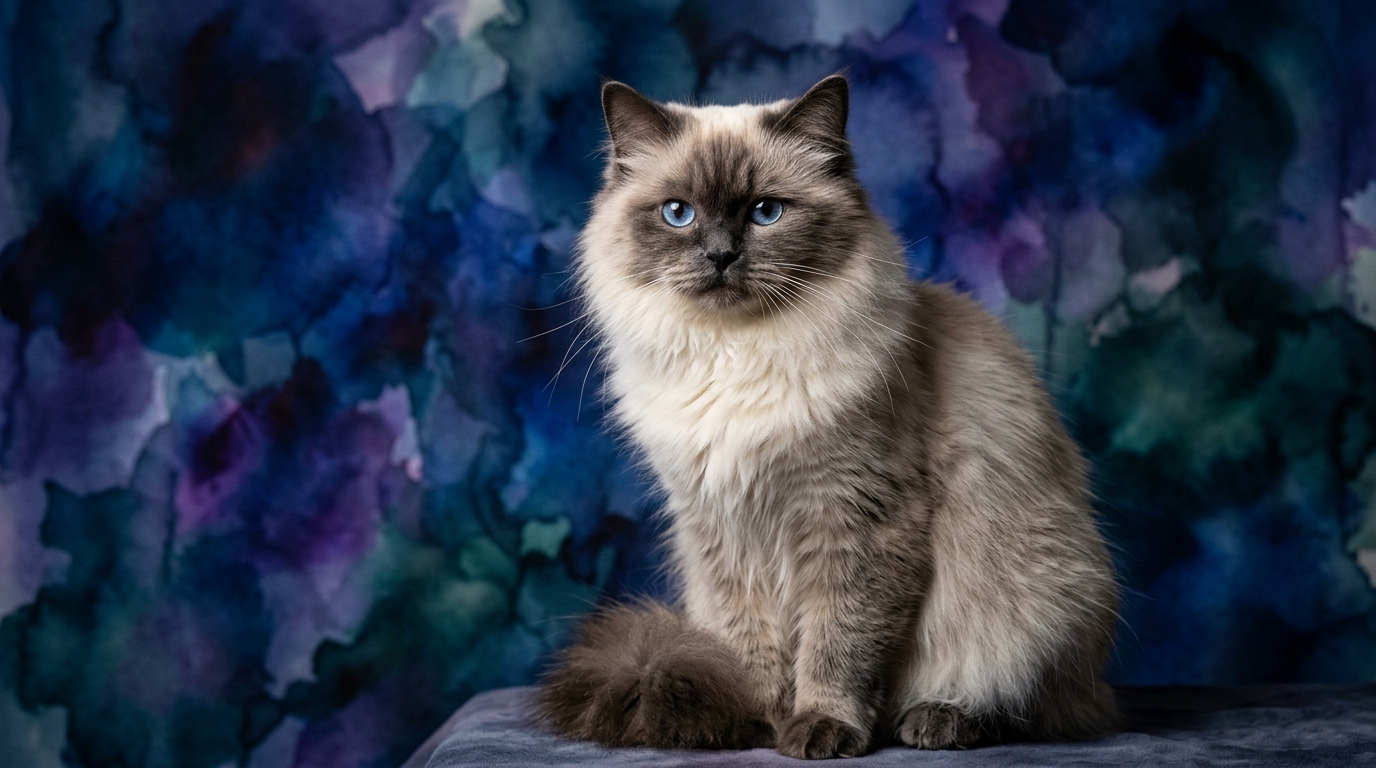
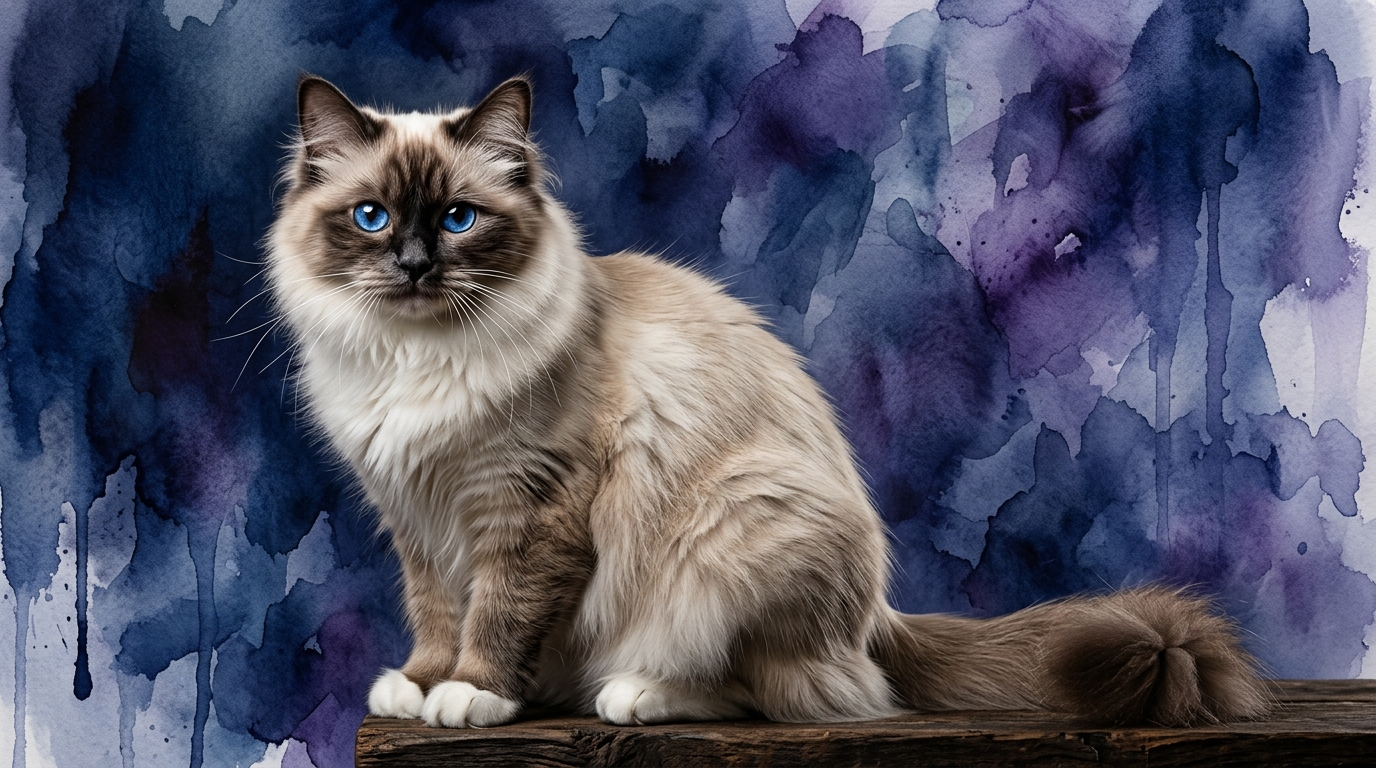
Side-by-Side Cognitive Profiles: Himalayan and Birman
At The Cosmic Pet Pet IQ Lab, we evaluate feline cognition across five key dimensions. Interestingly, both the Himalayan and the Birman breeds register identical scores across the board: Problem Solving 3/5, Training Speed 3/5, Social Intelligence 3/5, Instinctive Drive 3/5, and Memory 3/5. While these scores indicate a similar underlying cognitive capacity, the practical expression of these abilities often varies significantly between breeds due to their inherent temperaments and typical behaviors. Understanding these nuances is key to appreciating each cat's individual brilliance.
For Problem Solving (3/5), the Himalayan cat often approaches new challenges with a thoughtful, observational demeanor. They might prefer to assess a situation from a distance before attempting a solution, perhaps exhibiting a methodical, if not always persistent, approach to puzzles. A Birman, with the same 3/5 score, tends to be more hands-on and exploratory. Their problem-solving might involve more trial and error, often leveraging their gentle curiosity to investigate novel situations or objects until a solution is found.
Training Speed (3/5) in a Himalayan suggests they are capable of learning routines and commands, but may require a patient, consistent approach. They respond well to positive reinforcement but might take their time processing new information, thriving on established patterns. The Birman's 3/5 training speed often manifests as a more eager and receptive learner. Their desire for interaction can make training sessions feel more collaborative, as they are often keen to engage and please their human companions, responding well to gentle guidance and rewards.
Social Intelligence (3/5) in a Himalayan typically translates to a more reserved yet perceptive understanding of household dynamics. They form deep bonds but often express affection on their own terms, preferring a select circle of trusted individuals. They communicate their needs subtly. A Birman, also at 3/5, usually exhibits a more overtly sociable nature. They are often attuned to human emotions and body language, frequently seeking interaction and companionship, making them appear highly responsive and empathetic to their owners' moods.
Regarding Instinctive Drive (3/5), the Himalayan's expression leans towards moderate playfulness, enjoying interactive toys and occasional bursts of energy, but often content with periods of quiet observation. Their predatory instincts are present but not overwhelmingly dominant, fitting a calm home environment. The Birman's 3/5 instinctive drive often manifests as a more playful and interactive energy. They enjoy engaging in games that simulate hunting, such as chasing toys or batting at feathers, often inviting their owners to participate in these playful activities.
Finally, Memory (3/5) in both breeds indicates a solid ability to recall routines, people, and boundaries. A Himalayan will remember where their favorite napping spots are and the daily feeding schedule, holding onto established patterns. A Birman's 3/5 memory means they are adept at remembering positive interactions, favorite playtimes, and the people who provide them comfort and attention, often remembering commands and house rules with consistency.
Where the Himalayan's Cognitive Expression Shines
While their cognitive capacities are rated similarly, the Himalayan's unique blend of these 3/5 scores, coupled with their dignified temperament, creates specific strengths. Their problem-solving at 3/5, combined with their observational nature, means they can be remarkably self-sufficient in a calm environment, often figuring out how to occupy themselves without constant human intervention. For an owner who appreciates a feline companion that is present but not demanding, this independent cognitive processing is a distinct advantage.
The Himalayan's 3/5 social intelligence, expressed as selective affection, allows them to form incredibly strong, focused bonds with their chosen few. They understand subtle cues and household rhythms, offering a quiet, comforting presence that many owners find deeply reassuring. Their memory (3/5) is particularly effective in maintaining a predictable and serene household, as they thrive on routine and anticipate daily events with a calm certainty, contributing to a harmonious living space.
Where the Birman's Cognitive Expression Shines
The Birman's identical 3/5 cognitive scores, when filtered through their gentle and affectionate personality, also present distinct advantages. Their 3/5 social intelligence shines through their exceptional ability to connect deeply with humans, often appearing highly perceptive to emotions and eager to offer comfort or companionship. This makes them outstanding emotional support animals, as their cognitive understanding of social cues is often expressed with overt warmth.
The Birman's 3/5 training speed, combined with their inherent desire for interaction, makes them particularly rewarding to train. They often pick up new behaviors quickly when the process is engaging and positive, making activities like leash training or learning simple commands a joyful experience for both cat and owner. Their instinctive drive at 3/5 translates into charming, interactive play sessions that strengthen the human-animal bond, demonstrating a playful intelligence that is both engaging and endearing.
Navigating Training: Himalayan vs. Birman Approaches
Both Himalayans and Birmans share a 3/5 rating for training speed, indicating a moderate capacity for learning. However, the *experience* of training each breed can differ significantly due to their behavioral predispositions. Training a Himalayan often requires a calm, consistent, and patient approach. They respond best to established routines and positive reinforcement delivered in a low-key manner. Their independent streak, stemming from their problem-solving nature, means they might weigh the 'value' of a command, and consistency is key to solidifying learned behaviors.
Conversely, training a Birman, while requiring similar consistency, often feels more dynamic and collaborative. Their strong social intelligence and eagerness to engage make them highly receptive to enthusiastic, positive reinforcement. They thrive on the interaction itself, often viewing training as a fun bonding activity. While both learn at a similar fundamental speed, the Birman's more overt responsiveness can make the training process feel smoother and more immediately rewarding for an owner seeking an interactive learner.
Lifestyle Compatibility: Active vs. Relaxed Owners
The distinct temperaments of these two breeds, shaped by how their identical cognitive scores manifest, make them suitable for different owner lifestyles. The Himalayan, with its calm and dignified demeanor, often prefers a more serene and predictable home environment. Their moderate instinctive drive and selective social intelligence mean they are content with periods of quiet observation and gentle companionship, making them an excellent choice for relaxed owners who appreciate an understated yet deeply affectionate presence. They are not typically demanding of constant attention or vigorous play.
The Birman, on the other hand, typically possesses a more playful, affectionate, and social disposition. Their interactive instinctive drive and strong social intelligence mean they thrive on regular engagement, play sessions, and human interaction. They are better suited for active owners who enjoy spending quality time playing with their cat, engaging in 'conversations,' and having a feline companion who is often at their side. They bring a warm, social energy to the household and actively seek out companionship.
The Verdict
Choose the Himalayan if you seek a dignified, observant companion who appreciates a predictable routine and offers affection on their own terms, fitting seamlessly into a serene home environment.
Opt for the Birman if you desire an affectionate, interactive cat who enjoys engaging in play and conversation, bringing a warm, social energy and a constant companion to the household.
🧠 Find Your Pet's IQ Score
Our Pet IQ Lab assessment covers 25+ tests across 5 cognitive dimensions — personalized to your breed.
Take the Full IQ Test →Frequently Asked Questions
Are Birmans easier to train than Himalayans?
Both breeds demonstrate a similar cognitive capacity for learning with a 3/5 training speed. Birmans might *appear* to learn faster due to their eager-to-please nature and enjoyment of interactive training sessions, while Himalayans thrive on consistent routines and a calm learning environment.
Which breed is more affectionate?
While both breeds possess a 3/5 social intelligence, Birmans typically express their affection more overtly, often seeking out interaction and physical closeness. Himalayans offer a more reserved, dignified companionship, showing affection on their own terms and preferring a select trusted circle.
Do Himalayans or Birmans require more mental stimulation?
Both breeds have a moderate instinctive drive (3/5) and benefit from regular mental engagement. Himalayans might prefer quiet observation, puzzle toys, and consistent routines, while Birmans often enjoy more interactive play, 'hunting' games with their owners, and social interaction to stay stimulated.