Side-by-Side Cognitive Profiles
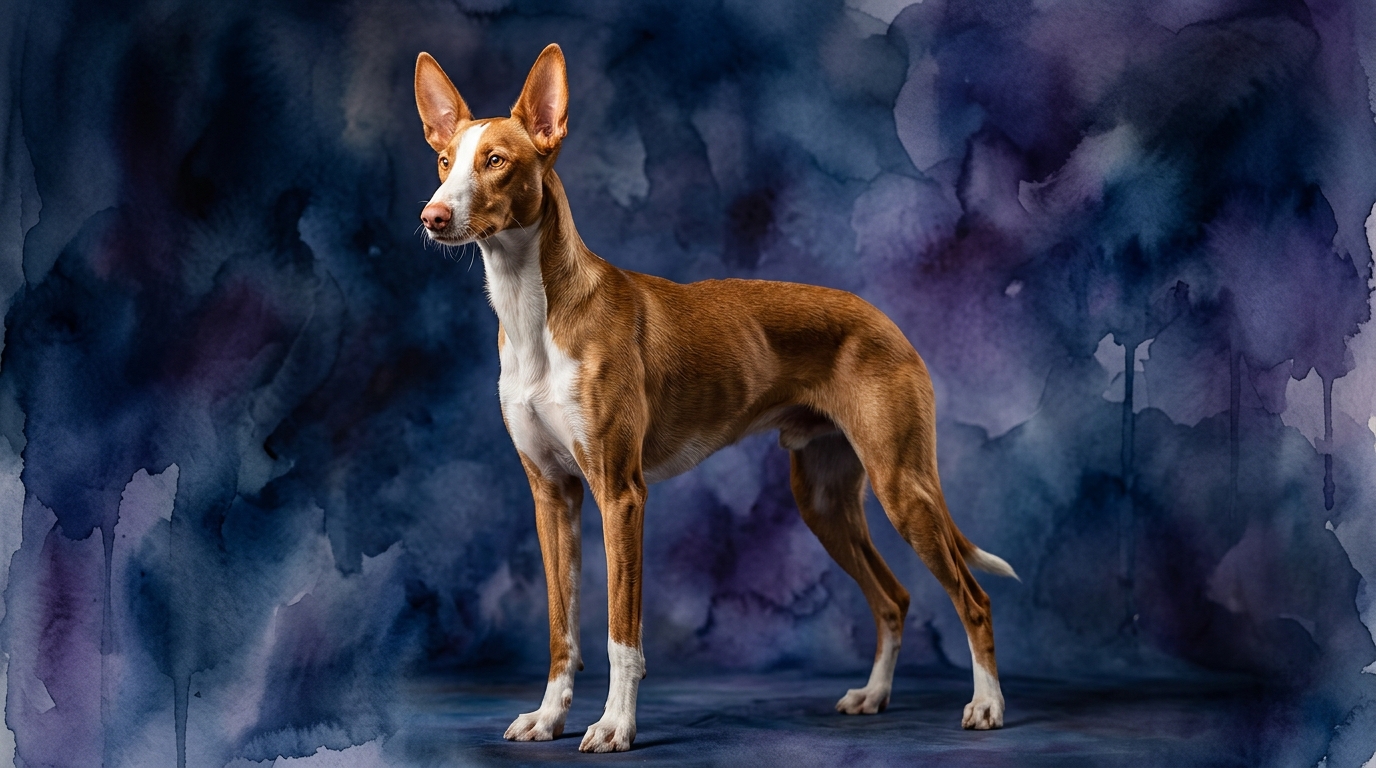
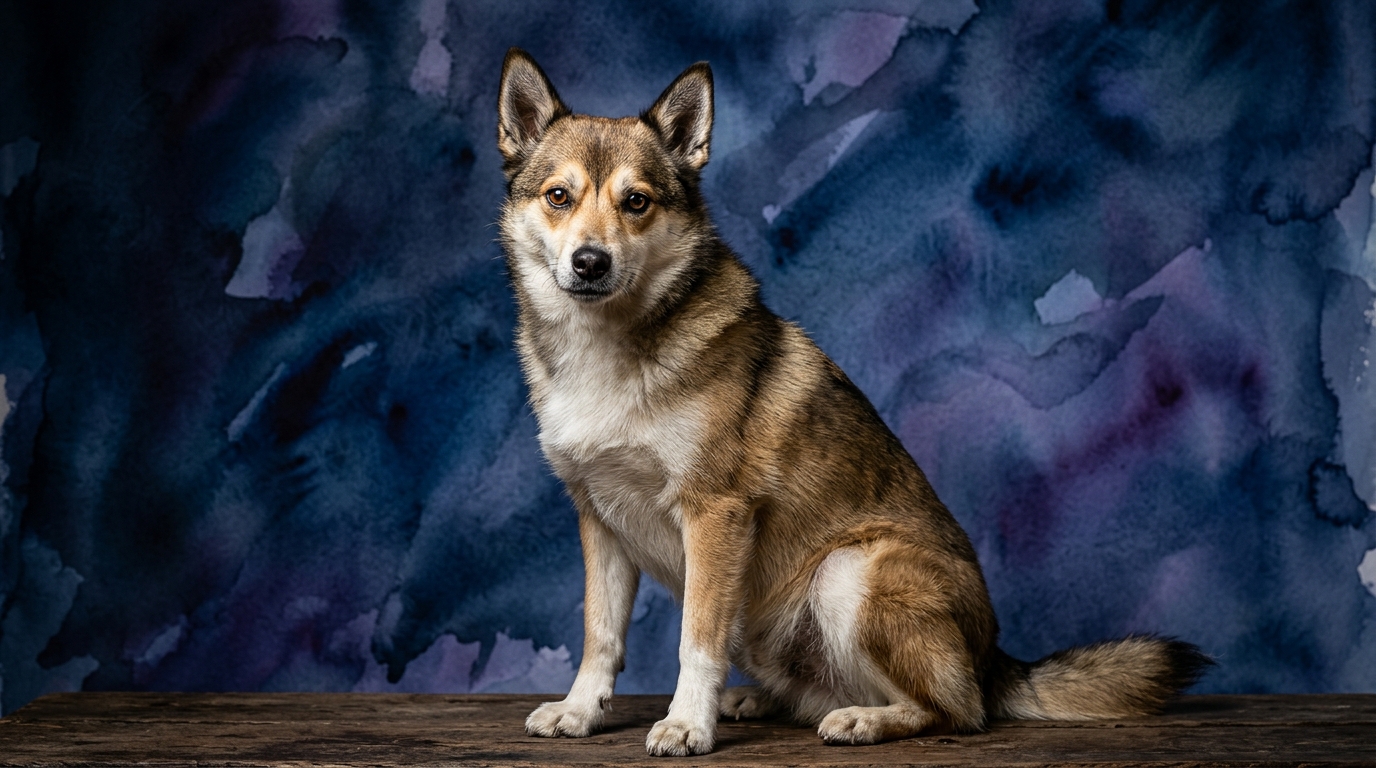
While both the Ibizan Hound and the Norwegian Lundehund are assessed with a consistent 3/5 across our five cognitive dimensions, their expressions within these scores are uniquely tailored to their historical roles. The Ibizan Hound, a sighthound ranked #53 by Coren, demonstrates a mind honed for visual pursuit, while the unranked Norwegian Lundehund, a rare breed, showcases an intellect adapted for navigating complex, tight environments.
For the Ibizan Hound, Problem Solving (3/5) often manifests in strategizing the most efficient chase routes or anticipating prey movements across varied terrain, relying heavily on visual cues. Their Training Speed (3/5) indicates an ability to learn, but their independent sighthound nature means they often need compelling reasons to comply, rather than simply pleasing their handler. Social Intelligence (3/5) sees them forming deep bonds with their immediate family, though they can be reserved with strangers, reading social cues primarily within their trusted circle. Their Instinctive Drive (3/5) is powerfully centered on prey drive, channeling their energy and focus into tracking and pursuit. Memory (3/5) is solid for routines, familiar people, and the layout of their hunting grounds, but this recall can be overridden by a strong instinctual trigger.
The Norwegian Lundehund's Problem Solving (3/5) is remarkably specialized, excelling in spatial reasoning to navigate intricate, confined spaces like cliff crevices for puffin hunting. Their unique physical adaptations, such as extra toes and flexible joints, are tools for this specific cognitive task. Training Speed (3/5) in a Lundehund requires significant patience; they are clever and can quickly understand commands but may choose to ignore them if a more engaging alternative presents itself. Social Intelligence (3/5) shows they are generally friendly and bond closely with their families, yet their history of independent work means they are not constantly seeking human direction. Their Instinctive Drive (3/5) is also a hunting drive, geared towards small prey, often manifesting as a strong urge to explore, dig, and investigate. Memory (3/5) is robust for learned routes and the locations of interesting 'prey' or treats, but their independent streak might sometimes prioritize their current interest over a remembered command.
Where the Ibizan Hound Excels Cognitively
The Ibizan Hound’s cognitive strengths are deeply rooted in its sighthound lineage, making it a master of visual processing and rapid decision-making in open environments. They possess an exceptional ability to scan vast distances, identify subtle movements, and instantly calculate the most effective pursuit trajectory. This isn't just about speed; it's about a sophisticated visual-spatial intelligence that allows them to anticipate the movements of fast-moving targets and adjust their own course with remarkable precision.
Their independence, often perceived as a training challenge, is also a cognitive win. Ibizan Hounds are capable of autonomous thought during a chase, making split-second tactical decisions without human intervention. This self-reliance in the field means they can creatively solve problems related to cornering prey or navigating obstacles while maintaining focus on their objective, showcasing a distinct form of practical, real-time problem-solving.
Where the Norwegian Lundehund Excels Cognitively
The Norwegian Lundehund's cognitive prowess is a testament to its highly specialized evolutionary niche. Their problem-solving shines in tasks requiring intricate spatial awareness and physical dexterity within confined, complex environments. Unlike the Ibizan's broad-field vision, the Lundehund's intellect is honed for micro-navigation, understanding how their unique, flexible body can contort and maneuver through tight spaces to achieve a goal.
Furthermore, their tenacity and resourcefulness in extracting puffins from narrow cliff crevices highlight a remarkable persistence in problem-solving. This isn't just brute force; it's a clever application of their physical attributes combined with a determination to succeed, suggesting a cognitive resilience and a capacity for iterative trial-and-error within a constrained environment. They demonstrate a unique form of 'fine motor intelligence' applied to their environment.
Training Dynamics: Ibizan Hound vs. Norwegian Lundehund
When it comes to training, both breeds present distinct challenges that stem from their independent natures, rather than a lack of capacity to learn. The Ibizan Hound's training journey is often characterized by its sighthound instincts; they learn quickly but can be easily distracted by movement or scents, making consistent focus a hurdle. Their inclination isn't typically to 'people-please' in the way some other breeds might; instead, they respond best to positive reinforcement that makes training more rewarding than any environmental distraction, such as incorporating elements of a chase or high-value treats.
The Norwegian Lundehund, while equally capable of learning, is often described as having a 'Lundehund stubbornness' or a highly independent streak. They are clever and can quickly grasp what is expected but may choose to obey only if they perceive a strong personal benefit or if the activity is intrinsically fun and engaging. Repetitive drills can bore them, and they might even creatively find ways to 'outsmart' a trainer. Successful training with a Lundehund requires patience, humor, and transforming commands into a stimulating game that appeals to their exploratory and problem-solving drives.
Matching Canine Companions to Lifestyles
For active owners, both breeds can be excellent choices, though their activity needs differ in style. The Ibizan Hound thrives with owners who can provide ample opportunities for sprinting and off-leash running in secure areas, such as lure coursing, to satisfy their powerful prey drive. While they can be calm indoors after sufficient exercise, their mental and physical well-being depends on regular, intense bursts of speed and the chance to use their incredible vision.
The Norwegian Lundehund also requires regular exercise and mental engagement, but their activity might lean more towards varied hikes, agility courses that utilize their unique flexibility, or exploring new environments. They are curious and enjoy puzzle toys and activities that challenge their spatial reasoning. For more relaxed owners, neither breed is truly a 'couch potato' without effort. An Ibizan Hound will become restless if its need for speed is unmet, while a Lundehund, with its exploratory drive and independent mind, needs consistent mental stimulation even if physical exercise is slightly less intense than a sighthound's. Both require committed owners willing to understand and cater to their specific energy outlets.
The Verdict: When to Choose Each Breed
The Verdict
Choose the Ibizan Hound if you appreciate an elegant, independent companion with an unparalleled visual hunting instinct, and you can provide secure, expansive spaces for them to run and express their sighthound nature.
Opt for the Norwegian Lundehund if you are fascinated by a unique, ancient breed with remarkable physical adaptations, and you are prepared for a clever, independent dog that thrives on mental challenges and varied, engaging activities.
🧠 Find Your Pet's IQ Score
Our Pet IQ Lab assessment covers 25+ tests across 5 cognitive dimensions — personalized to your breed.
Take the Full IQ Test →Frequently Asked Questions
Are Ibizan Hounds good family dogs?
Ibizan Hounds typically form deep, affectionate bonds with their immediate families and are known for being gentle companions indoors after their exercise needs are met. They can be reserved with strangers but are generally good with children who understand how to interact respectfully with dogs.
What are the unique physical traits of a Norwegian Lundehund?
Norwegian Lundehunds possess several unique physical traits, including at least six toes on each foot, a highly flexible neck that can bend backward to touch their spine, and shoulder joints that allow their legs to extend horizontally. These adaptations were essential for their historical role of hunting puffins in narrow cliff crevices.
Do Ibizan Hounds or Norwegian Lundehunds require a lot of grooming?
Neither breed typically requires extensive grooming. The Ibizan Hound has a short, smooth coat (or sometimes wire-haired) that needs minimal brushing. The Norwegian Lundehund has a double coat that sheds seasonally but generally only requires weekly brushing to keep it healthy and minimize loose hair.