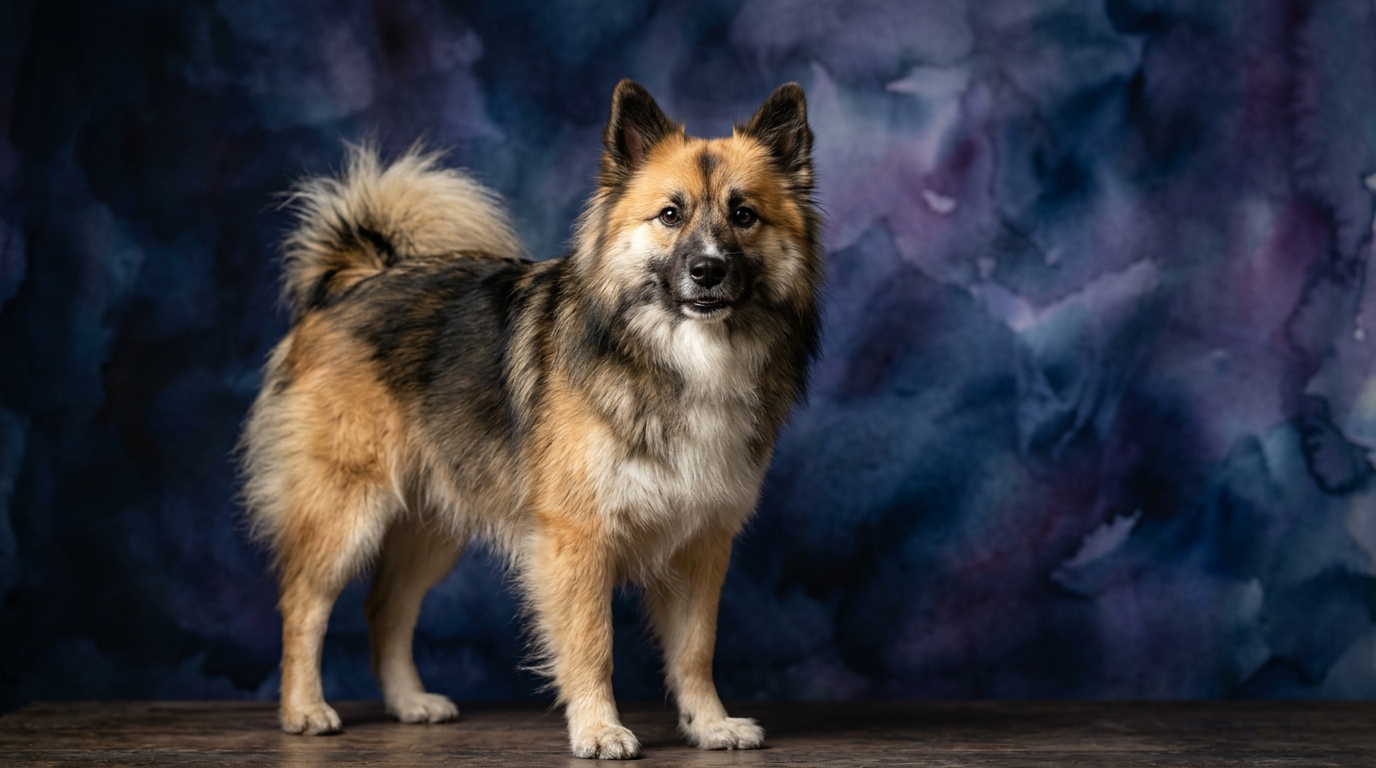
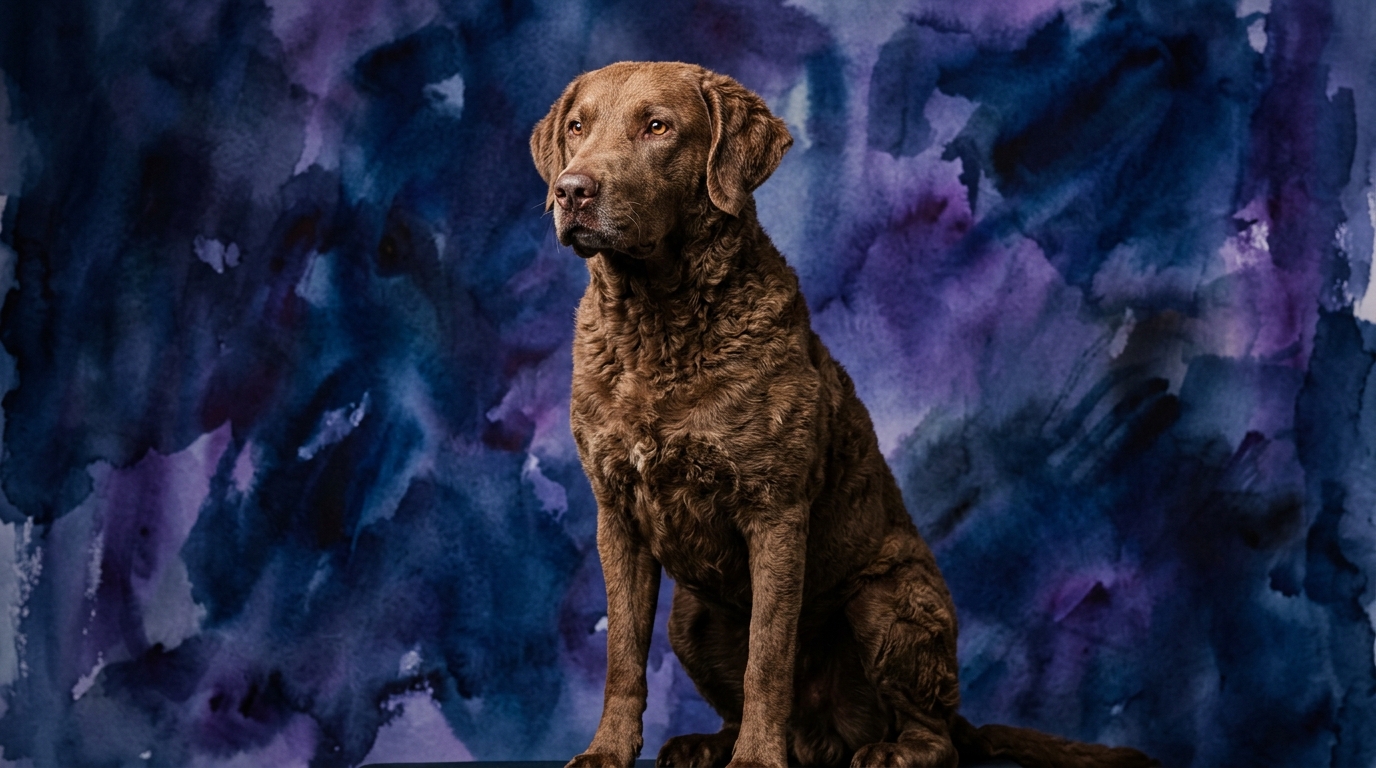
Side-by-Side IQ Profile: Herder vs. Retriever
The Cosmic Pet Pet IQ Lab evaluates canine intelligence across five key dimensions, providing a nuanced understanding beyond simple obedience. For the Icelandic Sheepdog, a breed rooted in centuries of herding sheep across rugged terrain, we observe a balanced cognitive profile: Problem Solving 3/5, Training Speed 3/5, Social Intelligence 3/5, Instinctive Drive 3/5, and Memory 3/5. This consistent scoring reflects a dog whose intelligence is geared towards independent yet cooperative work, requiring adaptability and awareness in dynamic environments without constant human direction.
In contrast, the Chesapeake Bay Retriever, a powerful sporting dog with a Coren ranking of #27, presents a profile indicating a different set of cognitive strengths: Problem Solving 4/5, Training Speed 4/5, Social Intelligence 3/5, Instinctive Drive 3/5, and Memory 4/5. This breed’s scores suggest a dog built for precision and efficiency in complex tasks, especially those requiring rapid learning and recall under pressure, reflecting its heritage as a dedicated hunting companion.
Delving into Problem Solving, the Icelandic Sheepdog's 3/5 indicates an ability to navigate novel situations and adapt to changing conditions, crucial for managing livestock without direct commands. They learn by observation and can devise solutions to common herding challenges, such as finding stray lambs or guiding a flock through difficult passes. The Chesapeake Bay Retriever's 4/5 in Problem Solving highlights its capacity for more complex, multi-step tasks; for instance, remembering multiple fall locations of retrieved game or figuring out the most efficient path through dense cover to reach a target. This higher score reflects a dog that can process intricate instructions and strategize effectively.
Training Speed for the Icelandic Sheepdog, rated at 3/5, means they generally grasp new commands and routines at a moderate pace. They are receptive to learning, but their independent nature, stemming from their herding responsibilities, sometimes means they require motivation that aligns with their inherent drives rather than rote repetition. The Chesapeake Bay Retriever's 4/5 in Training Speed points to a quicker uptake of new information and commands. Their strong desire to work alongside their handler and their focused drive make them particularly adept at acquiring and retaining a wide repertoire of behaviors efficiently, often needing fewer repetitions to solidify a command.
Both breeds share a Social Intelligence score of 3/5. For the Icelandic Sheepdog, this manifests as a sociable and responsive nature towards their human family, often acting as a watchful companion who is attuned to household dynamics. They communicate through barks and body language, displaying a clear understanding of social cues within their pack. The Chesapeake Bay Retriever's 3/5 social intelligence is often directed more intensely towards their primary handler, forming a deep bond and understanding their partner's intentions during work. While capable of friendly interactions, their focus and loyalty can be quite singular, making them discerning with strangers.
Instinctive Drive is rated 3/5 for both, but its expression differs significantly. The Icelandic Sheepdog’s drive is primarily a herding instinct, characterized by a desire to gather and control movement, often expressed through circling, barking, and nipping at heels. This drive is not about aggression but about managing a flock. For the Chesapeake Bay Retriever, the 3/5 instinctive drive is overwhelmingly geared towards retrieving, particularly from water. This manifests as an intense desire to find and bring back objects, coupled with a remarkable tolerance for cold water and harsh conditions, driven by a deep-seated prey drive channeled into cooperation.
Finally, Memory is a 3/5 for the Icelandic Sheepdog, meaning they retain learned information and experiences adequately, remembering routines, people, and places with reasonable consistency. They can recall past training and respond appropriately. The Chesapeake Bay Retriever, with a 4/5 in Memory, demonstrates a superior capacity for recall, which is vital for remembering complex sequences of retrieves, the locations of multiple birds, or intricate scent trails. This enhanced memory contributes significantly to their efficiency and reliability in field work, allowing them to perform multi-stage tasks with precision over extended periods.
Where the Icelandic Sheepdog Wins Cognitively
While generally scoring slightly lower in some metrics than the Chessie, the Icelandic Sheepdog excels in a unique blend of independent problem-solving and nuanced social awareness crucial for its original role. Its 3/5 in Problem Solving, though not the highest, is highly effective for autonomous decision-making in unpredictable environments; they can assess a situation with livestock and react appropriately without constant human intervention, demonstrating a self-reliance that's a hallmark of true herding intelligence. This adaptability means they are adept at navigating varied social and physical landscapes with a thoughtful, rather than purely reactive, approach.
The Icelandic Sheepdog's 3/5 Social Intelligence is particularly noteworthy for its breadth of application within a family unit. Unlike some working breeds whose social acumen might be primarily handler-focused, the Icelandic Sheepdog often integrates seamlessly into a household, reading the moods and intentions of multiple family members. Their vocal communication and expressive body language allow them to convey needs and observations effectively, fostering a deep, two-way understanding that enriches the human-canine bond beyond a simple working partnership. This cognitive strength makes them exceptionally well-suited for families seeking a communicative and engaged companion.
Where the Chesapeake Bay Retriever Wins Cognitively
The Chesapeake Bay Retriever's cognitive strengths truly shine in areas demanding precision, retention, and focused application, particularly evident in its higher Problem Solving (4/5) and Memory (4/5) scores. Their superior problem-solving ability allows them to tackle intricate tasks with remarkable efficiency, such as navigating complex obstacles to retrieve an object or understanding elaborate multi-part commands. This isn't just about strength, but about mental agility to strategize and execute effectively in challenging scenarios.
Their 4/5 in Memory is a significant advantage, enabling them to recall extensive training sequences, remember specific locations of hidden objects over time, and learn vast vocabularies of commands. This robust memory is foundational to their success as a working retriever, allowing them to perform reliably in demanding field tests and real-world hunting situations where remembering multiple 'marks' or scent trails is paramount. Combined with their 4/5 Training Speed, this makes the Chessie an exceptionally capable and quick study for complex, structured work, making them highly proficient at tasks requiring focused application of learned behaviors.
Which is Easier to Train and Why
When considering ease of training, the Chesapeake Bay Retriever generally presents a quicker learning curve, largely due to its 4/5 Training Speed and 4/5 Memory. Chessies possess an intense focus and a profound desire to work collaboratively with their handler, especially when the tasks align with their retrieving drive. They are often eager to please and will quickly grasp new commands and concepts, retaining them with impressive consistency. Their drive for directed work means they often thrive on structure and clear expectations, making them responsive to traditional obedience and advanced task training.
The Icelandic Sheepdog, with its 3/5 Training Speed, is still trainable but often requires a different approach. Their herding heritage fosters a degree of independence; they are accustomed to making decisions autonomously rather than always waiting for a direct command. While they are intelligent and capable of learning a wide range of commands, they might take slightly longer to generalize new behaviors or might require more creative, engaging, and patient methods to maintain their focus. Training an Icelandic Sheepdog often involves channeling their natural instincts into constructive activities, and understanding that their occasional independent streak is not defiance but a reflection of their cognitive design. They excel with positive reinforcement that builds a strong relationship, rather than purely command-based instruction, making the process rewarding but potentially less 'speedy' than with a Chessie.
Which Suits Active Owners vs. Relaxed Owners
Neither the Icelandic Sheepdog nor the Chesapeake Bay Retriever are suited for truly 'relaxed' owners who prefer minimal engagement. Both breeds are active and require substantial mental and physical stimulation to thrive, but the *type* of activity they require differs significantly. The Chesapeake Bay Retriever is an ideal match for highly active owners who are passionate about outdoor activities, especially those involving water sports, hunting, or rigorous dog sports like agility, dock diving, or competitive obedience. Their intense drive (3/5 Instinctive Drive) and problem-solving prowess (4/5) demand structured, challenging 'work' that allows them to utilize their impressive physical and cognitive abilities. Owners must be prepared for consistent, vigorous exercise and mental challenges to prevent boredom and channeling their energy into less desirable behaviors.
The Icelandic Sheepdog, while also active, often suits owners who enjoy a more varied and socially integrated form of activity. Their 3/5 Instinctive Drive for herding means they thrive on activities that engage their minds, such as herding games, scent work, or agility, but they can also be content with long hikes, interactive play, and being an integral part of family outings. They require consistent engagement and mental stimulation, but their activity might be less about intense, repetitive tasks and more about continuous, interactive participation. Owners who enjoy teaching new tricks, engaging in communicative play, and providing a stimulating home environment where the dog feels involved will find the Icelandic Sheepdog a rewarding companion. They are not built for a sedentary lifestyle, but their activity needs are often met through a blend of physical exercise and rich social interaction within the family context.
The Verdict: When to Choose Each
The Verdict
Choose the Icelandic Sheepdog if you value a communicative, adaptable companion who excels in independent thought and integrates deeply into family life, and you are prepared for consistent, varied mental engagement. They thrive with owners who appreciate their nuanced social intelligence and herding instincts.
Opt for the Chesapeake Bay Retriever if you are an active individual or family seeking a highly driven, focused working partner for demanding outdoor pursuits, especially water-based activities or competitive dog sports. Their superior training speed and memory make them excellent for complex, structured tasks.
🧠 Find Your Pet's IQ Score
Our Pet IQ Lab assessment covers 25+ tests across 5 cognitive dimensions — personalized to your breed.
Take the Full IQ Test →Frequently Asked Questions
Are Icelandic Sheepdogs good for first-time dog owners?
Icelandic Sheepdogs can be suitable for first-time owners who are committed to consistent positive reinforcement training and providing ample mental and physical stimulation. Their sociable nature makes them adaptable, but their herding instincts and vocal tendencies require understanding and management.
Do Chesapeake Bay Retrievers require a lot of grooming?
Chesapeake Bay Retrievers have a short, dense, oily coat that is relatively low maintenance, requiring weekly brushing to remove loose hair and occasional baths. Their coat is designed to be water-resistant and protect them in harsh conditions, so over-bathing can strip natural oils.
Can Icelandic Sheepdogs live in apartments?
While adaptable, Icelandic Sheepdogs are generally not ideal for apartment living due to their vocal nature and high energy levels. They thrive with access to a securely fenced yard where they can play and explore, alongside daily vigorous walks and mental exercises.