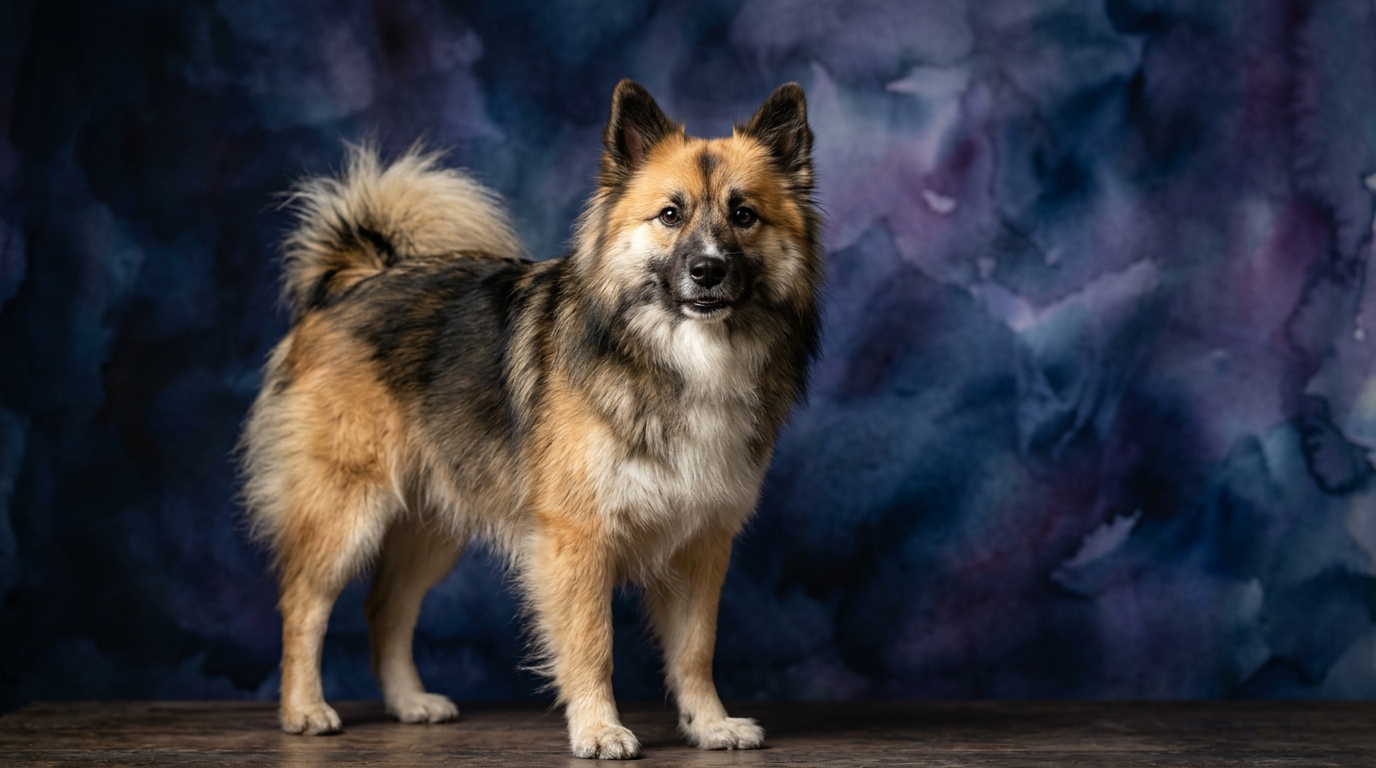
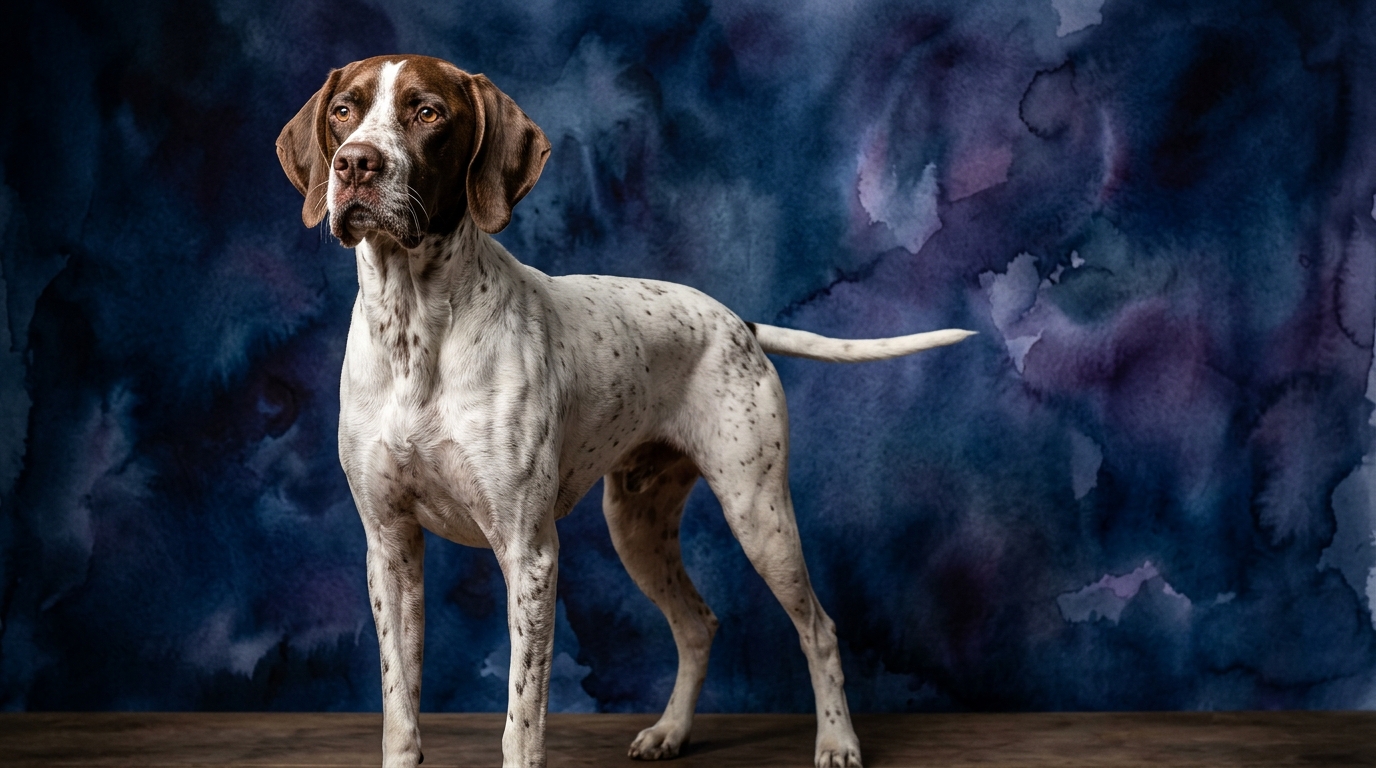
Side-by-Side Cognitive Profile
**Problem Solving (3/5):** Both breeds demonstrate a capable approach to novel challenges, indicating they can learn to navigate new situations and figure out solutions with moderate effort. For the Icelandic Sheepdog, this often manifests in their ability to manage complex flock movements, adapting to terrain and individual sheep behaviors to achieve a herding goal, requiring dynamic spatial awareness. The Pointer, conversely, applies its problem-solving to intricate scent trails, deciphering complex olfactory information to locate game, often requiring sustained focus and methodical exploration to pinpoint a hidden bird.
**Training Speed (3/5):** A score of 3/5 suggests both the Icelandic Sheepdog and the Pointer absorb new commands and behaviors at a moderate pace, making them responsive to consistent training efforts. The Icelandic Sheepdog, while trainable, often brings an independent spirit, reflecting their historical need for autonomous decisions in the field, which can sometimes require more engagement to maintain focus. The Pointer's training speed is often influenced by its intense drive; when channeling its natural instincts, it learns hunting-related tasks with impressive dedication, but general obedience might demand patience to overcome strong environmental distractions.
**Social Intelligence (3/5):** Both breeds exhibit a moderate level of social awareness, capable of understanding human cues and interacting appropriately within a social structure. The Icelandic Sheepdog's social intelligence is deeply rooted in its cooperative relationship with shepherds, understanding subtle signals to work as a team member in a challenging environment and attuned to human "flock" dynamics. The Pointer's social intelligence centers on its partnership with a hunter, requiring clear communication and a precise understanding of its role in a working relationship, often expressed through focused attention when on task.
**Instinctive Drive (3/5):** With a 3/5 in instinctive drive, both breeds possess inherent urges that significantly shape their behavior and cognitive focus. The Icelandic Sheepdog's drive is primarily herding-oriented, an innate desire to gather, control, and move livestock, fueling their vigilance and responsiveness to movement. The Pointer's instinctive drive is powerfully geared towards hunting and pointing game birds, a profound urge to locate and indicate prey through scent, leading to unwavering focus and stamina in this pursuit.
**Memory (3/5):** A 3/5 in memory indicates both breeds have a capable ability to recall learned behaviors, routines, and spatial information over time. The Icelandic Sheepdog's memory serves them well in remembering routes, flock patterns, and the location of their charges, essential for effective herding over varied terrains and recalling complex action sequences. The Pointer's memory is particularly adept at recalling specific scent profiles, the locations of previous game finds, and the patterns of movement in hunting grounds, crucial for efficient and successful retrieval and pointing.
Where the Icelandic Sheepdog Wins Cognitively
The Icelandic Sheepdog's 3/5 scores shine brightest in scenarios demanding dynamic spatial reasoning and multi-tasking within a fluid environment. Their herding legacy imbues them with a remarkable capacity for simultaneously monitoring multiple moving entities (like a scattered flock), anticipating their trajectory, and making rapid adjustments to maintain control. This isn't just about following commands; it's about independent, context-aware problem-solving to achieve a larger goal, such as guiding sheep through a gate or away from danger. Their social intelligence, while rated 3/5, is particularly adept at interpreting and responding to the subtle, evolving dynamics of both human and animal groups, making them excellent at cooperative tasks where initiative and communication are key. This breed excels when asked to manage complex, interactive systems, demonstrating a cognitive flexibility that allows them to adapt their strategy on the fly.
Where the Pointer Wins Cognitively
The Pointer's cognitive strengths, also rated 3/5, are most pronounced in tasks requiring sustained, singular focus and precise discrimination of sensory information, particularly scent. Their historical role as a game bird detector has honed an extraordinary ability to process and interpret a vast array of olfactory data, filtering out distractions to pinpoint specific targets with unwavering concentration. This isn't merely a strong nose; it's a cognitive process involving pattern recognition, memory of scent profiles, and an almost obsessive dedication to a task. Their instinctive drive, while also 3/5, translates into an unmatched endurance for focused work, allowing them to maintain peak cognitive performance over long periods in the field. Furthermore, their communication of discovery, through the iconic "point," demonstrates a precise, non-verbal intelligence, conveying complex information about location and proximity with remarkable clarity.
Which is Easier to Train and Why
While both breeds share a 3/5 training speed, the *experience* of training them can differ significantly due to their intrinsic drives. The Icelandic Sheepdog, with its strong herding instinct, often displays an independent streak. They are capable learners, but their natural inclination to gather and control can lead them to "herd" family members, children, or other pets, requiring consistent redirection and creative outlets for this drive. Their training might feel like a collaborative negotiation rather than simple command-and-response, as they are often thinking for themselves. The Pointer, on the other hand, possesses an intense prey drive and an unparalleled focus on scent. While this makes them incredibly dedicated to tasks related to hunting or scent work, their attention can be easily diverted by interesting smells or movement in other contexts. For a general pet owner, managing the Pointer's powerful drive and channeling its boundless energy into appropriate activities might initially feel more demanding, as their focus can be singular and intense, requiring a very engaging training approach to overcome environmental lures. Neither is "easier" per se, but their challenges stem from different aspects of their core personality and historical purpose.
Which Suits Active Owners vs. Relaxed Owners
Neither the Icelandic Sheepdog nor the Pointer are suited for genuinely relaxed owners seeking a sedentary companion; both breeds demand significant physical and mental engagement. The Icelandic Sheepdog thrives with active owners who enjoy interactive play, consistent outdoor adventures, and perhaps even dog sports like agility or herding trials. Their problem-solving abilities and social intelligence mean they need tasks that challenge their minds as much as their bodies, preventing boredom and potential mischief. Owners who appreciate a dog that thinks and engages collaboratively will find a rewarding partnership. The Pointer, however, requires an even more intense level of physical exertion. Their legendary stamina and instinctive drive mean they need owners dedicated to providing extensive daily running, long hikes, or opportunities for field work. A Pointer's powerful focus and high energy, if not adequately channeled, can lead to frustration and destructive behaviors. Therefore, active owners who prioritize endurance sports, long-distance activities, or have an interest in hunting or scent work will find the Pointer an ideal, tireless companion. The distinction lies in the *type* and *intensity* of activity preferred: interactive, problem-solving for the Sheepdog versus sustained, high-endurance for the Pointer.
The Verdict
Choose the Icelandic Sheepdog if you seek a vigilant, cooperative companion who enjoys interactive challenges, has a knack for managing dynamic situations, and thrives on a partnership that blends independent thought with clear communication.
Opt for the Pointer if your lifestyle revolves around high-energy outdoor pursuits, you appreciate unwavering focus on a task, and you can provide extensive opportunities for them to channel their profound scent-driven instincts.
🧠 Find Your Pet's IQ Score
Our Pet IQ Lab assessment covers 25+ tests across 5 cognitive dimensions — personalized to your breed.
Take the Full IQ Test →Frequently Asked Questions
Are Icelandic Sheepdogs good with children?
Icelandic Sheepdogs can be wonderful with children, often displaying a gentle and playful nature. However, their natural herding instinct may lead them to try and "herd" youngsters, gently nudging or nipping at heels, so supervision and teaching appropriate interactions are important.
Do Pointers need a lot of space?
Pointers primarily need a lot of *exercise space* and opportunities to run, rather than just a large yard. While a secure outdoor area is beneficial, their well-being is more dependent on daily, vigorous activity, making them suitable for various living situations as long as their exercise needs are met.
Which breed is more vocal?
The Icelandic Sheepdog tends to be more vocal, often barking to alert, express excitement, or even to "herd," a trait stemming from their pastoral heritage. Pointers are generally less prone to excessive barking but will vocalize when excited, frustrated, or when they've "pointed" something interesting.