Side-by-Side IQ Profile: Understanding the Nuances of a 3/5 Score
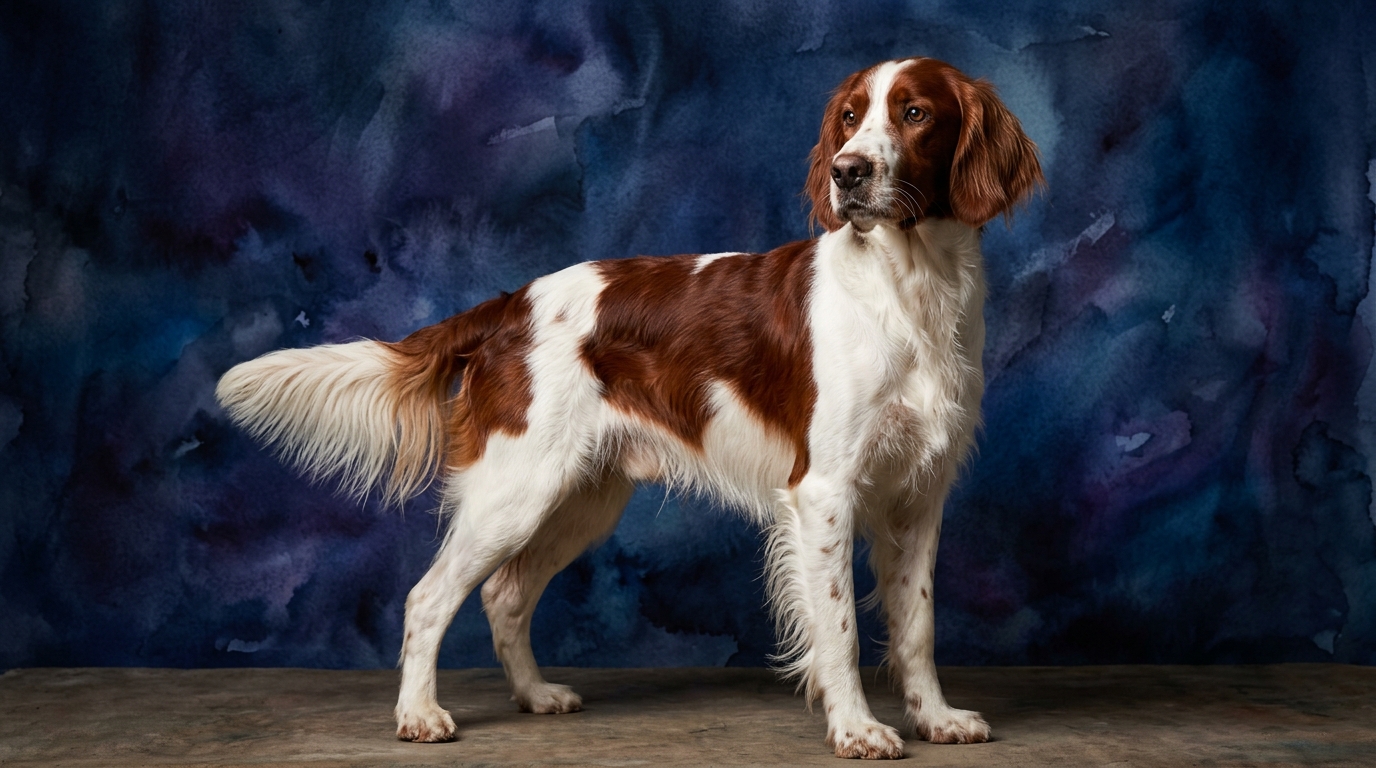
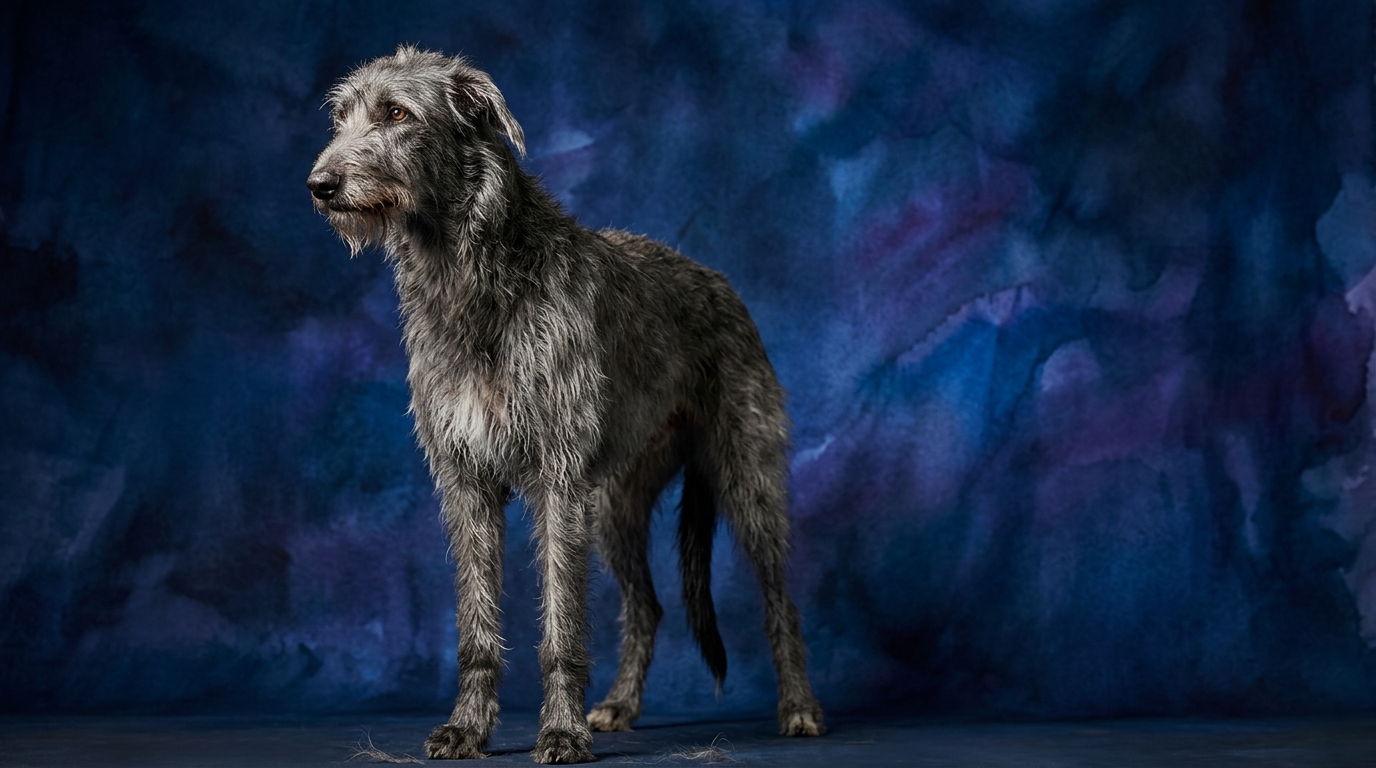
At The Cosmic Pet Pet IQ Lab, we evaluate canine intelligence across five key dimensions, assigning a score from 1 to 5. Both the Irish Red and White Setter, a Sporting group dog, and the Scottish Deerhound, a member of the Hound group, register a consistent 3/5 across all five categories. While these identical numerical scores might suggest cognitive parity, a deeper dive into their historical functions and breed-specific traits reveals distinct interpretations of what a '3' signifies for each.
For the Irish Red and White Setter, a 3/5 in **Problem Solving** often manifests as an ability to independently locate game, navigate complex cover, and adapt strategies in the field, driven by scent and visual cues. Their **Training Speed** at 3/5 indicates a responsive nature, generally willing to learn new commands with consistent, positive reinforcement, though they can have their moments of independent thought typical of a working breed. Their **Social Intelligence** at 3/5 points to a generally affable disposition, forming strong bonds with their human families and often interacting well with other dogs, but they retain a degree of self-reliance. An **Instinctive Drive** of 3/5 highlights their strong hunting and retrieving instincts, particularly for birds, requiring appropriate outlets. Finally, their **Memory** at 3/5 suggests a good retention for learned commands, routines, and familiar people or places, essential for field work where recalling specific locations or previous scent trails is beneficial.
The Scottish Deerhound's 3/5 in **Problem Solving** typically involves strategic pursuit of prey over vast distances, assessing terrain, and making rapid, independent decisions during a chase. Their **Training Speed** at 3/5 reflects a capacity to learn, but often with a more independent streak; they might grasp concepts quickly but require motivation that appeals to their sighthound nature rather than just handler pleasing. **Social Intelligence** at 3/5 describes a reserved yet loyal demeanor, typically forming deep bonds with their immediate family and often being polite but not overly demonstrative with strangers or other dogs. Their **Instinctive Drive** at 3/5 is powerfully geared towards sight-hunting and chasing, a deep-seated urge that defines much of their behavior. Lastly, a **Memory** score of 3/5 for the Deerhound implies good recall of familiar environments, routines, and specific visual targets, crucial for their historical role where remembering a quarry's last known direction or a familiar path home was vital.
Where the Irish Red and White Setter Excels Cognitively
The Irish Red and White Setter's cognitive strengths, even with a 3/5 across the board, shine particularly in scenarios demanding cooperative effort and sustained focus on a handler's direction within a dynamic environment. Their problem-solving often involves intricate scent work, requiring them to process multiple olfactory inputs to pinpoint game, a task that blends instinct with learned skill. This breed demonstrates a particular aptitude for tasks that require a blend of independent hunting drive and responsiveness to commands, making them adept at navigating complex field trials or advanced obedience work where subtle cues are critical.
Their social intelligence, while not off-the-charts, supports a more direct and often enthusiastic engagement with their human companions in joint activities. This can translate into a quicker understanding of handler intentions and a greater willingness to adapt their behavior based on human feedback, making them exceptional partners in activities that require close teamwork. The Setter's memory is also particularly geared towards recalling specific training sequences and handler expectations, allowing for a more fluid and predictable performance in structured tasks.
Where the Scottish Deerhound Excels Cognitively
The Scottish Deerhound's cognitive advantages become apparent in situations demanding independent decision-making, expansive spatial awareness, and singular focus on a distant moving target. Their problem-solving abilities are finely tuned for the hunt, where they must rapidly assess the most efficient pursuit path, anticipate prey movements, and navigate open terrain without constant human instruction. This autonomy is a hallmark of their intelligence, allowing them to excel in pursuits that require quick, self-directed action based on visual stimuli.
The Deerhound's instinctive drive, while also a 3/5, is channeled with remarkable precision towards sighthound activities. This includes an uncanny ability to spot and track movement from considerable distances, demonstrating a sophisticated visual processing capability. Their memory is particularly effective for recalling vast landscapes and the nuances of specific chase patterns, which is invaluable for a breed whose historical role involved covering immense distances. While perhaps not as overtly 'social' as some breeds, their calm and observant nature allows them to absorb and understand their environment with a quiet profundity, often reacting with considered thought rather than immediate impulse.
Which is Easier to Train, and Why?
While both breeds hold a 3/5 in training speed, the practical experience of training an Irish Red and White Setter versus a Scottish Deerhound can differ significantly due to their inherent temperamental and motivational drivers. The Setter, being a Sporting dog, typically possesses a stronger desire to work *with* their handler. Their inherent drive to please, combined with their strong retrieving and scenting instincts, means they often respond well to positive reinforcement and command-based training, especially when it involves engaging their natural abilities. They tend to maintain focus on the handler during training sessions, viewing it as a cooperative effort.
The Scottish Deerhound, a sighthound, often approaches training with a more independent mindset. Their ancestral role demanded self-reliance and quick, autonomous decisions during a chase, rather than constant consultation with a human. While they are certainly capable of learning and can be quite sensitive, their motivation often needs to appeal to their sighthound nature – often through play, chase, or high-value rewards. They might learn commands quickly but choose whether to obey based on their assessment of the situation or if something more compelling (like a fleeting squirrel) captures their attention. This isn't a lack of intelligence, but rather a difference in priorities and inherent drives, making consistency and patience even more crucial for Deerhound owners.
Which Suits Active Owners vs. Relaxed Owners
For owners with an active lifestyle, the Irish Red and White Setter is often a more natural fit. Their 3/5 instinctive drive for hunting and retrieving translates into a need for regular, engaging physical and mental activity, often best fulfilled through long walks, runs, agility, or field work. They thrive on having a 'job' and participating in family activities, channeling their cooperative intelligence into shared adventures. An active owner who enjoys training and outdoor pursuits will find a highly rewarding partnership with a Setter, as their cognitive profile encourages active engagement and shared purpose.
The Scottish Deerhound, while capable of bursts of incredible speed and requiring regular exercise to maintain their lean physique, often possesses a more 'relaxed' demeanor indoors. Their activity tends to be more about intense, shorter bursts of running or chasing, followed by extended periods of calm. Owners who appreciate a dignified, quiet companion indoors but are prepared to provide secure, expansive spaces for their Deerhound to stretch their legs and satisfy their chase instincts will find a good match. Their independent cognitive style means they are content to observe and be present, rather than constantly seeking active engagement, making them suitable for owners who enjoy a calmer home environment but can commit to dedicated outdoor exercise.
The Verdict: When to Choose Each
The Verdict
Choose the Irish Red and White Setter if you seek a cooperative, engaged companion for active outdoor pursuits and enjoy a responsive partner in training and shared activities.
Opt for the Scottish Deerhound if you appreciate a noble, independent companion who is calm indoors but needs dedicated space for exhilarating sprints, valuing a subtle, self-reliant intelligence.
🧠 Find Your Pet's IQ Score
Our Pet IQ Lab assessment covers 25+ tests across 5 cognitive dimensions — personalized to your breed.
Take the Full IQ Test →Frequently Asked Questions
Do identical IQ scores mean these breeds are exactly alike in their cognitive abilities?
No, identical scores like 3/5 across the board indicate a similar *level* of ability within our framework, but the *manifestation* of that ability differs greatly based on breed-specific instincts and historical roles. A Setter's problem-solving might focus on scent, while a Deerhound's focuses on visual pursuit.
How does 'instinctive drive' affect daily life for these breeds?
For the Irish Red and White Setter, a 3/5 instinctive drive means they will likely have a strong urge to follow scents and retrieve, requiring outlets like fetch or scent games. For the Scottish Deerhound, their 3/5 drive is primarily for chasing moving objects by sight, necessitating secure, fenced areas for exercise to prevent them from pursuing perceived prey.
Can a Scottish Deerhound be trained as effectively as an Irish Red and White Setter?
Yes, both breeds can be trained effectively, but the approach differs. Setters often respond well to traditional, reward-based training due to their desire to please. Deerhounds, while capable, often require more patient, creative training methods that appeal to their independent nature and sighthound instincts, making consistency key.