Side-by-Side Cognitive Profiles: Setter vs. Wolfhound
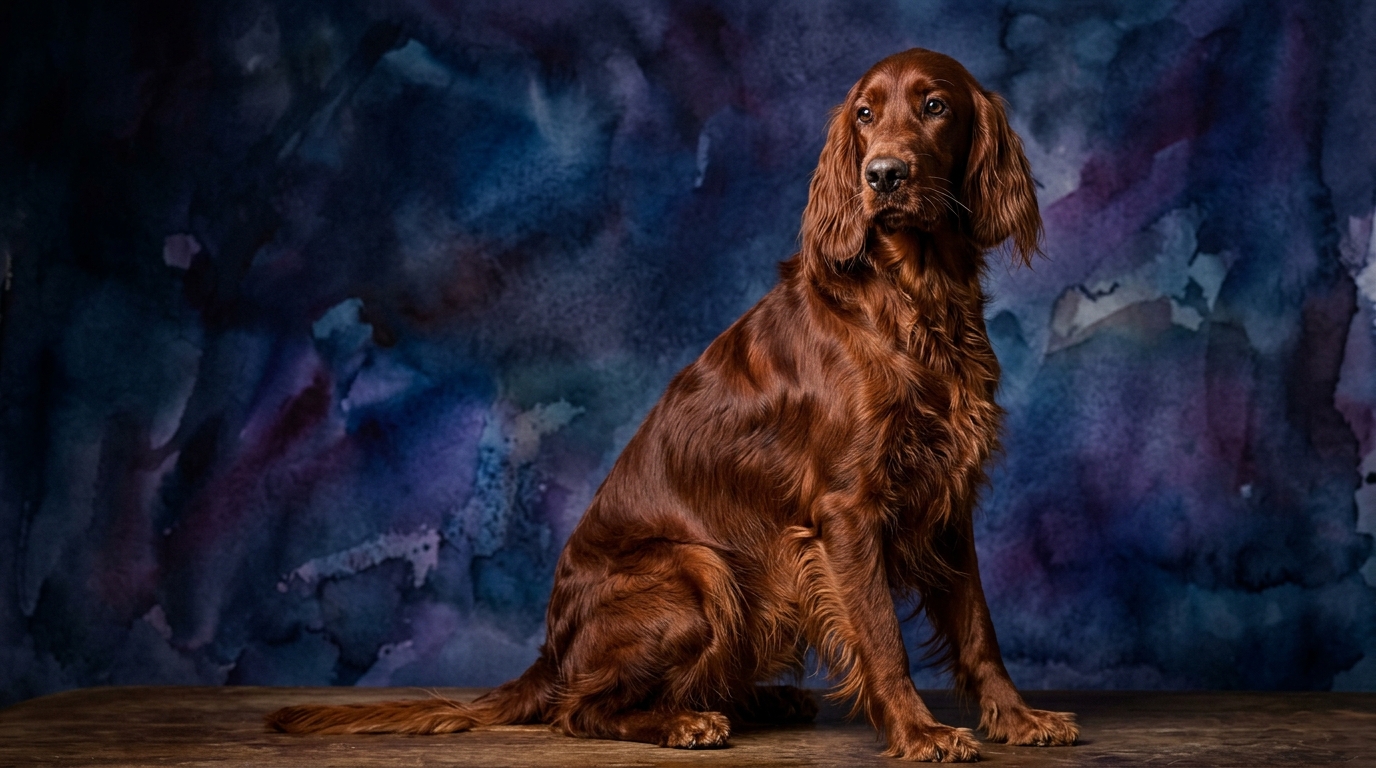
At The Cosmic Pet Pet IQ Lab, we analyze canine cognition across five distinct dimensions, providing a nuanced view beyond simple labels. The Irish Setter, a vibrant Sporting group member, registers on our scale with a Problem Solving score of 4/5, a Training Speed of 4/5, Social Intelligence at 3/5, Instinctive Drive at 3/5, and Memory at 4/5. Its Coren ranking places it at a respectable #35 among dog breeds, indicating a capacity for understanding and executing commands efficiently.
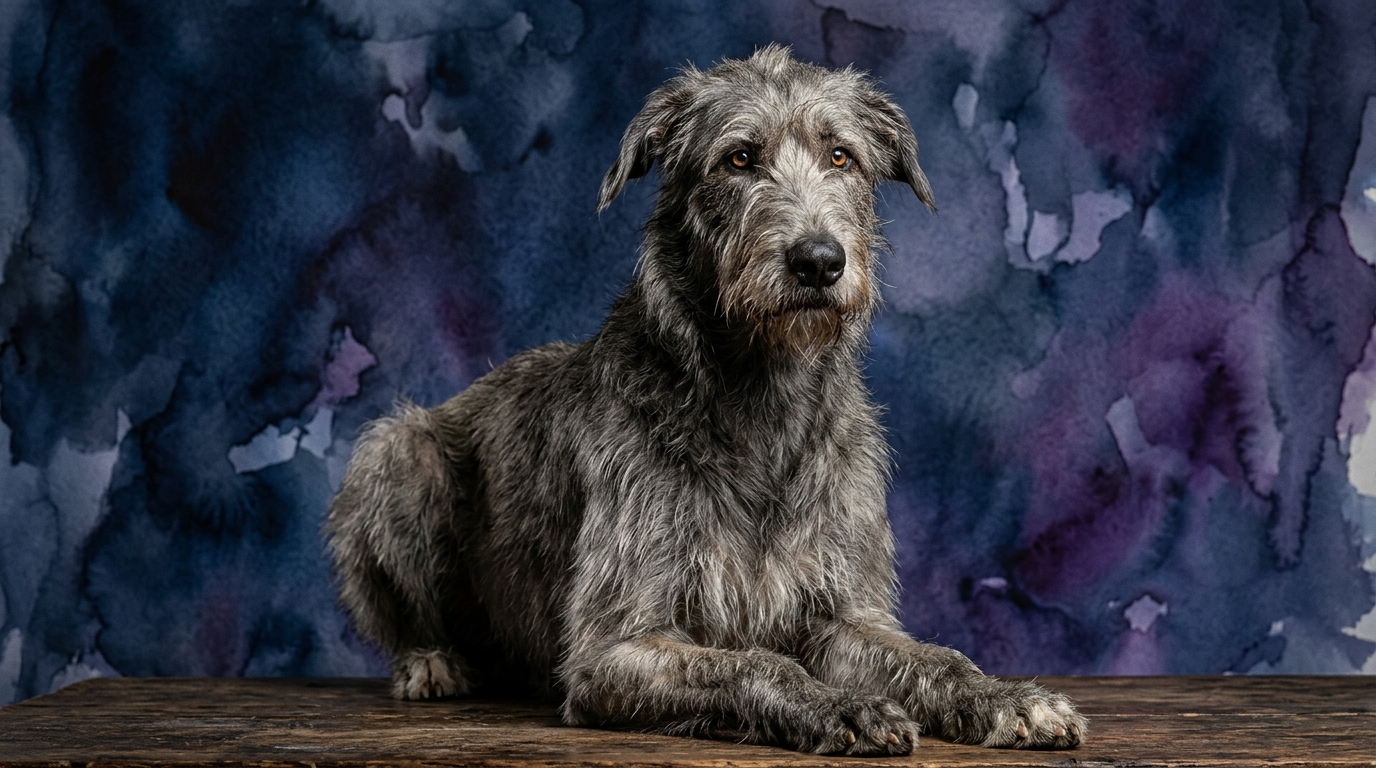
In contrast, the Irish Wolfhound, a majestic Hound breed, presents a profile reflecting its unique heritage. Its Problem Solving ability is rated at 3/5, Training Speed at 3/5, Social Intelligence at 3/5, Instinctive Drive also at 3/5, and Memory at 3/5. Notably, the Irish Wolfhound does not appear on Coren's traditional ranking, suggesting a cognitive approach that prioritizes different attributes than those typically measured by obedience-focused scales. This initial overview reveals a Setter with generally quicker cognitive faculties and a Wolfhound demonstrating consistent, balanced aptitudes.
Where the Irish Setter Excels Cognitively
The Irish Setter's cognitive profile clearly points to advantages in areas demanding quick uptake and application of information. With a Problem Solving score of 4/5, Setters often demonstrate a knack for figuring out novel situations, such as manipulating latches on crates or discerning the sequence of actions required to retrieve a hidden toy. This isn't just about brute force; it involves a nuanced understanding of cause and effect.
Its Training Speed, also at 4/5, means that an Irish Setter typically requires fewer repetitions to grasp a new command or behavior compared to many other breeds. They absorb new cues rapidly, making initial obedience training a relatively fluid process. This quick learning extends to their impressive Memory score of 4/5, enabling them to retain a vast repertoire of commands and routines over long periods. Owners often report that once a Setter learns something, it sticks, allowing for complex training progressions and reliable recall even after breaks in practice. This combination of swift learning and robust retention makes the Setter a prime candidate for activities requiring advanced cognitive engagement, such as competitive obedience or intricate trick training.
Where the Irish Wolfhound Demonstrates Distinct Strengths
While the Irish Wolfhound's individual scores are consistently 3/5, this doesn't imply a cognitive deficit, but rather a different kind of strength—one rooted in consistency, steadiness, and a deliberate approach. Its Problem Solving at 3/5 suggests it might not figure out a puzzle box as quickly as a Setter, but it will often approach challenges with a calm persistence, using its size and methodical nature to its advantage. This translates to a thoughtful, rather than frantic, engagement with its environment.
The Wolfhound's 3/5 in Social Intelligence, Training Speed, Instinctive Drive, and Memory indicates a reliable and balanced cognitive makeup. These dogs are known for their gentle, steady temperament, which is supported by their consistent social intelligence; they are adept at reading human emotions and responding with a calm, reassuring presence, making them excellent therapy prospects. Their memory, while not photographic, is perfectly sufficient for retaining crucial household routines and understanding who belongs where, contributing to their reputation as dependable family members. The instinctive drive, though rated 3/5, is geared towards a historical role of patient observation and decisive action against large game, requiring less frantic energy and more focused attention.
Trainability: A Tale of Two Temperaments
When considering ease of training, the Irish Setter generally presents a more straightforward path. Its 4/5 Training Speed means it picks up new commands with fewer repetitions, often eager to please and quick to connect actions with rewards. They are particularly responsive to positive reinforcement and thrive on engaging training sessions that challenge their problem-solving abilities. A Setter is likely to grasp 'sit,' 'stay,' or 'come' within a handful of dedicated sessions, and will generalize these commands to new environments relatively quickly. Their higher problem-solving score means they are less likely to get stuck on an unfamiliar task and more prone to experimenting to find the right solution.
The Irish Wolfhound, with its 3/5 Training Speed, requires a more patient, consistent, and often more creative approach to training. While certainly trainable, they may take more repetitions to solidify a command and might need more compelling motivation. Their problem-solving at 3/5 means they might not figure out complex tasks as rapidly, preferring a clear, consistent directive. Wolfhounds respond best to gentle, positive methods and can be sensitive to harsh corrections. Their training success hinges on building trust and making learning a positive, low-pressure experience, leveraging their steady memory and social intelligence to foster cooperation rather than relying on speed.
Matching Breeds to Lifestyles: Active vs. Relaxed Owners
The cognitive profile of the Irish Setter makes it an ideal companion for active owners who relish engagement and mental stimulation. Their high problem-solving and training speed scores mean they thrive when given tasks, whether it's navigating an agility course, participating in field trials, or learning complex trick sequences. Owners who enjoy frequent, varied walks, runs, or hikes will find the Setter's energetic nature and keen memory for routes a perfect match. They require consistent mental and physical outlets to prevent boredom, which can manifest as undesirable behaviors. An owner who can dedicate time to daily training sessions and interactive play will see the Setter's cognitive strengths truly flourish.
Conversely, the Irish Wolfhound's balanced cognitive scores and generally calmer demeanor are better suited for owners who appreciate a more relaxed, yet still engaged, companionship. While they require regular, moderate exercise for their physical well-being, their need for constant high-intensity mental challenges is less pronounced than a Setter's. Owners who enjoy long, leisurely walks and quiet evenings at home will find the Wolfhound's gentle presence comforting. Their consistent social intelligence makes them excellent, steady companions in a peaceful household. Training, though requiring patience, integrates well into a relaxed routine, focusing on reinforcing good manners and a harmonious coexistence rather than competitive performance. They prefer a predictable environment where their memory for routines can shine.
The Verdict
Choose the Irish Setter if you are an active owner seeking a highly responsive, quick-learning companion eager for diverse mental and physical challenges. They excel in environments where their problem-solving and memory can be regularly tested and engaged.
Opt for the Irish Wolfhound if you desire a calm, gentle giant known for its steady temperament and consistent, balanced cognitive approach to life. They thrive with patient owners who appreciate a companion that is dependable, socially aware, and less demanding of constant high-intensity mental stimulation.
🧠 Find Your Pet's IQ Score
Our Pet IQ Lab assessment covers 25+ tests across 5 cognitive dimensions — personalized to your breed.
Take the Full IQ Test →Frequently Asked Questions
Are Irish Wolfhounds difficult to train due to their lower IQ scores?
No, Irish Wolfhounds are not difficult to train, but their training speed is more moderate compared to an Irish Setter. They respond best to consistent, patient, and positive reinforcement methods, taking a bit more time to solidify commands rather than struggling to understand them.
Do Irish Setters require more mental stimulation than Irish Wolfhounds?
Yes, Irish Setters generally require more mental stimulation due to their higher problem-solving and memory scores, alongside their active sporting heritage. They thrive on engaging activities like obedience, agility, or complex trick training to keep their minds occupied.
How do their historical roles impact their current IQ profiles?
The Irish Setter's role as a bird dog required quick decision-making, rapid learning, and excellent memory for retrieving, reflected in its higher scores. The Irish Wolfhound's history as a large game hunter demanded patience, steady focus, and a methodical approach, contributing to its balanced, consistent cognitive profile rather than extreme speed.