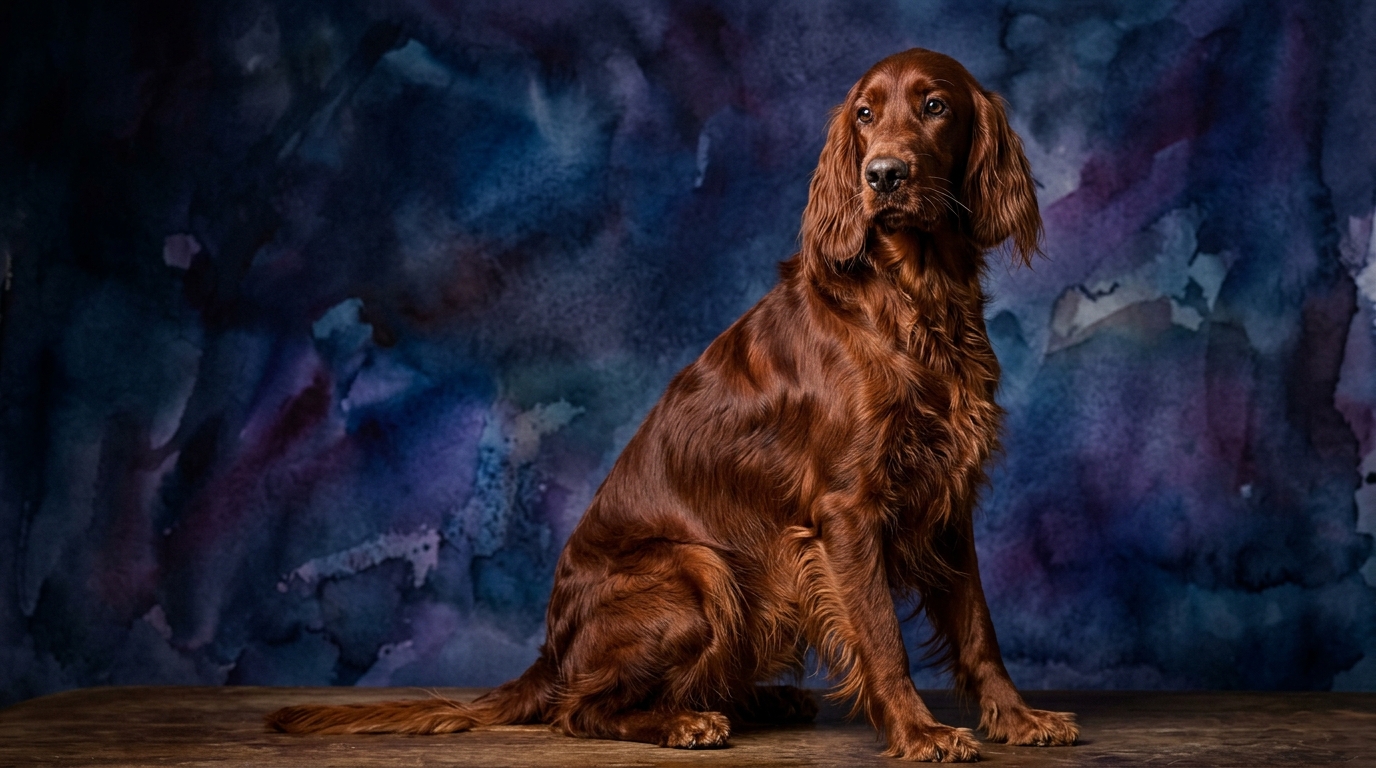
Side-by-Side IQ Profile: Irish Setter
The Irish Setter, a vibrant Sporting breed, presents a robust cognitive profile. In problem-solving, they score a solid 4/5, indicating an adeptness at navigating complex tasks and understanding sequential actions to achieve a goal. This often translates into figuring out puzzle toys with determination or devising clever ways to access forbidden treats.
Their training speed also rates highly at 4/5, meaning these dogs typically absorb new commands and routines with remarkable rapidity, often eager to please and quick to form associations between actions and consequences. Social intelligence stands at 3/5; while responsive to human cues and affectionate with their families, they possess a balanced independence. Instinctive drive, at 3/5, reflects their heritage as gundogs, possessing a moderate yet focused drive for flushing and retrieving, but not an overwhelming predatory instinct. Finally, their memory score of 4/5 suggests they retain learned behaviors, past experiences, and spatial information effectively, making them reliable in recalling commands even after long periods.
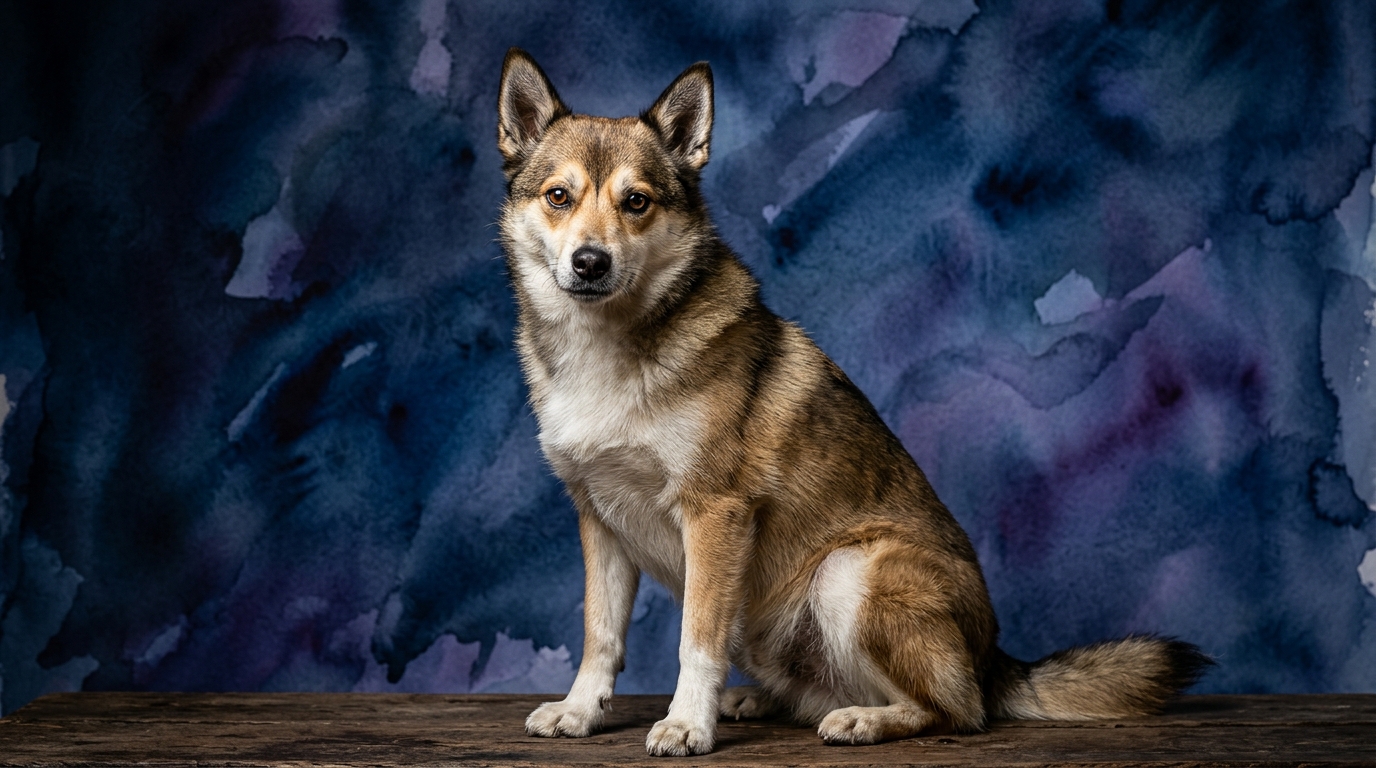
Side-by-Side IQ Profile: Norwegian Lundehund
The Norwegian Lundehund, a distinctive Non-Sporting breed, offers a cognitive profile marked by its unique history and adaptations. Their problem-solving ability scores 3/5, indicating a capacity for independent thought and a tendency to employ unique, sometimes unconventional, strategies to overcome obstacles. This breed was historically tasked with navigating treacherous cliffs to hunt puffins, demanding a specific kind of physical and mental ingenuity.
Training speed for the Lundehund is also 3/5; they are certainly trainable, but learning new commands may require more patience and consistent repetition compared to breeds with higher scores. Their social intelligence is 3/5, meaning they form deep bonds with their immediate family but can be discerning or reserved around strangers, valuing their inner circle above all. Instinctive drive, also 3/5, is strongly influenced by their puffin-hunting past, manifesting as a persistent curiosity and a drive for exploration, often involving climbing and digging. Their memory, rated at 3/5, implies they hold onto important experiences and routines, though recall might occasionally require prompting or reinforcement, especially for less frequently practiced behaviors.
Where the Irish Setter Wins Cognitively
The Irish Setter's cognitive strengths distinctly shine in areas requiring rapid learning and consistent performance. Their 4/5 training speed means they quickly grasp complex command sequences, making them excellent candidates for advanced obedience, agility, or competitive sports where precision and speed of response are paramount. This swift comprehension allows for a more fluid and engaging training experience, with the dog often anticipating the next cue.
Furthermore, their superior problem-solving (4/5) combined with strong memory (4/5) means they not only figure out novel situations efficiently but also retain those solutions for future application. An Irish Setter is more likely to remember the sequence to open a tricky gate or the path through an intricate scent trail, demonstrating a sustained cognitive advantage in tasks that build upon previous learning. Their moderate instinctive drive (3/5) is well-channeled into productive work, making them focused partners in activities that simulate their gundog heritage without being overly distracted by environmental stimuli.
Where the Norwegian Lundehund Wins Cognitively
While the Norwegian Lundehund's scores might appear lower, their cognitive profile represents a specific type of intelligence honed by centuries of demanding work in challenging environments. Their 3/5 in problem-solving highlights an independent, resourceful mindset. Unlike breeds that might rely heavily on human direction, Lundehunds are adept at figuring things out for themselves, often using their unique physical flexibility—such as turning their heads almost 180 degrees or having extra toes—to navigate tight spaces or unusual terrains. This independent problem-solving is a critical asset when faced with novel physical challenges.
Their instinctive drive (3/5), though not as high-octane as some sporting breeds, is characterized by an unwavering persistence and a unique curiosity, especially when exploring or investigating. This drive, combined with their moderate social intelligence (3/5), means they are not overly reliant on constant human interaction for stimulation, finding satisfaction in independent exploration and investigation. This self-sufficiency, born from their need to hunt alone in isolated areas, is a distinct cognitive advantage for owners who appreciate a dog with a strong sense of autonomy and innate resourcefulness.
Which is Easier to Train and Why
Based on their respective IQ profiles, the Irish Setter is generally easier to train than the Norwegian Lundehund. The Setter’s 4/5 training speed indicates a rapid acquisition of new commands and a strong desire to cooperate, often making them eager participants in training sessions. Their higher problem-solving score means they quickly understand the 'how' and 'why' of a given task, while their strong memory ensures that once a behavior is learned, it is retained effectively. This combination translates into a dog that responds quickly to cues and generalizes learned behaviors across different environments, making the training process smoother and more rewarding for most owners.
In contrast, the Norwegian Lundehund’s 3/5 training speed means that while trainable, they may require more patience, consistency, and creative approaches. Their independent problem-solving often manifests as a desire to figure things out on their own terms, which can sometimes be perceived as stubbornness during traditional obedience training. Lundehunds thrive with positive reinforcement and short, engaging sessions that respect their inquisitive and sometimes unconventional nature. Understanding their unique history and allowing for their inherent independence will yield better training results than rigid, repetitive drills.
Which Suits Active Owners vs. Relaxed Owners
The Irish Setter is an ideal companion for active owners who relish outdoor adventures and engaging their dog in structured activities. Their moderate instinctive drive (3/5) for scent work and retrieving, combined with their physical stamina, means they thrive on long hikes, runs, and participation in dog sports like agility or field trials. Owners who can provide consistent mental stimulation through training and physical exercise will find the Irish Setter to be a joyful, energetic partner. Their social intelligence (3/5) ensures they enjoy being part of family activities without being overly demanding of constant attention, provided their exercise needs are met.
The Norwegian Lundehund, with its unique blend of independence and curiosity, is better suited for owners who appreciate a dog with a distinctive personality and are prepared to engage with its specific needs. While not necessarily a couch potato, their activity level is often characterized by bursts of intense exploration and digging rather than sustained, high-speed running. They are excellent for owners who enjoy puzzle-solving, unique physical challenges, and who can provide a secure, stimulating environment for their dog to explore safely. A relaxed owner might find the Lundehund's independent problem-solving and digging instincts a challenge without appropriate outlets, but an owner who appreciates their quirky traits and can provide mental engagement will find them a fascinating companion.
The Verdict
Choose the Irish Setter if you desire a highly trainable, energetic companion eager to participate in demanding activities and quick to learn, offering a responsive and engaging partnership.
Opt for the Norwegian Lundehund if you appreciate a unique, independent thinker with a resourceful problem-solving style, valuing their quirky traits and providing outlets for their innate curiosity and exploration.
🧠 Find Your Pet's IQ Score
Our Pet IQ Lab assessment covers 25+ tests across 5 cognitive dimensions — personalized to your breed.
Take the Full IQ Test →Frequently Asked Questions
Does the Norwegian Lundehund's lower IQ score mean it's not smart?
Absolutely not. The Lundehund's scores reflect a specialized intelligence, honed for independent survival and problem-solving in a very specific, challenging environment. Its cognitive profile emphasizes resourcefulness and unique physical adaptations rather than traditional obedience, making it smart in its own distinct way.
How does the Irish Setter's gundog heritage influence its intelligence?
The Irish Setter's gundog heritage directly contributes to its high training speed and problem-solving abilities, as these traits were essential for effective hunting partnerships. Their instinctive drive (3/5) is channeled into working alongside humans, requiring them to quickly understand cues, remember locations, and cooperate to achieve a shared goal in the field.
Are there specific training methods that work best for the Norwegian Lundehund?
For the Norwegian Lundehund, positive reinforcement, short and varied training sessions, and incorporating puzzle-solving or scent work are often most effective. Their independent nature means that force-based methods are counterproductive; instead, engaging their curiosity and rewarding self-initiated problem-solving will yield better results.