Side-by-Side Cognitive Profile: Irish Setter vs. Scottish Deerhound
To truly understand the mental makeup of these two distinct breeds, we must examine their intelligence dimensions through The Cosmic Pet Pet IQ Lab framework. This allows for a nuanced comparison beyond simple blanket statements.
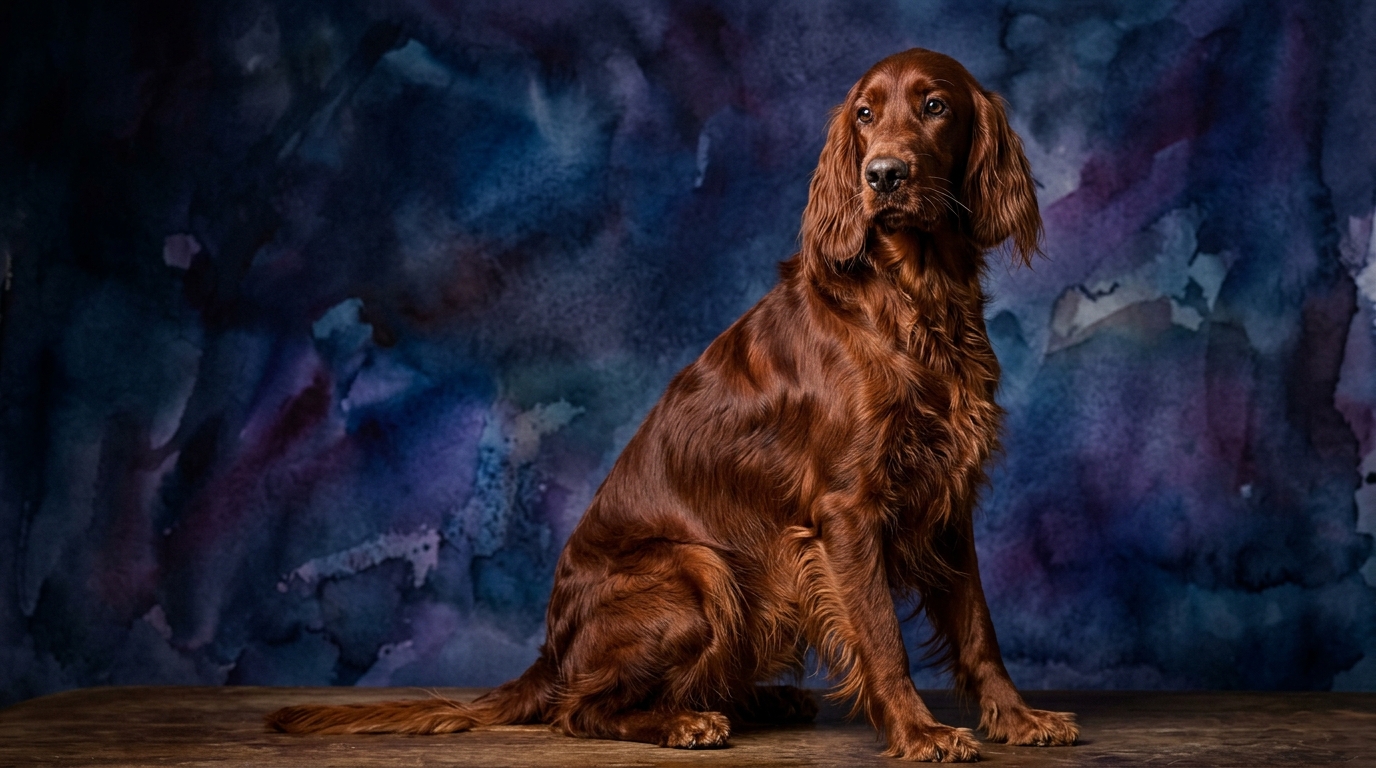
The Irish Setter, a Sporting dog with a Coren ranking of #35, shows a cognitive profile geared towards partnership and adaptability. Its Problem Solving is rated 4/5, indicating an aptitude for navigating complex situations and figuring out solutions, likely honed by the need to locate and retrieve game in varied terrains. Training Speed is also 4/5, suggesting a breed that quickly grasps new commands and routines, often eager to please and responsive to handler cues. Social Intelligence stands at 3/5, implying good, but not exceptional, understanding of human social cues. Instinctive Drive is a manageable 3/5, reflecting a moderate inherent drive for flushing and retrieving. Finally, Memory is strong at 4/5, crucial for recalling complex sequences of commands and task execution.
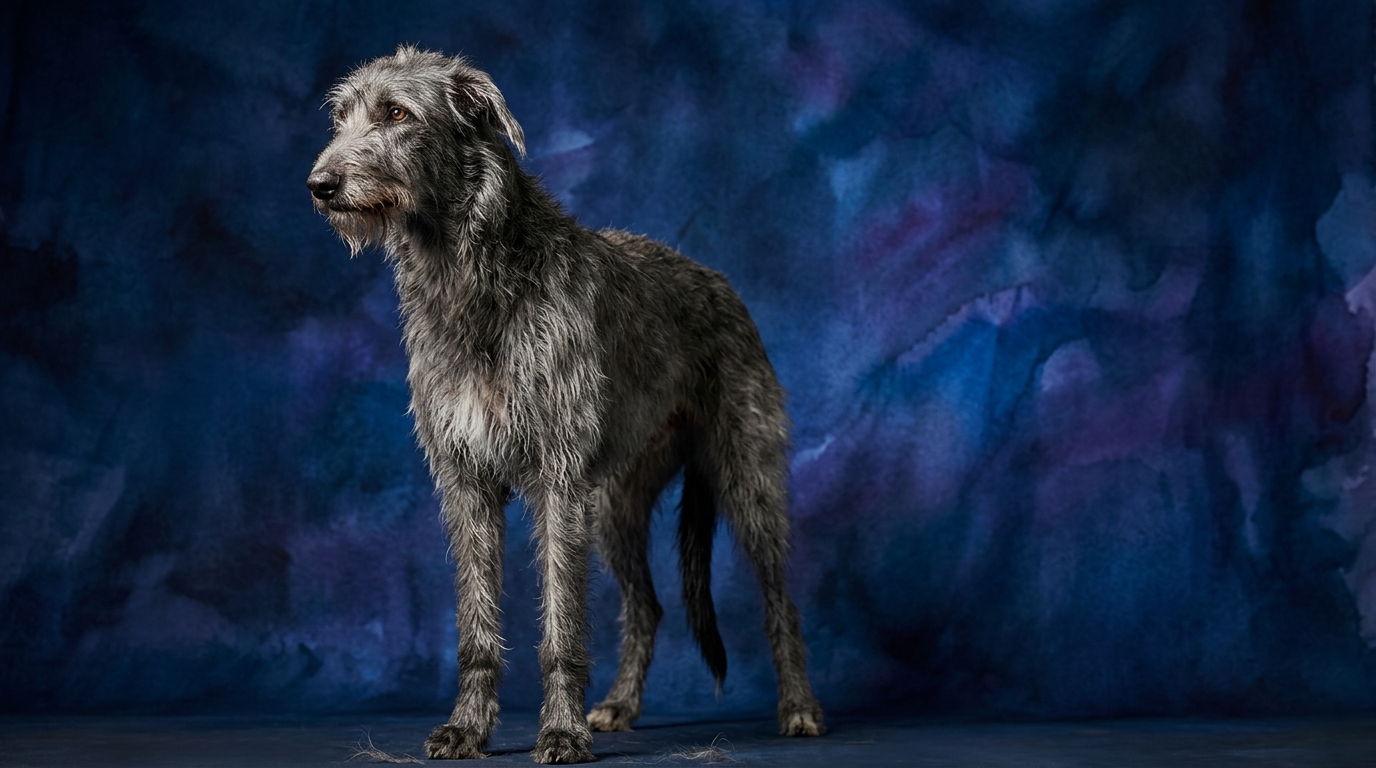
In contrast, the Scottish Deerhound, a Hound breed not Coren-ranked, presents a profile reflecting its independent hunting heritage. Its Problem Solving is 3/5, suggesting a capable but perhaps less intricate approach, excelling at direct, goal-oriented tasks relevant to sighthound work. Training Speed is 3/5, indicating that while trainable, they may require more repetition, patience, and motivation tailored to their independent nature. Social Intelligence is 3/5, similar to the Setter, implying amiable but potentially more reserved interactions. Instinctive Drive is also 3/5, but for a Deerhound, this manifests as a powerful, explosive instinct to sight and chase. Memory is 3/5, functional for routines and familiar environments, but perhaps less tuned to extensive human-given commands.
Where the Irish Setter Excels Cognitively
The Irish Setter clearly distinguishes itself in cognitive areas demanding cooperative engagement and adaptability, particularly in problem-solving, training speed, and memory. Their problem-solving acumen (4/5) allows them to quickly assess novel situations, whether it's figuring out how to retrieve a toy from an awkward spot or understanding the nuances of a new training exercise. This cognitive flexibility, combined with their rapid training speed (4/5), means they absorb new commands and routines with remarkable efficiency, often requiring fewer repetitions than many other breeds. Furthermore, their strong memory (4/5) enables them to retain vast amounts of information, from complex obedience sequences to the specific locations where game might be found, making them highly reliable partners in structured tasks. This blend of quick learning, effective retention, and situational awareness makes the Irish Setter a standout for owners seeking a responsive and mentally engaged companion.
Where the Scottish Deerhound's Specific Intelligence Shines
While the Scottish Deerhound's scores in general cognitive domains may appear moderate, its intelligence truly shines in its specialized, instinctive capacities, particularly within its core purpose. Its problem-solving (3/5) and instinctive drive (3/5), though not numerically superior, are uniquely geared towards independent pursuit and decision-making crucial for a sighthound. Deerhounds excel at rapidly assessing distance, speed, and trajectory in open spaces, making split-second judgments during a chase without constant human direction. Their cognitive strength lies in their remarkable visual acuity and the ability to process visual stimuli at speed, translating into an almost unparalleled efficiency in spotting and pursuing moving objects. This form of intelligence, while not always aligning with traditional obedience metrics, reflects a profound understanding of their predatory role and environment. Their memory (3/5), while not as focused on human commands, is robust for spatial awareness and remembering prime hunting grounds or safe running areas, showcasing a different yet equally valid form of cognitive strength rooted in their ancestral tasks.
Trainability: A Tale of Two Approaches
When it comes to ease of training, the Irish Setter generally presents a more straightforward experience for the average owner. Their higher training speed (4/5) and strong desire for cooperative engagement mean they typically pick up commands quickly and respond enthusiastically to positive reinforcement. They thrive on structure and consistency, viewing training as an engaging activity that strengthens their bond with their human. Their problem-solving skills also mean they can generalize learned behaviors to new contexts with relative ease. This makes them suitable for various dog sports and advanced obedience work.
In contrast, the Scottish Deerhound, with its moderate training speed (3/5) and independent sighthound nature, often requires a different approach. Deerhounds are not inherently driven by a strong desire to please in the same way; they are thinkers who weigh the perceived value of a command. Training a Deerhound demands immense patience, creativity, and a deep understanding of their motivations, which often involves making training fun, short, and highly rewarding to capture their attention. While capable of learning, their independence means they may choose to comply only if it aligns with their interests, making consistency and clear, concise communication paramount. Owners should be prepared for a more nuanced training journey with a Deerhound, one that respects their thoughtful and sometimes aloof disposition, focusing on building trust and making training a collaborative, not coercive, experience.
Matching Canine Cognition to Owner Lifestyles
The choice between an Irish Setter and a Scottish Deerhound also hinges significantly on an owner's lifestyle and activity levels. An Irish Setter is an ideal match for active owners who enjoy engaging in consistent training, dog sports, and daily outdoor adventures. Their substantial energy levels and cooperative cognitive profile mean they thrive on mental and physical stimulation, requiring regular, vigorous exercise and opportunities to use their problem-solving and memory skills. Owners who appreciate a dog deeply involved in family activities and responsive to ongoing instruction will find the Setter a rewarding companion, flourishing in an environment that provides consistent interaction and purpose.
Conversely, the Scottish Deerhound, while capable of astonishing bursts of speed, often suits owners who appreciate a more relaxed indoor temperament punctuated by intense outdoor activity. They require ample space for safe, off-leash running sessions several times a week to satisfy their powerful chase instinct, but once their exercise needs are met, they are typically calm, dignified, and content to lounge indoors for extended periods. They are not suited to owners who expect constant engagement or who cannot provide a secure, large area for them to gallop freely. Owners who understand and respect this unique blend of explosive athleticism and serene relaxation, and who value an independent yet affectionate companion, will find a Deerhound a perfect fit for their home, provided they can accommodate their specific exercise requirements.
The Verdict
Choose the Irish Setter if you desire a highly cooperative, trainable companion eager for consistent mental and physical engagement, excelling in structured activities and family participation.
Opt for the Scottish Deerhound if you appreciate an independent, dignified dog that requires bursts of intense exercise followed by calm relaxation, and you are prepared for a patient, nuanced training approach.
🧠 Find Your Pet's IQ Score
Our Pet IQ Lab assessment covers 25+ tests across 5 cognitive dimensions — personalized to your breed.
Take the Full IQ Test →Frequently Asked Questions
Are Irish Setters good family dogs?
Yes, Irish Setters generally make excellent family dogs, known for their affectionate and playful nature. Their social intelligence (3/5) means they bond well with family members and are typically good with children, provided they receive appropriate training and socialization from a young age. Their energy levels require an active family environment to thrive.
Do Scottish Deerhounds need a lot of exercise?
Scottish Deerhounds require a specific type of exercise: short, intense bursts of running in a securely fenced area. While they are not dogs that need to be constantly active, these opportunities to gallop freely are crucial for their physical and mental well-being, satisfying their strong instinctive chase drive. After their run, they are typically quite relaxed indoors.
Which breed is better for apartment living?
Neither breed is ideally suited for small apartment living without significant commitment to their exercise needs. However, if forced to choose, the Scottish Deerhound might adapt better to an apartment if its owners are absolutely dedicated to providing daily, secure off-leash running opportunities, given their calm indoor demeanor once exercised. The Irish Setter's higher constant energy and need for consistent engagement make an apartment more challenging without ample outdoor access.