
Side-by-Side IQ Profile: Irish Terrier
**Problem Solving (3/5):** The Irish Terrier's problem-solving ability is characterized by a tenacious and often ingenious approach to overcoming immediate physical obstacles. They aren't necessarily strategizing complex multi-step plans, but rather applying determined trial-and-error to achieve a desired outcome, such as figuring out how to retrieve a toy or navigate a fence line to investigate an intriguing scent. This resourcefulness stems from their historical role as independent vermin hunters.
**Training Speed (3/5):** Capable of learning new commands at a moderate pace, the Irish Terrier's training speed is often tempered by an independent streak. They grasp concepts well but require engaging methods and consistent reinforcement to maintain focus against their spirited nature. Repetitive drills might bore them if not framed as a fun challenge.
**Social Intelligence (3/5):** Highly attuned to their immediate family, Irish Terriers demonstrate a deep understanding of household routines and emotional cues within their inner circle. While generally amiable, their social intelligence can be selective, often showing wariness towards strangers or other dogs if not properly socialized from a young age, as they instinctively protect their perceived 'pack.'
**Instinctive Drive (3/5):** Their strong terrier instincts mean a notable drive to chase, dig, and investigate. This inherent drive fuels much of their cognitive activity, making them excellent at tasks that tap into their natural inclinations. This drive can sometimes conflict with obedience training, requiring owners to channel it productively.
**Memory (3/5):** Irish Terriers possess a solid memory for commands, routines, and past experiences. They recall training sessions effectively and remember perceived injustices or exciting past events with clarity, shaping their future responses. This robust memory aids in reinforcing desired behaviors but also means they won't quickly forget negative encounters.
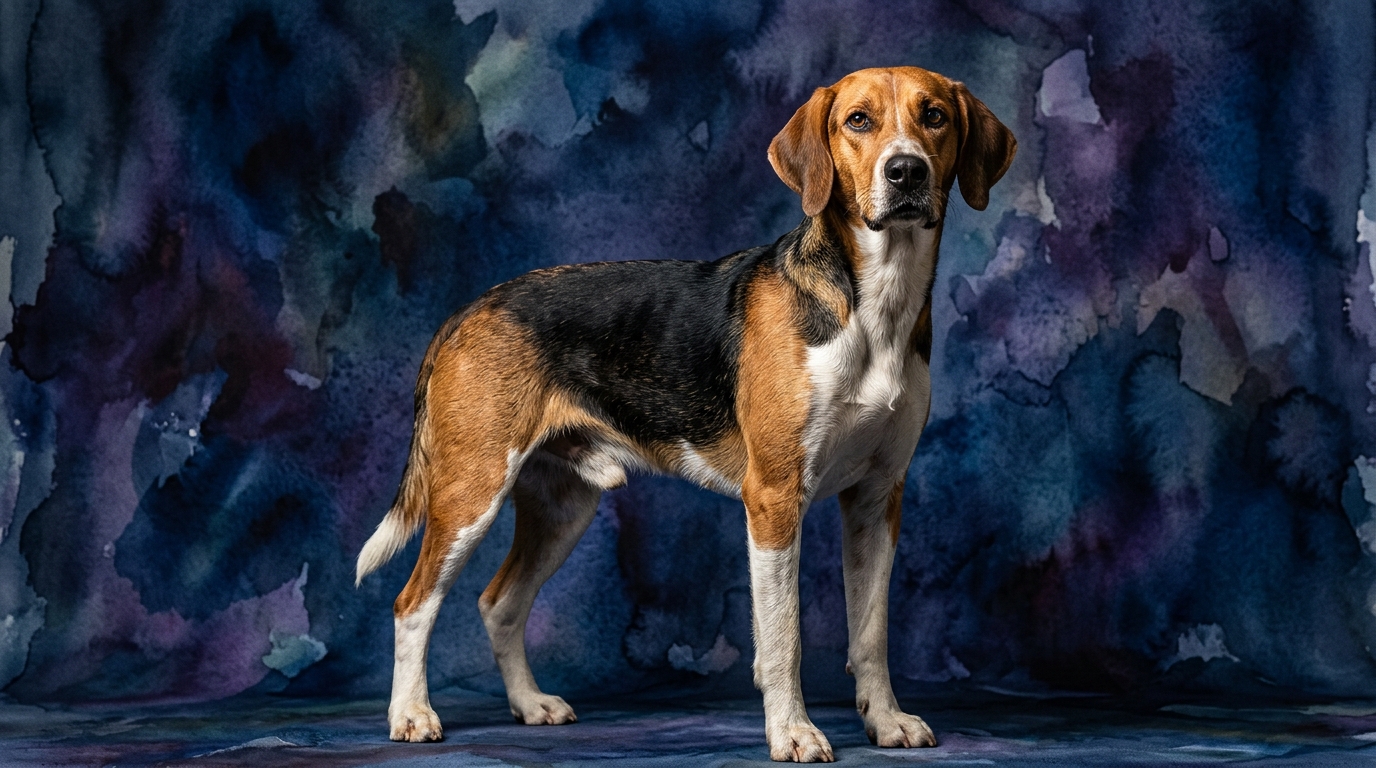
Side-by-Side IQ Profile: English Foxhound
**Problem Solving (3/5):** For the English Foxhound, a problem-solving score of 3 out of 5 translates to a specific type of cognitive engagement centered on their primary function: tracking. Their intelligence shines in the nuanced task of deciphering a fading scent trail, understanding how wind and terrain affect it, and collaborating seamlessly within a pack to maintain pursuit. This is a specialized form of cognitive agility focused on sensory processing and environmental navigation.
**Training Speed (3/5):** English Foxhounds learn at a moderate pace, but their primary cognitive focus is often directed towards their powerful sense of smell. While capable of understanding commands, their training speed can be significantly influenced by the presence of compelling scents, which can easily override other stimuli. Patience and scent-aware training methods are crucial.
**Social Intelligence (3/5):** As a breed developed to work in large packs, the English Foxhound excels in social settings involving other dogs, demonstrating cooperation and understanding of group dynamics. They are generally good-natured and tolerant with humans, valuing companionship within their established 'pack.' Their social acumen is geared towards harmonious group living.
**Instinctive Drive (3/5):** The English Foxhound's defining characteristic is an exceptionally potent instinctive drive for scent tracking and sustained endurance. This singular focus on following a trail dictates much of their cognitive processing, making them incredibly driven when engaged in scent work. This drive is so powerful it often eclipses other considerations.
**Memory (3/5):** Their memory is robust for scent patterns, familiar routes, and the dynamics of their pack. They recall previously encountered trails and the layout of their hunting grounds with precision, contributing to their effectiveness in their traditional role. While they remember commands, a fresh, compelling scent can temporarily overwrite recall.
Where the Irish Terrier Wins Cognitively
The Irish Terrier often demonstrates a more individualistic and adaptable form of problem-solving in a domestic setting. Their cognitive strengths lie in their ability to quickly assess and respond to novel household situations not directly related to scent. They excel at figuring out how to manipulate objects or navigate confined spaces to achieve a goal, showcasing a determined cleverness. Furthermore, their social intelligence, while selective, allows them to be highly attuned to the emotional nuances and cues of their immediate human family, often interpreting their needs and moods with remarkable perception. This makes them versatile in learning different types of tasks beyond pure scent work, thriving on varied mental challenges.
Where the English Foxhound Wins Cognitively
The English Foxhound's cognitive strengths are profoundly specialized around its primary function. It exhibits a superior ability to sustain intense focus on a single, long-term sensory task, namely scent tracking, for extended periods without faltering. Their cooperative intelligence within a group of dogs is exceptional, demonstrating an innate understanding of pack dynamics and working in unison towards a common goal, a trait honed over centuries of pack hunting. This breed also possesses an unrivaled endurance in the mental and physical pursuit of a specific objective, the trail, showcasing a deep, unwavering cognitive drive that few breeds can match.
Which is Easier to Train and Why
Despite both breeds having a 'Training Speed' of 3 out of 5, the nature of their training challenges differs significantly. The Irish Terrier's independent streak means they learn quickly if they perceive value or fun in the task, but they can be stubborn if unmotivated or if a command conflicts with their own strong will. Training requires creativity, engaging methods, and unwavering consistency to channel their spirited nature effectively. The English Foxhound, conversely, can learn commands, but their powerful scent drive often dictates their focus. Their nose is their master; a compelling scent can easily override even well-learned commands, making recall particularly challenging in open, stimulating environments. Training a Foxhound demands immense patience, an understanding of their sensory world, and often involves incorporating scent work to keep them engaged, rather than fighting their natural inclination. Neither is 'easy' in a conventional sense, but the Irish Terrier demands psychological engagement, while the Foxhound requires managing their profound sensory focus.
Which Suits Active Owners vs. Relaxed Owners
For owners seeking a companion with a vibrant personality and bursts of energetic activity, the Irish Terrier is a fitting choice. They thrive with active engagement, including mental games, digging opportunities, and vigorous play, but can adapt to varied living situations, including apartments, provided their cognitive and physical needs are consistently met. Their activity is often intense but can be managed with structured outlets. The English Foxhound, however, is unequivocally suited for highly active and dedicated owners. Their relentless instinctive drive and endurance demand vast amounts of sustained exercise, ideally off-leash in secure, expansive areas, or extensive scent work. Their energy is not easily sated and is ill-suited for relaxed or sedentary lifestyles; they require a commitment to an active, outdoor-centric routine.
The Verdict
Choose the Irish Terrier if you seek a spirited, engaging companion who thrives on mental games, family interaction, and can adapt to varied lifestyles with consistent training, particularly if you appreciate a dog with strong independent thought and a loyal, protective nature.
Choose the English Foxhound if you are an experienced, dedicated owner capable of providing extensive daily exercise, have an interest in scent work or dog sports, and appreciate a dog whose primary drive is focused on the outdoors and a powerful sense of smell, ideally with other canine companions.
🧠 Find Your Pet's IQ Score
Our Pet IQ Lab assessment covers 25+ tests across 5 cognitive dimensions — personalized to your breed.
Take the Full IQ Test →Frequently Asked Questions
Are Irish Terriers good family dogs?
Yes, Irish Terriers form deep bonds with their immediate family, showing loyalty and affection. However, their spirited nature and potential wariness of strangers mean early, consistent socialization is crucial for a harmonious household, ensuring they are comfortable in various social settings.
Do English Foxhounds need a lot of space?
English Foxhounds require significant outdoor space and daily, vigorous exercise. Their strong instinctive drive for scent tracking means they thrive with ample room to run and explore, making secure, large yards or consistent access to safe, open areas essential for their well-being and to prevent boredom-induced behaviors.
How do these breeds perform in obedience competitions?
Both breeds can achieve success in obedience with dedicated training, though their approaches differ. Irish Terriers might excel with engaging, varied routines that appeal to their problem-solving and spirited nature, while English Foxhounds might require methods that account for their powerful scent distractions and focus, often performing best when scent work is integrated or when distractions are minimized.