
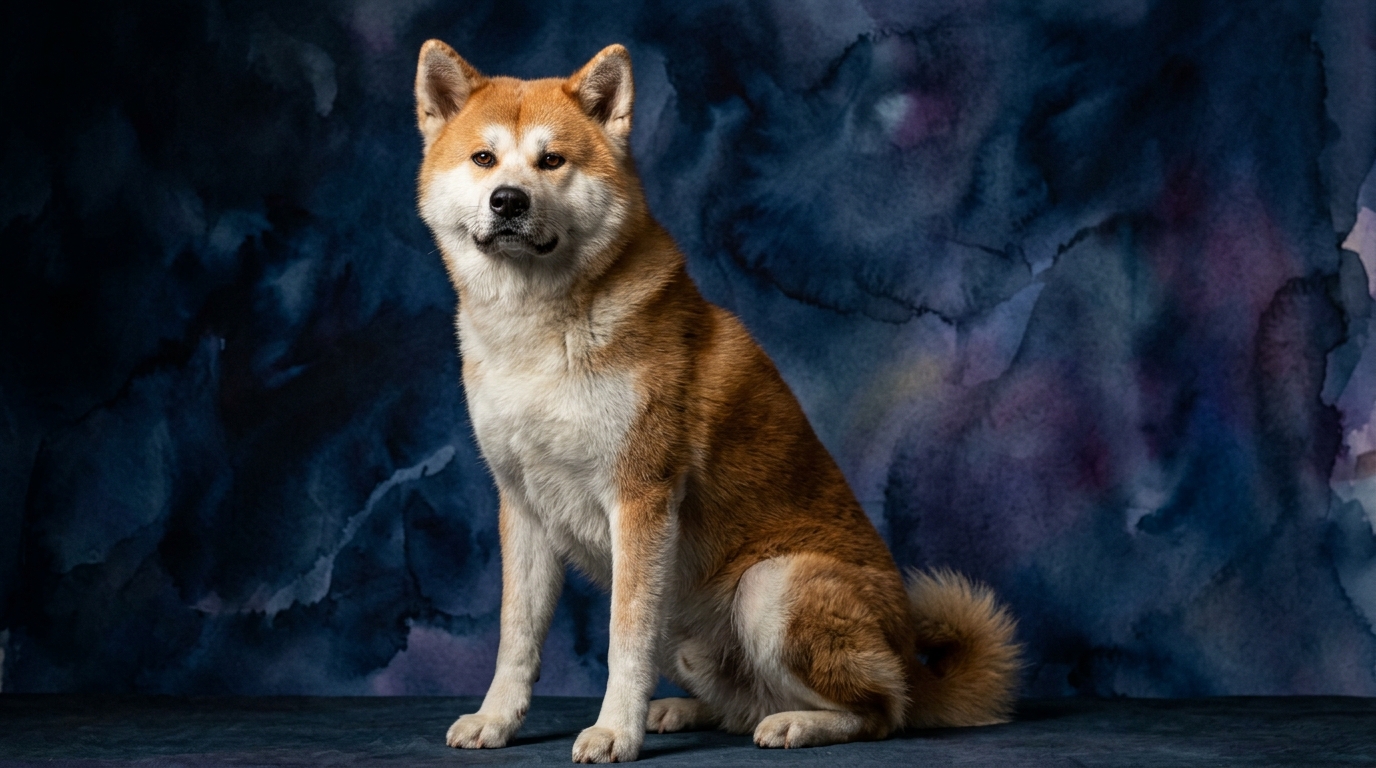
Side-by-Side IQ Profile: Jack Russell Terrier vs. Akita
The Cosmic Pet Pet IQ Lab employs a five-dimensional framework to assess canine intelligence, offering a nuanced perspective beyond simple obedience. Let's examine how the Jack Russell Terrier and Akita stack up in problem-solving, training speed, social intelligence, instinctive drive, and memory.
Jack Russell Terrier: A Dynamo of Ingenuity – Problem Solving (5/5): Jack Russell Terriers exhibit exceptional ingenuity, consistently devising solutions to complex environmental challenges. Their terrier heritage means they excel at figuring out how to bypass obstacles, open latches, or unearth hidden objects, demonstrating a remarkable capacity for strategic thinking in pursuit of their goals. Training Speed (3/5): While quick to grasp new concepts, their independent nature and sometimes strong-willed disposition mean that training can be a dynamic process. They learn commands at a respectable pace but require consistent, engaging methods to maintain focus and compliance, often preferring to pursue their own interests. Social Intelligence (3/5): JRTs understand human cues and social dynamics within their immediate family, but their primary drive often leans towards independent action rather than people-pleasing. They can be discerning in their social interactions, forming strong bonds but often prioritizing their own agenda over constant deference. Instinctive Drive (5/5): Their instinctive drive is incredibly potent, manifested in a tireless pursuit of prey, enthusiastic digging, and an insatiable curiosity for exploration. This intense drive fuels their spirited nature and demands significant outlets for physical and mental engagement. Memory (4/5): Possessing a robust memory, Jack Russell Terriers effectively recall learned commands, routines, and past experiences. This strong retention aids in their ability to navigate their environment and build upon previous learning, remembering both positive and negative associations with clarity.
Akita: The Thoughtful Guardian – Problem Solving (3/5): Akitas are capable problem solvers, particularly when the issue relates to their immediate environment or the well-being of their family. However, their approach tends to be more pragmatic and less inclined towards abstract, complex puzzles, often preferring established methods or direct solutions. Training Speed (2/5): The Akita's training speed is often described as deliberate, stemming from their independent and discerning temperament. They do not typically respond with eager obedience, preferring to evaluate the necessity or benefit of a command before complying, which can make initial learning a slower process requiring immense patience and a strong bond. Social Intelligence (3/5): Akitas display a nuanced social intelligence focused primarily on their inner circle. They keenly observe and understand the dynamics within their family unit, offering profound loyalty and protection. With strangers or other animals, they tend to be reserved and watchful, prioritizing the security of their pack. Instinctive Drive (5/5): Their instinctive drive is exceptionally strong, rooted in their heritage as guardians and hunters of large game. This manifests as powerful territoriality, protective instincts towards their family, and a dignified, watchful demeanor, requiring careful management and socialization. Memory (4/5): Akitas possess an excellent memory, particularly for individuals, their territory, and established routines. They remember learned behaviors and perceived threats with remarkable persistence, which contributes to their reliability as guardians once they accept a task or person into their trusted circle.
Where the Jack Russell Terrier Wins Cognitively
The Jack Russell Terrier undeniably excels in raw problem-solving aptitude, scoring a perfect 5/5 compared to the Akita's 3/5. This isn't merely about learning simple tricks; it reflects their innate ability to analyze situations, devise novel strategies, and manipulate their environment to achieve desired outcomes. Whether it's figuring out how to open a child-proof gate, navigating a complex agility course without prior training, or outsmarting their owners to get an extra treat, JRTs display a level of cognitive flexibility and cunning that is truly remarkable. Their relentless curiosity and terrier tenacity fuel this drive to understand and conquer, making them adept at adapting to new challenges and finding creative solutions where other breeds might give up. This superior cognitive processing allows them to learn complex sequences and associations rapidly, even if their independent streak sometimes makes consistent application a challenge.
Where the Akita Wins Cognitively
While not matching the JRT's pure problem-solving score, the Akita's cognitive strength lies in a profound blend of instinctive drive (5/5), memory (4/5), and a highly focused social intelligence (3/5) directed at its chosen family. Their cognitive prowess manifests not in playful trickery, but in unwavering loyalty and protective vigilance. An Akita's memory allows them to retain a vast mental map of their territory and the individuals within it, remembering who belongs and who doesn't with remarkable clarity. Their instinctive drive, honed over centuries, translates into an acute awareness of their surroundings and a deep understanding of their role as a guardian. This isn't about solving abstract puzzles, but about applying a sophisticated cognitive framework to maintain order, protect resources, and assess potential threats with a calm, discerning nature. Their intelligence is deeply practical and rooted in their ancestral purpose, making them acutely aware of social cues within their family and capable of making independent judgments based on their observations.
Which is Easier to Train and Why
When considering ease of training, the Jack Russell Terrier generally offers a quicker initial learning curve for new commands, largely due to their high problem-solving capacity (5/5) and innate curiosity. They are often eager to engage in interactive activities and can pick up new behaviors rapidly if the training is framed as an engaging game. However, their powerful instinctive drive (5/5) and independent nature mean they can be easily distracted by scents, movement, or their own agendas, making consistent, long-term compliance a greater challenge. Training a JRT requires immense creativity, patience, and the ability to make learning more enticing than the surrounding environment. In contrast, the Akita, with a training speed of 2/5, presents a more deliberate training experience. They are not typically motivated by a strong desire to please and will often question the purpose of a command. Gaining an Akita's cooperation demands a strong, consistent, and patient leader who can establish clear boundaries and build a relationship based on mutual respect. Once an Akita accepts a command as legitimate and necessary, their excellent memory (4/5) ensures strong retention. Therefore, while a JRT might learn 'sit' faster, an Akita, once committed, might perform it more reliably in the long run, albeit after a more extensive initial investment in building trust and understanding. For immediate command acquisition, the JRT has an edge, but for steadfast obedience, the Akita can be equally effective once their independent will is aligned.
Which Suits Active Owners vs. Relaxed Owners
The Jack Russell Terrier is unequivocally suited for exceptionally active owners who can match their tireless energy and intense instinctive drive (5/5). These dogs require significant daily physical exertion, such as long runs, vigorous fetch sessions, or participation in dog sports like agility or earthdog trials. Beyond physical activity, their high problem-solving (5/5) and curious nature demand extensive mental stimulation, including puzzle toys, scent work, and consistent training challenges. Owners who enjoy an outdoor, adventurous lifestyle and are prepared to dedicate substantial time to engagement will find a JRT a perfect, spirited companion. A relaxed or sedentary owner would likely face a frustrated, potentially destructive JRT whose unmet needs manifest in undesirable behaviors. The Akita, while requiring regular exercise, does not typically demand the same high-octane, continuous activity as a JRT. Their needs lean more towards purposeful daily walks, opportunities for mental engagement, and structured training sessions that reinforce their role within the family. They are well-suited for owners who are active enough to provide consistent daily exercise and mental stimulation but also appreciate a dignified, calm presence indoors. Akitas thrive with owners who can offer strong, consistent leadership and are prepared for thorough socialization and management, but who aren't necessarily seeking a dog to accompany them on extreme endurance pursuits. They are not for "lazy" owners, but rather for those who prefer quality engagement over constant high-intensity motion.
The Verdict
Choose the Jack Russell Terrier for owners who thrive on boundless energy, relish a dog's spirited independence, and are eager to channel a brilliant problem-solver into demanding physical activities and creative mental challenges.
Choose the Akita for owners seeking a profoundly loyal, dignified guardian who forms deep bonds with their family, are prepared for a deliberate training approach, and value a calm, watchful presence after sufficient daily engagement.
🧠 Find Your Pet's IQ Score
Our Pet IQ Lab assessment covers 25+ tests across 5 cognitive dimensions — personalized to your breed.
Take the Full IQ Test →Frequently Asked Questions
Are Jack Russell Terriers good family dogs?
JRTs can be wonderful family members for active households, especially with older, respectful children. Their boundless energy and strong prey drive mean they need supervision around very young children and smaller pets, and they thrive with consistent training and plenty of mental stimulation.
Do Akitas get along with other dogs?
Akitas often exhibit dog-aggressive tendencies, particularly with same-sex individuals, and early, thorough socialization is crucial but not always a guarantee. They are typically best suited as the only dog in a household or with a very carefully selected, opposite-sex companion, and require careful management in public.
What kind of mental stimulation do Akitas need?
Akitas benefit from mental stimulation that taps into their guarding and problem-solving abilities, such as obedience training, scent work, and puzzle toys. Engaging them in tasks that require thought and decision-making, rather than just repetitive commands, helps satisfy their cognitive needs.