
Side-by-Side Cognitive Profile: Jack Russell vs. Bedlington Terrier
The Cosmic Pet Pet IQ Lab provides a unique lens through which to compare the cognitive blueprints of these two distinct terriers. The Jack Russell Terrier, a breed renowned for its spirited nature, exhibits a robust cognitive profile tailored for independent action and persistent engagement. Their Problem Solving is rated an exceptional 5/5, reflecting a keen ability to strategize and overcome obstacles with minimal human intervention. Training Speed stands at 3/5, indicating they grasp concepts readily but often choose their own path. Social Intelligence also scores 3/5, meaning they can read cues but prioritize their own objectives. A perfect 5/5 in Instinctive Drive highlights their relentless pursuit of prey and tasks, while their Memory, at 4/5, ensures they retain complex information and experiences.
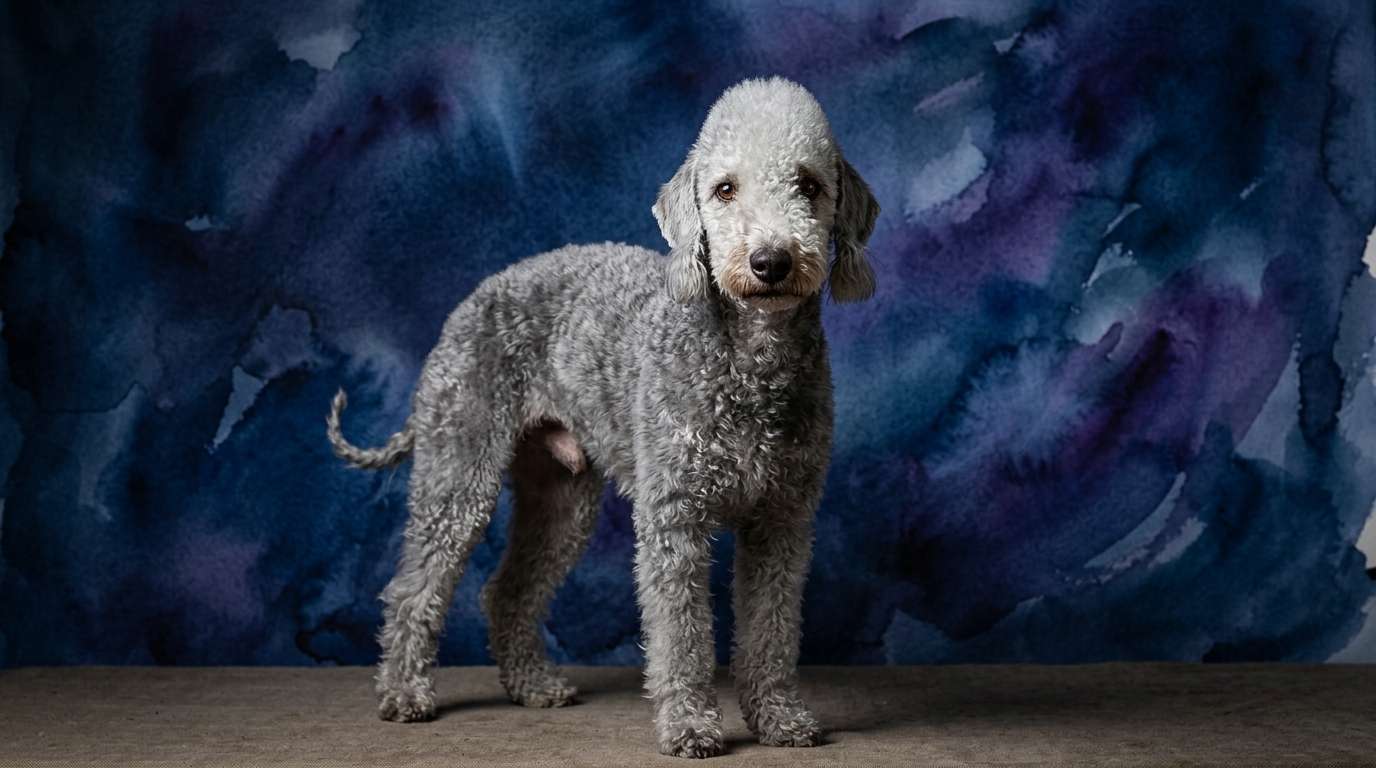
The Bedlington Terrier, with its lamb-like appearance, presents a more nuanced cognitive landscape. Their Problem Solving is rated 3/5, suggesting they are capable of finding solutions but may not exhibit the same level of independent, complex strategizing as the JRT. Training Speed is also 3/5, indicating a moderate learning pace that can be influenced by their gentle yet independent nature. Social Intelligence, at 3/5, shows they are generally amiable but can be sensitive to perceived injustices. Their Instinctive Drive is a moderate 3/5, possessing terrier traits but often with less intensity than some counterparts. Finally, their Memory is rated 3/5, providing functional recall for routines and commands without the same depth of complex sequence retention.
Where the Jack Russell Terrier Wins Cognitively
The Jack Russell Terrier's cognitive strengths shine brightest in areas demanding independent thought and tenacious execution. Their stellar 5/5 in Problem Solving reflects a breed that doesn't wait for instructions but actively devises solutions to overcome obstacles, whether it's escaping a yard or figuring out how to retrieve a prized toy from a difficult spot. This isn't just about quick learning; it's about adaptive reasoning and a willingness to experiment until a goal is achieved. Coupled with a perfect 5/5 in Instinctive Drive, their cognitive machinery is geared towards relentless pursuit and engagement with their environment, making them exceptionally adept at tasks requiring sustained focus on a target, like scent work or agility courses where they must navigate complex sequences with precision. Their 4/5 Memory further solidifies this, allowing them to recall intricate patterns and successful strategies, building on past experiences to refine their problem-solving approaches.
Where the Bedlington Terrier Wins Cognitively
While the Bedlington Terrier's scores might appear lower across the board compared to the Jack Russell, their cognitive profile indicates a different set of strengths, particularly in their nuanced approach to interaction and environmental engagement. Their 3/5 in Social Intelligence, while not indicating superior social acumen, often translates into a more sensitive and less confrontational interaction style. They tend to be more attuned to emotional cues and can be highly responsive to positive reinforcement, valuing harmony over challenging authority. Furthermore, their more moderate 3/5 in Instinctive Drive means they are less likely to become singularly fixated on a scent or prey item, potentially making them more manageable in environments where a lower distraction threshold is beneficial. This allows for a cognitive focus that, while not as intensely driven, can be more adaptable to varied social situations and less prone to persistent, instinct-driven behaviors that might require constant redirection, making them more pliable in a family setting.
Training Dynamics: Which is Easier and Why
When assessing ease of training, both the Jack Russell Terrier and the Bedlington Terrier score a 3/5 in Training Speed, but the underlying behavioral dynamics that contribute to this rating are distinct. The Jack Russell's training journey is often characterized by their sharp intellect combined with a fiercely independent spirit. They grasp commands quickly (Memory 4/5), but their strong Problem Solving (5/5) and Instinctive Drive (5/5) mean they are constantly assessing if following a command aligns with their own immediate goals. This can manifest as selective deafness or a determined pursuit of an alternative, more interesting activity. Training a JRT demands creativity, consistency, and making training feel like a game they choose to win, often requiring an owner to be one step ahead of their clever canine.
In contrast, the Bedlington Terrier's 3/5 in Training Speed stems more from a gentle stubbornness and sensitivity. They also learn at a moderate pace, but their independence is less about defiant self-direction and more about a quiet reluctance if they perceive the training as unengaging or harsh. Their 3/5 Social Intelligence means they respond well to positive reinforcement and gentle guidance, but can shut down or become resistant if pushed too hard. Therefore, while both require commitment, training a Jack Russell often feels like a strategic negotiation with a clever, self-motivated individual, whereas training a Bedlington requires patience, empathy, and building a strong, trusting bond to encourage willing participation, avoiding any methods that might cause them to withdraw.
Matching Breeds to Lifestyles: Active vs. Relaxed Owners
For owners with an active lifestyle, the Jack Russell Terrier is an ideal match. Their boundless energy and insatiable curiosity demand constant engagement, both physical and mental. Owners who enjoy long hikes, agility sports, earthdog trials, or intricate puzzle games will find a willing and enthusiastic partner in a JRT. Their high Instinctive Drive and Problem Solving skills mean they thrive when given a 'job' to do, even if that job is navigating a complex obstacle course or learning a new trick sequence. A relaxed owner, by contrast, might quickly become overwhelmed by a JRT's persistent need for stimulation, which can manifest as destructive behaviors or incessant demands for attention if unmet.
The Bedlington Terrier, while still a terrier with an inclination for activity, generally suits a broader range of lifestyles, including moderately active owners. Their energy levels are typically more manageable than a JRT's, and while they enjoy regular walks, playtime, and mental enrichment, they are also content to relax with their family. Their moderate Instinctive Drive and Problem Solving scores suggest they are less prone to creating their own elaborate entertainment if left to their own devices, making them more adaptable to a home environment where intense, daily 'work' isn't the primary focus. They appreciate companionship and gentle interaction, fitting well with owners who seek a loyal, affectionate presence that doesn't demand constant, high-octane engagement.
The Verdict
Choose a Jack Russell Terrier if you are an experienced owner seeking a highly engaged, problem-solving companion for demanding activities and mental challenges. Be prepared for their independent streak and high drive.
Opt for a Bedlington Terrier if you desire a sensitive, moderately active companion who thrives on close bonds and positive reinforcement, offering a more adaptable presence in a family setting.
🧠 Find Your Pet's IQ Score
Our Pet IQ Lab assessment covers 25+ tests across 5 cognitive dimensions — personalized to your breed.
Take the Full IQ Test →Frequently Asked Questions
Are Jack Russell Terriers difficult to live with due to their intelligence?
Jack Russells are not 'difficult' in the sense of being unintelligent, but their high problem-solving ability and intense drive mean they require significant mental and physical engagement. Without proper outlets, their cleverness can lead to undesirable behaviors like escape artistry or creating their own entertainment.
Do Bedlington Terriers bark a lot?
Bedlington Terriers generally have a moderate tendency to bark. Like all terriers, they can be vocal, especially if bored, anxious, or alerting to strangers, but their bark is typically less persistent than some other terrier breeds if their needs are met.
Are these breeds good with children?
Both breeds can be good with respectful, older children, but require supervision and early socialization. Jack Russells, with their high energy and prey drive, might be too boisterous for very young children. Bedlingtons, being more sensitive, prefer calm interactions and can be reserved with boisterous play.