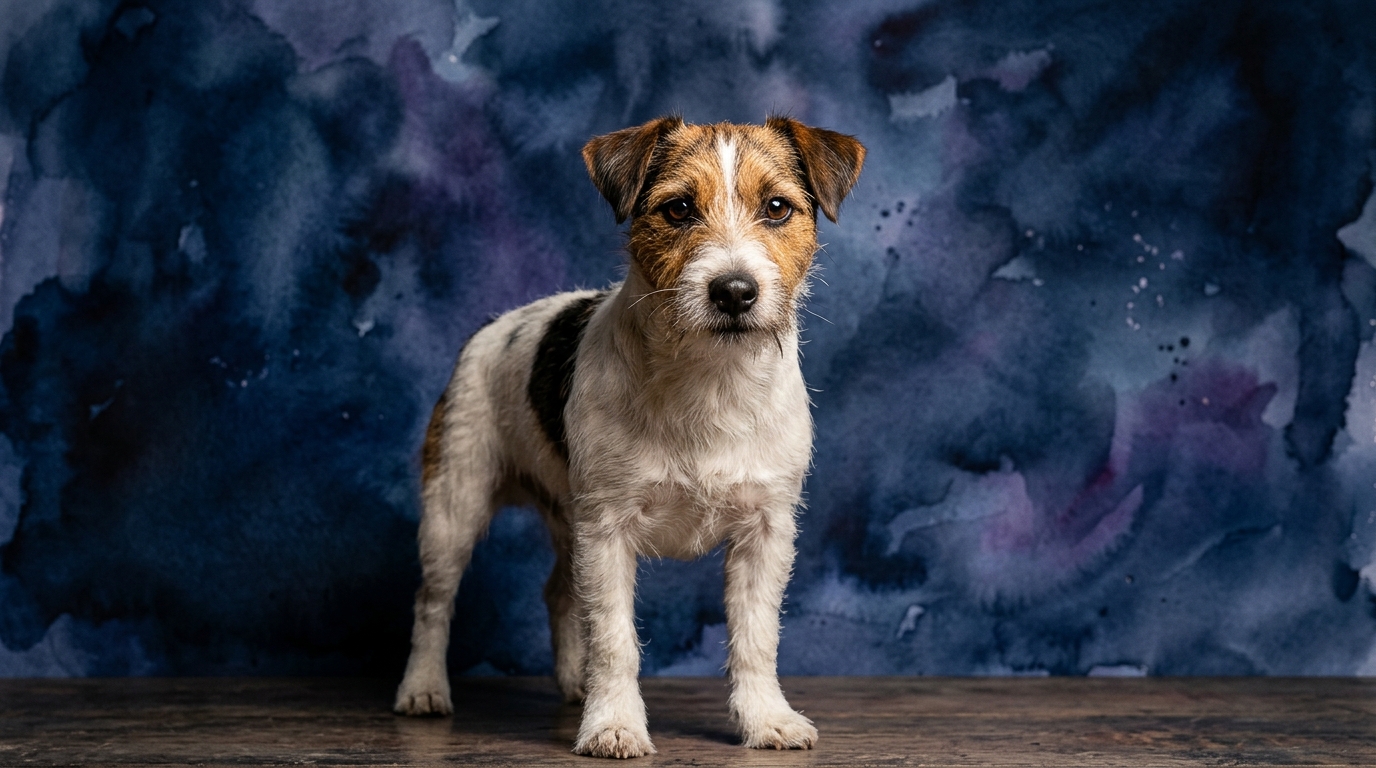
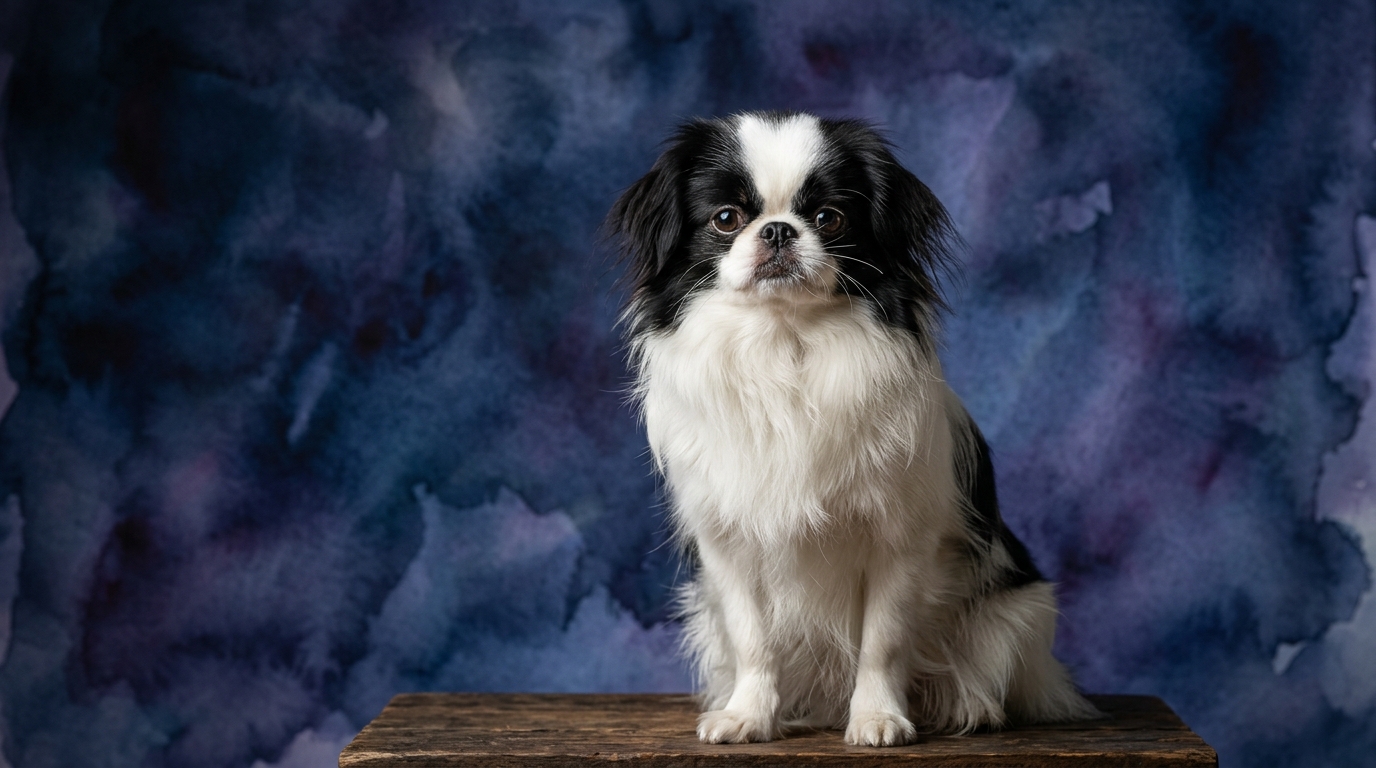
Side-by-Side Cognitive Profile
**Jack Russell Terrier:** This breed's IQ profile paints a picture of a sharp, driven individual. Their **Problem Solving (5/5)** is top-tier, indicating a dog constantly analyzing and devising strategies to navigate their world. **Training Speed (3/5)** suggests they are capable learners, though their independent streak means they might choose to prioritize their own agenda. Their **Social Intelligence (3/5)** allows them to understand social cues, but it's often balanced by their formidable **Instinctive Drive (5/5)**, a powerful urge to chase, dig, and explore. A strong **Memory (4/5)** ensures they retain learned behaviors and past experiences effectively, contributing to their resourceful nature.
**Japanese Chin:** The Japanese Chin presents a cognitive profile geared towards companionship and adaptability. Their **Problem Solving (3/5)** is moderate, meaning they can learn routines and navigate their environment without constantly seeking complex intellectual challenges. Like the Jack Russell, their **Training Speed (3/5)** is moderate, indicating they can learn commands with consistent, positive reinforcement. Their **Social Intelligence (3/5)** is a key strength, manifesting as a deep awareness of human emotions and a desire for close connection. A moderate **Instinctive Drive (3/5)** means they possess a gentle curiosity rather than intense hunting or working urges, making them generally calmer. Their **Memory (3/5)** is solid, allowing them to recall routines and familiar faces, ensuring comfort and predictability in their home life.
Where Jack Russell Terrier Wins Cognitively
The Jack Russell Terrier's cognitive profile is a masterclass in independent thought and relentless pursuit. Their remarkable 5/5 score in Problem Solving means they are perpetually analyzing their environment, identifying obstacles, and creatively devising solutions. This isn't just about navigating a puzzle toy; it extends to figuring out how to open gates, escape enclosures, or outsmart perceived “prey” in the yard. This profound capacity for independent thought makes them exceptionally resourceful in varied situations. Furthermore, their 5/5 Instinctive Drive fuels this problem-solving prowess, providing an intrinsic motivation to engage with the world and overcome challenges. This drive means they possess an unparalleled determination to complete tasks they deem important, from tracking a scent to retrieving a hidden object. Coupled with a 4/5 Memory, a Jack Russell can recall past successful strategies and apply them to new scenarios, learning from experience at an advanced level. This combination of high problem-solving, intense drive, and strong memory equips them to excel in complex tasks, agility, earthdog trials, or any activity that demands sharp wits and unwavering focus on a goal. For owners who enjoy engaging with a dog that thinks deeply and acts decisively, the Jack Russell's cognitive strengths are undeniably compelling.
Where Japanese Chin Wins Cognitively
While the Japanese Chin's scores might appear less “active” than the Jack Russell's, their cognitive profile represents a different kind of strength, perfectly attuned to their role as dedicated companions. Their 3/5 Instinctive Drive is a significant “win” for many owners, signifying a dog less prone to the intense, sometimes disruptive, urges of a working breed. This means a Chin is less likely to dig up the garden, chase every squirrel, or roam far from home, translating into a generally calmer and more manageable household member. Their moderate 3/5 Problem Solving, rather than being a deficit, means they are less inclined to invent mischief or outwit their owners in undesirable ways. They are content with their routines and less driven to constantly seek out novel intellectual challenges that could lead to destructive behaviors if not properly channeled. Crucially, their 3/5 Social Intelligence, on par with the JRT, shines brightly in their companion role. It manifests as a deep sensitivity to human emotions and a desire for close connection, making them exceptionally intuitive and empathetic partners. They excel at reading their owner's mood and providing comfort or quiet companionship, a nuanced form of intelligence that fosters strong emotional bonds. Their balanced cognitive approach means they are adaptable, pleasant, and highly responsive to their family's needs without the demanding mental stimulation required by a high-drive terrier.
Which Is Easier to Train and Why
When considering ease of training, both the Jack Russell Terrier and the Japanese Chin receive a 3/5 for Training Speed, suggesting they acquire commands at a similar moderate pace. However, the *application* of this learning speed differs significantly due to their other cognitive dimensions. The Jack Russell's formidable 5/5 Problem Solving and 5/5 Instinctive Drive can make them challenging to train for the average owner. While they learn quickly, their independence means they often evaluate whether a command aligns with their own strong internal motivations, such as chasing a scent or exploring. This requires an owner to be exceptionally consistent, creative, and engaging to keep the JRT's focus and convince them that following commands is more rewarding than pursuing their own agenda. They might *understand* what you want but choose not to comply if their drive is pulling them elsewhere, often testing boundaries with their sharp wits. Conversely, the Japanese Chin, with its moderate 3/5 Problem Solving and 3/5 Instinctive Drive, tends to be perceived as easier to train in many domestic settings. While they learn at the same pace, their lower intrinsic drives mean fewer competing interests distracting them from training. They are generally more eager to please their human companions, leveraging their social intelligence, and less inclined to invent complex ways to avoid commands. Their primary motivation is often companionship and comfort, making them more amenable to gentle, positive reinforcement methods. For an owner seeking a dog that readily integrates into a routine with less pushback against commands, the Chin's overall cognitive balance often translates into a smoother training experience.
Which Suits Active Owners vs. Relaxed Owners
The cognitive profiles of these two breeds clearly delineate their suitability for different lifestyles. The Jack Russell Terrier, with its blazing 5/5 Problem Solving, fierce 5/5 Instinctive Drive, and robust 4/5 Memory, is tailor-made for active owners who relish a dog that requires constant mental and physical engagement. These are not dogs content with a simple walk around the block; their minds are constantly whirring, seeking puzzles to solve and “prey” to pursue. They thrive when given a job, whether it's agility, earthdog trials, extensive scent work, or long, stimulating hikes. Owners who appreciate a dog with an independent spirit and the energy to match their own adventurous lifestyle will find a Jack Russell an exhilarating companion, but those seeking a low-maintenance pet will quickly find themselves overwhelmed by the terrier's boundless cognitive and physical needs.
In stark contrast, the Japanese Chin, with its moderate 3/5 scores across Problem Solving, Instinctive Drive, and Memory, is the quintessential companion for relaxed owners. Their cognitive makeup means they are perfectly content with a less demanding routine. While they enjoy gentle play and short walks, their intrinsic drives do not compel them to constantly seek out high-octane activities or complex mental challenges. Instead, their social intelligence flourishes in a home environment focused on companionship and quiet interaction. They are happy to curl up on a lap, observe household activities, and offer gentle affection. Owners who prefer a calm, adaptable presence, a dog that doesn't demand constant intellectual stimulation or strenuous exercise, and one that seamlessly fits into a tranquil home life, will find the Japanese Chin to be an ideal, charming partner.
The Verdict
Opt for a Jack Russell Terrier if you are an experienced, active owner eager for a dog with unmatched problem-solving skills, intense drive, and a tenacious spirit for sports or working tasks.
Select a Japanese Chin if you seek a gentle, adaptable companion whose moderate drives and keen social intelligence make them a perfect, affectionate fit for a relaxed home environment.
🧠 Find Your Pet's IQ Score
Our Pet IQ Lab assessment covers 25+ tests across 5 cognitive dimensions — personalized to your breed.
Take the Full IQ Test →Frequently Asked Questions
Are Jack Russell Terriers difficult to live with due to their high IQ?
Jack Russell Terriers possess high problem-solving and instinctive drive, which means they require significant mental and physical stimulation to prevent boredom and potential mischief. Their intelligence is a strength, but it demands an owner who can consistently channel their sharp wits into appropriate activities.
Does the Japanese Chin's moderate IQ mean they can't learn tricks?
Not at all. With a Training Speed of 3/5, Japanese Chins are capable learners and can certainly master a variety of tricks and commands, especially when motivated by positive reinforcement and gentle guidance. Their moderate drives simply mean they might not be as intensely driven to pursue complex, independent tasks.
Which breed is better for first-time dog owners?
For first-time dog owners, the Japanese Chin's more moderate instinctive drives and less demanding cognitive profile generally make them an easier introduction to dog ownership. The Jack Russell Terrier's intense mental and physical needs often require an owner with prior experience and a dedicated lifestyle.