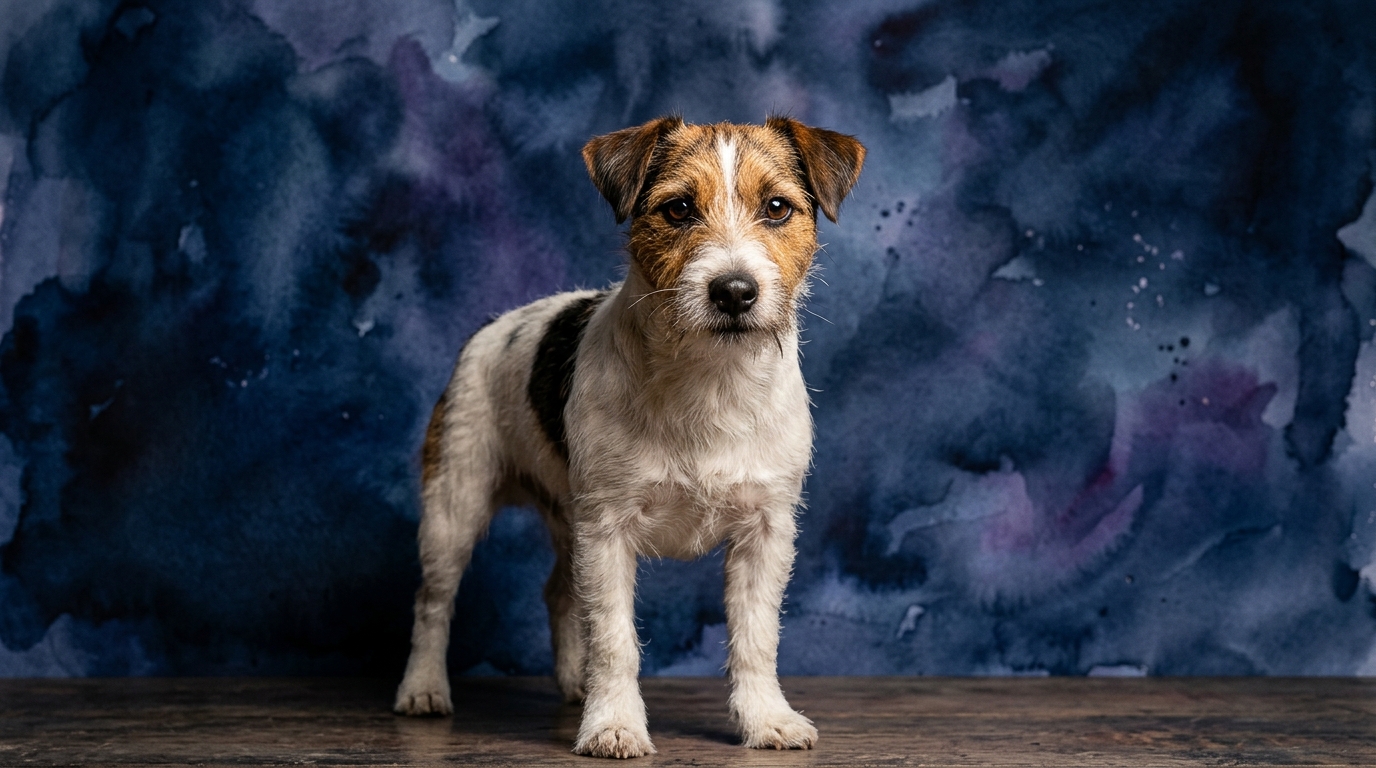
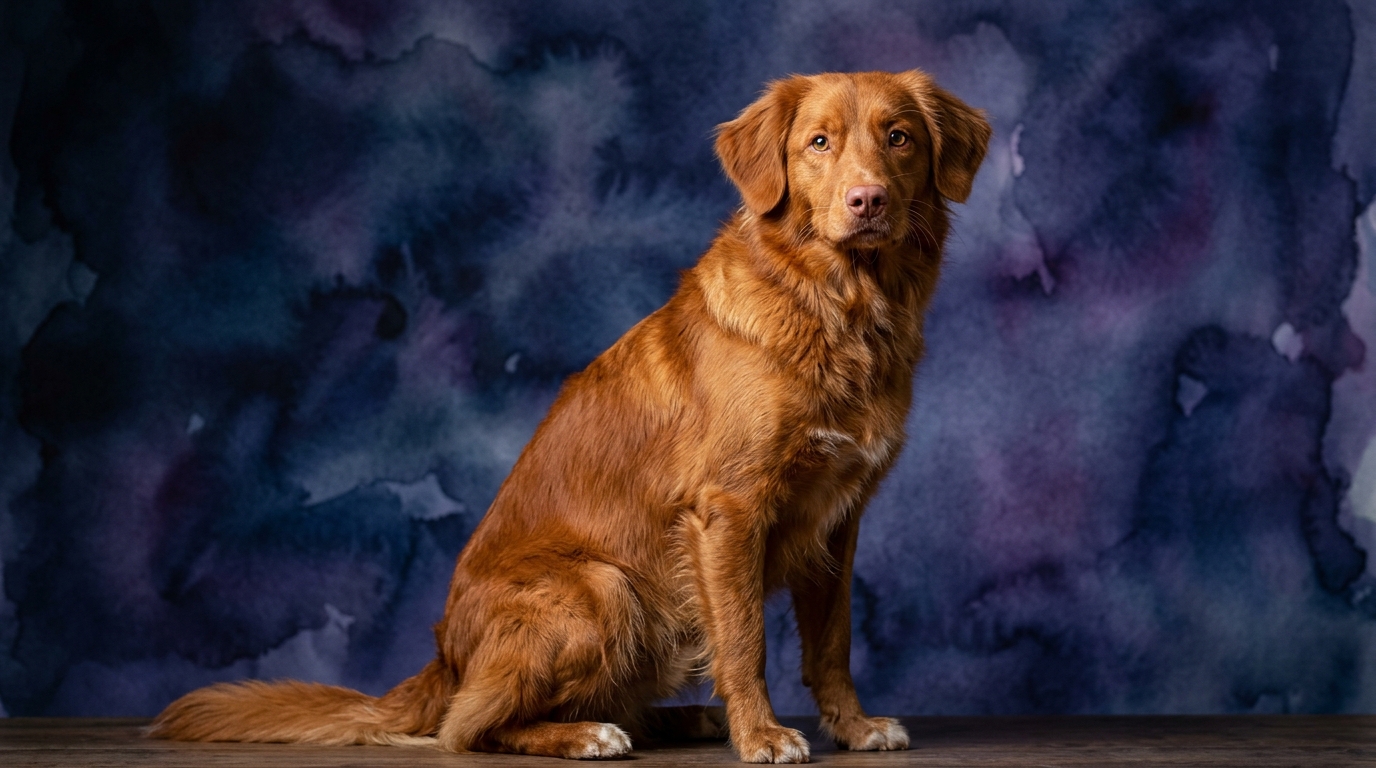
Side-by-Side IQ Profile
The Cosmic Pet Pet IQ Lab assesses canine intelligence across five key dimensions, revealing the distinct cognitive blueprints of these two breeds. For the Jack Russell Terrier, problem-solving registers at an impressive 5/5, indicating an exceptional capacity to navigate complex situations and devise solutions independently, often leading to ingenious mischief. Training speed is a moderate 3/5, meaning they grasp commands efficiently, yet their strong will can sometimes override consistent execution. Social intelligence also sits at 3/5; they are capable of reading human cues but frequently prioritize their own agenda or intense prey drive over social harmony. Their instinctive drive is a robust 5/5, a relentless, focused energy directed towards scent and movement. Memory rounds out their profile at 4/5, enabling them to retain training, routines, and experiences with good recall.
In contrast, the Nova Scotia Duck Tolling Retriever presents a more balanced, albeit less extreme, cognitive profile. Their problem-solving ability is a moderate 3/5, meaning they are capable learners who can tackle guided tasks but are less inclined to invent novel solutions without human direction. Training speed is also 3/5, indicating a steady learning pace and a generally cooperative demeanor, though they can exhibit independent streaks. Social intelligence is 3/5; Tollers are typically attuned to their family's dynamics but can be reserved or wary of strangers, requiring careful socialization. Instinctive drive is a moderate 3/5, centered on retrieving, making them eager participants in games and field work but less broadly driven than a Terrier. Their memory is 3/5, sufficient for retaining most training and experiences, though perhaps not with the vivid recall of a JRT.
Where Jack Russell Terrier Wins Cognitively
The Jack Russell Terrier clearly distinguishes itself in two cognitive areas: problem-solving and instinctive drive. Their 5/5 problem-solving isn't just about learning; it's about innovating. A JRT will meticulously analyze how to open a cabinet, scale a fence, or manipulate a puzzle toy, often finding creative solutions that surprise their owners. This translates to a dog that thrives on mental challenges, perpetually seeking to understand and interact with its environment in a strategic way. This keen ability to "figure things out" is a hallmark of their terrier heritage, designed for independent hunting.
Coupled with this is their 5/5 instinctive drive, a relentless internal motor that fuels their determination. Whether it's tracking a scent, pursuing a perceived quarry, or fixating on a new toy, a JRT's focus can be singularly intense. This drive means they approach tasks with an unmatched tenacity, refusing to give up easily. While this can be channeled into productive activities like earthdog trials or agility, it also means they require consistent mental engagement to prevent their formidable drive from being applied to less desirable pursuits, like digging or chasing. Their cognitive strength lies in their self-directed, tenacious pursuit of goals.
Where Nova Scotia Duck Tolling Retriever Wins Cognitively
While the Nova Scotia Duck Tolling Retriever doesn't boast higher scores in any single dimension than the Jack Russell Terrier, their cognitive profile offers a different kind of strength, particularly valuable for specific roles. Their balanced scores across the board, especially their 3/5 in problem-solving and 3/5 in instinctive drive, contribute to a cooperative and agreeable intelligence. This means Tollers are less likely to employ their intellect to outsmart their handler or pursue highly independent agendas. Instead, their cognitive strengths are geared towards partnership and directed tasks.
Their instinctive drive, while moderate at 3/5, is specifically refined for working *with* a human in a retrieving capacity, embodying a focused, biddable enthusiasm for fetch and water work. This isn't the broad, independent drive of a JRT, but a specialized drive for collaborative hunting. Similarly, their 3/5 social intelligence, combined with their moderate problem-solving, means they are generally more predictable and less prone to the independent "scheming" that can characterize a JRT. Tollers excel at sustained, focused partnership, attentively responding to their handler's cues, making them exceptional team players in activities like obedience or field trials where directed effort is paramount.
Which is Easier to Train and Why
Assessing which breed is "easier" to train requires understanding their distinct cognitive approaches. The Nova Scotia Duck Tolling Retriever, with its moderate 3/5 scores in training speed, problem-solving, and instinctive drive, generally offers a more straightforward training experience. They grasp commands at a steady pace and are typically eager to please their handler, making them responsive to positive reinforcement. Their moderate problem-solving means they are less likely to creatively circumvent commands, and their moderate drive makes them less prone to intense, self-directed distractions. They thrive on consistency and clear direction, making them excellent candidates for structured obedience and cooperative sports.
Conversely, the Jack Russell Terrier, despite also scoring 3/5 in training speed, presents a more complex training challenge due to their 5/5 problem-solving and 5/5 instinctive drive. They learn quickly, but their formidable intellect and relentless drive mean they might learn a command and then immediately apply their problem-solving skills to find a more "efficient" or self-serving way to act. For instance, they might understand "stay" but decide a passing squirrel is a more compelling priority, using their intelligence to strategize its pursuit. Training a JRT demands exceptional consistency, engaging methods, and a trainer who can anticipate their cleverness and channel their intense drive into productive, handler-directed activities. Without this, their intelligence can lead to independent decision-making that clashes with owner expectations.
Which Suits Active Owners vs. Relaxed Owners
Neither the Jack Russell Terrier nor the Nova Scotia Duck Tolling Retriever are suitable companions for truly "relaxed" owners, as both breeds possess significant energy and cognitive needs. However, they suit different *types* of active owners.
The Jack Russell Terrier is an ideal match for highly active owners who thrive on intellectual challenge and appreciate a dog with an independent, tenacious spirit. Owners must be prepared to engage their JRT's 5/5 problem-solving and 5/5 instinctive drive daily through complex training, challenging puzzle toys, earthdog trials, agility, or extensive exploration. They need an owner who is as clever and persistent as they are, someone who can consistently channel their formidable mental and physical energy into productive outlets. A JRT will not be content with a simple walk; they demand to be mentally stimulated and given "work" to do, making them a demanding but incredibly rewarding partner for the right individual.
The Nova Scotia Duck Tolling Retriever also requires an active lifestyle but typically seeks a more cooperative partnership. They are well-suited for active owners who enjoy structured outdoor activities like hiking, swimming, retrieving games, and dog sports such as obedience or dock diving. While they have energy, their 3/5 instinctive drive means it's often more easily directed and less prone to independent, self-serving pursuits than a JRT's. Tollers thrive with owners who can provide consistent exercise and engaging, collaborative mental tasks. They want to work *with* their people, making them excellent partners for those who value a biddable, enthusiastic companion for shared adventures, rather than a dog constantly devising its own agenda.
The Verdict
Choose the Jack Russell Terrier if you are an experienced, active owner prepared for a constant mental chess match, valuing a dog with exceptional independent problem-solving and relentless drive that you can channel into challenging activities.
Opt for the Nova Scotia Duck Tolling Retriever if you seek a cooperative, biddable, and enthusiastic partner for outdoor adventures and structured dog sports, valuing a balanced temperament that thrives on collaborative tasks.
🧠 Find Your Pet's IQ Score
Our Pet IQ Lab assessment covers 25+ tests across 5 cognitive dimensions — personalized to your breed.
Take the Full IQ Test →Frequently Asked Questions
Are Jack Russell Terriers difficult to live with due to their high problem-solving?
Their exceptional problem-solving (5/5) means they can be incredibly clever in achieving their goals, which might include opening cabinets or escaping yards. This trait requires owners to be equally clever in managing their environment and providing ample, appropriate mental stimulation to prevent boredom-driven mischief.
How does the Nova Scotia Duck Tolling Retriever's moderate instinctive drive manifest?
Their 3/5 instinctive drive is primarily focused on retrieving, making them eager participants in games of fetch or water activities. While they possess working instincts, they are generally less intensely driven by prey or independent exploration compared to some other breeds, making them more amenable to handler direction.
Do either of these breeds excel in dog sports?
Both breeds can excel, but in different capacities. Jack Russell Terriers often shine in agility, flyball, and earthdog trials, leveraging their problem-solving and drive. Nova Scotia Duck Tolling Retrievers are natural fits for obedience, retrieving trials, and dock diving, where their cooperative nature and retrieving instincts are highly valued.