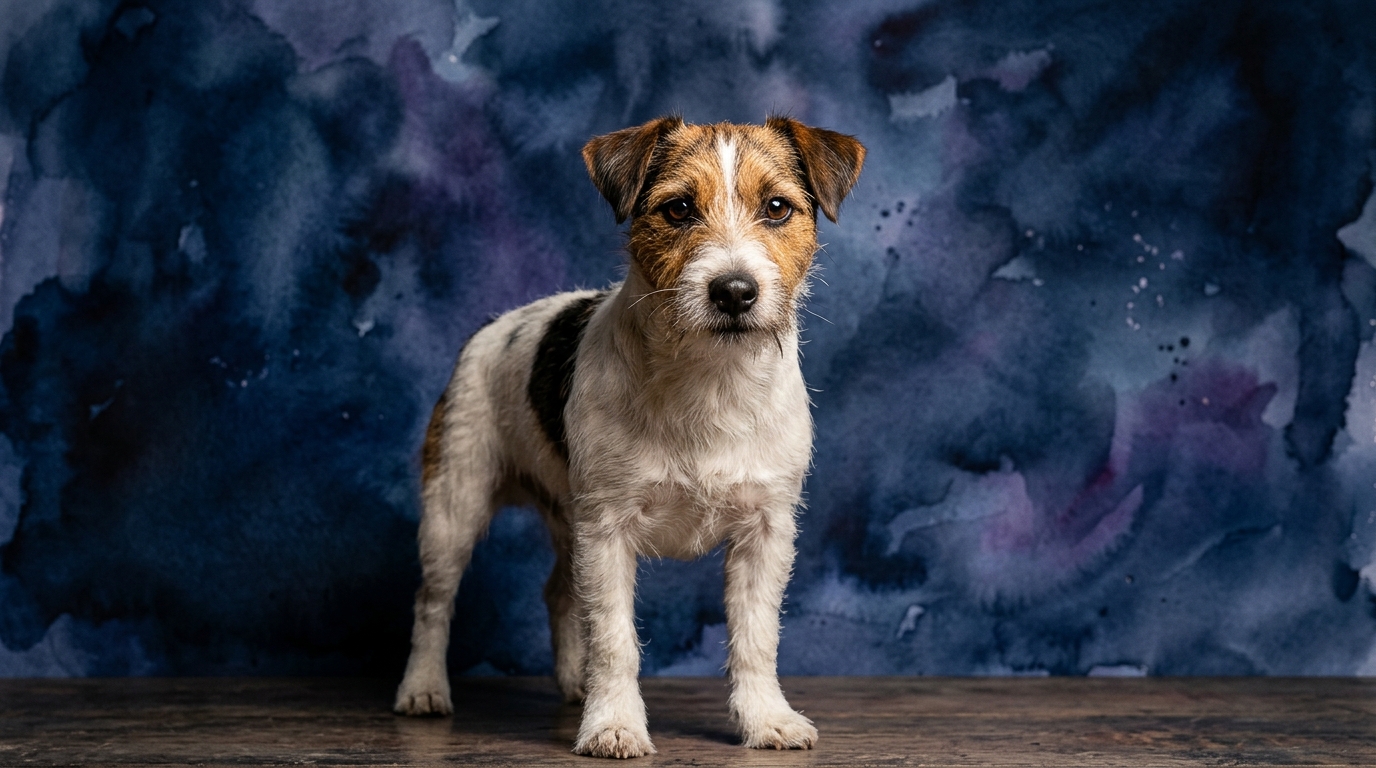
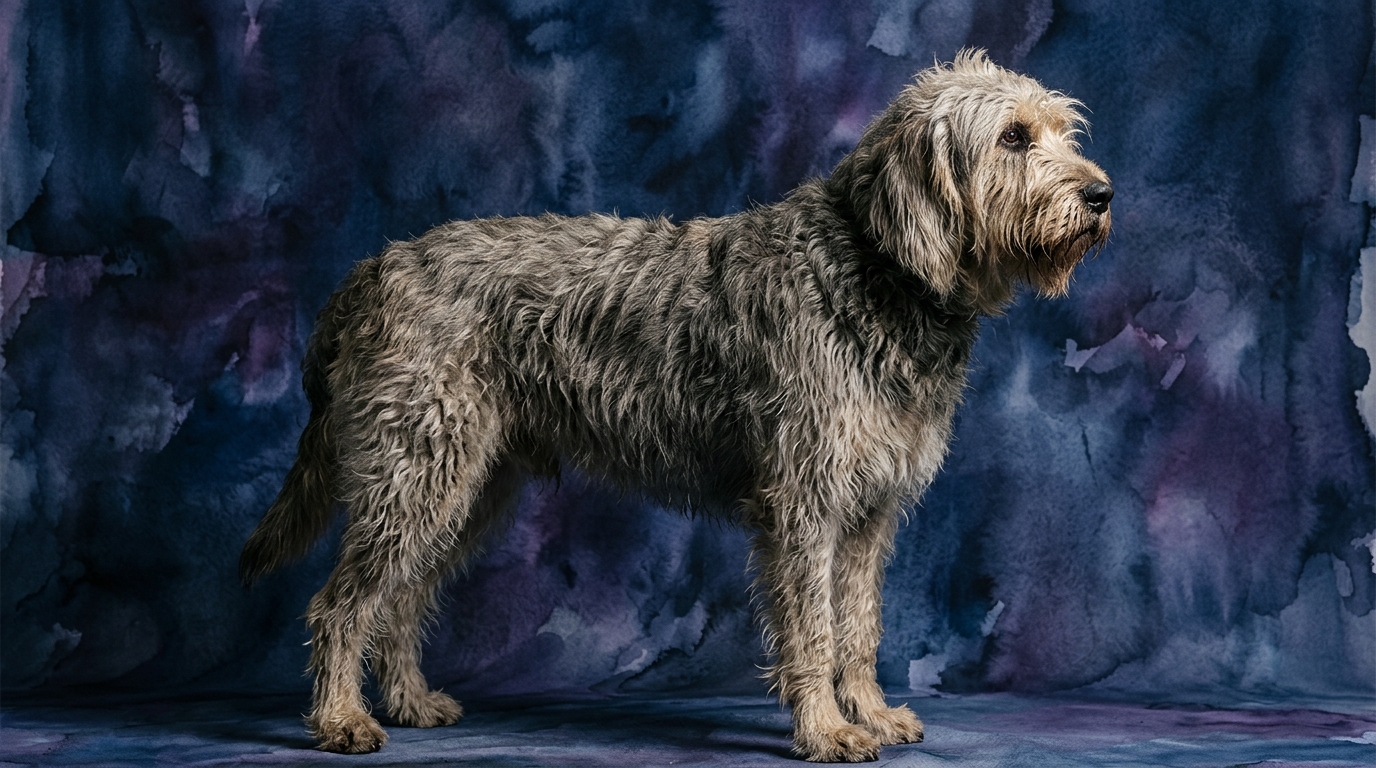
Side-by-Side Cognitive Profile: JRT vs. Otterhound
The Cosmic Pet Pet IQ Lab provides a unique lens through which to compare the Jack Russell Terrier and the Otterhound across five crucial cognitive dimensions. For the Jack Russell Terrier, problem-solving ability stands out at a perfect 5/5, indicating exceptional ingenuity in navigating complex scenarios and finding novel solutions to perceived barriers, which can be both impressive and occasionally mischievous. Their instinctive drive also scores a 5/5, reflecting a profoundly strong innate urge to hunt, chase, and explore, a core component of their cognitive makeup that heavily influences their behavior and requires significant outlets. Their memory is robust at 4/5, allowing for quick retention of learned behaviors and environmental layouts, while training speed and social intelligence both sit at a moderate 3/5, suggesting they are capable learners but possess an independent streak and may be reserved with strangers.
Conversely, the Otterhound presents a more consistently moderate cognitive profile. Their problem-solving ability is rated 3/5, indicating they approach challenges methodically rather than inventively, capable of resolving straightforward tasks but less inclined to devise complex workarounds. Training speed and social intelligence also align at 3/5, meaning they learn at a moderate pace and, while generally amiable and tolerant, integrate well into family dynamics without the intense social demands of some breeds. Their instinctive drive, at 3/5, is present but more moderate than the JRT's, primarily centered around tracking and exploring with their nose rather than relentless pursuit. Similarly, their memory is rated 3/5, solid for routines and familiar commands, though intricate sequences may require more consistent reinforcement.
Where the Jack Russell Terrier Wins Cognitively
The Jack Russell Terrier clearly outpaces the Otterhound in several cognitive domains, most notably in problem-solving and instinctive drive. With a perfect 5/5 in Problem Solving, JRTs exhibit a remarkable capacity for innovative thought, often devising clever strategies to achieve their goals, whether it’s figuring out how to open a cabinet or outsmarting a squirrel. This ingenuity can manifest as delightful cleverness or determined mischief, requiring owners to stay a step ahead. Their instinctive drive, also rated 5/5, is a powerful engine behind their actions, pushing them to pursue, dig, and explore with relentless focus. This intense drive, rooted in their working terrier heritage, means they are always scanning their environment for opportunities to engage their natural hunting instincts. Furthermore, their memory at 4/5 is a significant advantage, allowing them to quickly form and retain associations, from complex command sequences to the exact location of a hidden toy, contributing to their reputation for sharp recall and adaptability in familiar settings.
Where the Otterhound Wins Cognitively
While the Jack Russell Terrier shines with intense mental agility, the Otterhound's cognitive profile, characterized by its consistent 3/5 across several key dimensions, offers a different kind of strength that can be more advantageous for certain owners and lifestyles. The Otterhound's more moderate approach to problem-solving (3/5) means they are less likely to devise elaborate, independent schemes, leading to a more predictable and often calmer intellectual engagement. Their instinctive drive, also rated 3/5, is present but not overwhelming, primarily focused on scent tracking rather than relentless pursuit. This reduced intensity can be a significant advantage in environments where constant management of high prey drive is challenging, making them generally more manageable in domestic settings. Furthermore, their balanced memory (3/5) and social intelligence (3/5) contribute to a steady, amiable temperament, fostering reliable recall for routines and a generally tolerant disposition, which can be a definite 'win' for owners seeking a companion less prone to cognitive overstimulation or intense focus.
Training Dynamics: Which Breed is Easier to Guide?
Both the Jack Russell Terrier and the Otterhound share a Training Speed score of 3/5, suggesting neither is inherently a 'quick study' in the traditional sense, but the *nature* of their training challenges differs significantly. The JRT's formidable Problem Solving (5/5) and Instinctive Drive (5/5) mean they are often training *themselves* to achieve their own objectives, which may not align with an owner's commands. Their intelligence often manifests as independent thought, making consistent, engaging training crucial to channel their mental energy productively and prevent them from solving problems in undesirable ways. Conversely, the Otterhound's moderate Instinctive Drive (3/5) and Problem Solving (3/5) mean they are less likely to devise elaborate schemes to circumvent commands or become overly fixated on external stimuli. While they still possess the hound's independent streak, their more relaxed approach means that once motivated, they are generally more straightforward to guide through training sessions, without the same level of mental 'pushback' or self-directed problem-solving seen in the JRT. The key for both is making training enjoyable and rewarding, but the JRT demands more mental agility from its trainer to redirect its intense focus.
Lifestyle Match: Active vs. Relaxed Owners
The cognitive profiles of these two breeds clearly delineate their suitability for different lifestyles. The Jack Russell Terrier, with its perfect 5/5 Instinctive Drive and Problem Solving, is tailor-made for active owners who relish engaging with a dog that possesses boundless energy and a keen, active mind. They thrive on structured activities that challenge them both physically and mentally, such as agility, earthdog trials, or extensive interactive play. Owners who enjoy teaching complex tricks or participating in dog sports will find a highly rewarding partner in a JRT. Conversely, the Otterhound, characterized by a more moderate 3/5 in both Instinctive Drive and Problem Solving, aligns better with owners seeking a companion with a less demanding cognitive presence. While they certainly enjoy walks and exploring scents, their drive is not as relentlessly high, making them suitable for active owners who appreciate a more leisurely pace or relaxed owners who can still provide consistent, moderate outdoor engagement without the intensity required by a JRT. Their amiability also lends itself to a more relaxed home environment, as long as their scent-driven curiosity is acknowledged.
The Verdict
Choose a Jack Russell Terrier if you are an experienced, active owner seeking a highly intelligent, independent, and high-energy companion eager to engage in complex problem-solving and intense physical activities.
Opt for an Otterhound if you appreciate a good-natured, amiable companion with a more balanced and less intense cognitive profile, ideal for owners who enjoy consistent outdoor exploration at a moderate pace and a generally more predictable demeanor.
🧠 Find Your Pet's IQ Score
Our Pet IQ Lab assessment covers 25+ tests across 5 cognitive dimensions — personalized to your breed.
Take the Full IQ Test →Frequently Asked Questions
Do Jack Russell Terriers make good family pets given their high instinctive drive?
Jack Russell Terriers can be excellent family pets, particularly for active families who understand their need for mental stimulation and outlets for their 5/5 instinctive drive. Their sharp memory and problem-solving abilities mean consistent training and early socialization are crucial to direct their energy positively and ensure they integrate well with children and other pets.
Is an Otterhound's 3/5 social intelligence score a concern for interactions with strangers?
An Otterhound's 3/5 social intelligence score indicates they are generally amiable and tolerant, not necessarily reserved or aggressive. This score suggests they are capable of forming strong bonds and are typically friendly, but may not be as overtly demonstrative with all strangers as a breed with a higher social intelligence score might be, preferring familiar company.
How does the similar training speed (3/5) for both breeds translate into real-world training experiences?
While both breeds share a 3/5 training speed, the Jack Russell Terrier's high problem-solving and instinctive drive mean training often requires more creativity and persistence from the owner to maintain focus and prevent independent decision-making. The Otterhound, with its more moderate drives, might be slower to grasp complex commands but is generally less inclined to challenge directives, leading to a more straightforward, albeit not rapid, training process.