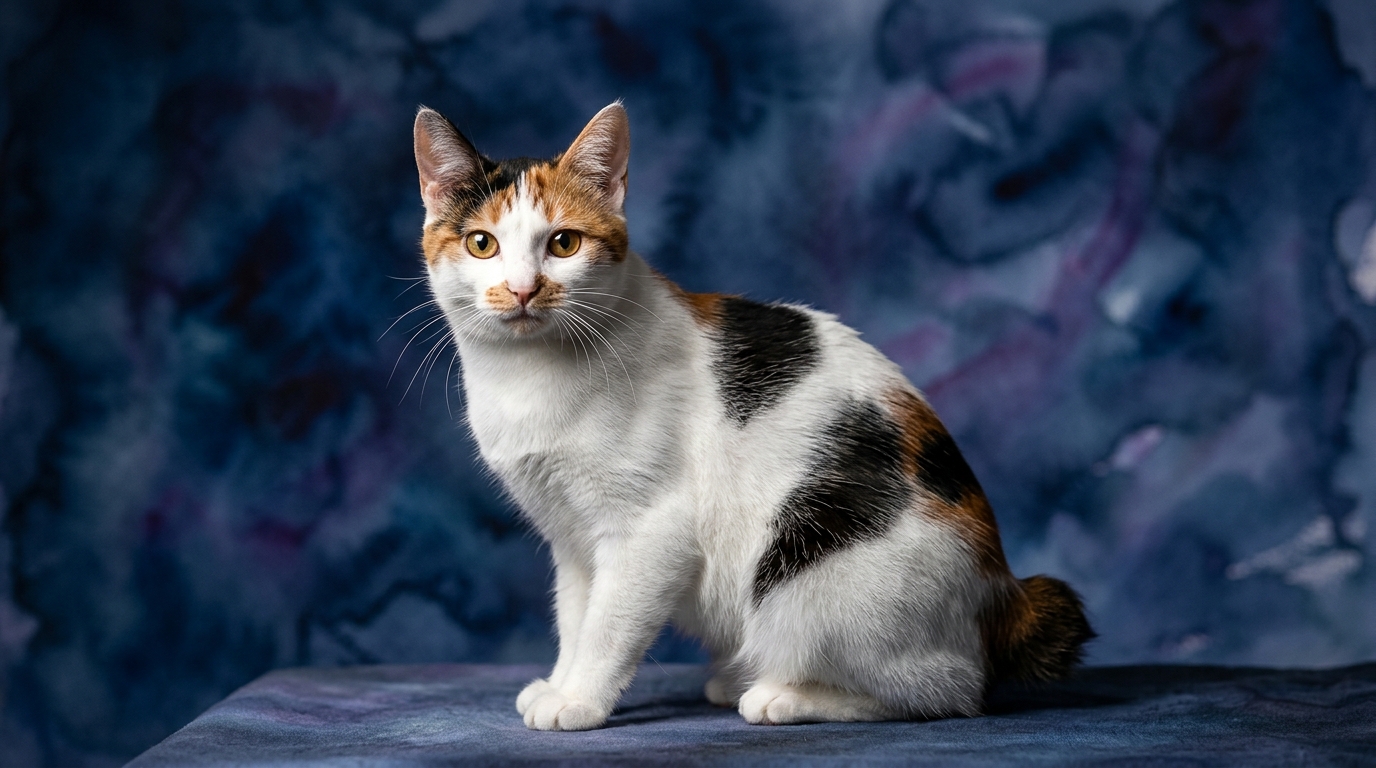
The Cosmic Pet Pet IQ Lab Profile: Japanese Bobtail
The Japanese Bobtail consistently scores a 3 out of 5 across all five cognitive dimensions, indicating a well-rounded yet moderately expressed intellectual capacity. Their Problem Solving at 3/5 suggests an ability to figure out moderate challenges, often manifesting in playful interactions such as retrieving toys or navigating household obstacles to reach a desired spot.
Training Speed, also at 3/5, means they generally pick up new commands and routines at a steady pace, often motivated by interactive play and positive reinforcement, enjoying the mental engagement. Their Social Intelligence of 3/5 points to a moderately affectionate and observant nature, forming strong bonds with their chosen people and often participating actively in family life, sometimes with their distinctive chirping vocalizations.
The Instinctive Drive at 3/5 is typically expressed through engaging in games that mimic hunting, like chasing laser pointers or pouncing on feather wands, maintaining a healthy interest in their environment. Finally, their Memory at 3/5 allows them to recall routines, preferred playtimes, and the specific individuals they interact with regularly, anticipating familiar patterns.
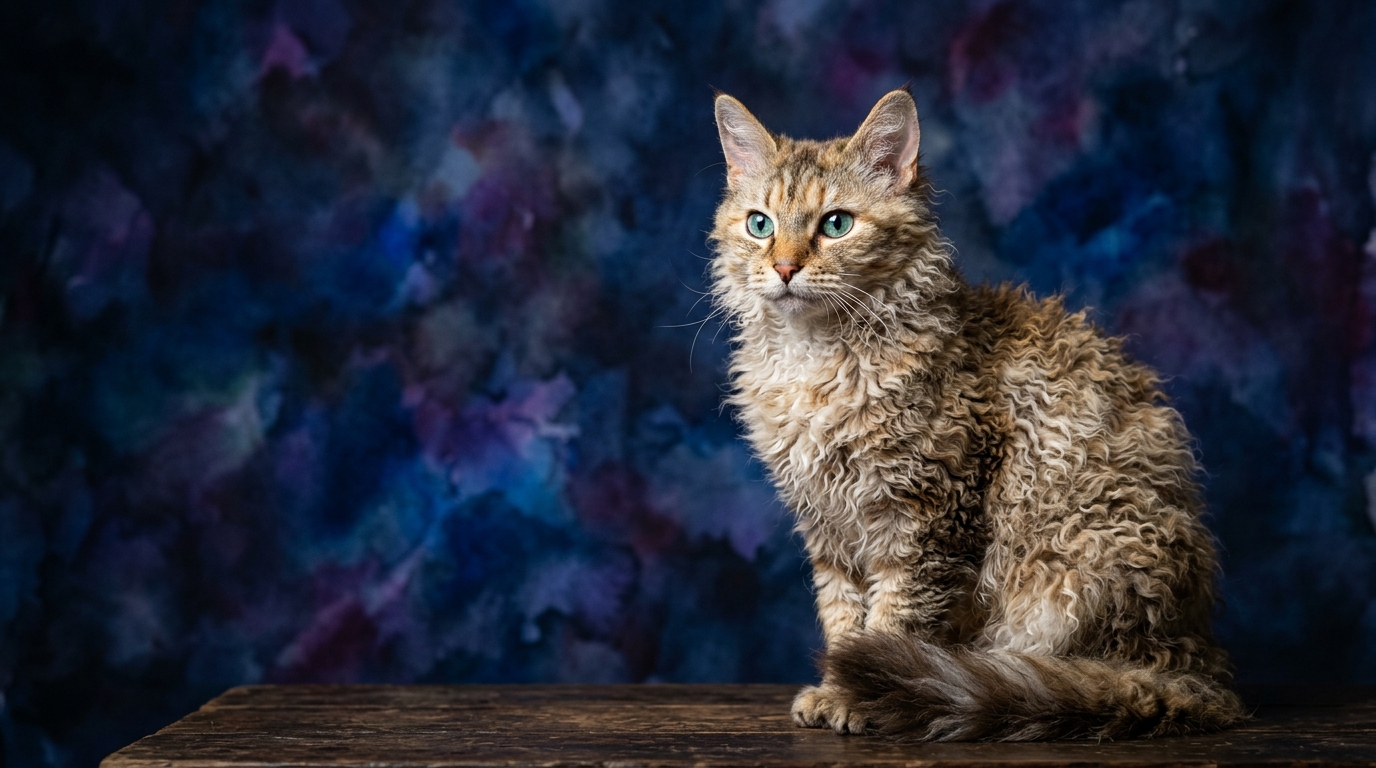
The Cosmic Pet Pet IQ Lab Profile: LaPerm
Mirroring the Japanese Bobtail, the LaPerm also achieves a consistent 3 out of 5 across all five cognitive dimensions, yet their expression of these scores is distinctively their own. Their Problem Solving, rated 3/5, often manifests as a curious exploration of their surroundings, figuring out how to access cozy nooks or investigating new textures and objects within their home.
A Training Speed of 3/5 indicates they are receptive to learning, especially when it involves gentle, consistent methods and fosters a deeper bond with their owner; they readily adapt to household rules and routines. Their Social Intelligence at 3/5 highlights a deeply people-oriented and empathetic nature; they are known for seeking out human companionship, offering comfort, and being highly attuned to their owners' moods, often initiating gentle head-nuzzles or purring cuddles.
The Instinctive Drive, also 3/5, is typically channeled into gentle play, exploring their territory with a quiet determination, and satisfying their curiosity through sensory engagement rather than high-octane hunting simulations. Their Memory, at 3/5, enables them to remember preferred laps, favorite petting spots, and the gentle hands that provide affection, creating a sense of security and familiarity within their environment.
Where Japanese Bobtail Wins Cognitively
While both breeds share identical 3/5 scores, the Japanese Bobtail's cognitive strengths often shine brighter in areas demanding interactive engagement and a more overt display of problem-solving. Their 3/5 in Problem Solving, for instance, is frequently expressed through an eagerness to participate in complex games like fetch, learning to open simple latches to access toys, or even figuring out how to retrieve objects from challenging spots. This active application of their mental capacity makes them particularly adept at interactive puzzle toys that require sequential steps.
Furthermore, their Social Intelligence, also a 3/5, often leans towards playful communication and integration into family activities. They are known to 'talk' with a range of chirps and trills, actively seeking to be part of discussions or observe human tasks with keen interest, rather than simply seeking physical proximity. This vocal and participatory nature can give the impression of a more 'involved' cognitive presence, making them appear to 'win' in scenarios where active, reciprocal mental engagement is valued.
Where LaPerm Wins Cognitively
Conversely, the LaPerm's cognitive strengths, while scoring identically, often manifest in a more nuanced, empathetic, and comfort-driven manner. Their 3/5 in Social Intelligence is profoundly expressed through an exceptional sensitivity to human emotions and a strong desire for close, comforting interaction. They excel at understanding subtle cues from their owners, often choosing to offer a gentle purr or a soft head-nuzzle when sensing distress, showcasing an emotional intelligence that fosters deep, empathetic bonds. This makes them 'win' in situations where quiet companionship and emotional attunement are paramount.
Their 3/5 in Problem Solving, while not always as overtly playful as the Bobtail's, is often utilized for navigating their environment to find the most comfortable sleeping spots, figuring out how to get onto a favorite lap, or gently exploring new textures and items in their home with a quiet, observant curiosity. This subtle, self-directed application of their problem-solving skills highlights a cognitive focus on comfort and connection, making them particularly adept at integrating seamlessly and lovingly into a home environment.
Which Is Easier to Train and Why
Given their identical 3/5 Training Speed scores, neither breed presents a significant challenge in terms of inherent learning ability, but their motivations and behavioral expressions lead to different training experiences. The Japanese Bobtail, with its playful demeanor and inclination towards interactive games, might be perceived as 'easier' for owners interested in teaching tricks or complex commands. Their enjoyment of mental stimulation and their 'dog-like' tendency to engage actively with their human can make them enthusiastic participants in clicker training sessions or agility courses. They often view training as a fun, shared activity, and their distinctive vocalizations can even be incorporated into command responses.
Conversely, the LaPerm, driven by its affectionate and people-oriented nature, might be considered 'easier' for owners prioritizing good household manners and consistent routines. Their desire to please and their sensitivity to human emotions mean they respond exceptionally well to gentle, positive reinforcement, often learning quickly through a desire to maintain harmony and receive affirmation. While they might not be as eager for complex tricks, they excel at adopting routines and behaving politely, motivated by the strong bond they share with their human companions.
Which Suits Active Owners vs. Relaxed Owners
For active owners seeking a companion to share in their energetic lifestyle, the Japanese Bobtail often proves to be an ideal match. Their 3/5 Instinctive Drive and Problem Solving are frequently channeled into lively play sessions, enjoying games of fetch, chasing toys, or even learning to walk on a leash and explore the outdoors safely. They thrive on regular interactive engagement and mental challenges, appreciating an owner who provides ample opportunities for play and exploration, making them a vibrant addition to a bustling household.
In contrast, the LaPerm is often better suited for more relaxed owners who appreciate a gentle, affectionate presence. While they enjoy play and exploration, their 3/5 Instinctive Drive is typically expressed in a calmer, more curious manner. Their strong 3/5 Social Intelligence means they are content to observe, cuddle, and offer quiet companionship, finding joy in simply being near their human. They flourish in environments where they receive consistent affection and gentle interaction, making them a comforting and emotionally supportive presence for those seeking a tranquil companion.
The Verdict
Opt for the Japanese Bobtail if you desire an interactive, vocal, and playful companion who enjoys engaging in 'dog-like' activities, learning tricks, and actively participating in family life with their distinctive chirps.
Select the LaPerm if you are looking for a gentle, empathetic, and affectionate companion who excels at providing quiet comfort, is deeply attuned to human emotions, and enjoys close physical contact and harmonious home life.
🧠 Find Your Pet's IQ Score
Our Pet IQ Lab assessment covers 25+ tests across 5 cognitive dimensions — personalized to your breed.
Take the Full IQ Test →Frequently Asked Questions
Are Japanese Bobtails good with children?
Yes, Japanese Bobtails are generally known for their playful and tolerant nature, often enjoying interaction with respectful children, especially when introduced properly.
Do LaPerms shed a lot?
LaPerms are considered low-shedding due to their unique curly coat, making them a good choice for individuals with mild allergies or those who prefer less cat hair around the house.
What kind of enrichment do these breeds enjoy?
Japanese Bobtails enjoy interactive puzzle toys and fetch, while LaPerms appreciate exploration of new textures, gentle play with feather wands, and plenty of cuddle time.