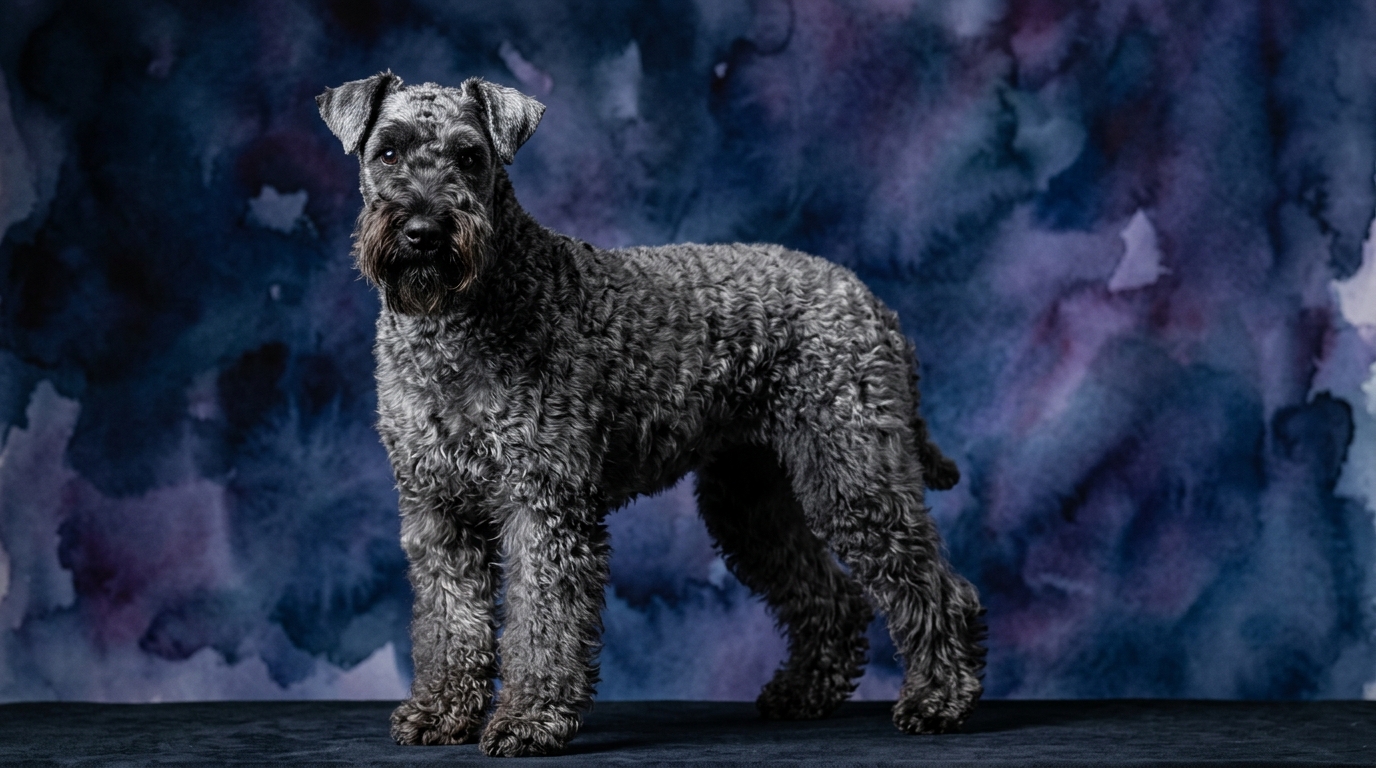
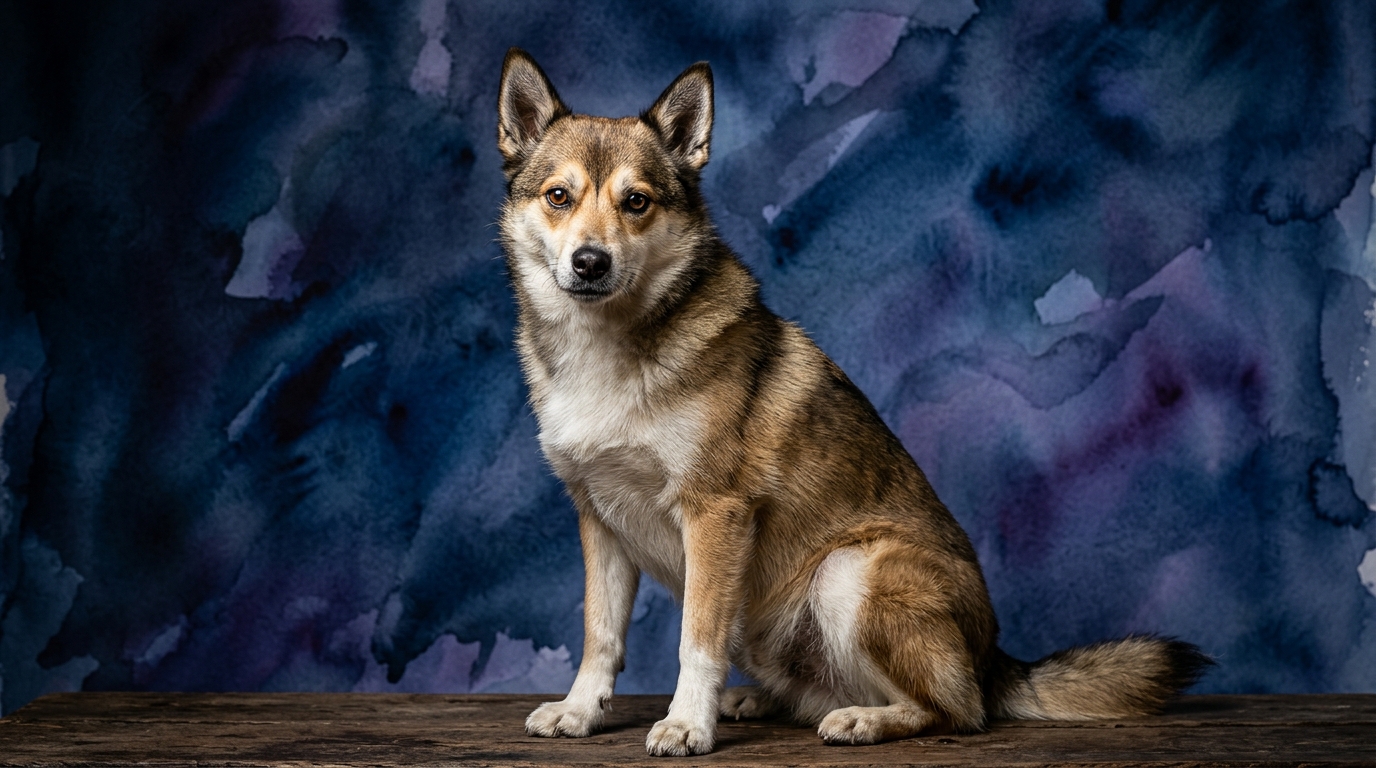
Side-by-Side IQ Profile: Kerry Blue Terrier vs. Norwegian Lundehund
The Cosmic Pet Pet IQ Lab assesses canine intelligence across five key dimensions, and for both the Kerry Blue Terrier and the Norwegian Lundehund, a consistent score of 3 out of 5 is observed in each category. While these numerical values suggest a moderate cognitive capacity, the practical application of this intelligence is shaped profoundly by their individual breed histories and physical attributes.
For Problem Solving (3/5), the Kerry Blue Terrier often applies its moderate aptitude to outmaneuvering small prey or figuring out how to access forbidden areas, showcasing a determined, sometimes mischievous, ingenuity. The Norwegian Lundehund, conversely, demonstrates its problem-solving through navigating treacherous coastal terrain, locating hidden nesting puffins, or utilizing its unique flexibility to squeeze into tight spaces, reflecting a more spatial and adaptive form of intelligence.
Training Speed (3/5) indicates a moderate pace of learning for both breeds, yet their motivations differ significantly. The Kerry Blue, a terrier at heart, can grasp commands with enthusiasm but may also display a headstrong nature, requiring consistent, engaging methods to maintain focus. The Lundehund, while capable of learning, often approaches training with an independent streak, requiring patient, reward-based approaches that make the process seem worthwhile to its often-aloof temperament.
Social Intelligence (3/5) for the Kerry Blue Terrier typically manifests as a moderate understanding of family dynamics, often seeking to establish its place within the hierarchy and responding to clear leadership, though it can be opinionated. The Lundehund’s social intelligence is marked by a more reserved and observant nature, moderately attuned to human emotions but often preferring to engage on its own terms, displaying a subtle rather than overtly demonstrative social awareness.
Instinctive Drive (3/5) is where their ancestries truly diverge. The Kerry Blue Terrier exhibits a moderate yet potent drive for chasing, digging, and guarding, rooted in its history as a farm dog and vermin catcher in Ireland. The Norwegian Lundehund, on the other hand, possesses a highly specialized instinctive drive for climbing, navigating complex environments, and demonstrating its remarkable flexibility (e.g., turning its head 180 degrees or folding its ears shut), all adaptations for its historical role in hunting puffins on steep cliffs.
Memory (3/5) for both breeds suggests a moderate ability to recall learned behaviors and past experiences. A Kerry Blue might vividly remember a successful hunt or a past escape route, applying this memory to future scenarios. The Lundehund’s memory likely aids its navigation of familiar territories, remembering safe passages and effective hunting spots, indicating a practical, environment-oriented recall.
Where Kerry Blue Terrier Wins Cognitively
While their overall IQ scores align, the Kerry Blue Terrier often presents a cognitive "win" in scenarios demanding assertive, persistent problem-solving and a strong engagement with human-directed tasks. Its terrier tenacity, coupled with a moderate problem-solving capacity, means it's adept at focusing on a singular objective, whether it's solving a puzzle toy or persistently trying to "catch" a thrown object, often displaying a determined intensity that can be highly motivating for owners.
Its moderate social intelligence, combined with its desire for clear leadership, can translate into a more direct and responsive interaction style in structured environments. This breed’s instinctive drive, while moderate, is geared towards active engagement and a willingness to "work" alongside its human, making it particularly effective in activities like obedience, agility, or even tracking, where its focused persistence becomes a distinct advantage.
Where Norwegian Lundehund Wins Cognitively
The Norwegian Lundehund's cognitive strengths lie in its highly specialized adaptations for its historical environment, making it a "winner" in areas requiring unique physical and spatial intelligence. Its problem-solving (3/5) is uniquely intertwined with its physical prowess, allowing it to assess complex terrain, find unconventional routes, and utilize its extraordinary flexibility to achieve goals, a cognitive-physical synergy unmatched by most breeds.
Its distinctive instinctive drive (3/5) for climbing and navigating treacherous landscapes is a direct manifestation of its cognitive ability to interpret and interact with its environment in a highly specialized manner. This breed demonstrates a quiet, observational social intelligence, often processing situations before reacting, which can be a distinct advantage in new or overwhelming environments, allowing it to adapt with a calm, discerning approach rather than immediate confrontation.
Which is Easier to Train and Why
Given their identical 3/5 training speed, neither the Kerry Blue Terrier nor the Norwegian Lundehund is inherently "easy" to train in the sense of being effortlessly compliant. Both require committed, knowledgeable owners, but the nature of the training challenge differs significantly due to their inherent temperaments and motivations.
The Kerry Blue Terrier, with its terrier heritage, often responds well to training that is engaging, consistent, and provides a clear job or purpose. They can be enthusiastic learners, but their moderate stubbornness and tendency to get bored require varied techniques, positive reinforcement, and firm, fair leadership to prevent them from becoming opinionated or finding their own "fun." Their prey drive can also be a significant distraction if not managed through early training and socialization.
The Norwegian Lundehund, conversely, presents a different set of training considerations. Their independence and sensitive nature mean harsh methods are counterproductive; they thrive on positive reinforcement, patience, and understanding. They are not typically driven by a strong desire to please and may question the utility of commands, requiring owners to find highly motivating rewards and make training a fun, cooperative game. Their unique physical structure also means some standard physical commands might need adaptation.
Which Suits Active Owners vs. Relaxed Owners
Both the Kerry Blue Terrier and the Norwegian Lundehund are breeds that demand active engagement from their owners; neither is suitable for a truly "relaxed" or sedentary lifestyle. Their moderate instinctive drives and overall energy levels necessitate regular physical and mental stimulation to prevent boredom and potential behavioral issues.
The Kerry Blue Terrier thrives with owners who can provide structured exercise, participate in dog sports like agility, earthdog trials, or obedience, and engage in consistent training and mental puzzles. Their need for a "job" and their spirited nature mean they require an owner who enjoys being active and can channel their energy productively, making them excellent companions for outdoor enthusiasts who appreciate a tenacious partner.
The Norwegian Lundehund also requires active owners, but their activity needs often lean towards exploration and varied physical challenges that engage their unique climbing and navigating abilities. They excel with owners who enjoy hiking, exploring natural environments, and providing opportunities for them to use their bodies and minds in complex ways. Their stamina is considerable, but their activity might be less about high-speed bursts and more about sustained, intricate movement, making them ideal for patient adventurers.
The Verdict
Choose the Kerry Blue Terrier if you seek an engaged, spirited companion for structured activities and are prepared to manage a strong-willed terrier with consistent training and clear leadership. This breed thrives with owners who enjoy an active, interactive partnership and can provide ample mental and physical stimulation.
Choose the Norwegian Lundehund if you are fascinated by unique physical adaptations, possess immense patience for an independent but sensitive mind, and seek a companion for nuanced exploration and engaging in varied, naturalistic activities. This breed suits owners who appreciate a dog with a quiet, observant intelligence and a rich, specialized heritage.
🧠 Find Your Pet's IQ Score
Our Pet IQ Lab assessment covers 25+ tests across 5 cognitive dimensions — personalized to your breed.
Take the Full IQ Test →Frequently Asked Questions
Are Kerry Blue Terriers good family dogs, and how does their intelligence factor in?
Kerry Blue Terriers can be wonderful family dogs, particularly with early socialization and consistent training. Their moderate social intelligence means they bond deeply with their family, but their assertive nature requires clear boundaries and respectful interaction, especially with children, ensuring they understand their place within the family unit.
What makes the Norwegian Lundehund's physical abilities so unique, and how does this relate to their intelligence?
The Norwegian Lundehund possesses extraordinary physical adaptations, including six fully functioning toes on each foot, highly flexible joints that allow them to turn their heads 180 degrees, and the ability to fold their ears shut. These unique traits are directly tied to their specialized problem-solving and instinctive drive, enabling them to navigate and hunt in the challenging, rocky cliffs of their native Norway, demonstrating a profound cognitive-physical synergy.
Do either breed's unique physical traits or historical roles present specific training challenges?
Yes, both breeds present specific training considerations. The Kerry Blue's strong prey drive and terrier tenacity require diligent focus and consistency to manage distractions. The Lundehund's independence, sensitivity, and sometimes aloof nature, coupled with potential digestive issues (Lundehund Syndrome), mean training must be highly positive, patient, and adapted to their unique motivations and physical comfort.