
Side-by-Side IQ Profile: Guardians vs. Scent Trackers
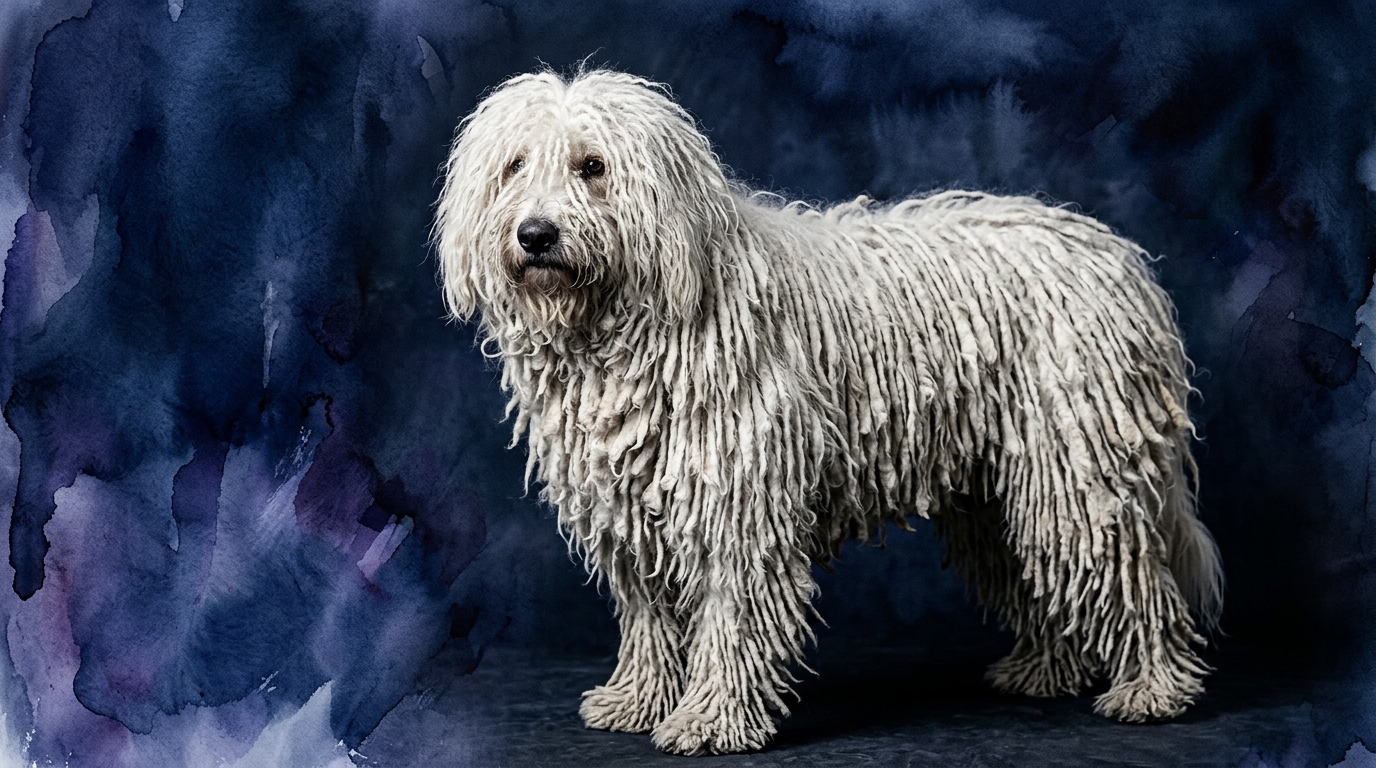
For a comprehensive understanding, The Cosmic Pet Pet IQ Lab evaluates canine cognition across five core dimensions, with both the Komondor and Basset Hound scoring a consistent 3 out of 5 in each category, placing them in Coren's "average working/obedience intelligence" band (Komondor at #67, Basset Hound at #71). The Komondor, a majestic Working breed, applies its Problem Solving (3/5) to independent vigilance, assessing potential threats and strategizing defensive postures without human command. Its Training Speed (3/5) reflects a capacity to learn, though often requiring motivation aligned with its protective instincts. Social Intelligence (3/5) is expressed through deep loyalty to its family or flock, coupled with discerning caution towards strangers, while its Instinctive Drive (3/5) is powerfully geared towards guarding and territorial defense. Its Memory (3/5) allows it to retain knowledge of its territory, familiar faces, and past threats, crucial for its role.
In contrast, the Basset Hound, a charming Hound, channels its Problem Solving (3/5) into deciphering complex scent trails, navigating varied terrain with persistent focus. Its Training Speed (3/5) is often challenged by overriding olfactory distraction, meaning it can learn but requires immense patience and high-value incentives. Social Intelligence (3/5) manifests as a generally amiable disposition, though its primary focus during "work" is solitary pursuit of scent. Its Instinctive Drive (3/5) is almost exclusively dedicated to following its nose, often overriding other impulses. The Basset's Memory (3/5) excels at recalling scent profiles and routes, enabling it to revisit successful hunting grounds.
Where the Komondor Excels Cognitively
The Komondor’s cognitive strengths are deeply rooted in its heritage as a livestock guardian, demanding a unique blend of autonomy and discernment. Its 3/5 problem-solving manifests as superior independent decision-making, allowing it to assess and respond to perceived threats to its charges without waiting for human instruction, a critical skill for a solitary guardian. This breed also demonstrates exceptional territorial acuity, where its social intelligence and instinctive drive combine to create a sophisticated understanding of its domain's boundaries and who belongs within them, efficiently distinguishing friend from foe. Furthermore, the Komondor exhibits a proactive environmental awareness, constantly surveying its surroundings and processing subtle changes that could indicate danger, engaging its memory and problem-solving in a continuous, watchful assessment.
Where the Basset Hound Excels Cognitively
The Basset Hound’s cognitive prowess lies in its specialized sensory capabilities and unwavering dedication to its primary instinct. Its 3/5 problem-solving and instinctive drive are uniquely channeled into unparalleled scent trail persistence, enabling it to interpret and follow intricate olfactory pathways, even old or faint ones, for extended periods. This represents a highly specialized form of cognitive engagement, prioritizing one sensory input above all others. The Basset also exhibits an extreme capacity for sensory focus when engaged in scent work, filtering out other stimuli to concentrate solely on its primary olfactory input, a distinct form of cognitive prioritization. Beyond its nose, its social intelligence contributes to an amiable adaptability, allowing it to integrate smoothly into diverse family dynamics, often displaying a relaxed demeanor that requires less active management of perceived threats compared to the more vigilant Komondor.
Training Dynamics: Convincing vs. Captivating
When it comes to training, both breeds present unique challenges, despite their identical 3/5 training speed scores, highlighting how inherent drives shape learning. The Komondor can be challenging due to its independent nature; it learns commands but often weighs them against its own judgment or perceived duties, particularly if the command interferes with its guarding role. Training a Komondor requires immense consistency, patience, and a deep understanding of its autonomous spirit, demonstrating *why* a command is beneficial rather than expecting blind obedience. In contrast, the Basset Hound's training difficulty stems from its overwhelming olfactory drive; its nose often acts as a significant distraction, making it appear stubborn or unresponsive. It can learn basic commands, but its attention is easily diverted by a compelling scent, requiring high-value rewards, short engaging sessions, and an understanding that its primary motivation is often at ground level. Neither breed is "easy" in a conventional sense; the Komondor demands respect for its independent intellect, while the Basset requires strategies to compete with its powerful sensory world. For general obedience in a controlled, scent-free environment, the Basset might appear marginally more compliant, but the Komondor, once convinced of a task's validity, can be profoundly reliable in its execution within its specific domain.
Lifestyle Match: Purposeful Vigilance vs. Ambling Curiosity
Matching these breeds to an owner's lifestyle requires understanding their core cognitive drivers. The Komondor is best suited for owners who are "active" in a managerial and mentally engaging sense, providing clear structure, consistent training that respects its autonomy, and ample opportunities for its natural guarding instincts to be fulfilled, even if that means overseeing family property. This breed thrives with a purpose and requires an owner prepared to be a strong, consistent leader who understands its need for vigilance and independent thought; it is not a dog for casual, infrequent walks but rather one that needs its environment to be its 'flock' to patrol and observe. Conversely, the Basset Hound suits owners who appreciate a more relaxed pace but are still dedicated to fulfilling its intrinsic needs, particularly its drive for scent exploration. While not requiring intense physical exertion, it needs regular, engaging outings where it can follow its nose at its own pace, a crucial form of mental stimulation. This breed adapts well to a calm home environment but requires an owner patient enough to indulge its meandering curiosity and occasional selective hearing when a fascinating scent presents itself.
The Verdict
Choose this breed if you seek a devoted, independent guardian for your home or property, appreciate a dog that thinks for itself, and are prepared for a committed training relationship built on mutual respect and understanding of its protective, autonomous nature.
Opt for a Basset Hound if you appreciate a charming, persistent companion with an unparalleled nose, enjoy leisurely explorations driven by scent, and are patient with a dog whose primary motivation often lies at ground level, requiring a gentle but firm hand.
🧠 Find Your Pet's IQ Score
Our Pet IQ Lab assessment covers 25+ tests across 5 cognitive dimensions — personalized to your breed.
Take the Full IQ Test →Frequently Asked Questions
Are Komondors good family dogs?
Yes, Komondors can be excellent family dogs, forming deep bonds and being fiercely protective of their human "flock." However, their independent and watchful nature means they require early and consistent socialization, along with experienced owners who understand their guarding instincts.
Can Basset Hounds be off-leash?
Generally, it is not recommended to let Basset Hounds off-leash in unsecured areas due to their overwhelming scent drive. Once they pick up an interesting trail, their focus becomes singular, and they may ignore commands, making recall unreliable and putting them at risk.
What's the biggest training challenge for each breed?
For the Komondor, the biggest challenge is their independent nature and tendency to question commands that don't align with their perceived duties or judgment, requiring owners to earn their respect and explain the 'why'. For the Basset Hound, the primary challenge is their intense scent drive, which often overrides their attention and makes them appear stubborn or easily distracted, demanding creative and persistent training techniques.