Side-by-Side Cognitive Profiles: Decoding Identical Scores
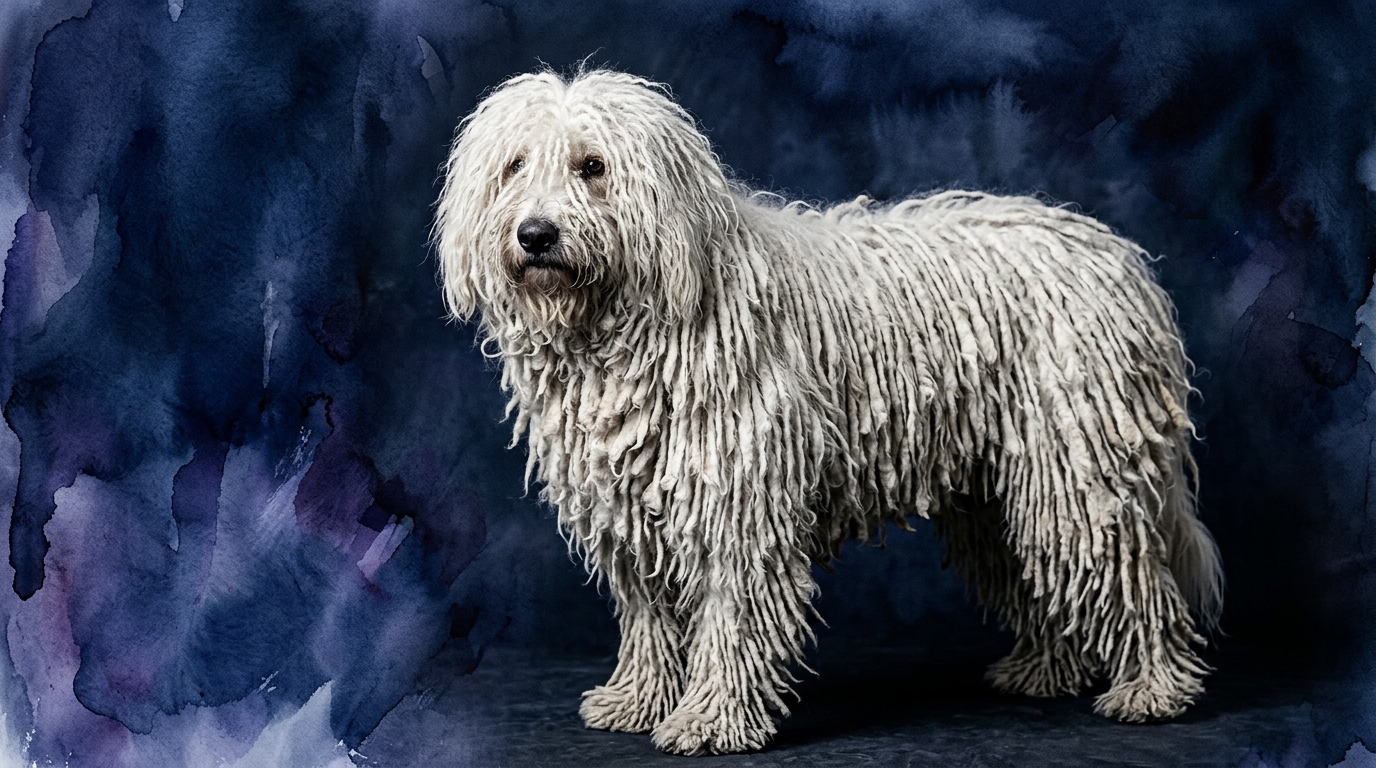
On paper, the Komondor and the Black Russian Terrier both register a consistent 3 out of 5 across all five dimensions of our Pet IQ Lab assessment: problem solving, training speed, social intelligence, instinctive drive, and memory. This numerical parity, however, belies significant differences in how these cognitive attributes manifest in practice, deeply rooted in their divergent historical roles and breed development. The Komondor, a venerable Hungarian livestock guardian, carries a Coren rank of #67, placing it in the average category for obedience and working intelligence. This ranking reflects its independence, a trait essential for a dog bred to autonomously protect flocks without constant human direction.
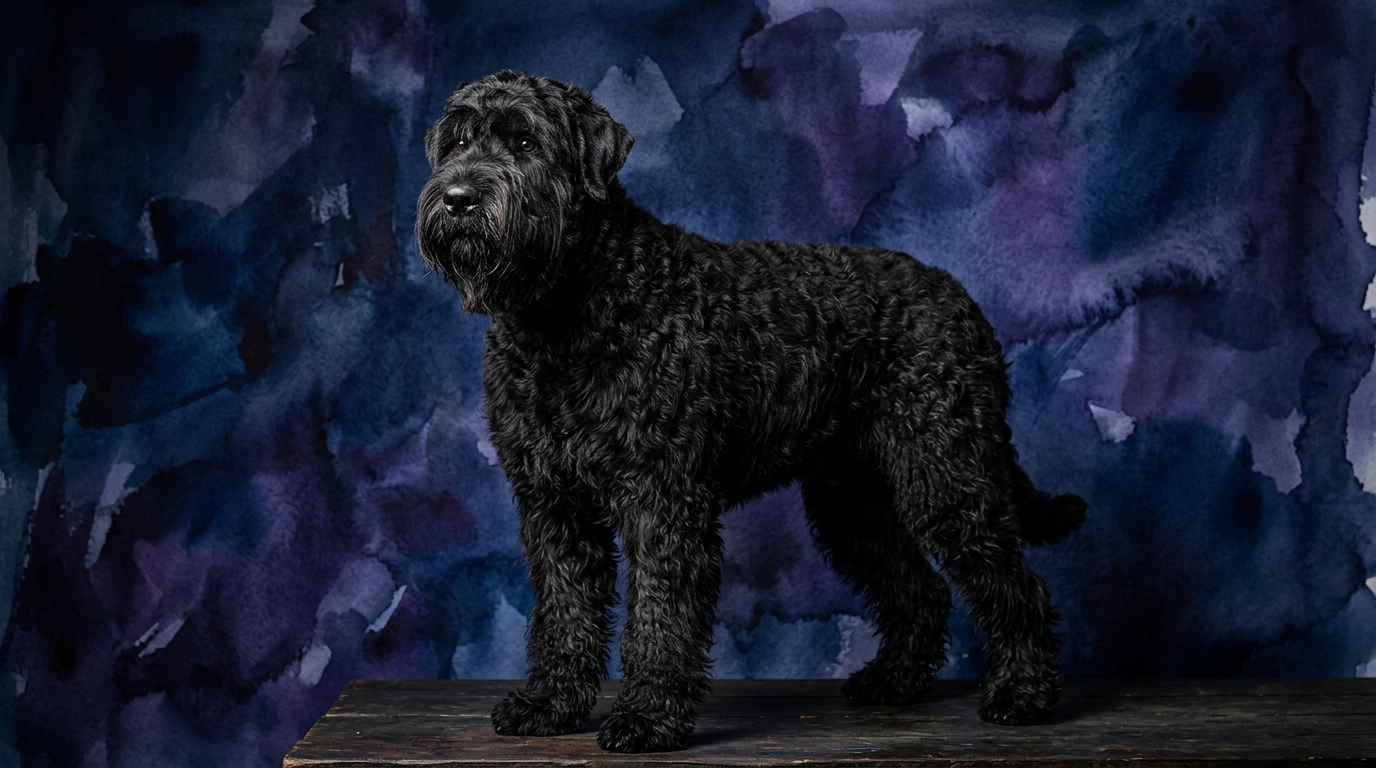
The Black Russian Terrier, in contrast, is not specifically listed in Coren's rankings, a detail that hints at its more recent and specialized development. Originating in Soviet Russia as a military dog, its cognitive strengths are geared towards complex protection tasks and high-level handler cooperation. For both breeds, a 3/5 in problem solving signifies a capacity to navigate novel situations, but the Komondor's approach is often self-directed and observational, while the BRT's is typically more task-oriented and responsive to cues. Similarly, a 3/5 in training speed for the Komondor might mean a deliberate learning style, focused on understanding the purpose of a command, whereas for the BRT, it implies a readiness to absorb intricate sequences, provided the motivation and leadership are clear. Their social intelligence, also rated 3/5, differs in application: the Komondor excels at reading its environment and potential threats to its charge, while the BRT focuses keenly on its handler and discerning intentions in human interactions. Finally, their instinctive drive at 3/5 is equally strong but channeled differently—Komondor towards vigilant, territorial guarding; BRT towards active, controlled defense. Their memory, a 3/5 for both, ensures they retain crucial information about their environment, training, and perceived threats.
Where the Komondor's Cognition Shines Brightest
The Komondor's cognitive strength lies prominently in its autonomous decision-making and nuanced environmental assessment, traits honed over centuries as an independent livestock guardian. Its problem-solving at 3/5 isn't about solving puzzles for human entertainment, but rather about independently evaluating complex, dynamic situations in a pasture. A Komondor must discern a genuine threat from a curious wanderer, identify a predator without direct command, and strategize its response to protect its flock, often without human intervention. This requires a sophisticated understanding of context and risk, blending its 'instinctive drive' for protection with a deep 'social intelligence' for its charges. It learns the routines of its flock and the patterns of its territory, utilizing its 3/5 memory to recall past encounters and potential danger zones.
This breed's 'social intelligence' (3/5) is uniquely focused on its protective duties, allowing it to interpret the subtle behaviors of livestock and the intentions of strangers approaching its charge. It's a quiet, observational intelligence that prioritizes vigilance and self-reliance over overt displays of obedience. While its 'training speed' is 3/5, this often reflects its need to process commands through the lens of its primary guarding instinct; it will comply if it perceives the command aligns with its duty or if it respects the authority of its human partner, but its initial response is often one of independent assessment. This breed's cognition excels in situations demanding unwavering, self-directed guardianship, where a dog must be both judge and protector.
Unpacking the Black Russian Terrier's Cognitive Edge
The Black Russian Terrier's cognitive prowess is distinguished by its capacity for complex, structured learning and its acute responsiveness within a working partnership. While its problem-solving is rated 3/5, this manifests as a strong ability to apply learned solutions to novel scenarios, particularly in protection and obedience work. Unlike the Komondor's independent assessment, the BRT's problem-solving often involves interpreting intricate commands and executing multi-step tasks under pressure, a legacy of its military origins. Its 'training speed' (3/5) is highly effective in a structured environment; these dogs are eager to engage in directed learning, absorbing and retaining complex obedience routines and protection protocols with notable efficiency. Their work ethic and desire to please a strong handler drive this aptitude.
The BRT's 'social intelligence' (3/5) is finely tuned to human cues and social dynamics, making it adept at discerning friend from foe and understanding the nuances of handler communication. This isn't just about reading body language, but about anticipating commands and responding with controlled precision, which is critical in protection roles. Its 'instinctive drive' (3/5) is powerfully channeled into defense and guarding, but always with the expectation of human direction and control, allowing for a highly versatile and adaptable working dog. The BRT's memory (3/5) ensures it retains vast amounts of training information, complex routines, and recognition of specific individuals or threats, making it a reliable and formidable partner in various demanding roles. This breed's cognition thrives on purpose, direction, and the challenge of mastering intricate tasks alongside its human.
Training Aptitude: Which Breed Offers an Easier Path?
When considering ease of training, the Black Russian Terrier generally offers a more straightforward path for handlers experienced with working breeds, largely due to its historical development and inherent temperament. While both breeds score 3/5 in 'training speed,' the BRT's history as a military dog instilled a strong drive to work cooperatively with a handler and a remarkable capacity for absorbing complex commands. They thrive on structure, consistency, and clear leadership, eager to engage in the learning process and apply their 'problem-solving' skills to master new tasks. Their focus on the handler and desire to please, combined with their robust 'memory,' make them highly receptive to traditional obedience and advanced protection training, provided the handler is firm, fair, and consistent.
The Komondor, by contrast, presents a greater challenge for standard obedience training. Its 3/5 'training speed' is tempered by its profound independence and an ancient breed purpose that demanded self-reliance. A Komondor was bred to think for itself, to make decisions without human input, and to question commands if they didn't align with its perceived duty of guarding. This isn't a lack of intelligence, but a different cognitive wiring; it often requires the Komondor to understand the 'why' behind a command rather than just accepting it. Training a Komondor demands immense patience, consistency, and a deep respect for its independent nature, often requiring more creative and less coercive methods. While both breeds require experienced handlers, the BRT's eagerness for structured work makes it 'easier' in the conventional sense of learning and executing commands, whereas the Komondor requires a handler who can appreciate and work with its inherent autonomy.
Matching Breeds to Lifestyles: Active vs. Relaxed Owners
The Komondor and Black Russian Terrier, despite both being working breeds, suit different owner lifestyles based on their cognitive and physical needs. A Komondor is an ideal fit for owners who can provide a large, secure property for them to patrol and guard, fulfilling their ingrained 'instinctive drive' and 'problem solving' needs for territorial oversight. While they are not high-energy dogs in the sense of needing intense, owner-participatory exercise like jogging or agility, they require mental stimulation through their guarding duties and appreciate an owner who respects their independent nature. 'Relaxed owners' in this context are those who value a self-sufficient guardian and understand that their dog’s 'activity' is often observational and protective, not necessarily handler-driven. They are not suited for apartment living or owners seeking a constant companion for active outings, but rather for those who appreciate a vigilant, autonomous presence.
The Black Russian Terrier, conversely, demands a truly 'active owner' who is deeply committed to rigorous training, consistent exercise, and constant mental engagement. Their 'instinctive drive' for protection and their capacity for 'problem solving' within a structured framework mean they need a job and a strong sense of purpose. This breed thrives on daily physical activity, such as long walks, runs, or structured play, combined with regular, advanced obedience and protection training. A 'relaxed owner' who cannot provide this level of engagement will find a BRT challenging, as their powerful physical and mental needs, coupled with their strong 'social intelligence' and desire to interact, can lead to destructive behaviors if not properly channeled. They are best suited for experienced handlers who are prepared to integrate their dog into an active, disciplined lifestyle, providing both physical exertion and complex cognitive tasks.
The Verdict
Choose the Komondor if you seek an independent, self-reliant guardian for a large property, valuing a dog that makes its own decisions in protection and requires an owner who respects its unique autonomy.
Opt for the Black Russian Terrier if you are an active, experienced owner committed to consistent, high-level training, desiring a powerful, responsive, and dedicated protection partner who thrives on purpose and strong leadership.
🧠 Find Your Pet's IQ Score
Our Pet IQ Lab assessment covers 25+ tests across 5 cognitive dimensions — personalized to your breed.
Take the Full IQ Test →Frequently Asked Questions
Do Komondors need extensive daily exercise like other working breeds?
Komondors require moderate physical exercise, but their primary need is mental stimulation through patrolling and guarding a secure territory. Unlike many working breeds, they don't necessarily need intense, owner-participatory activities; their 'activity' is often vigilant observation and independent assessment of their environment.
Is the Black Russian Terrier suitable for first-time dog owners?
The Black Russian Terrier is generally not recommended for first-time dog owners due to its powerful physical presence, strong protection instincts, and demanding training needs. They require an experienced, confident handler who can provide consistent leadership, extensive socialization, and rigorous training from a young age.
How do their protection instincts differ despite both being guardians?
The Komondor's protection instinct is largely independent and proactive, focused on guarding livestock and property with minimal human direction, stemming from its LGD heritage. The Black Russian Terrier's protection instinct is more handler-oriented and reactive, designed for controlled defense and complex protection work under specific human command, a trait from its military development.