
Side-by-Side IQ Profile
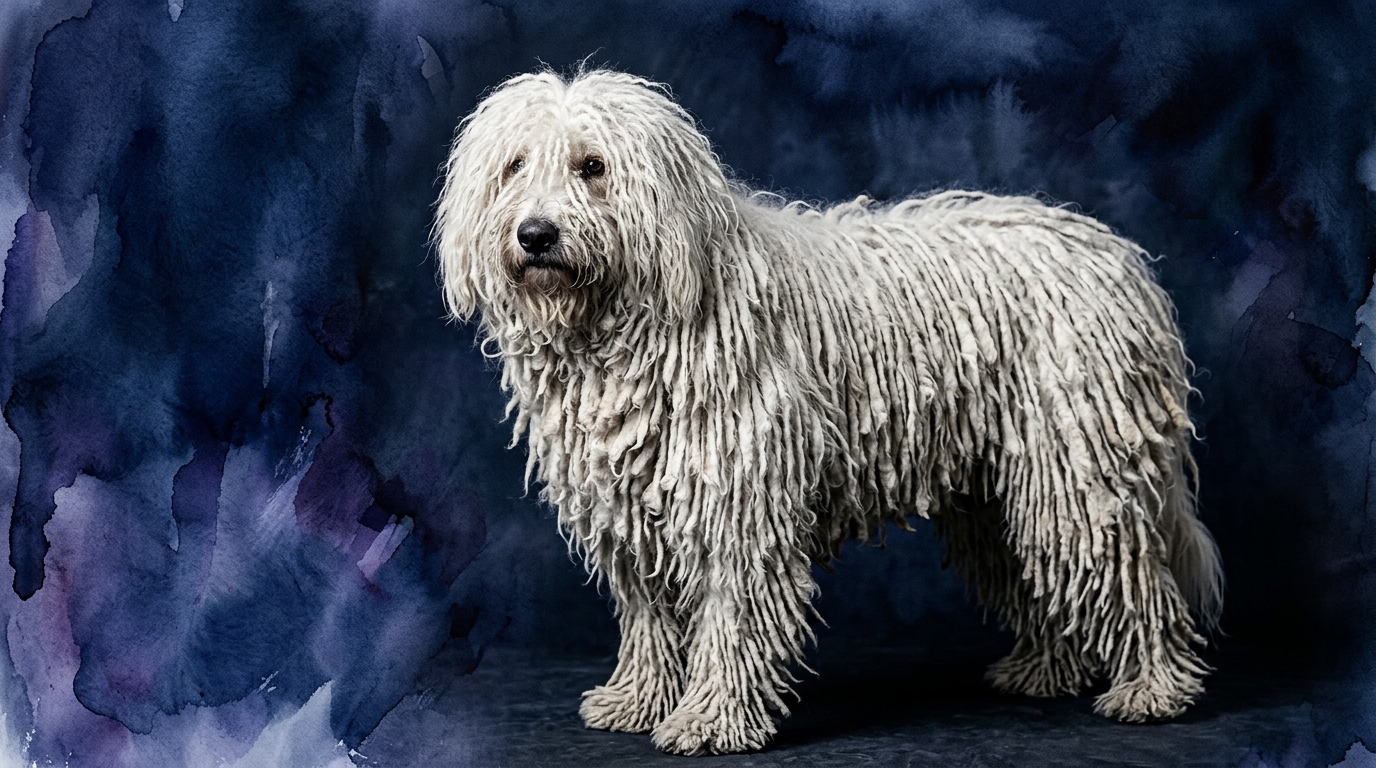
The Komondor, a majestic livestock guardian, exhibits a balanced yet independent cognitive profile (Coren Rank #67). Its Problem Solving at 3/5 reflects a capacity for autonomous decision-making in protecting flocks, often without direct human instruction, prioritizing observation over immediate action. Training Speed, also 3/5, indicates a deliberate learning pace, as these dogs are bred for steadfastness rather than rapid task acquisition, often requiring patience and consistency. Social Intelligence at 3/5 suggests a guarded, watchful disposition, capable of discerning threats but not inherently seeking broad social engagement. An Instinctive Drive of 3/5 points to a strong, inherent guardian instinct, driven by purpose rather than pure athleticism or game drive. Memory at 3/5 supports its ability to recall routines and identify flock members or potential dangers over time, though perhaps not with the same detail as a breed bred for complex sequences.
The Chesapeake Bay Retriever, a robust sporting dog, showcases a more reactive and partner-oriented cognitive makeup (Coren Rank #27). Its Problem Solving at 4/5 highlights an aptitude for navigating complex environments and figuring out solutions to retrieve game, often involving varied terrains and conditions. Training Speed, rated 4/5, indicates a quicker grasp of new commands and a strong desire to please and engage in structured learning, essential for a working retriever. Social Intelligence at 3/5 suggests a loyal and devoted bond with its chosen human family, though it may be reserved with strangers, a trait common in many working breeds. An Instinctive Drive of 3/5 points to a powerful drive for retrieving and working in challenging conditions, fueled by its desire to perform its traditional role. Memory at 4/5 is crucial for remembering fall locations, scent trails, and complex command sequences required for efficient game recovery.
Where Komondor Wins Cognitively
The Komondor's cognitive strengths truly shine in scenarios demanding independent judgment and unwavering vigilance. Its 3/5 Problem Solving, while not the highest, is perfectly adapted for its historical role of solitary flock protection; it's less about solving a puzzle for a human and more about assessing a threat and reacting appropriately without command. This breed excels at long-term, low-intensity monitoring, patiently observing its environment for subtle changes, a cognitive task requiring immense focus and environmental awareness. Its social intelligence, though rated 3/5, is specifically tailored for discerning friend from foe, making it acutely aware of its immediate "flock" and any perceived outsiders, rather than seeking broad social interaction. The Komondor's steadfast memory supports its ability to recognize patterns in its territory and the individual animals it guards, ensuring consistent guardianship over years.
Where Chesapeake Bay Retriever Wins Cognitively
The Chesapeake Bay Retriever demonstrates superior cognitive agility in tasks requiring cooperative effort and rapid adaptation. Its 4/5 Problem Solving rating reflects a breed that thrives on challenges, whether it's navigating dense cover to find a downed bird or figuring out how to retrieve an object from difficult terrain. This aptitude extends beyond physical tasks, enabling them to quickly understand new rules or expectations in training. The Chessie's 4/5 Training Speed is a significant advantage, allowing it to master complex sequences of commands and hand signals with impressive efficiency, crucial for field work where precision and responsiveness are paramount. Furthermore, its 4/5 Memory is a standout trait, enabling it to recall exact "fall" locations of multiple birds, remember intricate scent patterns, and retain a vast repertoire of learned behaviors, making it a highly reliable working partner.
Which Is Easier to Train and Why
Based on their respective IQ profiles, the Chesapeake Bay Retriever (Training Speed 4/5) is generally easier to train than the Komondor (Training Speed 3/5). The Chessie's higher training speed indicates a greater eagerness to engage with human instruction and a quicker understanding of new commands, driven by its strong desire to work collaboratively and retrieve. They thrive on positive reinforcement and clear directives, quickly forming associations between actions and rewards. In contrast, the Komondor's 3/5 training speed is indicative of its independent, guardian nature; they are not inherently motivated by repetitive drills or performing tricks for human approval. Training a Komondor requires immense patience, consistency, and a deep understanding of their innate drive to protect rather than obey every command instantly. While they can learn, their learning style is more about understanding the "why" behind a command, especially if it relates to their protective duties, rather than simply complying. Their cognitive independence means they may assess a situation and choose their own course of action if they perceive it as more effective for their guardian role, demanding a different approach from their handler.
Which Suits Active Owners vs Relaxed Owners
For owners seeking a highly active and engaged canine partner, the Chesapeake Bay Retriever is the clear choice. Its combination of 4/5 Problem Solving, 4/5 Training Speed, and a strong Instinctive Drive (3/5, focused on retrieving) means it thrives on consistent physical and mental stimulation, excelling in activities like hunting, dock diving, agility, or obedience trials. These dogs require owners who can commit to daily rigorous exercise and provide ongoing training and task-oriented engagement to satisfy their working drive. Conversely, the Komondor is better suited for owners who appreciate a more relaxed, yet vigilant, presence. While they require regular exercise and mental stimulation to prevent boredom, their energy output is typically less about high-intensity bursts and more about patrolling and observing their territory. A Komondor thrives with an owner who understands their independent nature, provides a clear, consistent structure, and values a loyal, albeit reserved, guardian companion, making them a fit for owners who prefer a less demanding training partner but are prepared for a dog with a strong will and protective instincts.
The Verdict
Choose the Komondor if you seek an independent, steadfast guardian who excels at autonomous decision-making and provides a watchful, protective presence, and you are prepared for a deliberate training journey.
Opt for the Chesapeake Bay Retriever if you desire an eager-to-please, highly trainable partner for active pursuits, capable of mastering complex tasks and thriving on collaborative work.
🧠 Find Your Pet's IQ Score
Our Pet IQ Lab assessment covers 25+ tests across 5 cognitive dimensions — personalized to your breed.
Take the Full IQ Test →Frequently Asked Questions
Is the Komondor difficult to train due to its intelligence score?
The Komondor's 3/5 Training Speed indicates it learns at a deliberate pace and values independence, not that it's unintelligent. It requires a patient, consistent handler who understands its guardian instincts and motivates it through purpose-driven tasks rather than rote repetition. Their cognitive strength lies in independent decision-making, which can be perceived as stubbornness in traditional obedience training.
How does the Chesapeake Bay Retriever's memory impact its daily life?
The Chessie's 4/5 Memory is a significant asset, allowing it to recall complex routines, remember specific locations, and retain a wide array of commands. This sharp memory contributes to its reliability in field work, its ability to learn new tricks quickly, and its overall adaptability to various tasks and environments. It helps them be more consistent in learned behaviors.
Can a Komondor and a Chesapeake Bay Retriever live together peacefully?
Yes, with proper socialization from a young age and careful management, these breeds can coexist. The Komondor's guarded social intelligence means it might be reserved, while the Chessie's drive could be misinterpreted. Early introductions and consistent training are crucial to ensure mutual respect and understanding between their distinct temperaments.