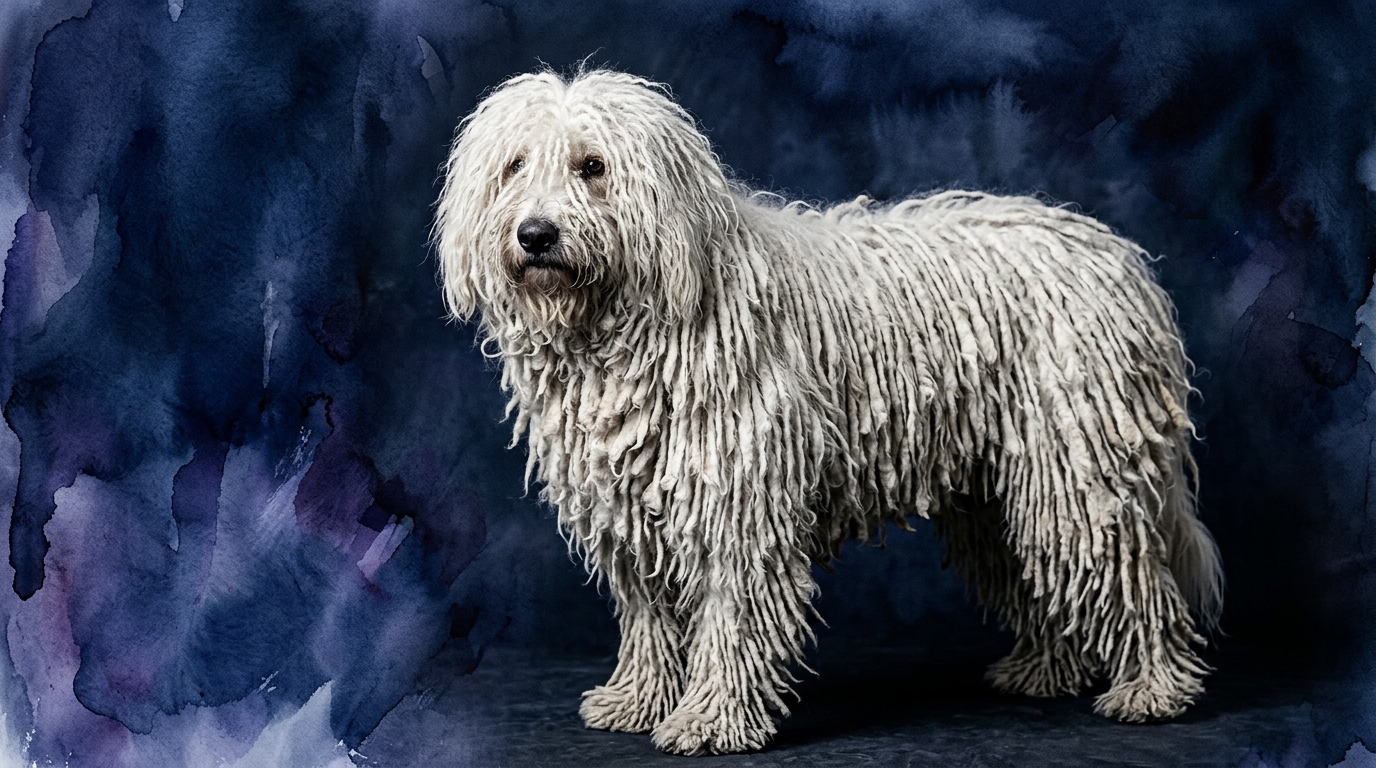

Side-by-Side Cognitive Profiles: Decoding the 3/5 Score
At The Cosmic Pet Pet IQ Lab, both the Komondor (Coren rank #67) and the Chow Chow (Coren rank #76) register a uniform 3/5 across all five measured cognitive dimensions. This identical numerical assessment, however, belies significant differences in how these scores manifest in their daily lives and interactions. A score of 3/5 indicates a moderate level of aptitude, suggesting that neither breed is at the extreme ends of the cognitive spectrum, but rather capable and competent within their own unique contexts.
For the **Komondor**, a 3/5 in **Problem Solving** reflects their historical role as independent livestock guardians; they are adept at assessing threats to their flock and devising solutions without direct human command, such as strategically positioning themselves or intimidating predators. Their **Training Speed** at 3/5 means they learn new commands at a moderate pace, often requiring repetition and clear purpose, but will retain them once understood, especially if the task aligns with their protective instincts. **Social Intelligence** at 3/5 highlights their discerning nature, quickly identifying family members versus strangers and understanding subtle shifts in pack dynamics within their trusted circle. Their **Instinctive Drive** is a strong 3/5, rooted in their inherent protective and guarding behaviors. Finally, a **Memory** score of 3/5 indicates they effectively recall experiences, commands, and social interactions, particularly those pertinent to their role as a guardian.
The **Chow Chow's** 3/5 in **Problem Solving** often manifests in a more internal, self-serving manner; they are capable of navigating their environment and managing their resources to maintain personal comfort and boundaries, rather than solving problems for others. Their **Training Speed** at 3/5 suggests they can learn, but their independent and sometimes aloof nature means they often decide if and when to apply what they've learned, requiring patience and motivation from the trainer. A 3/5 in **Social Intelligence** points to their ability to observe and understand social cues, though they frequently choose to remain aloof, prioritizing their own space and limited social circle. Their **Instinctive Drive** also registers a 3/5, primarily expressed through strong territoriality and a drive for self-preservation and autonomy. A **Memory** score of 3/5 means they possess a good recall for routines, boundaries, and past interactions, especially those that reinforce their preferred lifestyle or comfort.
Where the Komondor Excels Cognitively
The Komondor's cognitive strengths lie in their proactive application of their moderate intelligence, particularly in scenarios requiring independent judgment and protective action. Their 3/5 Problem Solving isn't about parlor tricks, but about real-world vigilance: assessing a potential threat to their family or property, evaluating the best course of action, and acting decisively. This involves complex environmental scanning and decision-making, such as determining if a strange sound is merely a gust of wind or an intruder, and then responding appropriately. Their Instinctive Drive, deeply intertwined with their problem-solving, allows them to leverage their memory of past encounters and learned behaviors to protect their charges effectively. A Komondor remembers who belongs and who doesn't, and this memory fuels their consistent vigilance. They excel at processing information related to security and family well-being, making them exceptional at their original purpose. This breed's cognitive prowess shines when given a 'job' that taps into their innate desire to guard and protect, utilizing their moderate social intelligence to differentiate friend from foe with keen accuracy.
Where the Chow Chow Excels Cognitively
The Chow Chow's cognitive advantages are rooted in their discerning nature and self-sufficiency, often manifesting as a quiet, observant wisdom. Their 3/5 Problem Solving capability allows them to skillfully manage their own comfort and boundaries, navigating social situations by choosing engagement or disengagement. They are masters of filtering out irrelevant stimuli, demonstrating a selective attention that conserves their mental energy for what truly matters to them. This selective focus can be interpreted as stubbornness, but it is also a cognitive strength: an ability to prioritize their own needs and preferences. Their Social Intelligence, while scoring 3/5, is expressed through a profound understanding of their immediate family's emotional states and routines, even if they don't always outwardly respond with effusive displays. The Chow Chow's memory, also a 3/5, contributes to their consistent adherence to established rules and boundaries, making them reliable in their routines once they accept them. They remember past interactions and will hold grudges or favor based on these experiences, which contributes to their reputation for being particular. This breed excels in quiet observation and a deep, albeit reserved, understanding of their immediate world, leveraging their cognitive scores for personal autonomy and a dignified presence.
Training Dynamics: Independence vs. Self-Possession
While both breeds share a 3/5 in Training Speed, the practical experience of training a Komondor versus a Chow Chow differs significantly due to their underlying temperaments and motivations. The Komondor, with its working background, can be easier to train if the tasks presented align with its protective instincts or provide a clear purpose. They are independent thinkers, meaning they might question commands or seek to understand the 'why' behind them, but once convinced of the value, their moderate memory and problem-solving skills allow for consistent performance. Training a Komondor involves channeling their drive and intelligence, often requiring a confident leader who can communicate expectations clearly and consistently, appealing to their desire to be a contributing member of the 'flock'. They respond well to positive reinforcement that acknowledges their efforts in fulfilling a role.
The Chow Chow, on the other hand, presents a unique training challenge despite its identical 3/5 Training Speed. Their self-possessed and often aloof nature means they are less inclined to blindly follow commands. Their moderate problem-solving is often applied to determining if a command is worth their effort or if they can find an alternative. Training a Chow Chow requires immense patience, consistency, and a deep understanding of their independent spirit. They respond best to methods that respect their dignity, avoid force, and offer clear, concise cues. Motivation must come from building a strong, respectful bond, rather than relying on an eager-to-please mentality. While they remember commands (3/5 memory), their willingness to execute them depends entirely on their current inclination and perceived value. They are not necessarily difficult to teach new behaviors, but they are often difficult to compel to perform them on demand, reflecting their strong instinctive drive for autonomy.
Matching Breeds to Lifestyles: Active Engagement vs. Quiet Companionship
The Komondor and Chow Chow, despite their similar cognitive scores, are suited for vastly different owner lifestyles. The Komondor, while not requiring constant physical exertion in the way a herding dog might, absolutely thrives with owners who can provide mental engagement and a sense of purpose. An 'active owner' for a Komondor means someone who is actively involved in guiding their dog's protective instincts, whether through formal training, responsible property guardianship, or participation in dog sports that leverage their problem-solving and vigilance. They need space, a 'flock' to oversee, and consistent, fair leadership. Owners should be prepared for a dog that is always 'on duty' in some capacity, processing its environment and making judgments based on its strong instinctive drive.
The Chow Chow, conversely, is better suited for 'relaxed owners' in terms of physical activity, but this does not imply a passive ownership style. A relaxed owner for a Chow Chow is someone who appreciates a discerning, independent companion and is willing to respect their need for personal space and quiet dignity. While they enjoy moderate walks, their primary need is for a stable, predictable home environment where their boundaries are understood and honored. Owners must be consistent, patient, and prepared for a dog that will not be overly demonstrative but will offer loyal, self-possessed companionship. Their cognitive strengths are best appreciated by owners who value a dog's quiet observation and independent decision-making, rather than constant eager participation.
The Verdict
Choose the Komondor if you seek a vigilant, independent protector who thrives on having a clear purpose and an owner willing to channel their strong instinctive drives and problem-solving skills into a meaningful role.
Opt for the Chow Chow if you value a self-possessed, discerning companion who offers quiet loyalty, and you are prepared to respect their independent nature and preference for clear boundaries and a stable, calm environment.
🧠 Find Your Pet's IQ Score
Our Pet IQ Lab assessment covers 25+ tests across 5 cognitive dimensions — personalized to your breed.
Take the Full IQ Test →Frequently Asked Questions
Do Komondors and Chow Chows get along with other pets?
Komondors, with their guarding instincts, can coexist with other animals they consider part of their 'flock' if properly socialized from a young age, often extending their protective nature to them. Chow Chows, being more independent and sometimes territorial, typically prefer to be the sole pet or live with very calm, respectful companions, and early, consistent socialization is crucial for any multi-pet household.
Are Komondors or Chow Chows good with children?
Komondors can be excellent family protectors and are generally good with children they consider part of their family, often displaying a gentle patience, though supervision is always advised due to their size. Chow Chows, while loyal to their immediate family, are often reserved and less tolerant of boisterous play from children outside their inner circle, requiring careful supervision and teaching children to respect their space.
Which breed is more prone to behavioral issues if not properly managed?
Both breeds can develop behavioral issues without appropriate management, but the nature differs: Komondors might exhibit excessive guarding or become overly protective if not given clear guidance and socialization, while Chow Chows can become overly territorial or withdrawn if their independence is not respected or if they lack consistent, calm leadership. Understanding their innate drives is key to preventing problems.