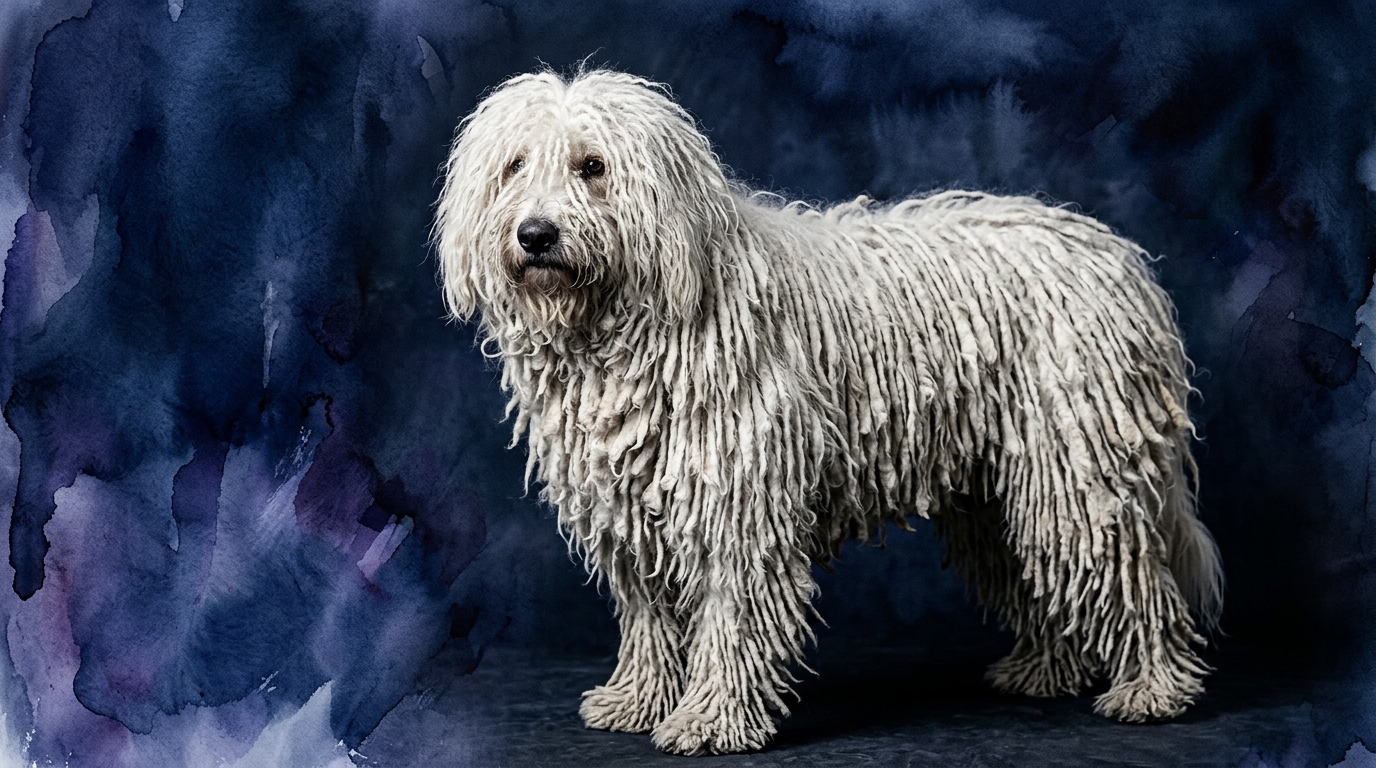

Side-by-Side IQ Profile: Deconstructing Identical Scores
**Problem Solving (3/5):** For the Komondor, this score reflects an innate capacity for independent decision-making in protecting livestock. They excel at assessing potential threats, discerning friend from foe, and formulating defensive strategies without direct human command, often patrolling territories and reacting autonomously. The Clumber Spaniel's 3/5 in problem-solving manifests differently, centered on its role as a gundog. This breed skillfully navigates dense undergrowth, uses its formidable scenting ability to locate game, and intelligently retrieves, adapting to varied terrain and conditions while working cooperatively with a handler.
**Training Speed (3/5):** A Komondor's 3/5 training speed is often tempered by its inherent independence and critical assessment of commands. They learn, but often need to understand the “why” behind an instruction, particularly if it conflicts with their guarding instincts; consistency and mutual respect are key. The Clumber Spaniel, also rated 3/5, generally exhibits a more biddable nature during training. They respond well to positive reinforcement and clear guidance, eager to please their handler, though their enthusiasm for scent trails can sometimes present a distraction that requires patient redirection.
**Social Intelligence (3/5):** The Komondor's social intelligence is deeply rooted in its protective role. They form profound bonds with their “flock” – be it human family or livestock – understanding social dynamics within their trusted circle and demonstrating fierce loyalty, but are reserved and often wary of strangers, processing new social interactions carefully. The Clumber Spaniel, with its 3/5, displays a more generally gregarious social intelligence. They are known for their gentle and affectionate nature within their family, often seeking companionship and understanding human moods and intentions, making them adaptable to various social settings once comfortable.
**Instinctive Drive (3/5):** For the Komondor, the 3/5 instinctive drive is overwhelmingly focused on guarding. This manifests as a powerful territorial instinct, a profound desire to protect, and an innate understanding of threats, often expressed through watchful patrolling and a deep sense of responsibility. The Clumber Spaniel's 3/5 instinctive drive centers on its sporting heritage. They possess a strong drive to scent, flush, and retrieve, exhibiting persistent enthusiasm for fieldwork; their instincts guide them through cover and towards game, driven by an innate desire to perform their historical hunting tasks.
**Memory (3/5):** The Komondor's 3/5 memory is critical for its guarding duties. They remember specific territories, routines of their charges, and previous encounters, allowing them to anticipate and react effectively to familiar and novel situations; this memory contributes to their reliability as a protector. The Clumber Spaniel's 3/5 memory is equally robust, particularly concerning learned commands, training sequences, and the layout of hunting grounds. They effectively recall scent patterns, retrieve locations, and the specific tasks associated with working alongside a handler, demonstrating consistent performance over time.
Where the Komondor Wins Cognitively
The Komondor's cognitive strengths truly shine in its capacity for autonomous decision-making and strategic defense. While both breeds score 3/5 in problem-solving, the Komondor's application is uniquely independent; they are masters of assessing complex, evolving threats to their charges without constant human input. This involves not just reacting, but proactively establishing deterrents, identifying vulnerabilities in their territory, and making nuanced judgments about when to observe, when to warn, and when to act. Their instinctive drive (3/5) fuels this, translating into a deeply ingrained understanding of protective roles that few other breeds possess. This self-reliance in high-stakes situations, coupled with a memory (3/5) for past events and territory specifics, allows them to operate as highly effective, self-sufficient guardians. Their social intelligence (3/5), though outwardly reserved, is acutely tuned to the safety and well-being of their specific “flock,” giving them a unique cognitive advantage in protective roles.
Where the Clumber Spaniel Wins Cognitively
The Clumber Spaniel's cognitive brilliance lies in its cooperative intelligence and nuanced application of learned skills within a partnership. Despite an identical 3/5 in problem-solving, the Clumber excels at interpreting subtle human cues and applying complex learned behaviors in dynamic environments, particularly in the field. Their training speed (3/5) allows them to absorb and retain a wide array of commands, which they then deploy with precision during hunting, navigating challenging terrain, and performing intricate retrieves. Their instinctive drive (3/5) for scenting and retrieving is not just raw impulse; it's channeled and refined through training into a highly effective working partnership. The Clumber's social intelligence (3/5) also plays a pivotal role here, fostering a strong desire to work *with* their handler, making them exceptionally attuned to the collaborative demands of their historical role. This combination of biddability, focused instinct, and adaptability within a human-dog team gives them a distinct cognitive edge in cooperative endeavors.
Which is Easier to Train and Why
Between these two breeds, the Clumber Spaniel is generally considered easier to train for conventional obedience and cooperative tasks. While both have a 3/5 training speed, the Clumber's inherent biddability and desire to please its handler significantly streamline the process. They are typically more receptive to commands and less likely to question the necessity of an instruction, making them more straightforward to guide through basic and advanced training. Their social intelligence (3/5) facilitates this, as they thrive on positive interaction and praise from their human companions.
The Komondor, by contrast, presents a greater training challenge due to its profound independence and historical role as an autonomous guardian. Their 3/5 training speed is coupled with a need for commands to make sense within their protective framework. They often require a trainer who understands their critical thinking and respects their independent nature. Training a Komondor often feels more like a negotiation than simple instruction, requiring immense patience, consistency, and a deep understanding of canine psychology to earn their cooperation and trust, rather than mere compliance.
Which Suits Active Owners vs. Relaxed Owners
Neither the Komondor nor the Clumber Spaniel are ideal for truly “relaxed” owners in the sense of minimal engagement; both require dedicated mental and physical stimulation, but the *nature* of that engagement differs significantly.
The Komondor is better suited for owners who are active in their dedication to a protective companion. This isn't about running marathons together, but rather providing a secure territory, understanding and managing strong guarding instincts, and engaging in consistent, patient training that respects their independence. Owners must be “active” in their leadership, providing structure and mental challenges related to their protective role. They thrive with owners who appreciate a dog that thinks for itself and is prepared for the responsibilities that come with a powerful, discerning guardian.
The Clumber Spaniel, while not a high-energy “active” dog in the traditional sense, suits owners who enjoy moderate outdoor activities and cooperative engagement. They are ideal for those who want an active partner for long, leisurely walks, scent games, or even participation in dog sports like obedience or tracking. Their sporting background means they benefit from regular opportunities to use their nose and retrieve. Owners who enjoy consistent, positive training sessions and value a steadfast, affectionate companion for family life and outdoor exploration will find the Clumber Spaniel a rewarding fit.
The Verdict
Choose the Komondor if you are an experienced owner seeking a fiercely independent and dedicated guardian, prepared to manage a strong protective instinct with consistent, respectful leadership and an understanding of its autonomous nature.
Opt for the Clumber Spaniel if you desire a biddable, affectionate companion for moderate outdoor activities, who thrives on cooperative training and forms a deep, loyal bond within a family setting.
🧠 Find Your Pet's IQ Score
Our Pet IQ Lab assessment covers 25+ tests across 5 cognitive dimensions — personalized to your breed.
Take the Full IQ Test →Frequently Asked Questions
Do Komondors get along with other pets?
Komondors can coexist with other pets, especially if raised with them from a young age, viewing them as part of their “flock.” However, their strong guarding instincts mean new introductions require careful supervision and a slow, controlled process.
Are Clumber Spaniels good family dogs?
Clumber Spaniels are generally considered excellent family dogs, known for their gentle, affectionate nature and patience with children. They thrive on companionship and integrate well into family life, often forming strong bonds with all members.
What kind of mental exercise do Komondors need?
Komondors need mental exercise that taps into their protective instincts, such as patrolling their territory, observing their environment, and making independent judgments. Puzzle toys and problem-solving tasks that reinforce their role as a guardian can also be beneficial.