Side-by-Side Cognitive Profiles
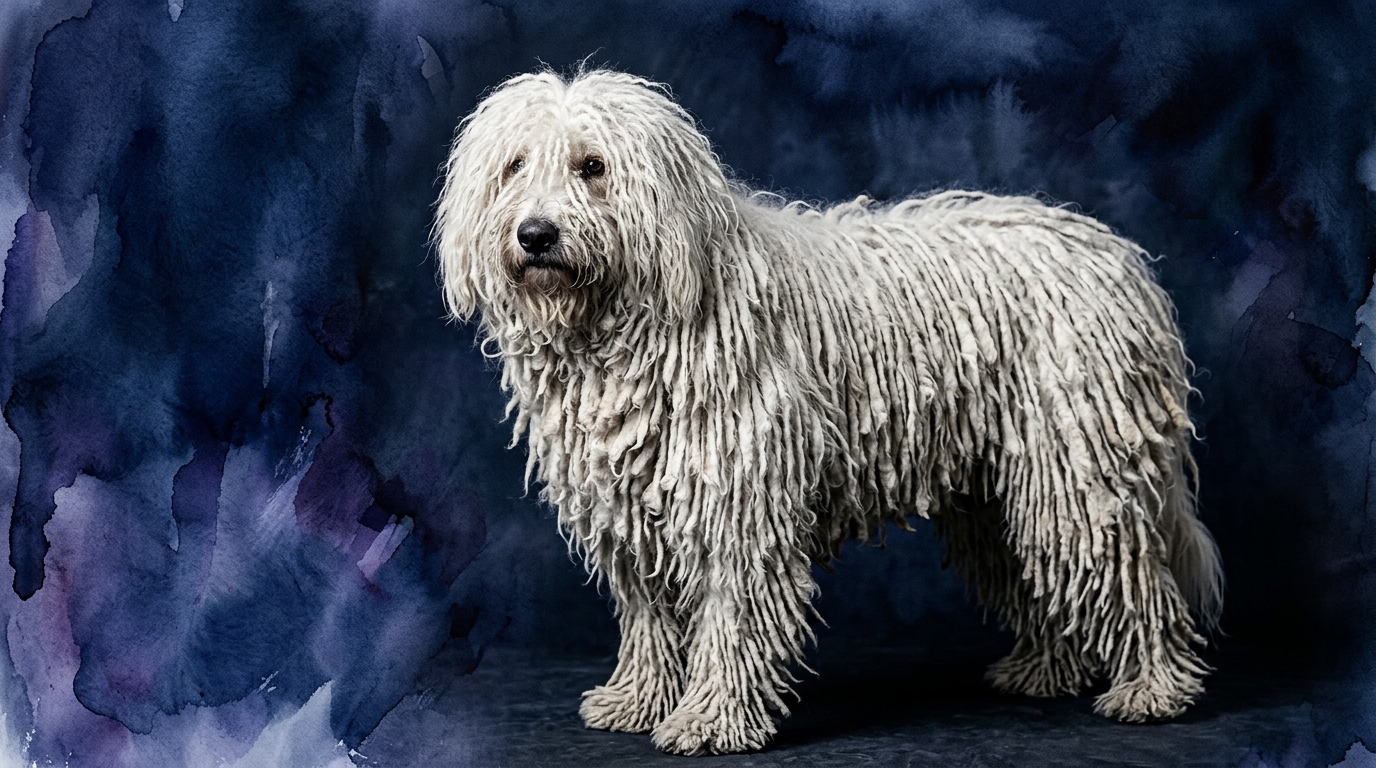
The Komondor, a majestic member of the Working Group with a Coren ranking of #67, exhibits a cognitive blueprint perfectly adapted for its historical role as a livestock guardian. Its Problem Solving at 3/5 is less about puzzle-solving and more about assessing dynamic environmental threats and making independent protective decisions. Training Speed, also 3/5, reflects its capacity to learn, but often with an inherent skepticism or a tendency to weigh commands against its own judgment of the situation. Social Intelligence, rated 3/5, is keenly focused on discerning threats from allies within its perceived flock, leading to a reserved, watchful demeanor towards strangers. Instinctive Drive at 3/5 is predominantly channeled into territorial defense and vigilance, rather than a prey or retrieving drive. Its Memory, at 3/5, supports its ability to recall established boundaries, recognized individuals, and past threats, crucial for consistent guardianship.
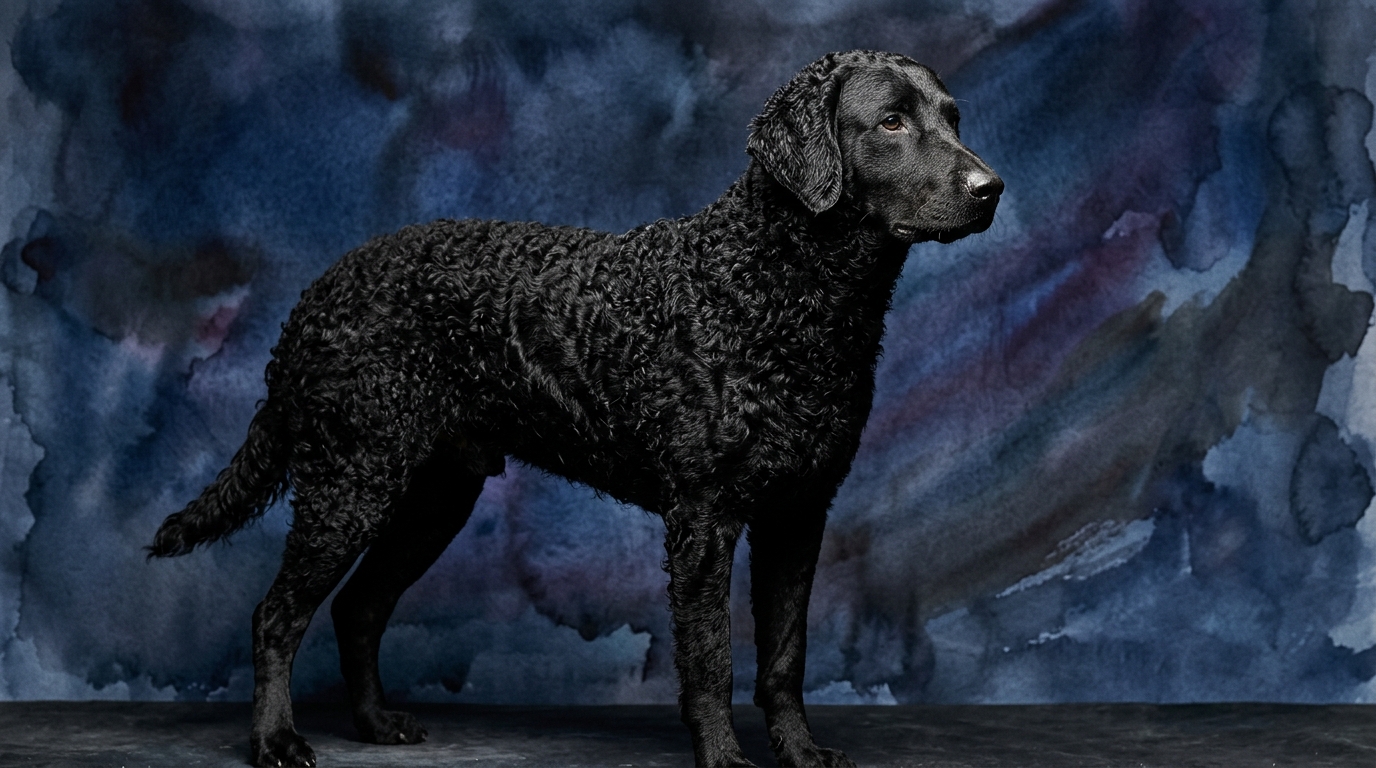
In contrast, the Curly-Coated Retriever, a Sporting Group dog with a higher Coren ranking of #41, presents a cognitive profile optimized for cooperative partnership and task execution. Its Problem Solving, also 3/5, manifests as practical ingenuity in navigating terrain or overcoming obstacles to retrieve game, demonstrating resourcefulness in its primary function. Training Speed, at 3/5, indicates a willingness to learn and an eagerness to engage in structured activities, though they can become bored without varied mental stimulation. Social Intelligence, also 3/5, is geared towards reading human cues and collaborating effectively with a handler, fostering a strong, interactive bond. Instinctive Drive at 3/5 is heavily weighted towards retrieving, displaying a strong drive to carry and bring objects. A standout difference is its Memory, rated 4/5, which allows for superior retention of complex command sequences, marked fallen game locations, and past training lessons, contributing significantly to its effectiveness in field work.
Where the Komondor Excels Cognitively
The Komondor's cognitive strengths are deeply rooted in its independent guardian heritage, making it a master of autonomous decision-making in protective scenarios. Its Problem Solving, while rated 3/5, is specifically tailored for evaluating potential threats without direct human oversight. This manifests as a nuanced ability to differentiate between a genuinely dangerous intruder and an innocent passerby, or to assess the intentions of an unfamiliar animal approaching its flock. This isn't about solving complex obedience drills but about real-world situational awareness and threat assessment, a critical cognitive function for a solitary protector.
Furthermore, its Social Intelligence, at 3/5, is a specialized form of perception, allowing it to maintain a vigilant watch over its family or territory. It develops a profound understanding of its 'flock' members, recognizing their routines and subtle cues, while remaining aloof and discerning with outsiders. This allows the Komondor to act as a living alarm system and deterrent, relying on its internal judgment to protect its charges effectively. Its Instinctive Drive, also 3/5, is almost entirely dedicated to this protective role, providing an unwavering commitment to its perceived duties, making it an unwavering sentinel rather than a participant in active games or sports.
Where the Curly-Coated Retriever Excels Cognitively
The Curly-Coated Retriever truly shines in areas demanding memory, cooperation, and adaptability, reflecting its Sporting Group lineage. Its most notable cognitive advantage is its Memory, scoring a robust 4/5 compared to the Komondor's 3/5. This superior recall allows a Curly to master and retain a wider array of commands and complex sequences, making multi-stage retrieves or intricate agility courses more manageable. They can remember precise locations of fallen game, even after significant time or distraction, a critical skill for their intended purpose. This enhanced memory also contributes to faster re-learning of previously taught skills, making intermittent training more effective.
Beyond memory, the Curly-Coated Retriever's higher Coren ranking (#41) suggests a greater overall capacity for understanding and executing human commands, underpinning its cooperative nature. Its Problem Solving (3/5) is expressed through practical application, such as finding the most efficient path to a retrieve or navigating challenging terrain. Coupled with its Social Intelligence (3/5), which is oriented towards partnership, the Curly excels at interpreting handler signals and working in tandem to achieve a goal. This makes them highly responsive and eager to please in structured environments, a stark contrast to the Komondor's more independent approach.
Trainability: A Tale of Two Temperaments
When considering ease of training, the Curly-Coated Retriever generally presents a more straightforward path for the average owner, primarily due to its breed purpose and underlying cognitive architecture. Its higher Coren ranking indicates a greater propensity for understanding and obeying human commands, and its 4/5 Memory score means it retains lessons more efficiently. Curly-Coated Retrievers are bred to work in close partnership with humans, possessing a natural biddability and a desire to please. While their Training Speed is 3/5, similar to the Komondor, their approach to learning is typically more enthusiastic and less prone to independent interpretation, making them receptive to positive reinforcement and consistent guidance.
The Komondor, despite also having a 3/5 Training Speed, presents a more nuanced training challenge. As a livestock guardian, it was bred to think and act independently, often making decisions based on its own assessment of a situation rather than blindly following commands. This manifests as a dog that might 'question' a command if it doesn't align with its perceived duty or if it deems the instruction unnecessary. Training a Komondor requires immense patience, consistency, and a deep understanding of its guardian mindset. Owners must establish themselves as benevolent leaders, earning the Komondor's respect through fair and clear communication, rather than expecting eager compliance. While it can certainly learn, its inherent independence means training is often a longer, more dedicated process focused on building a trusting partnership.
Matching Breeds to Lifestyles: Active vs. Relaxed Owners
For owners seeking a physically active companion who thrives on engagement and purpose, the Curly-Coated Retriever is an excellent match. This breed requires regular, vigorous exercise to satisfy its Sporting Group drive, enjoying activities like retrieving, swimming, hiking, and canine sports. Their need for mental stimulation is equally robust, making them ideal for owners who enjoy consistent training, puzzle toys, and new challenges. A Curly-Coated Retriever will not be content with short walks and minimal interaction; they flourish when given a 'job' to do, whether it's competitive obedience, agility, or simply being an active outdoor partner.
The Komondor, while requiring a strong cognitive engagement from its owner, is better suited for individuals who appreciate a more watchful, independent presence rather than a constant playmate. Physically, once their territory is established and secured, Komondors can be surprisingly calm and relaxed indoors, often content to observe their surroundings from a comfortable vantage point. However, their mental needs are significant: early and extensive socialization is crucial to shape their protective instincts appropriately, and consistent, fair leadership is vital to manage their independent nature. Owners must be prepared to invest in understanding and respecting the Komondor's unique guardian temperament, providing a secure environment and clear boundaries, rather than expecting a highly active, biddable companion.
The Verdict
Choose the Komondor if you seek an independent, vigilant guardian capable of autonomous decision-making and are prepared to navigate a training journey built on mutual respect and understanding of its unique protective instincts.
Opt for the Curly-Coated Retriever if you desire an active, cooperative partner for sports or outdoor adventures, valuing its superior memory, trainability, and eagerness to engage in a wide array of activities alongside its human companion.
🧠 Find Your Pet's IQ Score
Our Pet IQ Lab assessment covers 25+ tests across 5 cognitive dimensions — personalized to your breed.
Take the Full IQ Test →Frequently Asked Questions
Is a Komondor hard to train?
Training a Komondor requires significant patience and consistency due to its independent, guardian nature. It will learn, but often weighs commands against its own judgment, meaning owners must earn its respect and understand its inherent drive to protect rather than simply obey.
What kind of mental stimulation does a Curly-Coated Retriever need?
A Curly-Coated Retriever thrives on mental challenges that engage its retrieving drive and problem-solving skills, such as advanced obedience, agility, scent work, or complex puzzle toys. Consistent training sessions and varied activities are crucial to prevent boredom and channel its energy constructively.
How do their social behaviors differ?
The Komondor is typically reserved and discerning with strangers, prioritizing the protection of its family, while the Curly-Coated Retriever is generally more outgoing and eager to interact, especially with those it perceives as friendly. Both have strong social bonds with their immediate families, but their initial approach to outsiders varies significantly.