Side-by-Side Cognitive Profiles
While both the Komondor and Finnish Spitz register a consistent 3/5 across The Cosmic Pet Pet IQ Lab's five cognitive dimensions, the application and manifestation of these capacities are deeply intertwined with their historical roles. These scores indicate a solid, functional intelligence that is neither overtly complex nor overly simplistic, but rather purpose-built.
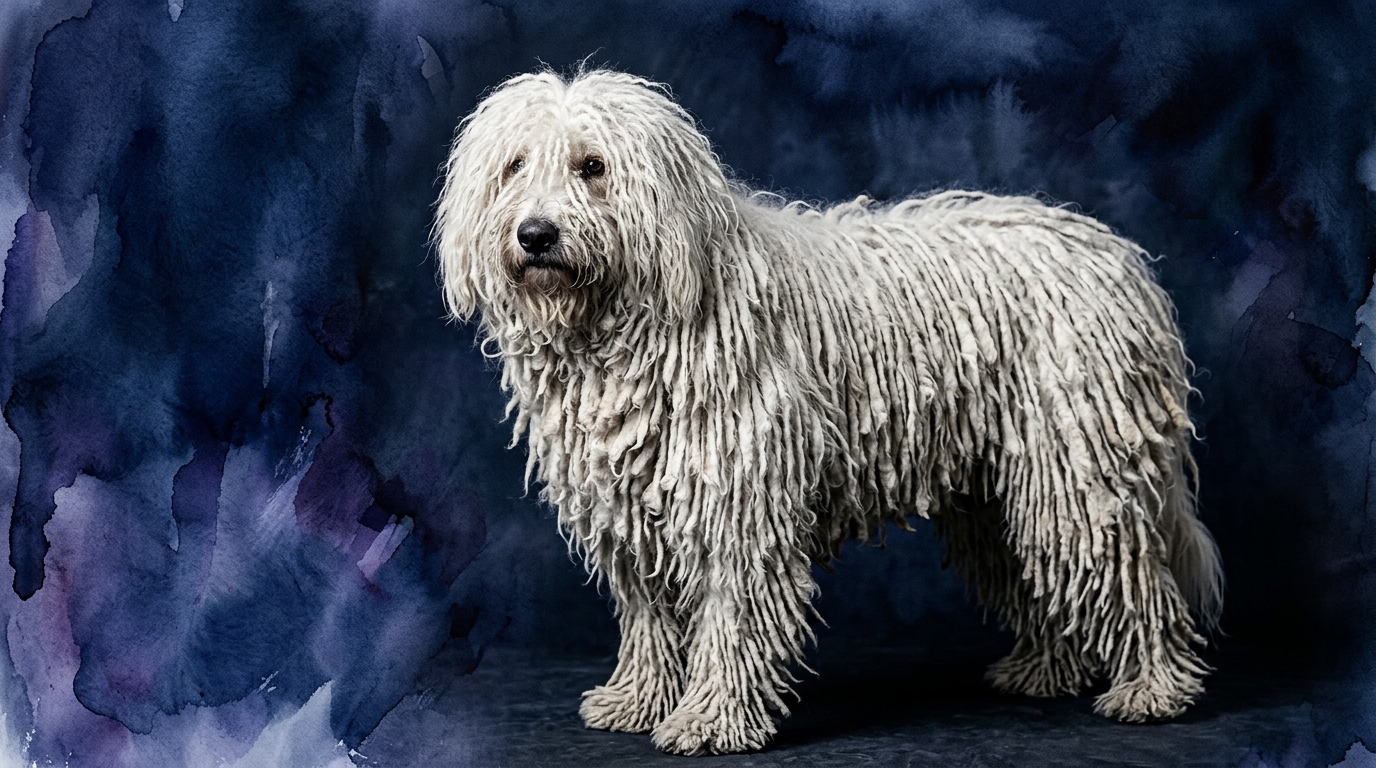
For the **Komondor**, a majestic livestock guardian, **Problem Solving (3/5)** centers on strategic territorial defense, assessing potential threats, and making autonomous decisions to protect their flock without direct human command. Their **Training Speed (3/5)** reflects an ability to learn, but often requires understanding the 'why' from their independent perspective, rather than rote obedience. **Social Intelligence (3/5)** is keenly developed for discerning between trusted family members, the protected flock, and potential intruders, rather than broad friendliness. Their **Instinctive Drive (3/5)** is overwhelmingly focused on guarding, vigilance, and protection, a core aspect of their cognitive makeup. Finally, **Memory (3/5)** is robust for retaining knowledge of safe boundaries, regular routines, and individuals perceived as threats or allies.
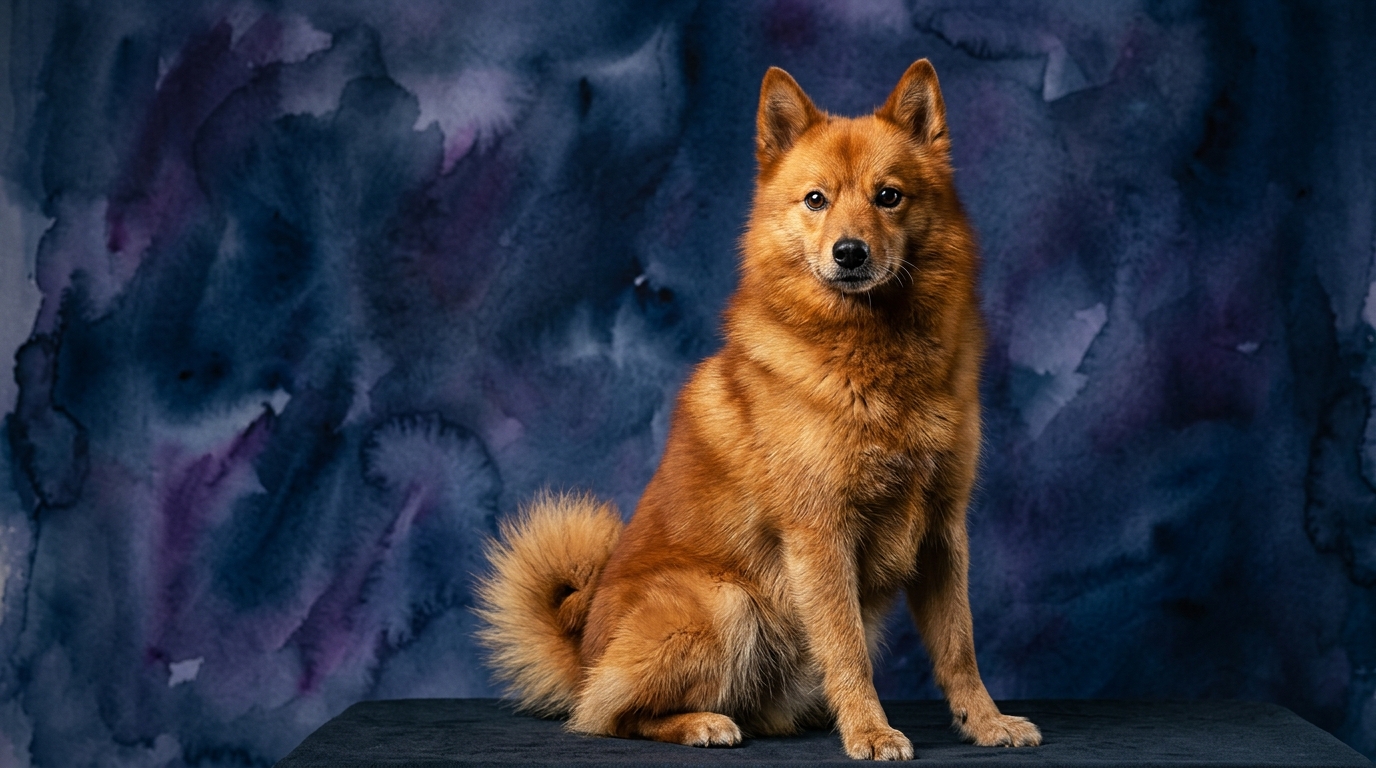
The **Finnish Spitz**, an agile hunting companion, applies its cognitive capacities differently. Its **Problem Solving (3/5)** excels in independent hunting strategies, such as locating game, navigating dense terrain, and figuring out how to flush prey. **Training Speed (3/5)** indicates a capacity to grasp commands, though their independent nature and strong prey drive can present challenges, demanding engaging and patient instruction. Their **Social Intelligence (3/5)** is alert and observant within their family unit and hunting environment, understanding subtle human cues relevant to their tasks, but often reserved with strangers. The **Instinctive Drive (3/5)** is powerfully oriented towards vocalization (the characteristic 'yodel' or bark) to mark game, and an intense desire to pursue prey. Their **Memory (3/5)** is well-suited for recalling productive hunting grounds, specific scents, and successful past strategies, alongside family habits.
Where the Komondor Wins Cognitively
The Komondor's cognitive strengths distinctly lie in its specialized aptitude for autonomous guardianship and nuanced threat assessment. Its problem-solving capabilities are exceptionally honed for strategic territorial defense, allowing it to evaluate evolving situations and make independent protective decisions in dynamic environments, a task few other breeds can manage with such self-reliance. This breed's social intelligence, while not broadly affable, is superior in its capacity for deep discernment, accurately distinguishing between harmless visitors and genuine dangers, a critical skill for safeguarding livestock or family.
Furthermore, the Komondor's memory excels in retaining complex spatial information about its territory and the identities of individuals, reinforcing its vigilance. Its instinctive drive for protection is not merely a behavioral trait but a cognitive advantage, enabling a constant, low-level monitoring and a rapid, decisive response when threats emerge, showcasing a specialized form of practical intelligence tailored for its demanding role.
Where the Finnish Spitz Wins Cognitively
The Finnish Spitz demonstrates unique cognitive advantages in its highly specialized hunting repertoire, particularly in independent game location and vocal communication. Its problem-solving skills are acutely adapted for navigating complex natural environments, independently tracking scents, and devising methods to locate and 'bark up' game, often requiring initiative far from human direction. This breed's instinctive drive for persistent vocalization, a precise 'yodel' to signal prey, represents a sophisticated cognitive adaptation for communicating location and success to a hunter.
Moreover, the Finnish Spitz's social intelligence shines in its ability to interpret subtle environmental cues crucial for hunting, such as changes in wind direction or the rustling of leaves, integrating these into its pursuit strategy. Its memory is exceptional for recalling successful hunting patterns, specific scents, and the topography of productive areas, reflecting a keen, practical intelligence focused on its ancestral purpose. These capacities highlight a cognitive profile optimized for proactive, independent hunting rather than reactive defense.
Trainability: A Tale of Two Independents
When assessing trainability, neither the Komondor nor the Finnish Spitz presents an 'easy' path in the conventional sense, largely due to their shared yet differently expressed independence. The Komondor, with its working dog heritage, was bred to make autonomous decisions regarding its flock's safety. This translates into a dog that often questions commands, not out of defiance, but because it evaluates the necessity or logic from its guardian perspective. Training a Komondor demands unwavering consistency, clear leadership, and building a foundation of trust where the dog respects the owner's judgment as superior to its own in non-guarding contexts. Their protective instincts are deeply ingrained and require careful management and extensive socialization rather than attempts to suppress them, which can be a lifelong training commitment.
The Finnish Spitz, on the other hand, possesses an independence rooted in its hunting origins, where it needed to operate far from human direction. This manifests as a strong prey drive, a tendency to follow its nose, and a powerful instinct to vocalize. Training a Finnish Spitz requires immense patience, highly engaging methods, and high-value rewards to capture and maintain its attention against environmental distractions. Recall can be particularly challenging due to their hunting focus, and managing their characteristic barking requires dedicated effort. While they can learn quickly, their focus can be fleeting when a captivating scent or sound presents itself. In essence, the Komondor's challenge is convincing it to follow when it believes it knows best, while the Finnish Spitz's challenge is keeping its attention focused when its instincts pull it elsewhere. Neither is inherently 'easier,' but the nature of the training effort differs significantly.
Matching Breeds to Lifestyles: Active vs. Relaxed Owners
The Komondor, despite its imposing size, is not a dog requiring endless miles of running. Its activity needs are more about consistent patrolling and mental engagement through supervision. It suits calm, confident owners who understand and respect its independent, protective nature, and who can provide a secure, spacious environment for it to survey. Owners who appreciate a watchful, self-possessed guardian rather than a constantly playful companion will find a good match. This breed is for those who are 'active' in terms of consistent mental stimulation, boundary setting, and responsible management of a large, powerful dog, rather than physically demanding exercise routines. They are best suited to individuals or families prepared for a deeply loyal but independent presence.
Conversely, the Finnish Spitz is an inherently active and agile breed, requiring substantial physical and mental exertion. They thrive with owners who enjoy outdoor pursuits like hiking, long walks, or participating in dog sports such as agility, scent work, or rally. Their strong prey drive and vocal nature mean they are not content to be sedentary; they need outlets for their energy and instincts. This breed is an excellent choice for truly 'active' owners who seek a lively, engaging partner for adventures and are prepared to manage a dog with a strong desire to explore, bark, and chase. They are not a suitable match for relaxed owners seeking a low-maintenance companion.
The Verdict: When to Choose Each Breed
The Verdict
Choose the Komondor if you seek a dedicated, autonomous guardian deeply loyal to its family and property, valuing a calm, watchful presence and prepared to manage a large dog with profound protective instincts.
Opt for the Finnish Spitz if you are an active owner who enjoys outdoor pursuits, is prepared for a vocal and independent hunting companion, and appreciates a lively, intelligent dog with a unique personality.
🧠 Find Your Pet's IQ Score
Our Pet IQ Lab assessment covers 25+ tests across 5 cognitive dimensions — personalized to your breed.
Take the Full IQ Test →Frequently Asked Questions
Are Komondors good family dogs?
Yes, Komondors are intensely loyal and protective of their families, including children, viewing them as their flock. However, their size and guarding instincts mean they require early socialization and consistent training to ensure they differentiate between perceived threats and normal interactions.
How much exercise does a Finnish Spitz need?
Finnish Spitz are energetic dogs requiring a good amount of daily exercise, typically an hour or more of vigorous activity. This can include brisk walks, runs, hiking, or engaging in dog sports to satisfy their physical needs and keen hunting instincts.
Do Komondors bark a lot?
Komondors are not typically excessive barkers in general situations, but they are highly alert and will bark to alert their owners to anything they perceive as a threat or unusual. Their bark is deep and authoritative, serving as a warning to intruders.