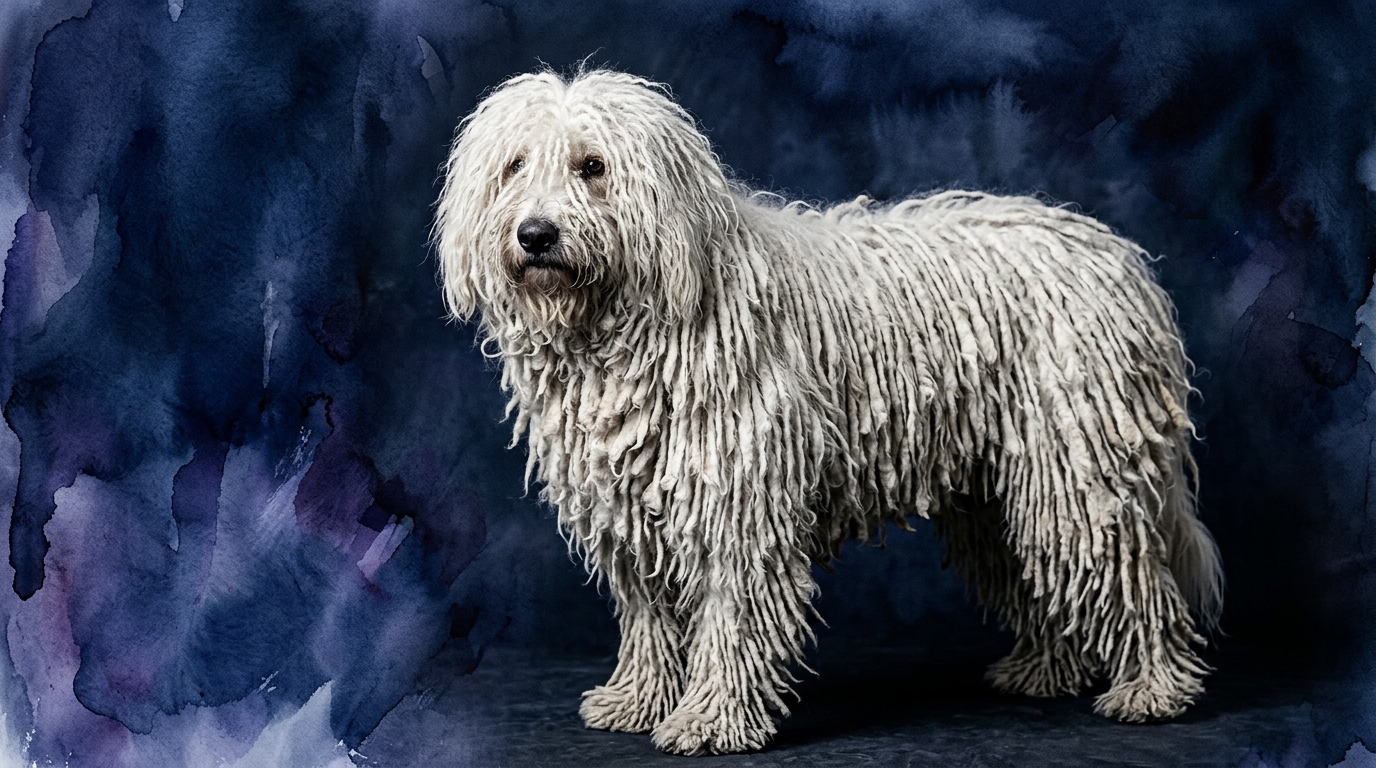
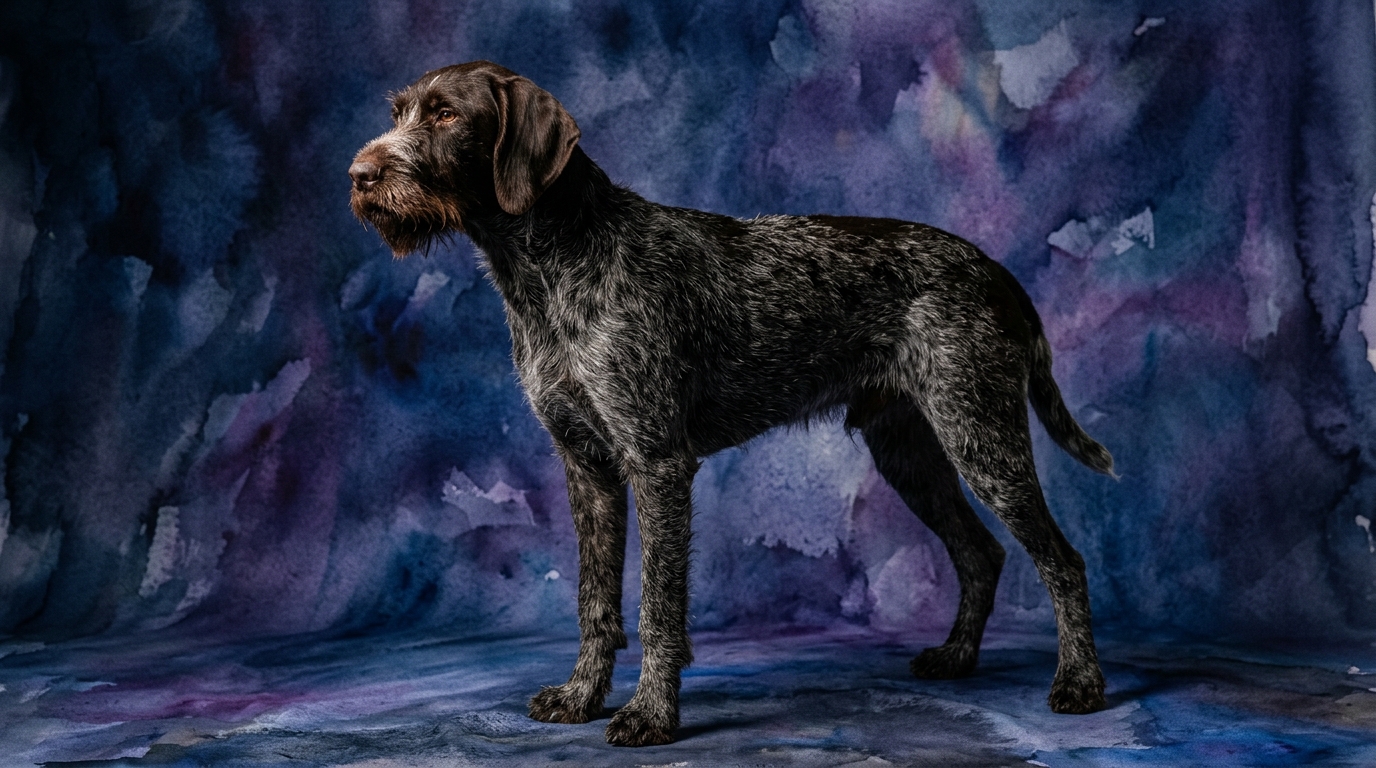
Side-by-Side IQ Profile: Komondor vs. German Wirehaired Pointer
To understand the cognitive landscape of these two breeds, The Cosmic Pet Pet IQ Lab employs a five-dimensional framework. Here’s how the Komondor and German Wirehaired Pointer stack up:
**Komondor (Coren Rank #67, Working Group):**
**Problem Solving (3/5):** This breed excels at autonomous decision-making in protective scenarios, assessing threats and implementing defensive strategies without direct human command. Their problem-solving is rooted in self-reliance and situational judgment, crucial for solitary guarding duties.
**Training Speed (3/5):** While capable of learning, the Komondor's independent nature means they often prioritize their own assessment over immediate obedience. Training requires patience and consistency, focusing on building a partnership where commands align with their perceived purpose.
**Social Intelligence (3/5):** Deeply devoted to their family or flock, Komondors are typically reserved or wary of strangers. Their social cognition is highly tuned to discerning friend from potential foe, managing group dynamics within their charge, rather than broad social engagement.
**Instinctive Drive (3/5):** Their primary drive is an inherent and powerful guarding instinct, manifesting as vigilant territoriality and a strong protective impulse. This drive is constant and focused on defense, not a versatile prey drive.
**Memory (3/5):** They possess a robust memory for routines, boundaries, and past threats, essential for maintaining their protective duties. Their recall is strong for practical, self-preservation, and protective information.
**German Wirehaired Pointer (Coren Rank #28, Sporting Group):**
**Problem Solving (4/5):** German Wirehaired Pointers demonstrate superior ability to adapt and solve problems in dynamic environments, particularly those involving scent work, retrieval, or navigating varied hunting terrain. They quickly adjust strategies based on new information.
**Training Speed (4/5):** Eager to learn and cooperate, this breed picks up new commands and complex routines with remarkable speed. Their strong desire for human partnership makes them highly responsive to consistent instruction and positive reinforcement.
**Social Intelligence (3/5):** Generally friendly and outgoing with their human family, GWPs form strong, collaborative bonds. Their social cognition is geared towards effective teamwork with a handler, though early socialization is important for interactions with other dogs.
**Instinctive Drive (3/5):** Possessing a strong and versatile hunting drive (pointing, tracking, retrieving), this instinct is readily channeled and refined through training. This makes them exceptionally effective in the field under direction.
**Memory (4/5):** GWPs retain extensive amounts of information, including intricate training protocols, specific commands, and scent profiles, over extended periods. Their recall of complex action sequences is a key asset in their working roles.
Where the Komondor Wins Cognitively
The Komondor's cognitive strengths lie in their unparalleled independence and strategic vigilance. With a Problem Solving score of 3/5, their success isn't about rapid obedience but about autonomously assessing situations and formulating defensive strategies, particularly when guarding. They excel at self-reliant decision-making in the absence of human instruction, a critical trait for a solitary livestock guardian. Their 3/5 Instinctive Drive for protection, combined with a practical 3/5 Memory, allows them to maintain continuous, low-level threat assessment across their domain, remembering past intrusions and discerning patterns. This self-assuredness means they apply learned rules and boundaries without constant prompting, demonstrating a unique form of cognitive application.
Where the German Wirehaired Pointer Wins Cognitively
The German Wirehaired Pointer shines in collaborative problem-solving and rapid learning. Their 4/5 Problem Solving and 4/5 Training Speed make them adept at mastering intricate, multi-step tasks that require quick adaptation to environmental changes, such as navigating complex hunting scenarios. They integrate new commands and signals with impressive speed, driven by an eagerness to work alongside their human partner. Their 4/5 Memory allows for the retention of extensive training protocols and specific cues over long durations, ensuring reliability in varied field conditions. While both breeds score 3/5 in Instinctive Drive, the GWP's drive is highly trainable and precisely channeled towards sophisticated hunting tasks, demonstrating superior cognitive application under direction.
Which is Easier to Train and Why
The German Wirehaired Pointer is generally considered easier to train due to their higher Training Speed (4/5) and inherent desire for human cooperation. They thrive on clear, consistent directives and positive reinforcement, quickly forming associations between commands and desired actions. Their strong hunting drive, when properly channeled, acts as a powerful motivator, making them responsive and eager to please. In contrast, the Komondor's 3/5 Training Speed reflects their independent nature; they are less inclined to obey simply for the sake of it. Training a Komondor demands immense patience, consistency, and a deep understanding of their self-assured temperament. They respond best when commands make logical sense to them or align with their protective instincts, requiring a partnership approach rather than strict control.
Which Suits Active Owners vs. Owners Appreciating Independence
The German Wirehaired Pointer is an ideal match for highly active owners. Their robust instinctive drive (3/5), coupled with their need for significant mental engagement (Problem Solving 4/5, Memory 4/5), necessitates extensive daily physical exercise and challenging mental tasks. Owners who enjoy activities like hunting, competitive dog sports, or long, vigorous hikes will find a GWP an incredibly fulfilling and tireless partner. For the Komondor, the term “relaxed owner” is somewhat misleading; they don’t require high-intensity physical activity like a GWP, but they demand an owner who values a watchful, independent presence and understands their profound protective instincts. They thrive with a clear role, ample space to patrol, and consistent, calm leadership, making them suitable for owners who are often home and appreciate a self-reliant guardian over a constantly engaged companion.
The Verdict
Choose the Komondor if you seek a self-reliant, watchful guardian with a strong, independent spirit, valuing discerning loyalty and a profound sense of purpose over eager obedience.
Opt for the German Wirehaired Pointer if you desire an energetic, cooperative partner for demanding outdoor adventures and enjoy the process of training a highly responsive, versatile working dog.
🧠 Find Your Pet's IQ Score
Our Pet IQ Lab assessment covers 25+ tests across 5 cognitive dimensions — personalized to your breed.
Take the Full IQ Test →Frequently Asked Questions
Is a Komondor a good choice for a first-time dog owner?
Generally, no. Their strong independence and protective instincts require an experienced owner capable of consistent leadership and thorough socialization from a young age. First-time owners may find their self-assured nature and unique training approach challenging to manage effectively.
How much exercise does a German Wirehaired Pointer need daily?
A German Wirehaired Pointer requires substantial daily exercise, typically 1-2 hours of vigorous activity beyond simple walks. This could include running, swimming, or engaging in demanding training sessions to satisfy their strong hunting drive and mental needs for stimulation.
Can a Komondor live in an apartment?
While large, a Komondor's energy is more about patrolling and vigilance than constant running, so a very spacious apartment with dedicated outdoor access for monitoring might be possible but not ideal. They thrive with a secure yard to fulfill their guarding instincts and survey their domain effectively.